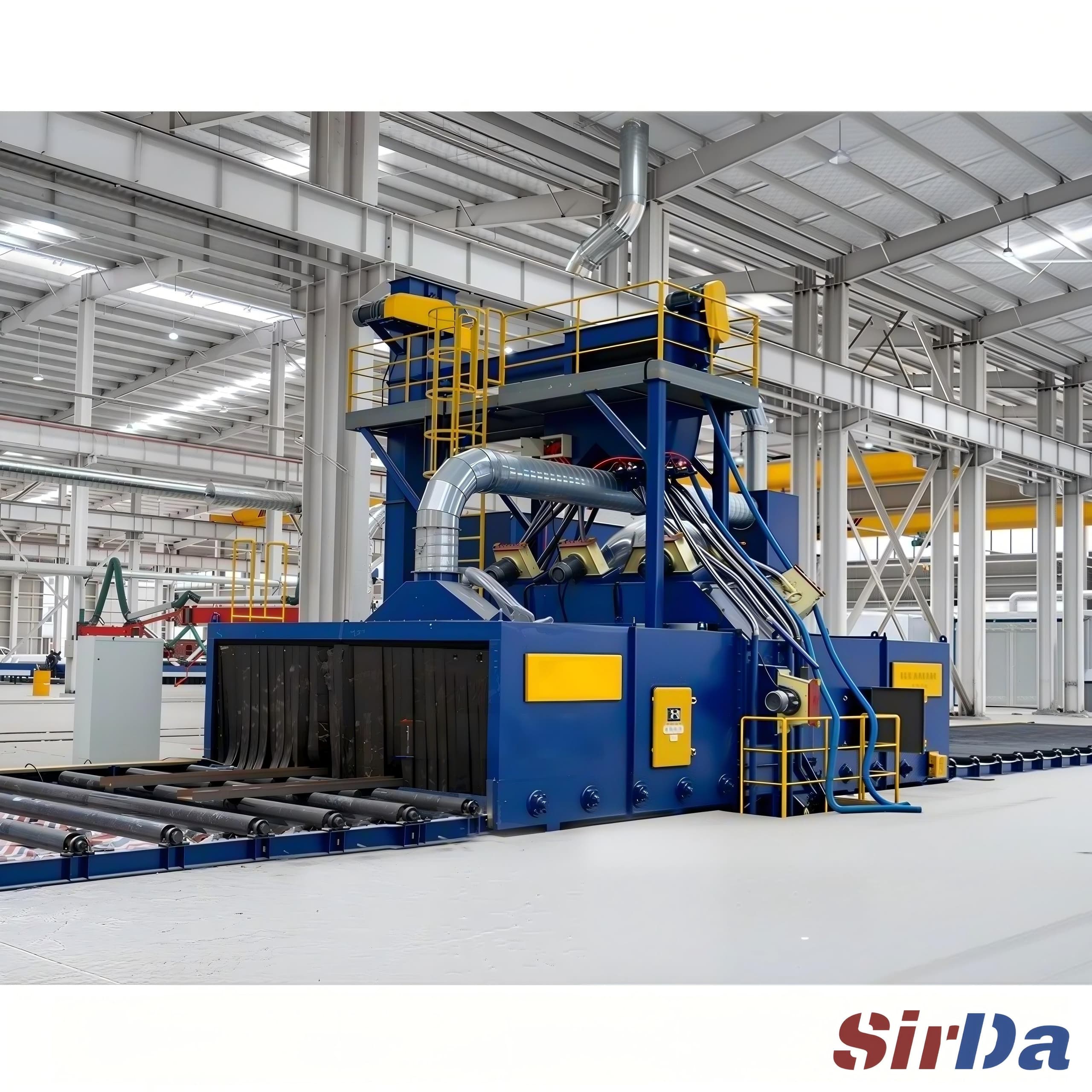
Almen Intensity Control in Wheel Blast Peening
How Almen strips, saturation curves and coverage work in wheel blast peening, and where the method stops being reliable.
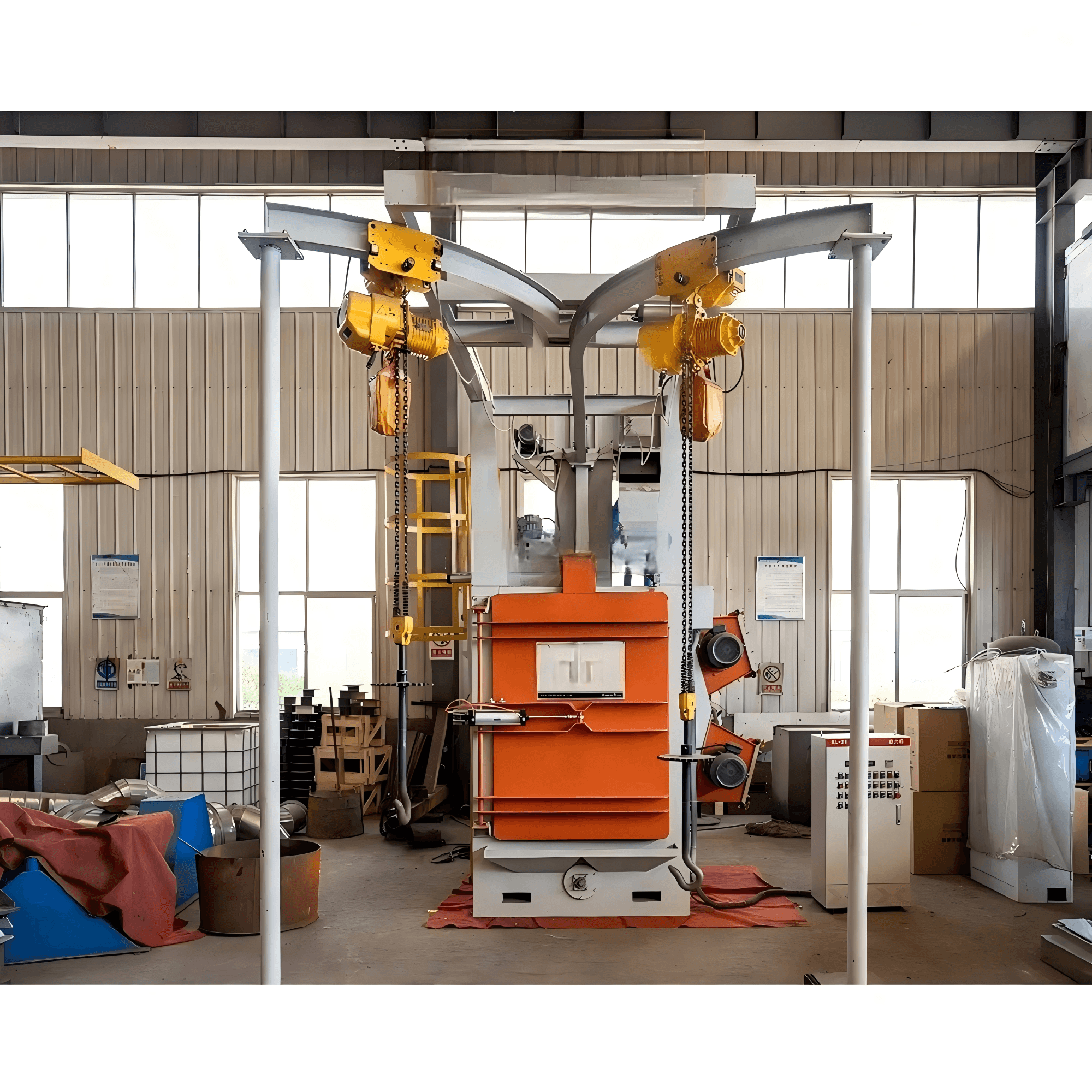
Shot peening and shot blasting use the same equipment and produce opposite intentions. Blasting removes material and creates a profile for coating; peening induces compressive residual stress to improve fatigue life. When peening is specified, the acceptance criterion is not a surface appearance — it is an Almen intensity and a coverage percentage, and both are process-control measurements rather than inspection results.
What Almen intensity actually measures
An Almen strip is a thin, hardened steel coupon. Peening one side induces compressive stress that makes the strip curve. The arc height of that curve, measured on a gauge, is the intensity — reported as an A, N or C scale value depending on strip thickness.
Intensity is a property of the peening stream at that location, not of the part. That is the key point: you qualify the process on strips, then apply the qualified process to the part, and you verify coverage separately.
Building a saturation curve
A single strip at a single exposure tells you almost nothing. The method is to peen several strips at increasing exposure times and plot arc height against time.
The curve rises quickly and then flattens. Saturation is defined as the point where doubling the exposure time increases arc height by no more than 10%. The intensity at that point is the specified intensity, and the exposure time that produces it becomes the process parameter.
Two practical consequences:
- The curve must be built for the actual setup — wheel speed, abrasive size and flow, nozzle or wheel distance, and the fixture that holds the strip.
- The curve must be rebuilt when any of those change, including after a wheel rebuild or a media change.
Using a curve from a different machine, or from the supplier's brochure, is the most common error in peening control. A second common error is treating the curve as permanent: it describes a machine condition, and that condition changes with every wear part replaced.
Strip placement and fixturing
The strip has to see the same stream the part sees. That means mounting it on a holder at the same distance and angle, in the same position in the cabinet, with the same exposure.
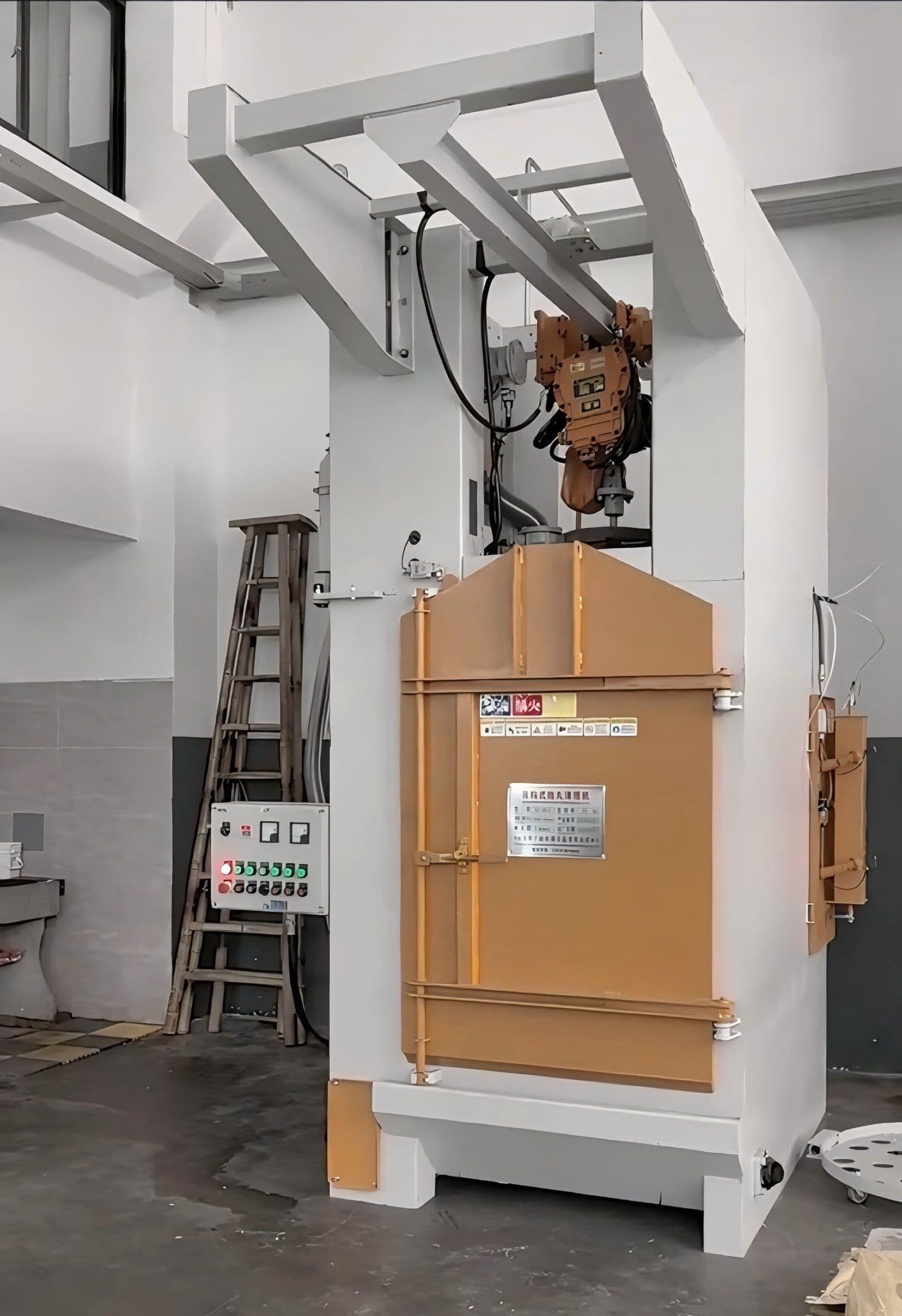
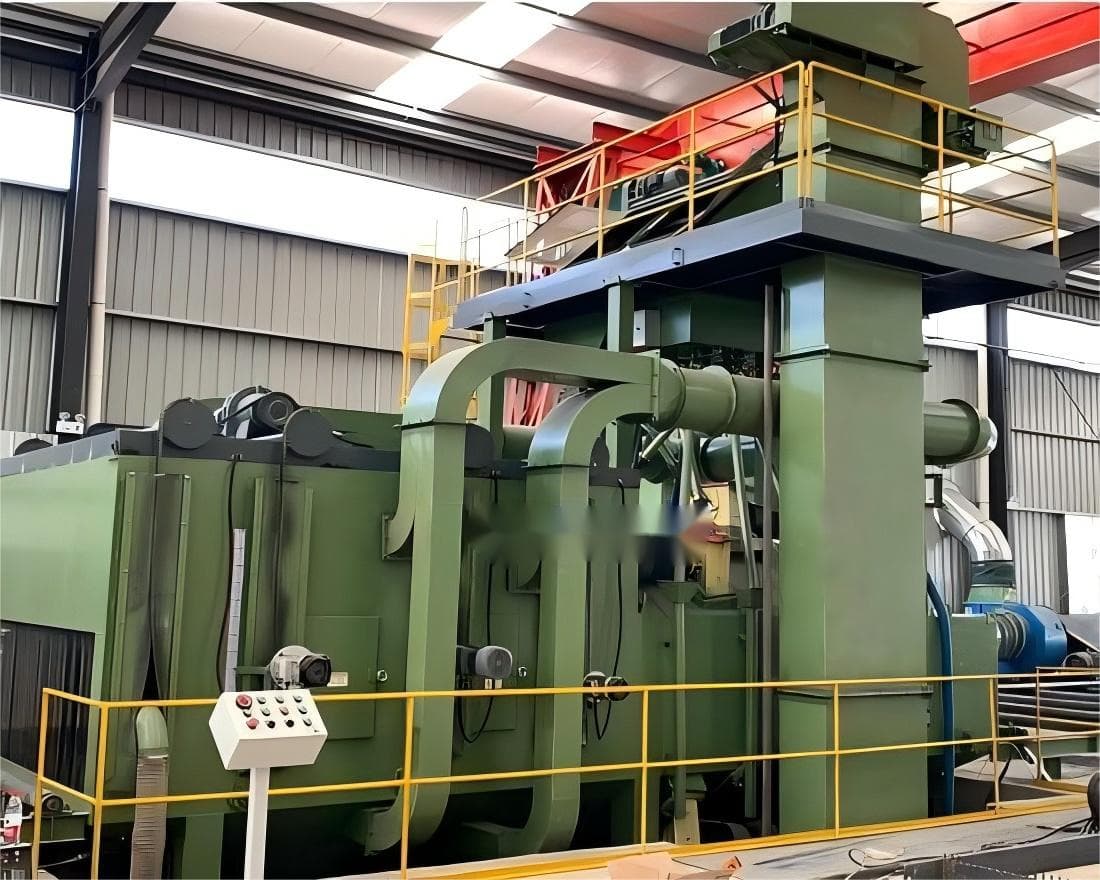
On a hanger type machine, the strip holder is mounted on the hook at the height and radius of the part surface being qualified. On a roller conveyor machine, the holder sits on the conveyor at the part height. In both cases the holder must be rigid; a vibrating strip produces scatter that looks like process variation.
Record the holder position in the setup sheet. If the position is not recorded, the next qualification will not be comparable.
Coverage is separate from intensity
Coverage is the percentage of the surface that has been indented at least once. It is assessed visually or with image analysis against reference photographs, typically at 100%, 200% and higher.
Intensity and coverage are independent. You can reach the specified intensity with incomplete coverage if the stream is not covering the whole surface — which is exactly what happens in a shadow. This is why coverage is inspected on the part and intensity on the strip.
For 100% coverage, every point must be hit at least once. For 200%, the exposure is doubled, and the visual appearance is a fully dimpled surface with no original surface visible.
Coverage assessment is also where the two processes diverge in practice. A wheel curtain covers a predictable band, so coverage can be planned from the part's presentation. A nozzle depends on the operator's path, so coverage depends on technique and is much harder to reproduce between shifts. Where coverage is safety-critical, that difference alone can decide the process.
Media control is process control
Peening media is specified differently from blasting media: roundness, size distribution and hardness are all controlled, and the working mix must be maintained within limits. Broken or angular media changes the intensity and can damage the surface.
The practical rules are the same as in blasting, with tighter tolerances: sieve the mix on a defined schedule, remove fines and broken media continuously, and replace with the specified grade rather than with whatever is available.
Specifying peening in a purchase order
A peening requirement that says only "shot peen" is not a specification. The purchase order needs the intensity with its Almen scale, the coverage percentage, the area to be peened and the areas to be masked, the media specification, and the acceptance method including who performs the strip measurement.
It should also state what happens at edges and holes. Peening intensity at a sharp edge is not the same as on a flat surface, and the edge condition may need additional treatment or protection. Leaving that to the supplier guarantees a disagreement at first article inspection.
Where the part is safety-critical, the specification normally references a recognised standard and requires a qualified process with a documented saturation curve. The machine then has to be capable of holding the qualified parameters repeatably, which is a different requirement from being able to reach them once.
Common audit findings
Four findings appear repeatedly when a peening process is audited.
An out-of-date saturation curve. The curve was built when the machine was commissioned and never rebuilt after a wheel change or a media change. The process may still be producing a result, but nobody can demonstrate that it is the specified one.
No coverage reference. Coverage is assessed by eye without reference photographs or a defined magnification, so two inspectors disagree and the record is not defensible.
Media outside specification. The working mix has drifted toward fines or contains broken media, which changes intensity even when the machine settings are unchanged.
Strip records without setup data. The arc heights are recorded but not the wheel speed, flow, holder position or media lot, so the record cannot be reproduced or compared.
Each of these is cheap to fix and expensive to discover during a customer audit. A quarterly internal review against the list is more effective than an annual external audit that finds the same four items.
Where wheel blast peening stops working
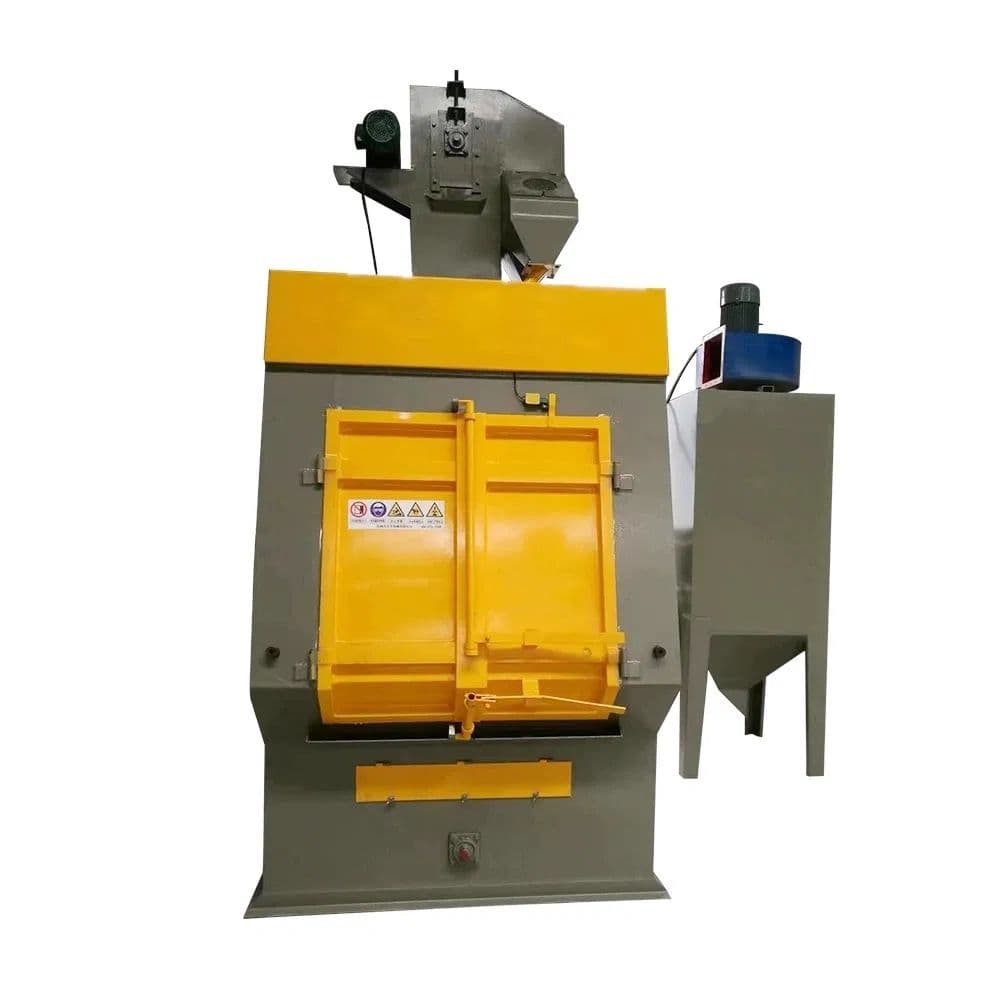
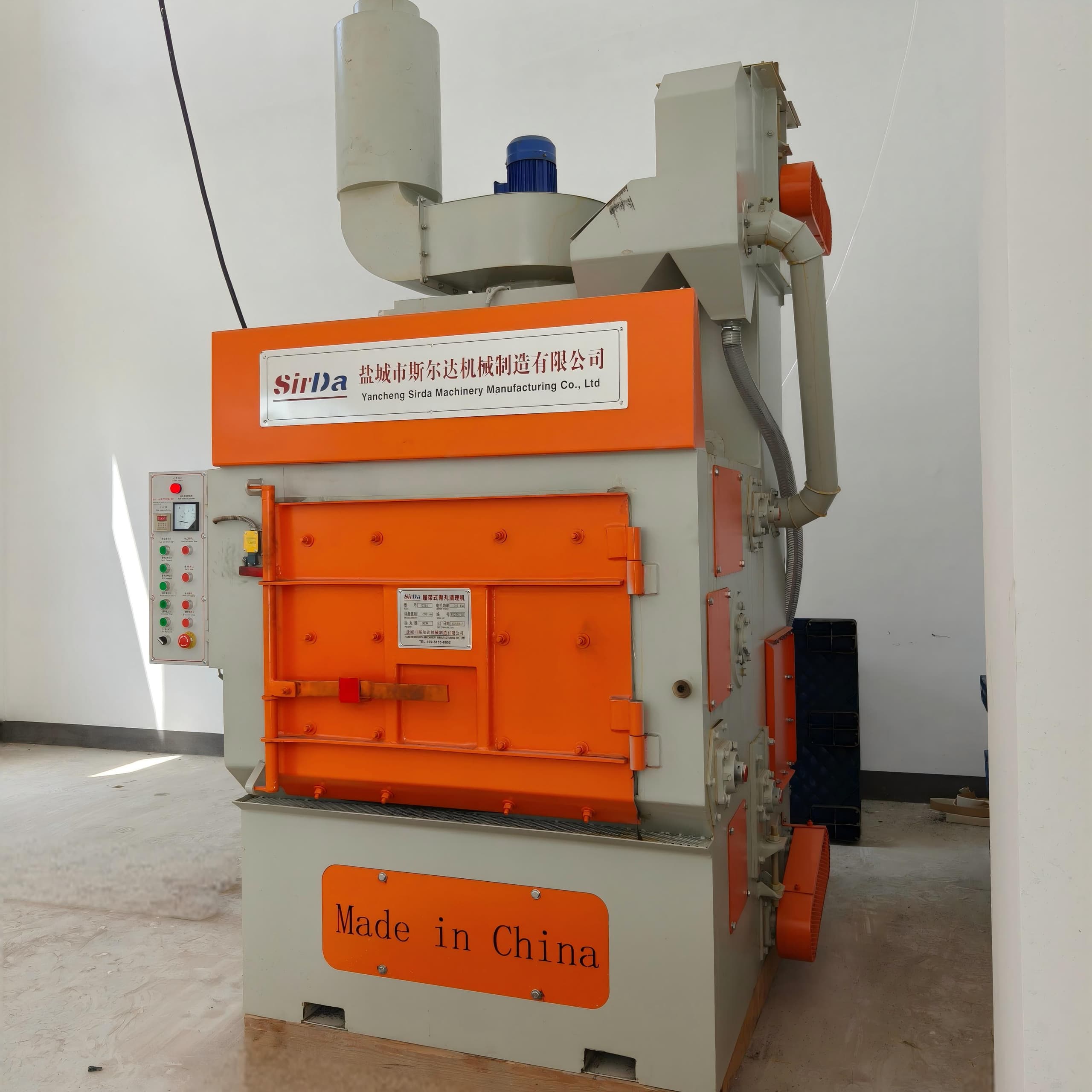
Wheel blast peening is efficient for large, simple surfaces: plate, webs, shafts, springs, and large castings. It is poor for internal features, fillets hidden from the curtain, and small areas that need a precise, localised treatment.
For those, air blast peening with a nozzle is the correct process, because the stream can be aimed. A wheel machine can be used for the bulk of a part and a nozzle for the critical fillets, but each process needs its own saturation curve.
Documentation that survives an audit
A peening record should contain: the saturation curve and the date it was built, the setup (wheel speed, media, flow, holder position), the strip readings, the coverage assessment method and result, and the media check results. Without those, the process is not controlled — it is repeated. A record that can be read by someone who was not present is the difference between a controlled process and a habit.
If you are setting up a peening specification, our engineering team can help map the Almen setup to the machine envelope. Use the contact form and include the required intensity scale, coverage and the part geometry.