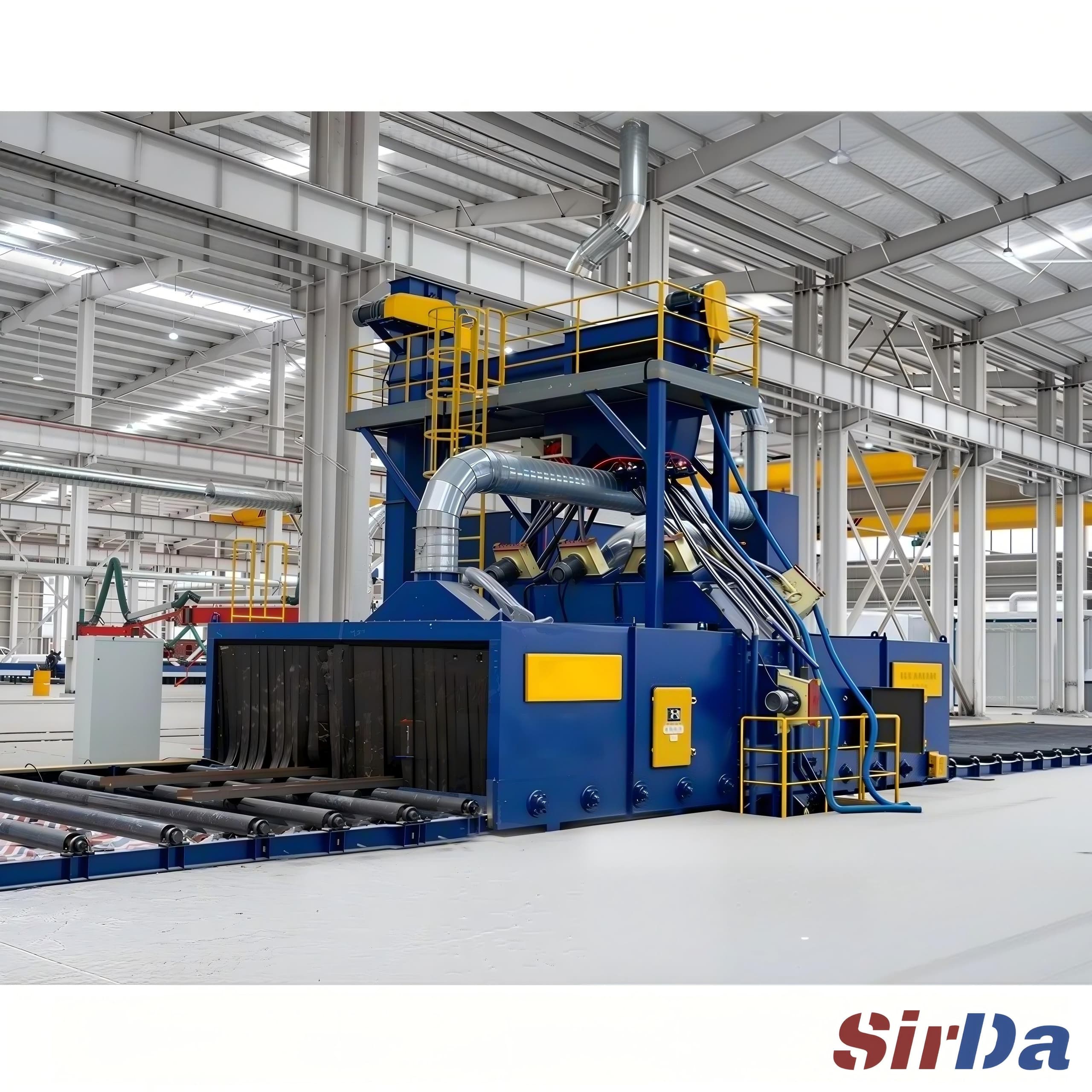
Combustible Dust Protection in Blast Dust Collectors
Why shot blasting dust can be explosible, and what NFPA 652 and ATEX require from the collector, ducting and housekeeping regime.
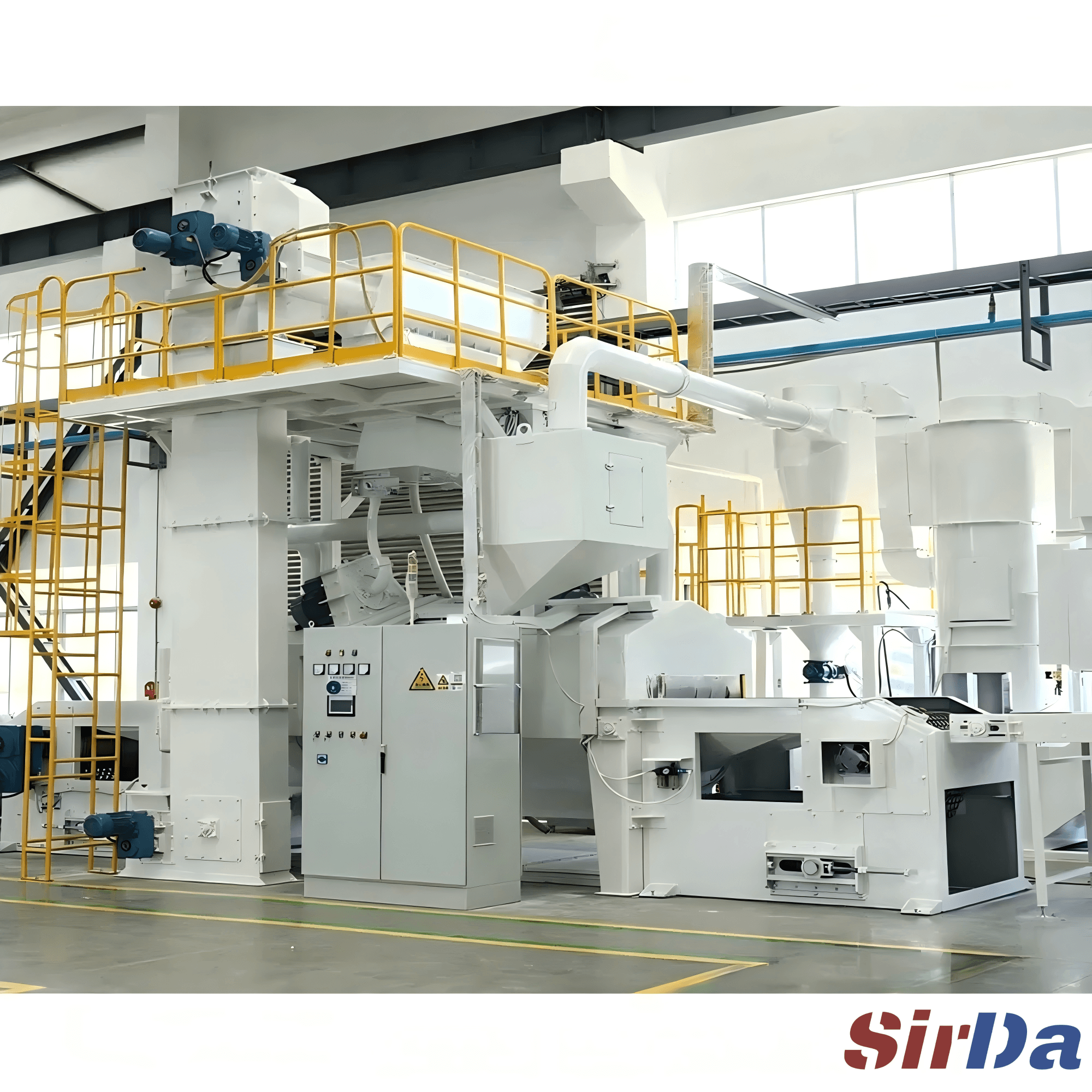
Blasting steel does not sound like a combustible dust process. The abrasive is metal, the workpiece is metal, and the cabinet is steel. The dust, however, is not the abrasive. It is a mixture of fractured abrasive, mill scale, paint, oil, and — in foundries and refurbishment shops — organic material that can be explosible.
When is blast dust a combustible dust?
The honest answer is: you do not know until it is tested. NFPA 652 requires a dust hazard analysis (DHA) for facilities handling combustible particulate solids, and the first step is characterisation of the dust: particle size, moisture, and whether it can form an explosible cloud.
Two test results drive the design. The first is whether the material is explosible at all, usually assessed with a screening test. The second is the severity — Kst and Pmax from a closed-vessel test — plus the minimum ignition energy and the layer ignition temperature. Those numbers determine whether the collector needs explosion venting, isolation, or a suppression system.
Dust from pure steel abrasive on clean steel is often not explosible in practice, but the mixture in a real shop is rarely pure. Paint, powder coating, oil, rubber, and food or agricultural residues change the answer. Treat "probably not explosible" as an untested assumption, not a conclusion.
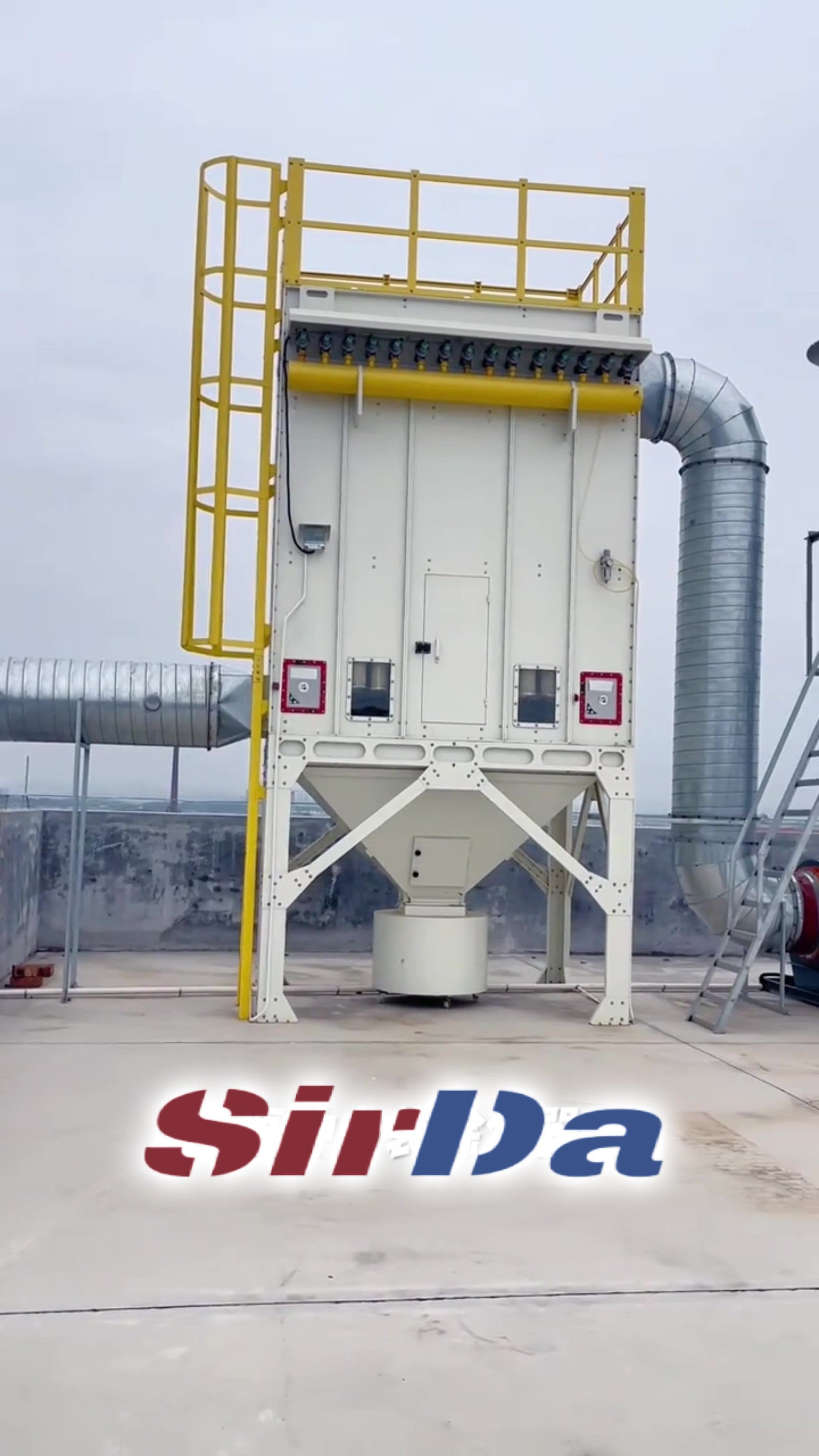
The collector is the highest-risk item
A dust collector concentrates fines in one place, in a turbulent airflow, with filter media that can build up static charge. That combination is why collectors appear in almost every combustible dust incident report.
Design measures that reduce the risk:
- Explosion venting sized to the collector volume and the tested Kst, directed away from occupied areas.
- Isolation between the collector and the cabinet — a rotary valve, a flap valve or a chemical barrier — so a deflagration cannot propagate back into the machine where people work.
- Bonding and grounding of every conductive component, with continuity checked at commissioning and at each filter change.
- Filter media selection for the dust's conductivity and for the required filtration efficiency.
- Differential-pressure monitoring so a blinded filter does not create a dust accumulation problem that nobody notices.
None of these is a substitute for the DHA. They are the implementation of its findings.
Ducting and air velocity
Dust has to stay suspended in the duct. If velocity falls, dust settles, and a settled layer in a horizontal run is both a fuel load and a blockage. Design velocities depend on the material; the DHA and the duct designer set them, not the machine supplier alone.
Avoid horizontal runs and sharp bends where possible. Where they are unavoidable, provide clean-out access and include them in the inspection route. A duct that has never been opened is a duct whose condition is unknown.
Ignition sources inside the machine
A blast cabinet contains several credible ignition sources: metal-to-metal impact from broken abrasive or foreign objects, hot work from a jammed part, electrical equipment, and static discharge. Control measures include:
- Keeping tramp metal out of the abrasive circuit with screens and magnetic separators.
- Preventing parts and fixtures from contacting the wheel.
- Using equipment rated for the dust zone — ATEX category and IP rating appropriate to the classified area in Europe, or the equivalent class/division approach elsewhere.
- Interlocking the wheels with the door and with the dust collector, so blasting cannot run without extraction.
The electrical rating question is often settled late and changes the cost significantly. Equipment inside a classified zone has to be certified for the dust group and temperature class that the test results establish, and standard motors, sensors and junction boxes do not qualify. Decide the zone boundaries before the layout is fixed, because moving a motor out of a zone is far cheaper than certifying it.
Housekeeping is a control, not a chore
The layer of dust on beams, ledges and the floor is the fuel for a secondary explosion, which is usually the destructive one. NFPA 652 requires a documented housekeeping programme with defined frequencies and methods.
Three practical rules: use vacuum cleaning with conductive hoses rather than compressed air, because blowing dust converts a settled layer into a cloud; define the maximum acceptable layer depth and inspect against it; and include the roof structure and cable trays, which are the places nobody looks at.
Housekeeping frequency should follow the dust generation rate, not the calendar. A shop blasting painted or coated work generates fines far faster than one blasting clean structural steel, and a fixed weekly interval that suits the second will be inadequate for the first.
Working with the authority having jurisdiction
The dust hazard analysis is a site document, and the site is the only place where the inputs exist. The machine supplier can provide airflow, filter area, internal volumes and the electrical ratings of equipment, but it cannot know the paint chemistry, the oil carry-over or the hours of dust accumulation.
Start the conversation with the local authority early. In some jurisdictions the requirement is expressed through a fire code, in others through occupational safety regulation, and the acceptance evidence differs. Discovering the local expectation after the collector is installed is expensive, because venting, isolation and duct routing are structural decisions.
Two documents speed the process. A process flow diagram showing where dust is generated, captured and stored, and a table of dust sample results with the test method used. Without them, the analysis tends to default to the most conservative assumption, which raises cost without necessarily raising safety.
Also agree who owns the analysis. On a new installation the machine supplier, the dust collector supplier, the installer and the operator all touch the risk, and each will assume another party has covered it unless the contract says otherwise.
What this means when buying a machine
Ask the supplier for the dust collector's airflow and filter area, the explosion protection concept, and the isolation method between collector and cabinet. A supplier who cannot describe the isolation method has not designed for combustible dust.
Airflow figures published for our machines — 5,000–16,000 m³/h across the hanger type range and 12,000 m³/h on the collector of the mesh belt machine — are the numbers the DHA needs as an input. They are not a substitute for the analysis.
Documentation the authority will ask for
An explosion protection concept is only as good as its paperwork. The file that survives an inspection contains the dust test results, the dust hazard analysis, the equipment certification for the classified zones, the venting calculation, the isolation method and its maintenance requirement, the grounding continuity records, and the housekeeping log.
Two items are routinely missing. The first is the maintenance record for the isolation device, because a rotary valve that no longer seals still looks installed. The second is the grounding continuity check after filter replacement, because the filter change is exactly when bonding straps get disturbed.
Build the file at commissioning, not after an incident. Reconstructing a hazard analysis from memory is not a defensible position, and the exercise of assembling it usually reveals at least one assumption that was never verified.
If your shop handles coated, painted or mixed-material work, start the DHA before specifying the machine. Our contact form reaches the engineering team, and we can supply the machine-side data the analysis needs.