
Blasting stainless steel without embedding iron
Free iron embedded by blasting media rusts and ruins stainless parts weeks later, long after the blast looked clean. Which iron-free media to use, how to segregate the machine and set reclaimer pressure, how to verify with copper sulphate and ferroxyl tests, and when passivation is the right repair.
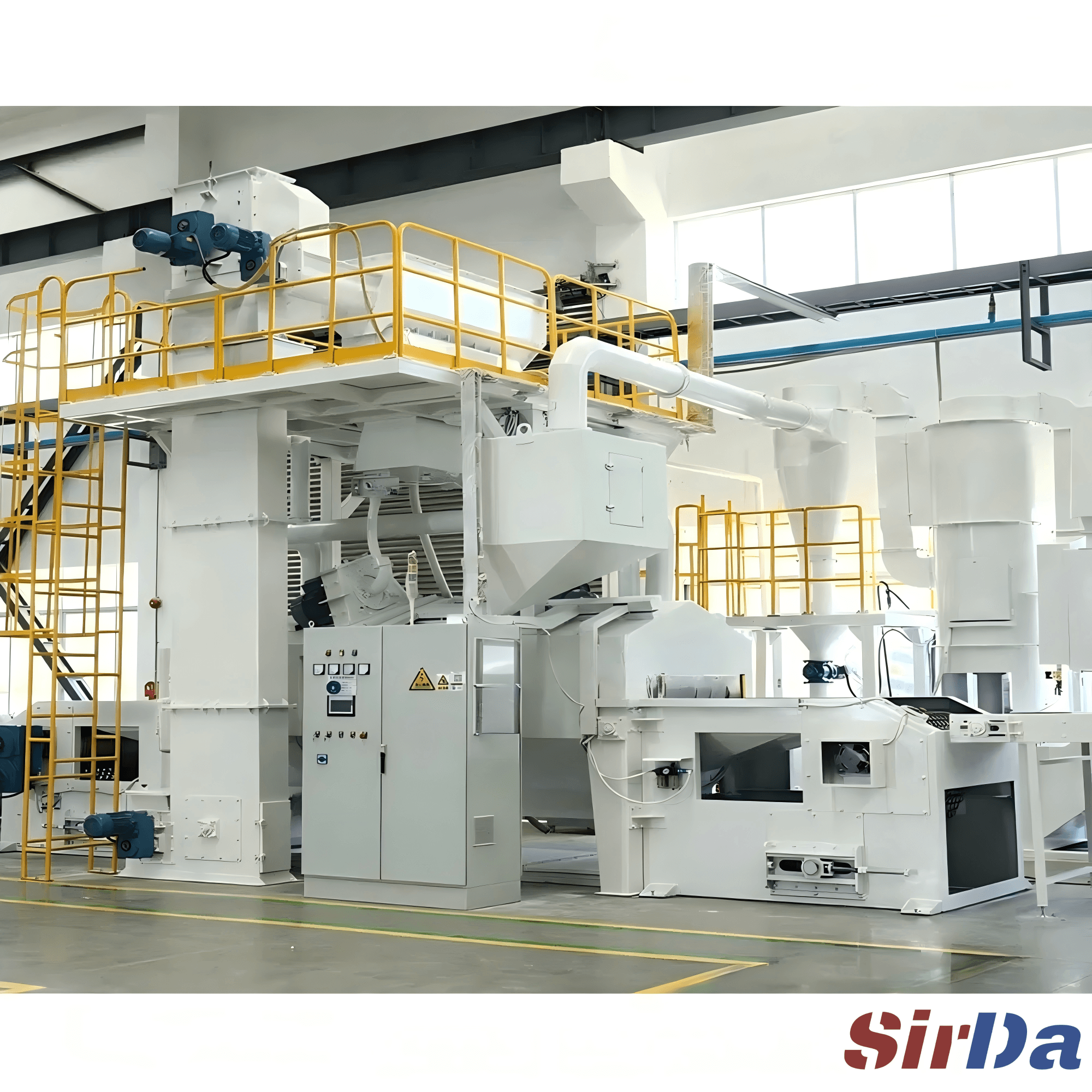
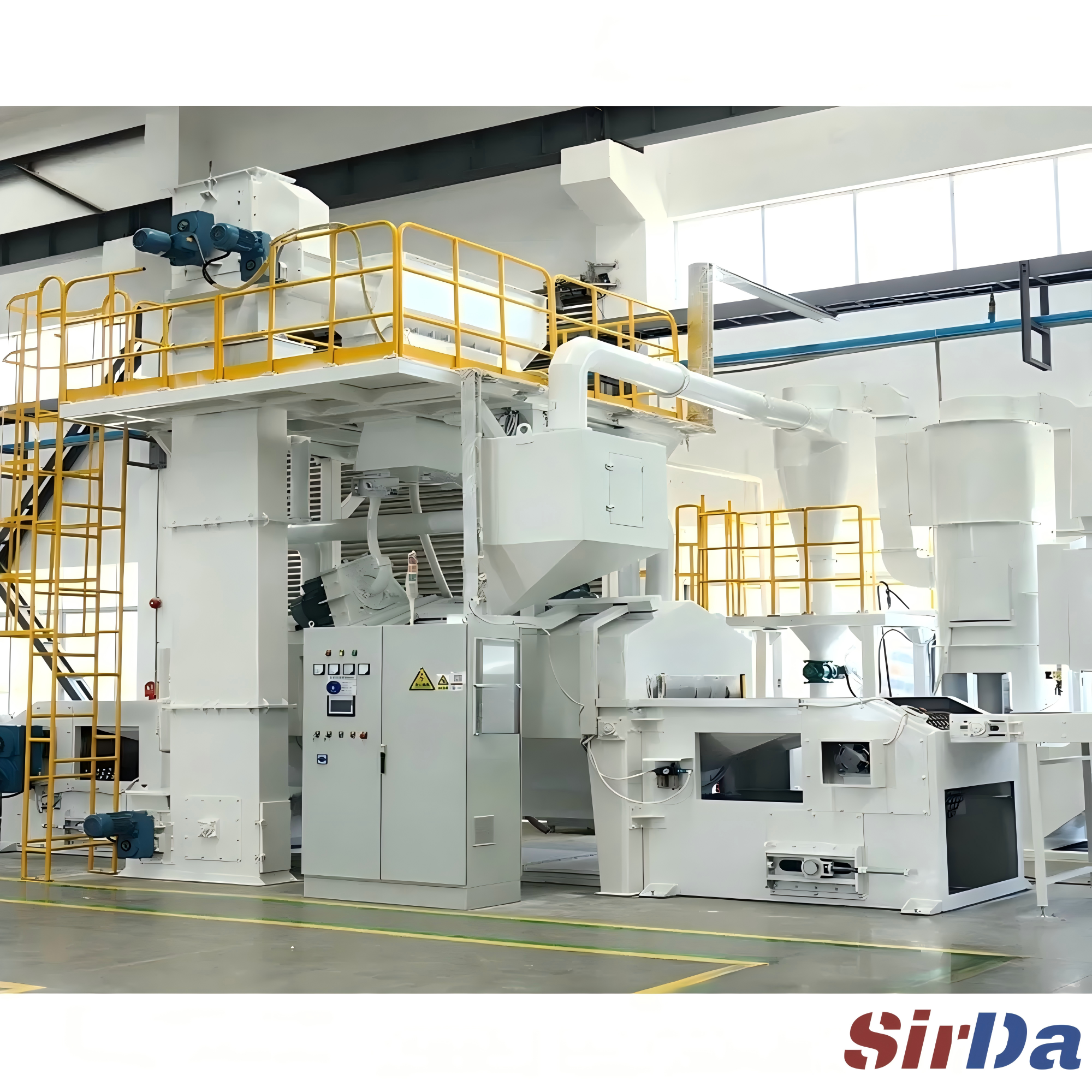
Why iron contamination ruins stainless even when the surface looks clean
Stainless steel survives because of a chromium oxide passive film only a few nanometers thick. That film is what makes 304 and 316 corrosion resistant, and what free iron destroys. When a particle of carbon steel, or a piece of contaminated media, embeds in a stainless surface, it rusts, and the iron oxide breaks the passive film locally. The result is tea coloured spotting that appears days or weeks later, often after the part has been coated and passivated, while the blast itself looked clean.
Blasting alone cannot repair iron contamination. It moves iron around the surface rather than removing it. Only methods that strip the surface layer, such as machining, grinding or electropolishing, or dissolve free iron chemically, can clear it. Chemical cleaning is therefore not optional after the blast. It decides whether the blast was worth doing at all.
Choosing media that cannot introduce iron
The rule is narrow: for stainless work the media must contain no metallic iron, and it must not have touched carbon steel.
- Glass bead — soda-lime or borosilicate, Mohs 5.5 to 6.5, 50 to 500 microns, 80 to 120 mesh. Spherical, so it peens rather than cuts, leaving a uniform satin finish with almost no dimensional change. Fully iron free. The catch is fragility: it fractures in service and needs screening and top-up.
- Ceramic bead — zirconia or alumina, Mohs 7 to 8.5, also spherical. Harder and far more durable than glass, surviving hundreds of cycles where glass breaks down quickly. It reaches complex geometry and thin sections without cutting them, carries no free iron, and holds a consistent texture batch after batch.
- White fused aluminium oxide — 99.5 percent alumina or better, Mohs 9, and angular, so it cuts rather than peens. Choose it when a defined anchor profile for coating is needed, or when heavy scale and spatter must come off. Iron free, but it gives a darker, coarser matte and much more dust.
- Low iron garnet — angular, low in iron, a middle ground for large fabrications needing a coating profile without the oxide dust load.
Two exclusions matter more than any of the choices. Brown fused aluminium oxide contains trace iron oxide and must never be used on stainless, and neither must steel shot, steel grit, or any blended or recycled media whose history includes carbon steel. Common sand is excluded for another reason, since it carries free silica and has been banned in many countries on operator health grounds.
Setting up the machine, the recovery and the dust collection
Media choice is only half of the control. Where the media has been, what the machine is made of, and how dust is handled decide whether iron ever reaches the part.
The strongest control is segregation. A dedicated cabinet for stainless removes the whole class of problems at once, because iron laden dust in the plenum, iron fines in the cyclone and iron in the wear parts all disappear. If a shared machine is unavoidable, the validated alternative is a full strip-down and clean with fresh media, after which that machine is treated as stainless dedicated.
Wear parts deserve specific attention. On a wheel type machine the impeller, casing, rotor and wear plates are normally mild or alloy steel. Running steel shot through them leaves iron in the blast circuit permanently, so a machine that has processed carbon steel media is contaminated for stainless purposes forever.
Dust collection is the second control, and it is where media selection quietly becomes an operating problem. The reclaimer static pressure has to be set for the media in use, because the balance between fines and usable media is media dependent.
- Glass bead No. 6 and 7 — about 3.5 to 4 inches of water column
- Glass bead No. 8 to 13 — about 3 to 3.5 inches
- Aluminium oxide 60 mesh and coarser — about 4 to 5 inches
- Aluminium oxide 80 mesh and finer — about 3 to 4 inches
- Steel shot or steel grit — about 6 to 7 inches
Set the damper too closed and the reclaimer will not lift the fines out. Media returns to the blast dirty, visibility drops, and the conveying hose blocks. Set it too open and usable media is carried into the dust collector, wasting consumable and putting fine iron bearing dust back into the room. The dust collector is itself a filter for the iron you want off the part: a cartridge loaded with iron oxide sheds it back if extraction is unbalanced.
Verification, cycle time and the repair decision
Verification is the step most shops skip, and it is cheap next to a rust staining recall. ASTM A380 sets out the acceptance tests. The copper sulphate test is the classic screen: a 6 percent solution applied for 6 minutes, with no copper coloured deposit forming on the surface. The chemistry gives it away, because free iron plates copper out visibly through Fe + CuSO4 = FeSO4 + Cu. The ferroxyl test is more sensitive still. Potassium ferricyanide in dilute nitric acid turns blue within 15 to 60 seconds where free iron is present. It gives false positives, must be mixed fresh each day, and belongs to trained personnel. Neither test suits martensitic or low chromium ferritic grades, which can read positive from their own alloy content.
Throughput on stainless is set by exposure, not by pressure alone. Glass bead at low pressure needs longer dwell to strip heat tint; aluminium oxide at the same pressure cuts it in a fraction of the time. Raising pressure to recover cycle time trades a clean surface for embedded media and a rougher profile, so hold the specified pressure and extend dwell time, or split the job into a coarse cut and a cosmetic pass.
If a test fails, the choice is between removing the iron chemically or removing the surface mechanically. Passivation under ASTM A967 targets free iron and leaves the base metal essentially untouched: 20 to 25 percent nitric acid at 120 to 140 degrees Fahrenheit for 20 to 30 minutes on austenitic and ferritic grades, or 4 to 10 percent citric acid at 120 to 150 degrees Fahrenheit for 4 to 20 minutes where non toxicity matters. Pickling is the aggressive option, at 10 to 25 percent nitric with 1 to 3 percent hydrofluoric acid. It strips scale and heat tint, but it also removes 5 to 50 microns or more of base metal and roughens the surface, so on a part with a specified roughness it can go out of specification.
The recurring failure pattern is worth naming, because it is invisible at the point of blasting. Contaminated media reused on stainless. A stainless part handled with carbon steel brushes, wire wheels or a steel spatula. Free iron trapped under a coating that looked sound at shipment and blistering months later. Each traces back to a control that was never written down.