Q37
Hanger Type
Castings and complex suspended workpieces
Explore machine
Home / Machines / Top-Mounted Blast Head Shot Blasting Machine for Small Castings and Stampings
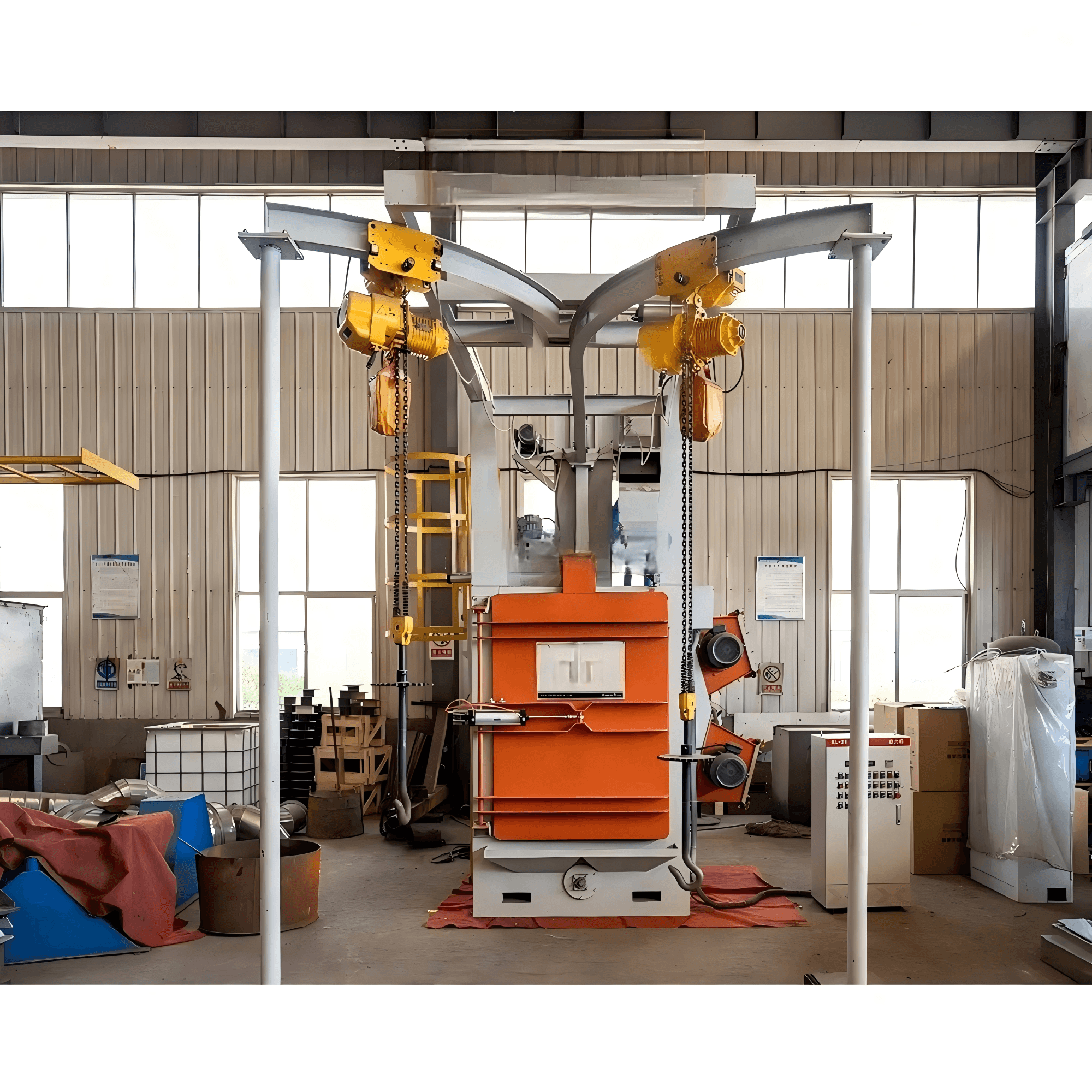
A batch shot blasting machine that mounts its blast heads above a horizontal chamber and discharges through a gated outlet, so small castings and stampings are cleaned from several directions in one cycle without being clamped or hung on hooks.
Read product details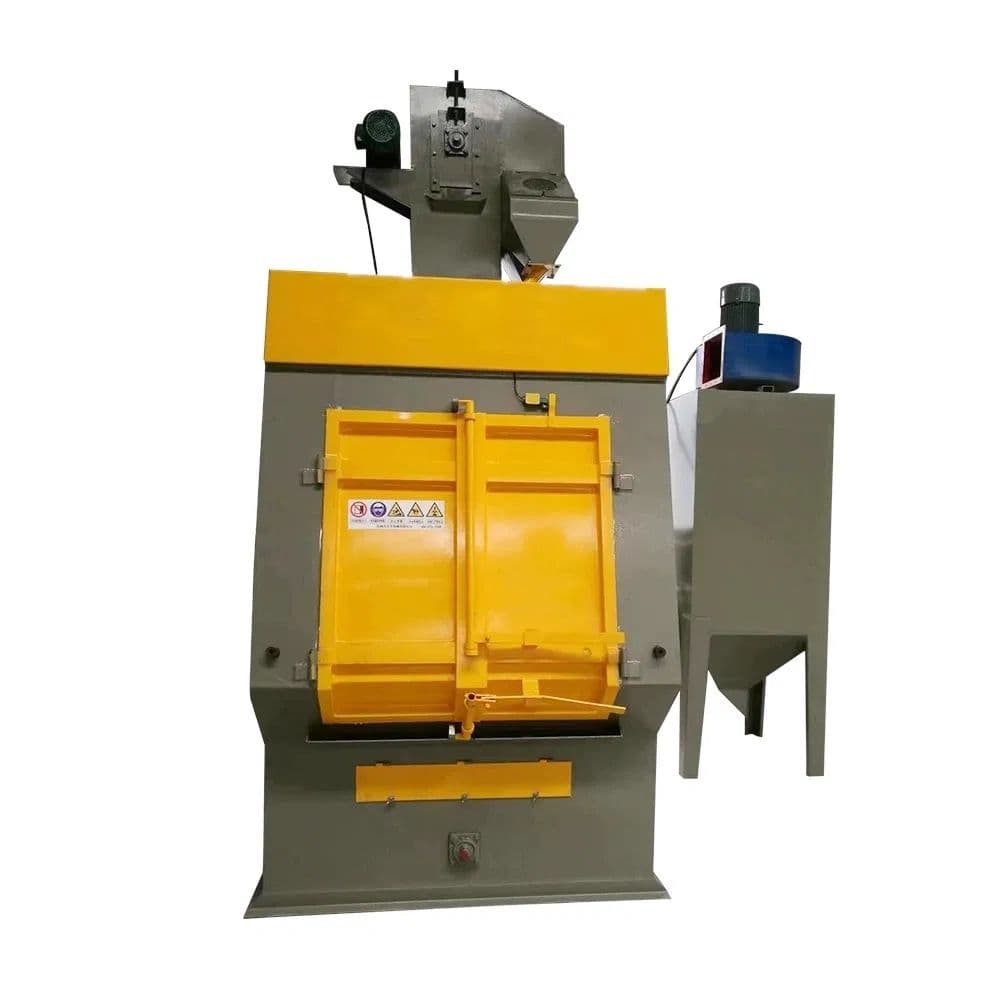
Most small casting and stamping lines are cleaned by machines named after how they carry the part: hooks, belts, tables, conveyors. This machine is named after how it blasts instead. The blast heads are mounted above a horizontal chamber and the parts are worked from the top down, with a gated outlet below the chamber for discharge.
That arrangement matters for the geometry of the parts it is built for. Small castings have thin ribs, webs and blind pockets. A single blast source aimed from one side leaves the opposite face partly shadowed, and the operator compensates by re-racking the batch and running it again. With several blast heads covering the same chamber, one pass puts media on the top surfaces, the side walls and the lower faces at the same time, and the number of handling steps per batch drops with it.
The same logic applies to stampings, which are typically thin, flat and stacked close together. Blasting them from above means the media reaches the open faces without the part having to be turned over part by part.
The machine is configured around the parts you run through it, so several things have to be settled first.
The workpiece is the starting point. Small castings differ from stampings in wall thickness, in how deep the pockets go and in how much of the surface is hidden when the part sits in the chamber. Send drawings or samples, and describe which surfaces actually need cleaning and which ones must be masked.
The blast heads and their arrangement are then reviewed against that geometry: how many heads are needed, where each one is aimed, and how the media stream is shaped to reach into pockets without leaving sharp edges. The intensity is adjusted to the part, because the same setting that removes scale from a cast iron housing will mark a thin stamped bracket.
The media itself follows from the finish you need and the removal rate you are targeting, and it has to be compatible with the machine's own wear parts.
The surrounding equipment - the cyclone, the dust collector and where they discharge - is confirmed against the cell, including the loading position, the service access around the chamber, and how the batch is fed in and taken out.
Finally the control scope is set: which cycle steps run automatically, how the recipe is changed between part types, and what interlocks the line needs. Interface requirements to the surrounding plant should be stated at the same time.
Machine build, chamber volume and cycle behaviour are confirmed against the workpiece and the cell layout before anything is quoted.
Share a photo or drawing, material, maximum dimensions and expected output. These details help us review a suitable configuration.
Send project requirementsQ37
Castings and complex suspended workpieces
Explore machine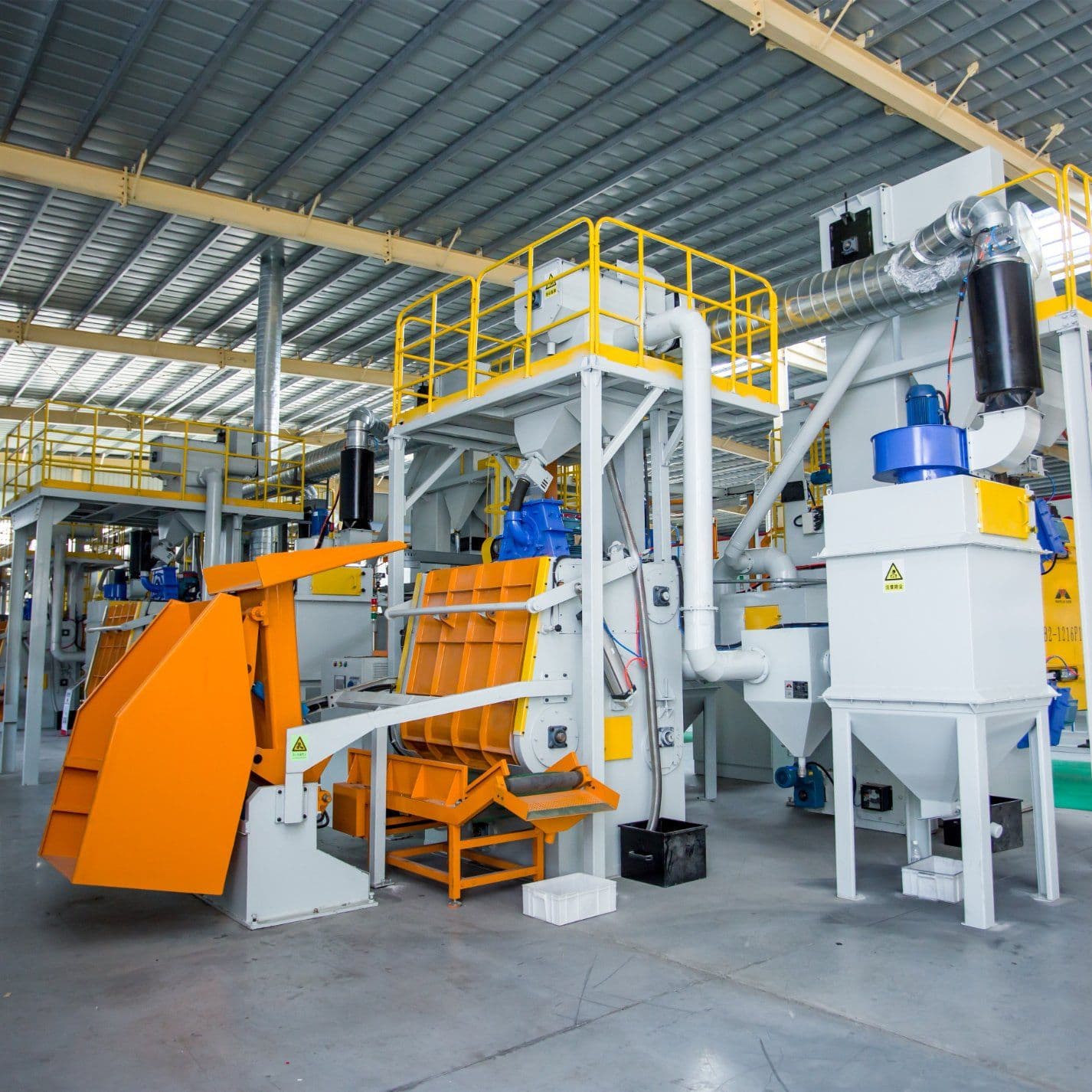
Batch cleaning
A batch tumble machine that carries workpieces on a soft rubber belt and tumbles them through a cantilevered centrifugal blast, so thin-wall copper and aluminium parts are decoated without being bent, marked or pressed.
Explore machine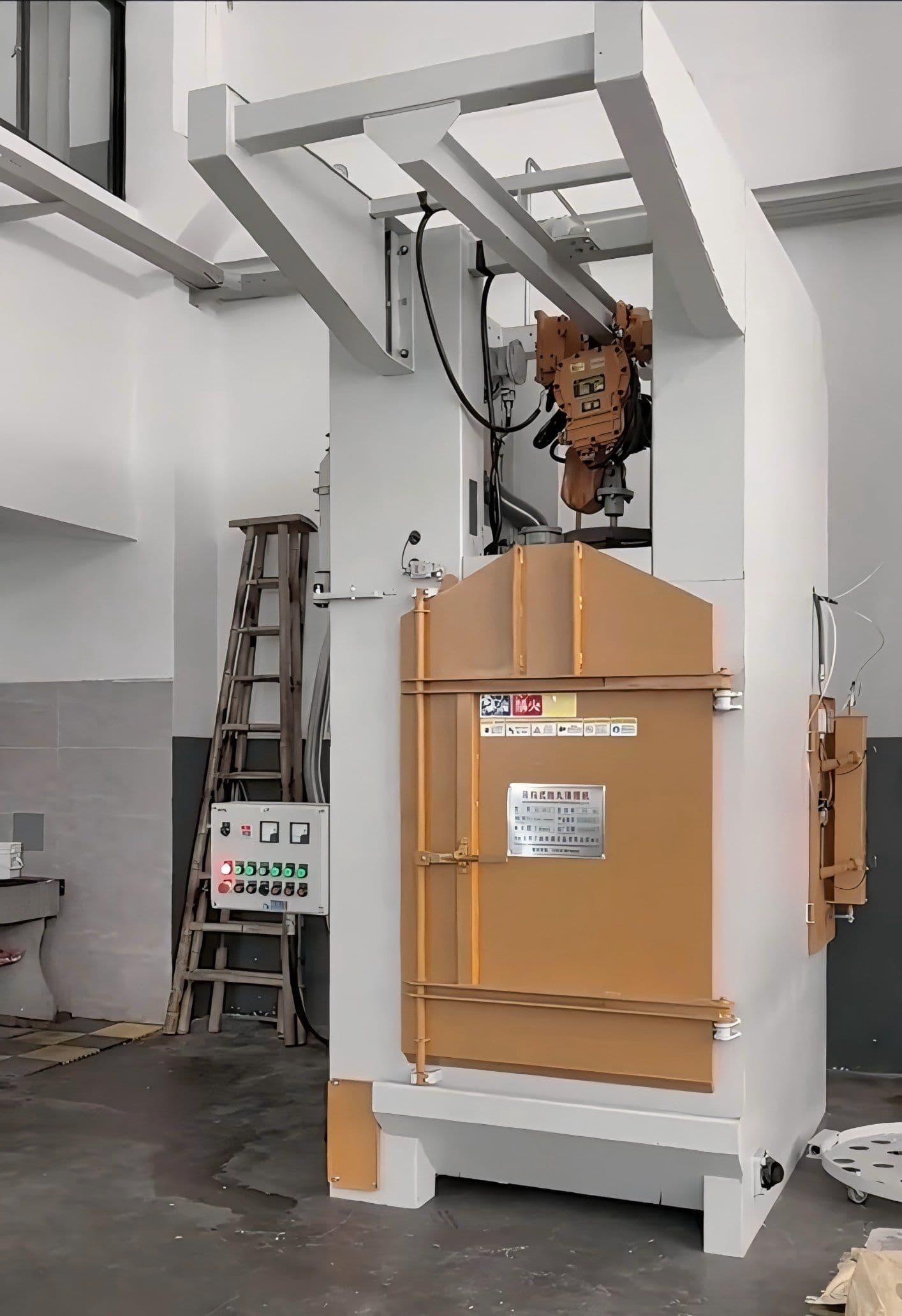
Batch cleaning
A rotary hook shot blasting machine combines the revolution of the hook arm with the spin of the workpiece, so every point of a forging surface passes periodically through the blast jet and the shadow band left by a fixed blast source disappears.
Explore machine