Q69
Roller Conveyor
Steel plates, profiles and fabricated structures
Explore machine
Home / Machines / Continuous Through-Type Shot Blasting Line with Configurable Wheel Layout
A continuous through-type shot blasting line cleans structural sections, tubes and plates while they keep moving. This page explains how blast wheel placement, media recycling and dust routing are configured around the workpiece cross-section.
Read product details
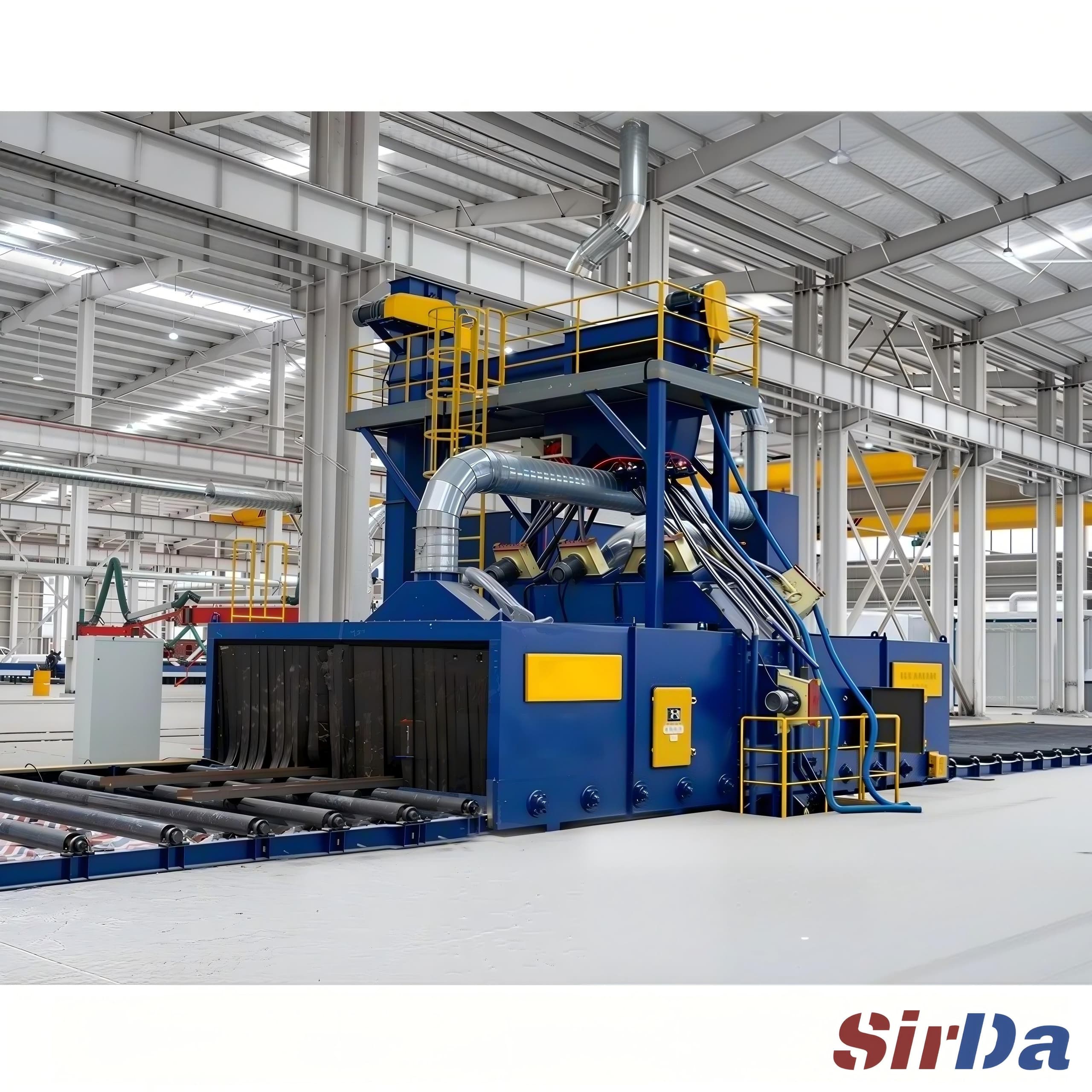
A continuous shot blasting line exists for one reason: the workpieces must not stop. Sections, tubes and plates enter on the infeed conveyor, pass through the blast chamber while every surface is exposed to the abrasive stream, and leave on the discharge conveyor ready for the next process. Everything else about the machine — chamber height, wheel count, conveyor speed — is derived from that promise.
This is also why the chamber opening in a through-type line follows the workpiece cross-section instead of being a fixed box. The chamber has to seal around the profile while it moves, because abrasive escaping the chamber is both a media loss and a housekeeping problem for the shop floor.
The platform and pipework above the chamber are not decoration. A bucket elevator lifts the spent mix of abrasive, scale and dust out of the discharge hopper; an air-wash separator divides that mix so only clean abrasive returns to the wheels, while scale and fines go to the dust removal circuit. The ducts visible on the roof of the chamber connect it to a pulse-jet baghouse collector sized for the line's airflow.
When the platform stays accessible, wheel maintenance — blade and control cage replacement — happens without dismantling the chamber, and that is what keeps a continuous line running on schedule.
A through-type line earns its cost when the same sections run in volume, day after day, and the surface must come out consistent enough for painting or fabrication without rework. It is the wrong tool for small mixed batches: irregular parts and low volumes belong in batch machines such as tumble or rotary table types, where the workpiece turns in front of the wheels instead of filing past them.
Before the wheel layout is fixed, confirm the section dimensions, the weight per piece and the target throughput. Those three inputs — not catalogue numbers — decide the configuration of the line.
Share a photo or drawing, material, maximum dimensions and expected output. These details help us review a suitable configuration.
Send project requirementsQ69
Steel plates, profiles and fabricated structures
Explore machine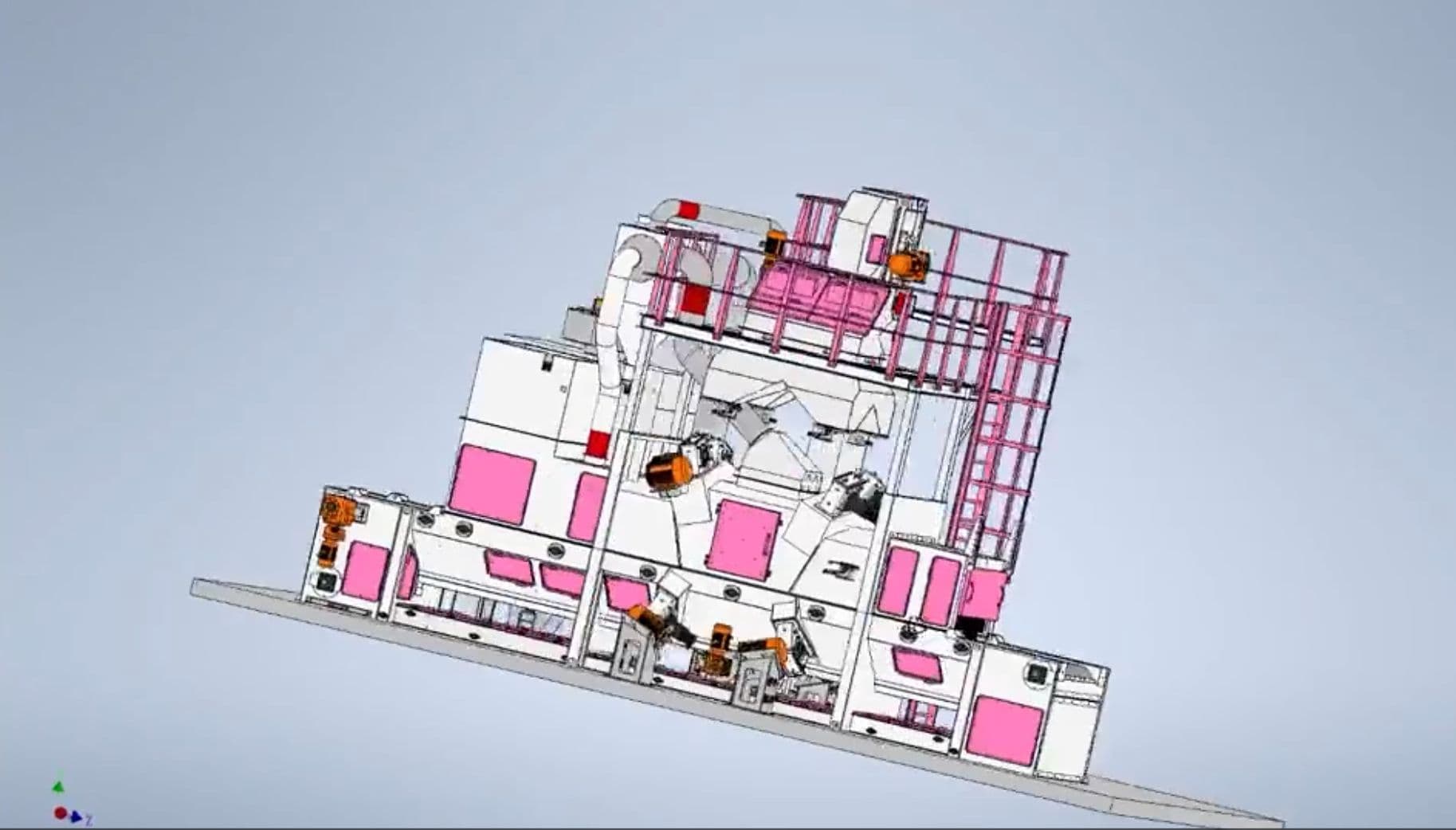
Continuous flow
Automatic mesh belt shot blasting machine for high-volume small steel parts such as cuplock scaffolding couplers and paver components. The continuous in/out flow removes the per-batch load/unload dwell that caps batch machines, so throughput tracks belt speed instead of batch count.
Explore machine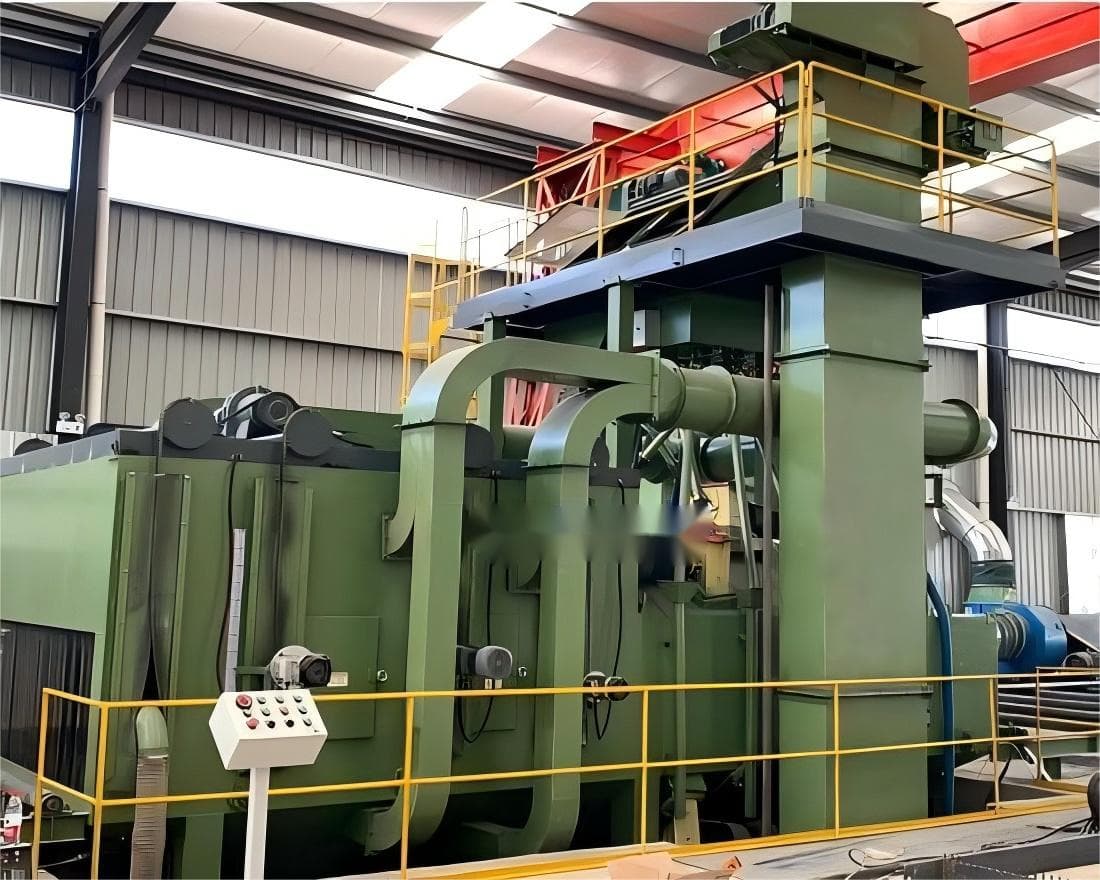
Continuous flow
An abrasive recovery system for continuous roller conveyor shot blasting lines closes the loop between the blast chamber and the media supply, so spent abrasive and workpiece debris are separated before the media returns to the wheels. Recovery quality determines consumable cost, wheel maintenance intervals and how consistently the line holds a given surface standard.
Explore machine