
Nozzle inspection intervals that prevent rework
A worn blast nozzle does not stop the machine, it quietly turns it into a different one. This guide covers how nozzle wear raises air demand, how to measure bore growth, which inspection cadence fits your duty cycle, and what actually destroys a liner before you have to scrap a batch.
Most blast rooms do not fail loudly. A nozzle worn past its limit still fires, still sounds right to the operator, and still fills the cabinet. What changes is the air behind it: the bore has opened up, the compressor delivers more volume at less pressure, abrasive leaves the nozzle slower, and the impact energy that actually forms the anchor profile drops away. On the floor that shows up as light texture at one end of a panel and heavy texture at the other, and weeks later as coating that peels where the profile was too light. The part comes back for rework, caused by a consumable that cost less than the shipment did.
What wear does to the blast before anyone sees it
A worn nozzle fails by becoming a different machine, not by stopping. A bore that has opened is no longer the restriction the system was designed around, so air demand climbs while working pressure at the nozzle falls. The published rule of thumb is about 1.5% of blasting efficiency lost for every 1 PSI below 100 PSI at the nozzle. Twenty PSI of decay at an 80 PSI setting is roughly 30% of the cutting power gone while the operator still thinks nothing has changed.
The air side follows. A bore that grows from 3/8 inch to 7/16 inch pushes consumption up by roughly a third, and that extra volume has to come from somewhere. If the compressor was sized for a new nozzle, it is now oversubscribed: pressure sags, cycle time creeps, the pot cycles harder, and there is a real chance of oil or moisture carryover into the blast pot, which turns into media contamination and blocked metering further downstream.
Two habits hide this. The first is opening the metering valve to "make it blast faster". That burns media, clogs the pot, and does not restore impact energy, because the energy problem is on the air side, not the abrasive side. The second is blaming the compressor. Before you touch the compressor, gauge the nozzle.
The pattern itself also degrades, and this is where rework becomes expensive. The venturi taper is what turns a narrow stream into a uniform footprint. Erosion is rarely even: the exit flares, the pattern goes star-shaped, streaks appear on the workpiece, and one end of a frame stops matching the other. Stand too close and ricochet chews the liner; the usual working standoff is 6 to 12 inches.
Setting the interval from measurement, not from the calendar
The useful question is not "how often do we replace nozzles" but "how much wear has this nozzle accumulated". Answer it with a number.
- Baseline at installation. Record the bore size, the date, the abrasive type, and the machine's blast hours reading. Without a baseline there is no wear measurement, only opinion.
- Check method. Use a go/no-go nozzle bore gauge or a pin gauge at the throat. A drill bit is an acceptable field substitute: if a 3/8 inch bit passes freely through a #5 nozzle, that nozzle has worn to #6.
- Cadence tied to duty cycle. Look at every shift, gauge weekly or roughly every ten operating hours, re-gauge after any change of abrasive, and check the washer, gasket, and holder at every media recovery service.
- Replacement threshold. Pull the nozzle when the bore has grown 1/16 inch over original, which is two size steps in 1/16 inch increments. For carbide liners many shops use a tighter early-warning line of 1/32 inch growth, so the change happens before the hard limit. A third rule of thumb is to replace once the bore has grown 15 to 20 percent over its original diameter.
- Log every reading. Six weeks of your own numbers will tell you more than any published life figure, because your duty cycle, media, and pressure are yours.
What actually wears a nozzle out
- Liner material. Carbide is the normal choice for production work; ceramic tends to be reserved for light duty because of short life. Carbide liners are brittle, and boron carbide is the most brittle of them, so a good share of carbide nozzles are retired after chipping rather than wear-through. A hairline crack in a boron carbide liner can shatter the nozzle under pressure.
- Published service lives, and why they disagree. For direct-pressure work with steel shot, tungsten carbide is quoted anywhere from roughly 200 to 500 hours, silicon carbide around 700 hours, boron carbide up to about 1500 hours, and silicon nitride around 500 to 600 hours with garnet. The spread is duty cycle, not folklore. Treat the numbers as brackets, then replace the brackets with your own log.
- Media matching. Tungsten carbide suits garnet and steel grit, boron carbide suits aluminum oxide and silicon carbide, silicon nitride suits coal slag and glass bead. A hard angular media on a soft liner is a fast death.
- The washer and gasket. A worn or wrongly sized nozzle washer protrudes into the flow or leaves a gap, and the turbulence eats one side of the nozzle entrance. That is the classic reason a nozzle wears asymmetrically. Change the washer whenever you change the nozzle.
- Contamination. Unscreened media, a flake of mill scale, or a lump of damp abrasive in the pot will chip the throat. Clear blockages with a wooden dowel or a soft rod, never by striking the nozzle against steel.
- Handling. Do not drop a nozzle on concrete and do not drag it by the hose. Where the crew is rough, a urethane-jacketed liner survives what a bare carbide does not.
- Distance and angle. Too close increases ricochet and liner wear, too far increases dust ingestion. Sweep the nozzle across the work rather than pointing it at one spot.
Making the routine hold
Rotate two or three nozzles on long jobs instead of running one to failure; rotation spreads the erosion and roughly doubles the calendar life per nozzle. Keep spares matched to the machine, including the bore sizes actually in service, the liners you really use, washers, and one section of hose at the correct internal diameter, because an undersized hose chokes airflow and gets misdiagnosed as a worn nozzle. Verify pressure at the nozzle rather than at the pot, since a 10 PSI gap between the two is the difference between an acceptable profile and a rejected one.
And when profile drift appears, work through the causes in order: nozzle, then media, then pressure. A profile that varies only on one side of a frame usually means one nozzle was replaced mid-job and now behaves differently from its neighbours, which is a rework order already in progress. On a continuous line that single discipline is what separates a rejected batch from a re-blast.
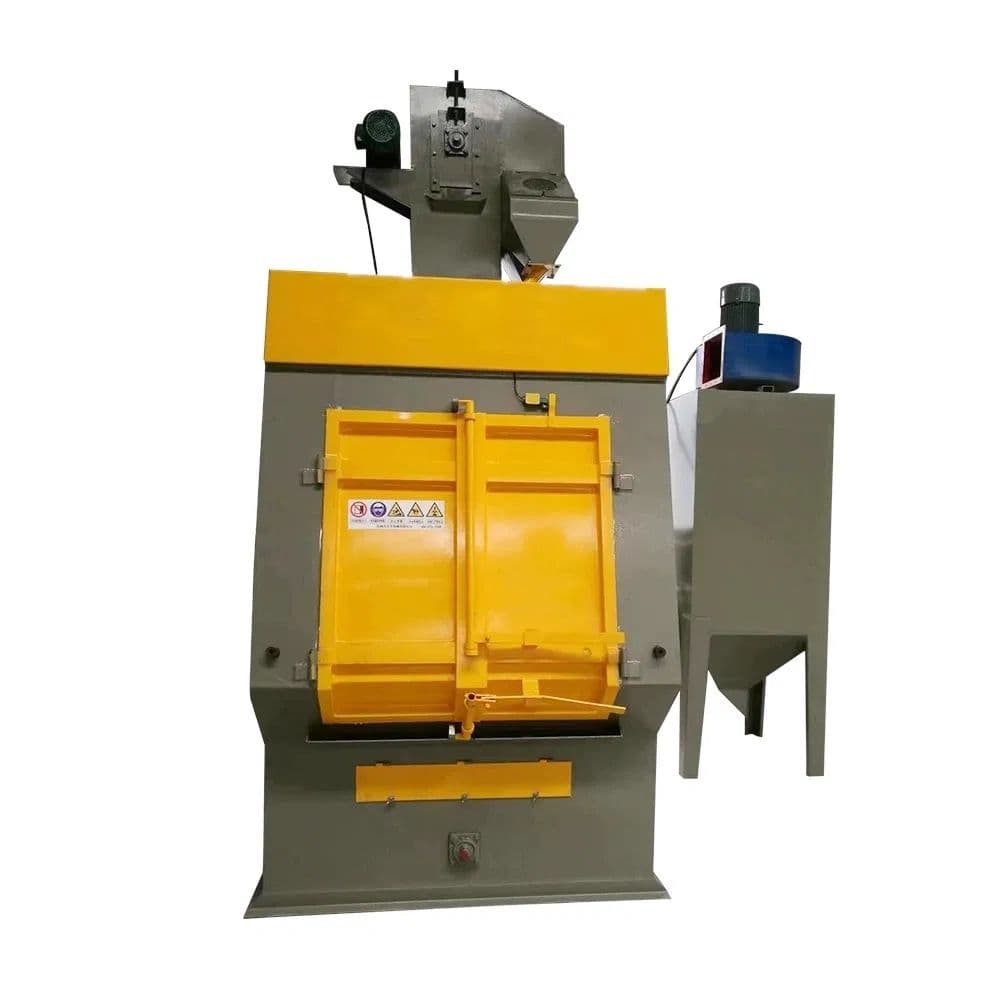
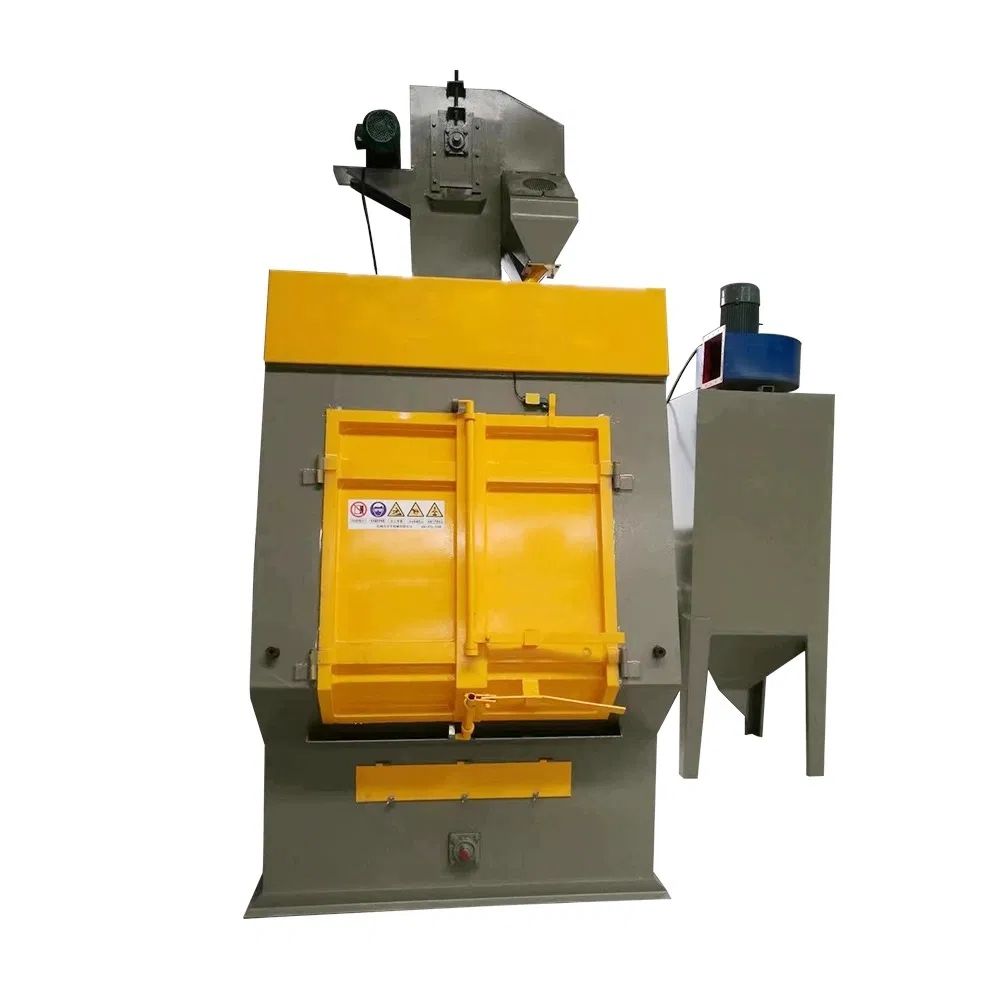
SIRDA Machinery builds tumble belt, roller conveyor, and hook type shot blasting machines; nozzle sizing, wear allowance, and inspection cadence are normally settled together with the machine, against your parts, media, and cycle time.