
Why your dust collector filter keeps loading up
A dust collector that loads up fast is a symptom, not a filter fault. Differential pressure, condensation, sticky dust, face velocity, media choice and pulse settings decide whether your bags keep their life or blind in months.
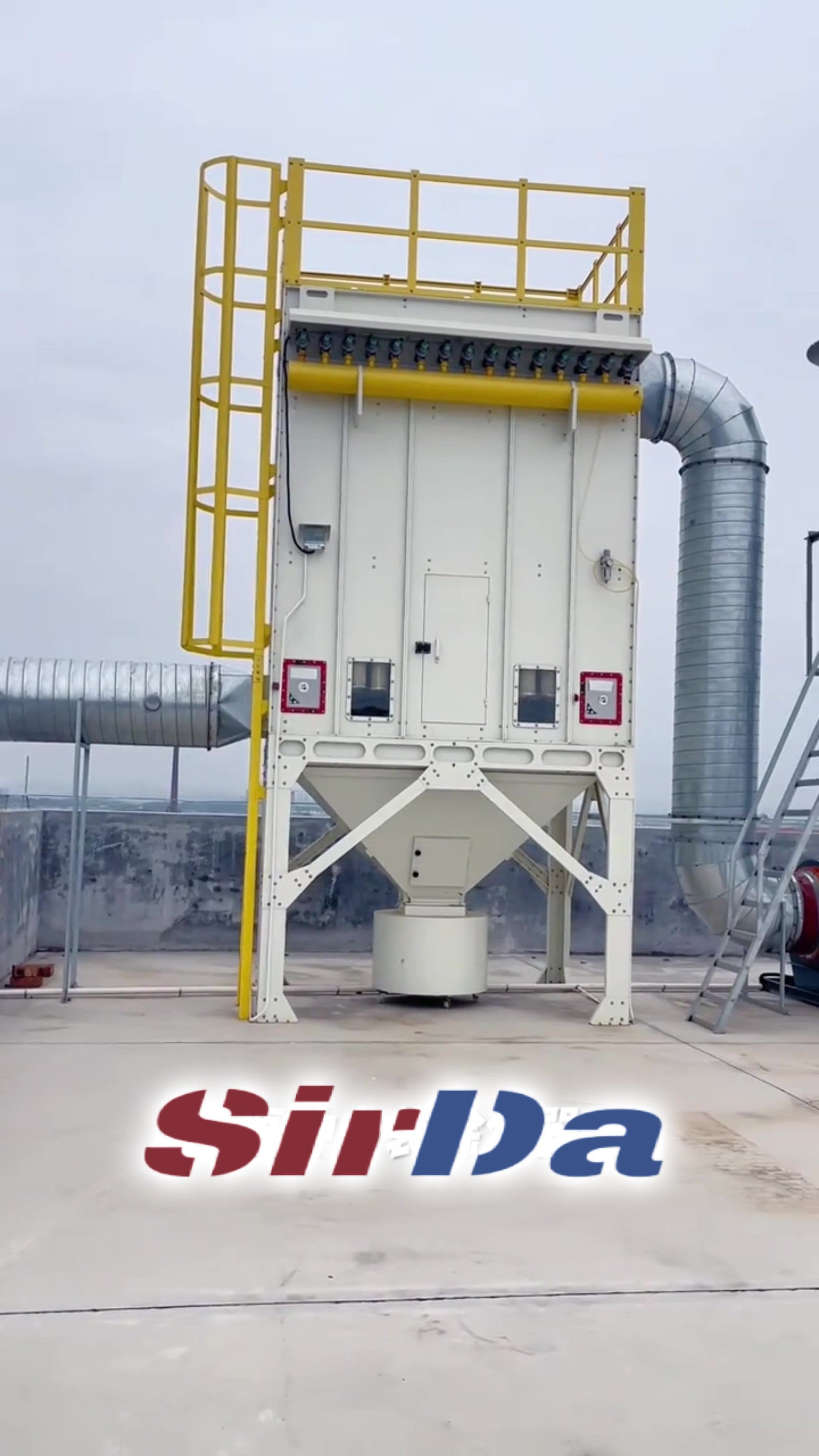
A collector that loads up faster than it should is almost never a filter problem on its own. It is a symptom, and the cause sits in the dust, the airflow, or the media specification, not the fabric. Replacing bags without working out which of the three has moved is why a fresh set blinds again within months.
What loading up actually means
Every fabric collector builds a dust cake on the filter surface, and a thin, even cake is what you want: it is the primary filtration barrier. Trouble starts when the cake stops being something a pulse can knock off.
The number that separates the two states is the differential pressure across the housing, between inlet and outlet plenums. A pulse-jet baghouse running normally sits between 2 and 4 inches water gauge, and most controllers trigger cleaning around 4 to 6. Above roughly 6 the system works against itself, and beyond 8 you can lose 20 to 35 percent of your design airflow. A steady climb over days is ordinary loading. A jump within minutes means something broke: a torn bag, a failed valve, or a plugged tap.
The distinction that gets missed most often is between dirty and blinded. A dirty bag carries a loose layer that releases cleanly and comes back within a minute of the next pulse. A blinded bag carries dust driven into the fabric or bonded into a hard crust. No amount of pulsing will restore it, and a longer pulse will not help. The real question is why the next set fails the same way.
The root causes, in the order they usually show up
- Condensation on the fabric. Dust becomes adhesive when it wets. Once the gas falls below the dew point, moisture condenses on the cold bag surface and turns the cake into a mud that pulse cleaning cannot shift. The fix is thermal: keep the gas 15 to 25 degrees above the dew point and insulate the housing.
- Oily or sticky dust. Oil vapour, resin, paint overspray and plastic powder adhere to the media by design. No cleaning cycle solves this, because the bond is chemical. Surface treatment is the answer: a PTFE or silicone coating, or a membrane laminate, cuts blinding incidents by 60 to 70 percent against untreated felt.
- Excessive or unbalanced airflow. If airflow per unit of filter area is too high, particles are driven into the fabric instead of being held on the surface as cake. A blocked inlet, a closed damper, or a collapsed duct does it differently: more flow through less filter area, and uneven loading. This is a sizing error no media fixes.
- Media specified for temperature only. A bag that survives the heat but is chemically wrong for the dust fails early.
- Abrasion from coarse carryover. Shot, spent media and broken pieces travelling with the airflow act like sandpaper on the clean side of the fabric, which is why a collector behind a blast machine needs a pre-separator.
The pattern is diagnostic. Heavy deposit at the top of the bags points to moisture in the compressed air or a pulse not reaching the upper rows. Heavy deposit at the bottom points to build-up in the hopper or re-entrainment from a leaking rotary valve. One row affected points at a specific pulse valve. Uniform loading points to condensation, excess airflow, or wrong media.
Media, air-to-cloth and pulse settings that keep filters alive
The most useful preventive step in a blast installation is to stop expecting the exhaust system to do the media separation job. Extracting spent abrasive fines with the ventilation air is no substitute for proper media recovery. A cyclone in front of the filter changes the picture: at 12 to 20 metres per second inlet velocity it captures 70 to 95 percent of everything above 10 microns and passes only the fines on. Air-to-cloth ratio governs loading speed. Cartridge collectors run between 1.0 and 1.8 CFM per square foot of media; baghouses between 2:1 and 5:1. The lower the ratio, the longer the cake stays cleanable and the less compressed air the cycle consumes. A ratio copied from a catalogue rather than measured on site is a likely cause.
Media has to match both temperature and chemistry. Polyester is the default for dry, non-corrosive dust up to 130 degrees Celsius. Aramid takes continuous service to 200 degrees and resists abrasion, the usual choice for shot-derived dust. PPS holds up to 190 degrees and resists acidic flue gas. PTFE and membrane laminates reach 260 degrees and suit fine, sticky or hygroscopic dust. Antistatic media is not optional where combustible dust is present. Exceeding a fibre's limit degrades the fabric quickly, but operating below the dew point is the more common mistake: condensation kills media well before heat does.
The blast setting and the collector are one decision. Cut wire shot leaves a different dust signature than broken glass bead, so the collector must be specified for the dust the machine makes.
The cleaning cycle is where the cost hides. Pulse pressure of 90 to 110 psi at the valve, for 50 to 150 milliseconds, is the working range for a modern pulse-jet unit. Each cleaning valve draws roughly 5 to 7 CFM of compressed air at 90 psi, which is where a badly tuned timer quietly triples your air consumption. Offline intervals typically run 10 to 30 minutes; on-line systems sequence rows every 30 to 90 seconds. Pulse too often and bag life drops sharply; pulse too rarely and the cake compacts until the collector chokes. Cartridge elements run 12 to 24 months, bags 18 to 36 months, but neither figure means much if the collector was undersized.
Reading the numbers that tell you it is time
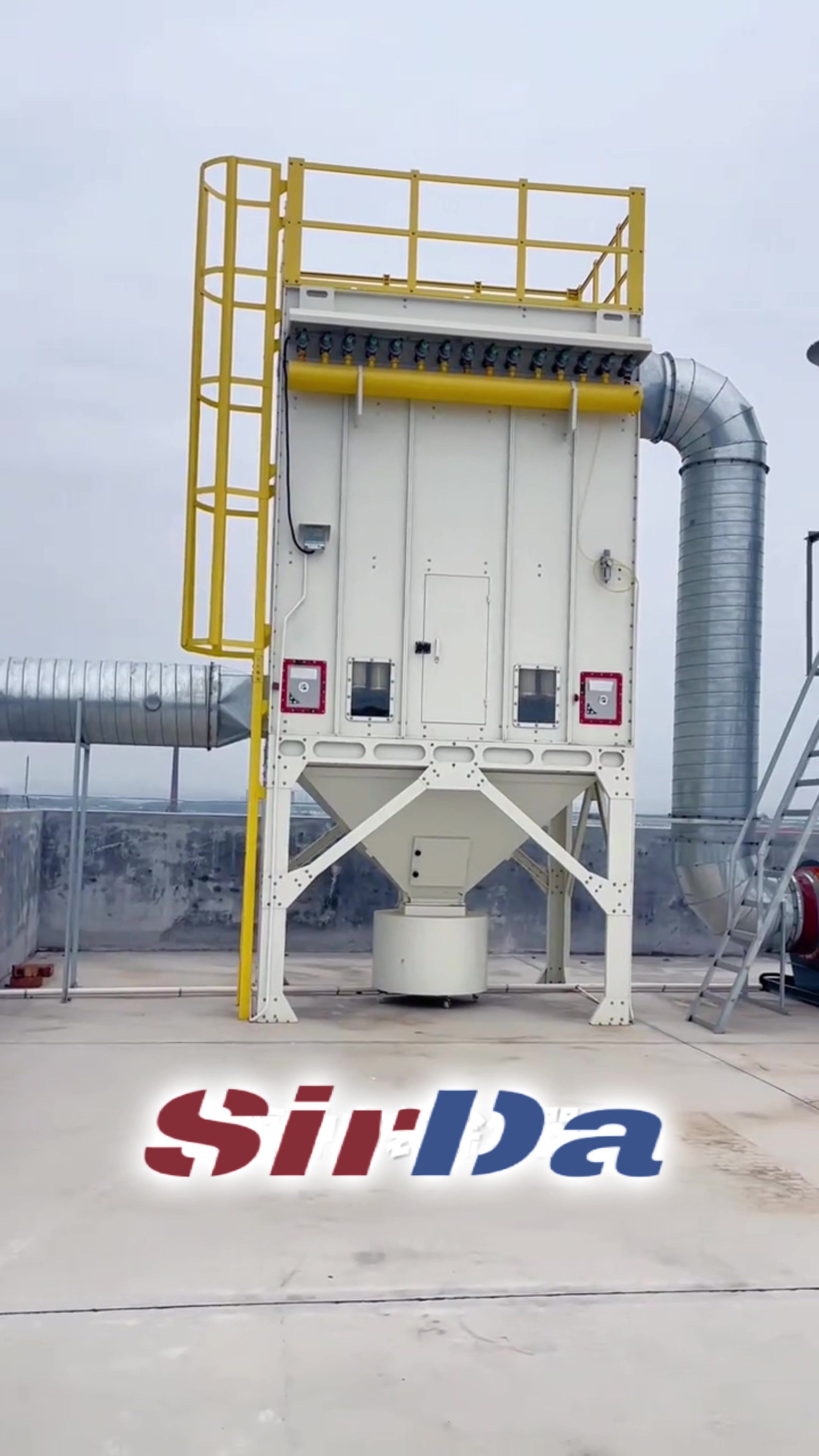
Before ordering media, take three readings. Differential pressure before and after a pulse tells you whether the cake releases. Compressed air pressure at the header tells you whether the pulse has the energy to do its job. And airflow, measured at the machine rather than read off the fan nameplate, tells you whether the air-to-cloth ratio is still the one you designed for.
If differential pressure stays high after a pulse that should have dropped it, the media is blinded. If pressure is high and airflow is also high, the collector is undersized. If pressure climbs while airflow falls and the pulse looks healthy on the gauge, suspect a plugged pressure tap, a leaking access door, or a hopper valve that has stopped discharging. If pressure drops sharply and the stack goes dusty, a bag has torn, and that matters for safety as well as output: a bypassed collector is an exposure problem.
The correct order of work is always the same: confirm the differential pressure and airflow numbers, identify which mechanism above is responsible, correct the process condition first, and only then decide whether the media needs changing. A collector configured for the dust it actually carries, with a pre-separator, a realistic air-to-cloth ratio and a pulse cycle sized to the load, keeps its filters on the schedule the datasheet claims.