Shot Blasting Technology: What Actually Changed
Separating real advances in shot blasting from marketing language: wheel control, abrasive recovery, dust handling and automation.
Most of what is sold as innovation in shot blasting is a refinement of three things that have not changed since the process was invented: accelerate abrasive, direct it at the workpiece, and get it back clean. The genuine advances of the last decade are in how precisely those three steps are controlled, and in how much of the operator's judgement has been moved into the machine.
The wheel is still the centre of the process
A centrifugal blast wheel throws abrasive at 60–80 m/s in the published data for this class of equipment. That number has barely moved, because the energy needed to clean steel is a property of the material, not of the decade. What changed is control: wheel speed on a variable frequency drive, more accurate curtain positioning, and better wear geometry that keeps the pattern stable as the blades wear.
The practical consequence is that a modern wheel running slightly slower with an accurately aimed curtain often cleans better than a faster wheel aimed by eye. Pattern alignment, not headline power, is the first thing to check when cleaning rate falls.
Abrasive recovery has improved more than the wheel
The separator is where most machines lose performance, and it is where the biggest real improvements sit. Better airwash geometry, adjustable curtains and full-width magnetic separation mean fines leave the circuit instead of circulating. That directly reduces dust load, improves visibility inside the cabinet, and stabilises the profile.
If you are comparing two machines on price, compare their separation. A machine that recovers clean abrasive will out-clean a more powerful machine that does not, on the same media budget.
Dust collection became a design input, not an accessory
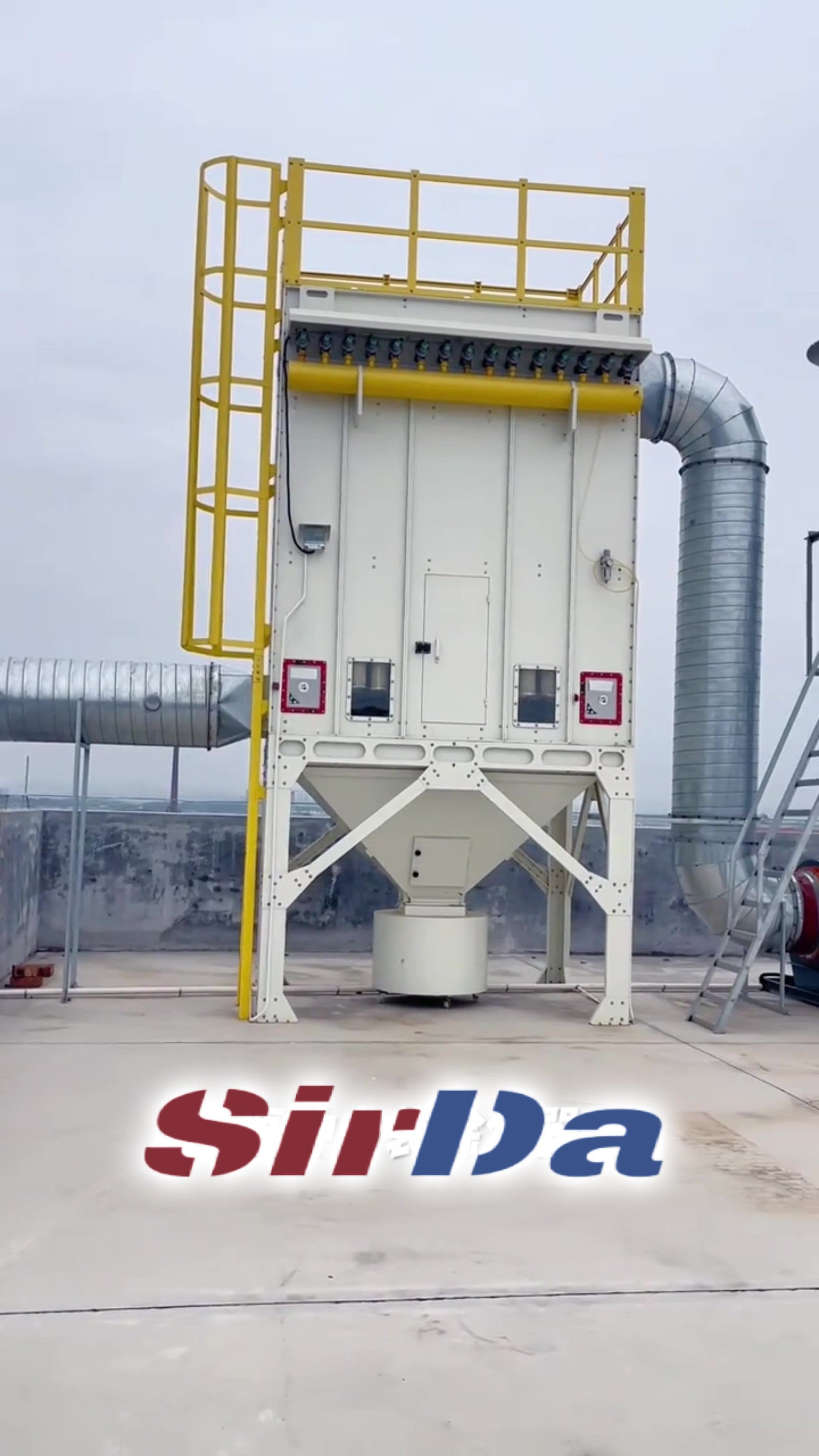
Cartridge collectors with pulse cleaning and differential-pressure monitoring are now standard on serious installations. This matters for two reasons. First, the collector is the only path by which fines leave the system, so its condition sets the working mix. Second, combustible-dust rules in most jurisdictions now require documented control of dust accumulation and ignition sources.
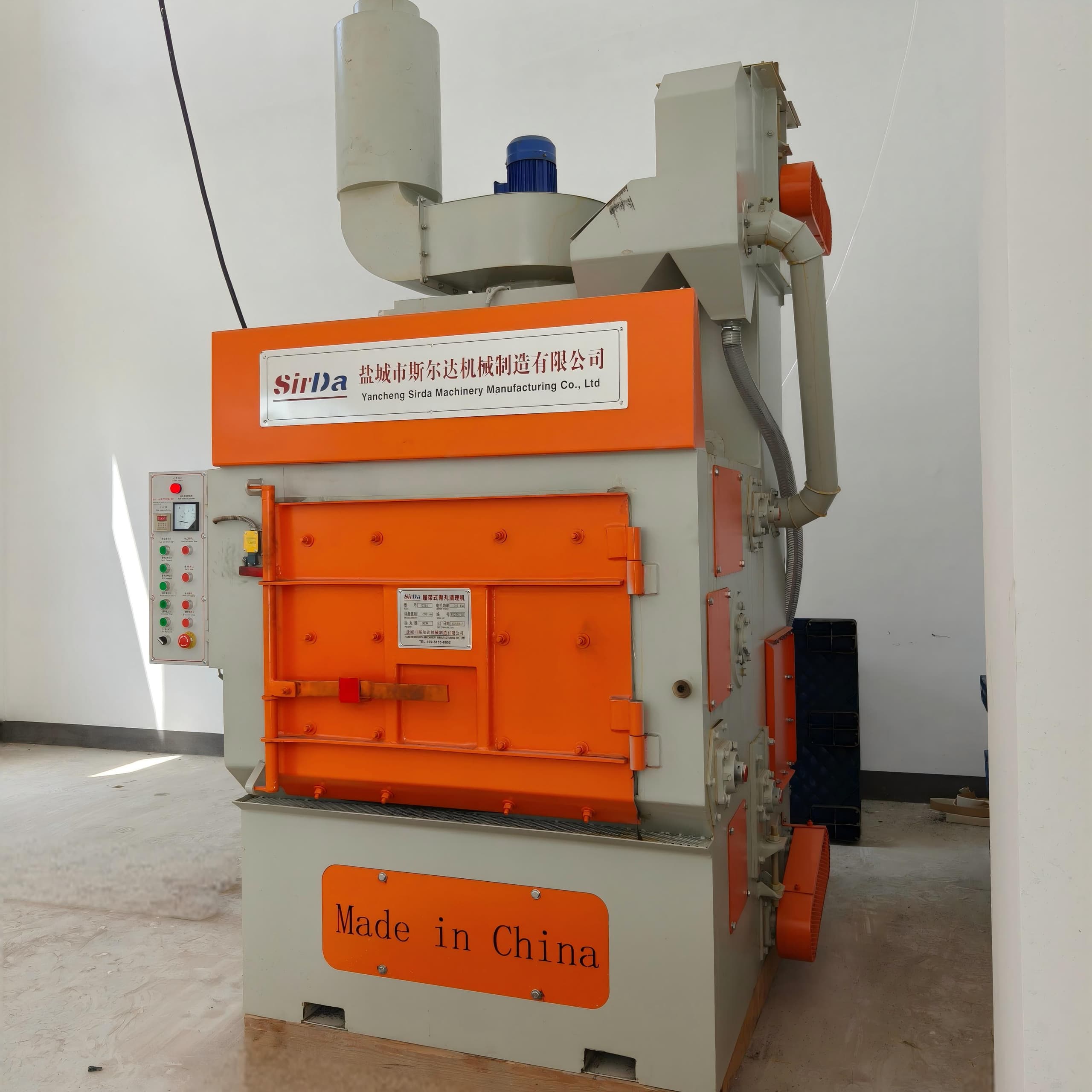
Machines in our range publish their airflow as a specification rather than a footnote — for example 5,000–16,000 m³/h on the hanger type range and 12,000 m³/h on the dust collector of the mesh belt machine. That is the right way to compare: airflow and filter area, not "powerful extraction".
Automation moved from the machine to the line
Standalone blasting is increasingly rare in new plants. The machine is now a station in a line, and the interesting engineering is in the interfaces: conveyor speed synchronised with the upstream process, part tracking that selects a recipe, and interlocks that stop the wheels before a jam becomes a wrecked set of blades.
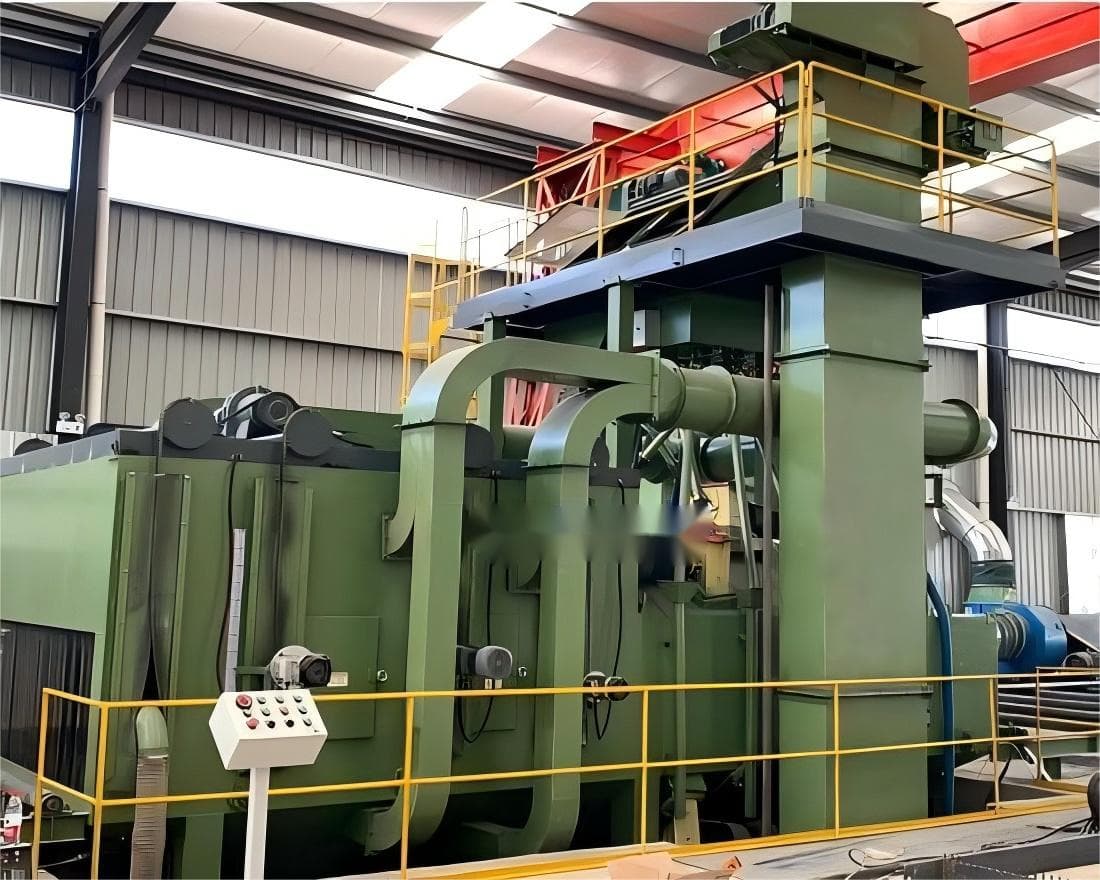
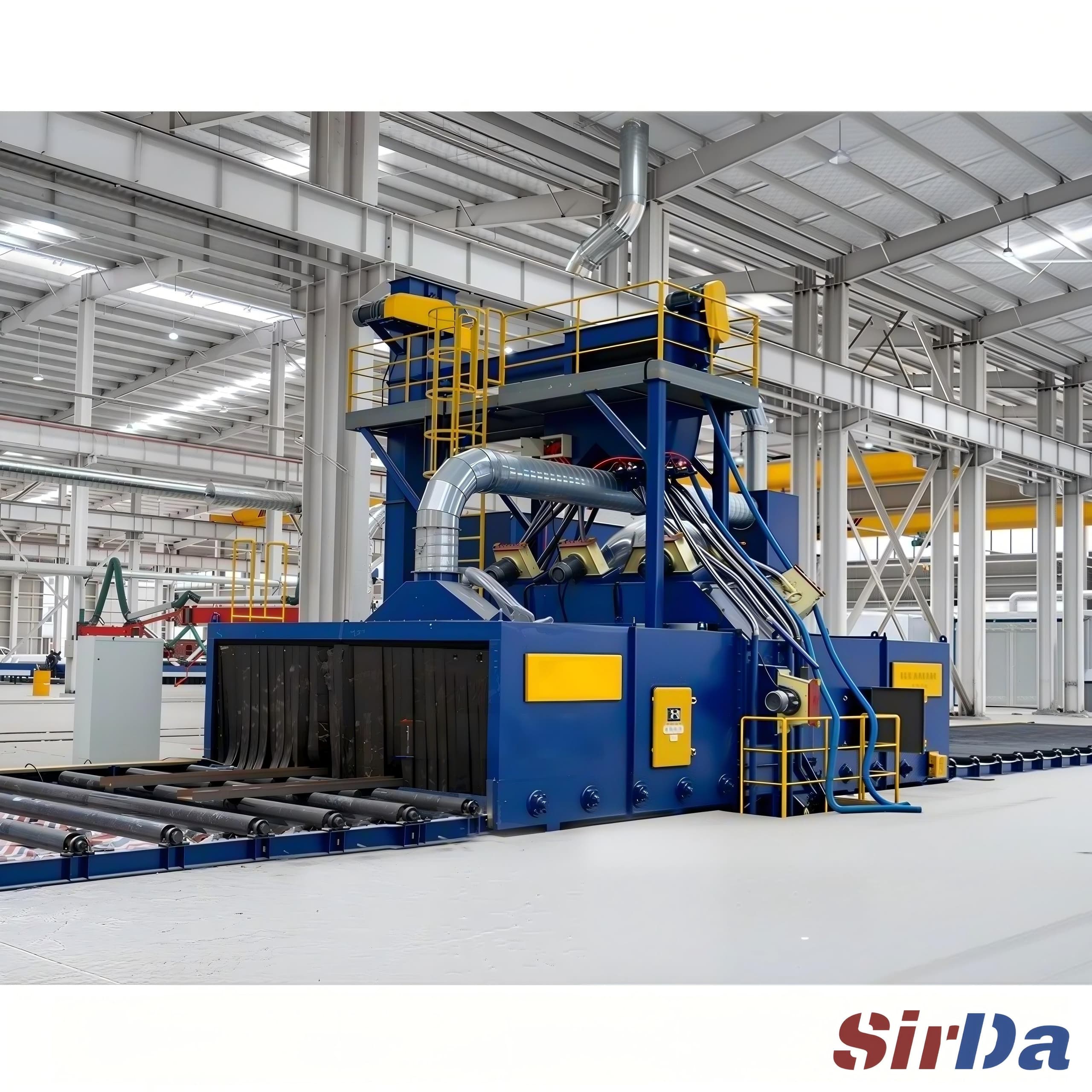
The roller conveyor machine is the clearest example. Its published throughput of 2.0–5.0 t/h at 4 × 11 kW only means something when the conveyor is matched to the fabrication line that feeds it. Buy the blasting station without that calculation and the line runs at the speed of its slowest handoff.
Monitoring: useful, but not yet predictive
Sensors now report wheel current, vibration, bearing temperature, abrasive flow and differential pressure. The value is in trend detection, not in prediction. A rising wheel current at constant feed usually means the curtain is worn or the media mix has coarsened; a falling current usually means a starved wheel or a broken feed pipe. Both are actionable within a shift.
What monitoring cannot do is tell you the surface is correct. Only a cleaned test piece, a comparator and a profile gauge do that. Any vendor claiming otherwise is selling software, not process control.
What did not change
Three fundamentals remain exactly as they were:
- Coverage must be verified, not assumed. Shadows behind ribs, inside hollow sections and on the far side of a part are the same problem they were fifty years ago.
- The working mix controls the result. No control system compensates for a separator that is passing fines.
- Maintenance determines the second year of performance. Blades, liners and impellers wear; a machine that is easy to inspect is worth more than one with a better brochure.
Wear parts became a design feature
Older machines treated blades and liners as consumables to be replaced when they failed. Modern designs make them accessible, keyed and matched, so a blade set can be changed without disturbing wheel balance and a liner can be replaced without cutting and re-welding. That change matters more than it sounds: the cost of a wear part is rarely the part itself, it is the production time lost reaching it.
Look at how a machine is assembled before judging its specifications. If replacing a set of blades requires removing the wheel from the cabinet, the machine will be run past its wear limits because the maintenance window never arrives. If the liners are bolted from inside with clear access, the machine will be maintained.
The same logic applies to the control cage and the distributor. These are small parts that move the blast pattern, and on a well-designed machine they are inspected and replaced as routine items. On a poorly designed one they are buried behind the wheel, and pattern drift is diagnosed only after a coating failure.
Digital records replaced paper logbooks
Machine controls now store recipes, cycle counts and alarm history, and some export them to a plant network. The operational value is not the dashboard; it is the ability to answer a question months later. Which recipe ran on the batch that failed inspection? When was the last blade change, and how many hours has the set run since?
Without that record, every quality investigation restarts from somebody's recollection. With it, a pattern of drift becomes visible before it reaches a customer.
The limit is data quality. A control system records what it is told, and if operators override the recipe to clear a backlog, the record documents the override rather than the intention. Better record-keeping only helps where the process rules are enforced by the machine.
Retrofits kept older machines competitive
Not every improvement requires a new machine. Variable-frequency drives, replacement separators, cartridge collectors and modern controls are routinely fitted to existing cabinets, and the result is often most of the performance at a fraction of the capital. The constraint is the cabinet itself: if the structure, the wheel housing and the access are sound, a retrofit is worth costing.
The decision usually comes down to downtime. A retrofit happens inside an existing production calendar, while a replacement requires a shutdown and a foundation. Where the existing machine sits in a line that cannot stop, the retrofit is frequently the only option that gets approved.
How to judge a claim
When a supplier presents a new machine, ask four questions. What is the wheel diameter and the measured throw velocity? What is the separation method and how are fines removed? What is the airflow and filter area? And what is the documented maintenance interval for wear parts? Answers to those four predict performance far better than any efficiency percentage.
If you are evaluating a replacement or a new line, our team can review the workpiece drawings, the required ISO 8501-1 grade and the line takt time against the published machine specifications and tell you which configuration fits. The project cases show how those decisions played out in real installations.