Q69
Roller Conveyor
Steel plates, profiles and fabricated structures
Explore machine
Home / Machines / Roller Conveyor Shot Blasting Machine for Square Tube and Section Steel
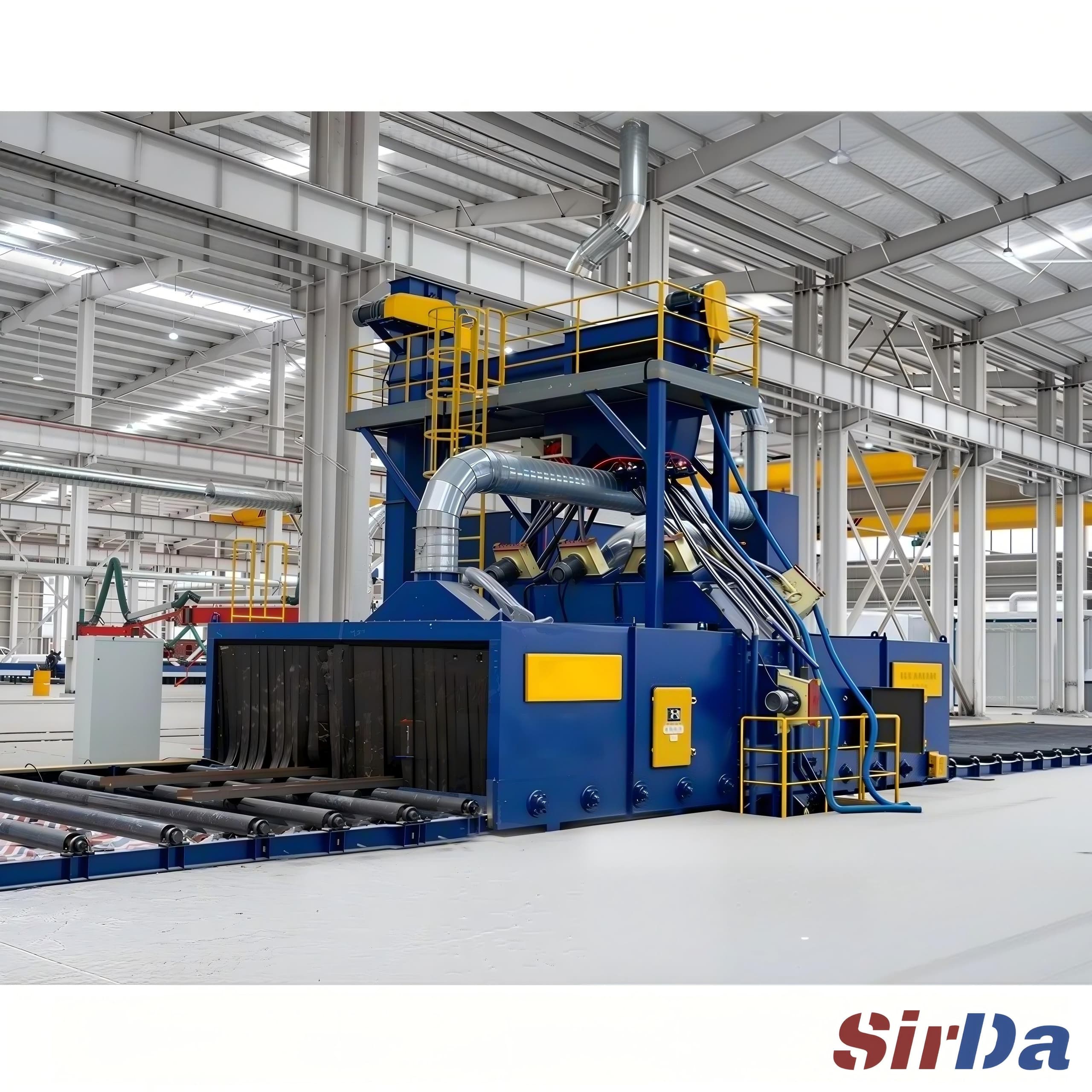
A roller conveyor shot blasting machine that carries square and rectangular hollow section through the blast zone on driven rollers while friction turns each piece about its own axis, so all four faces and the corners are cleaned to the same standard and weld slag is broken in the same pass instead of by hand.
Read product details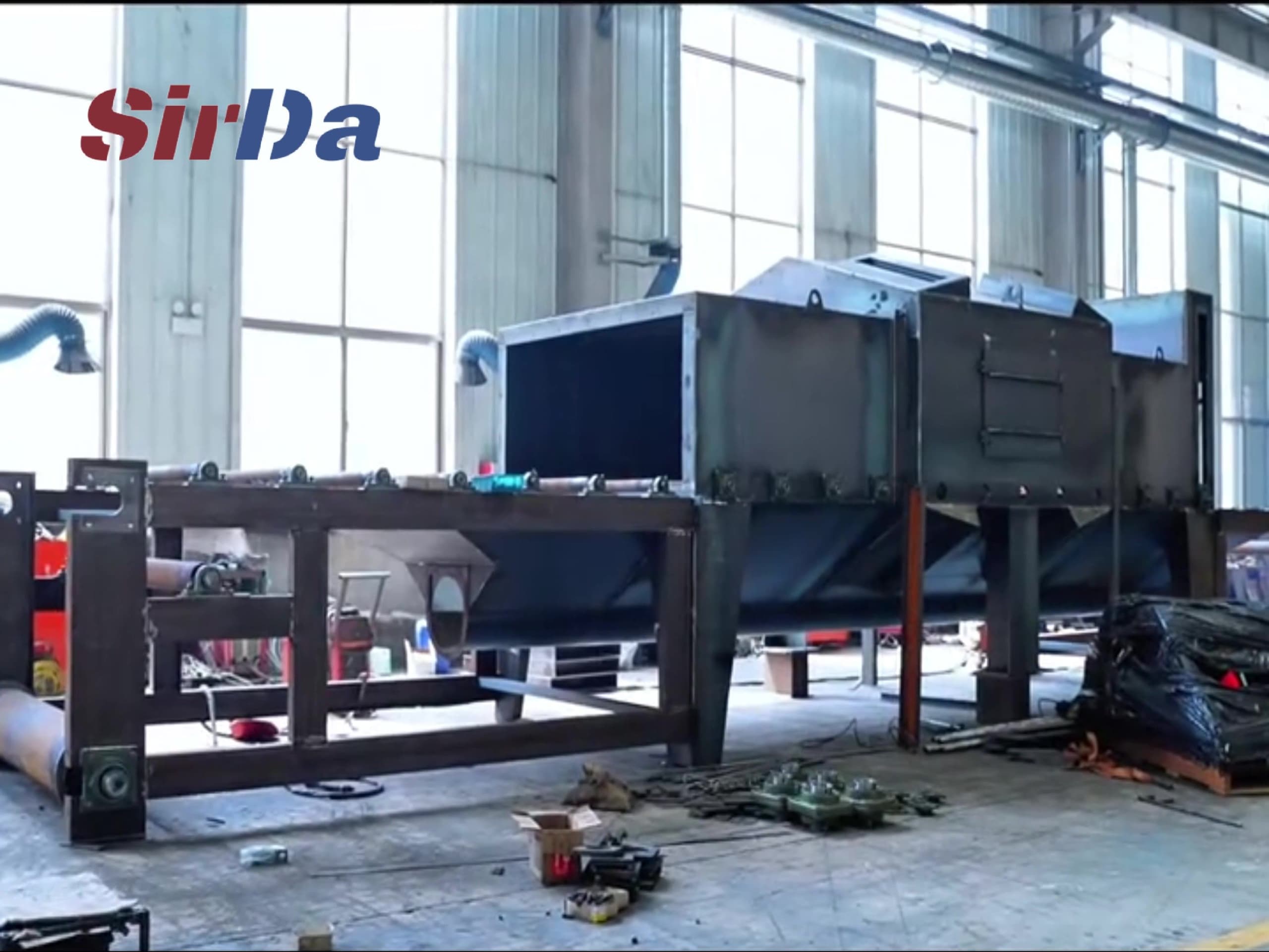
Structural section arrives at the shot blasting line with two distinct things on its surface, and they respond to abrasive in completely different ways. The first is mill scale: the oxide skin left by the rolling mill, friable, loosely attached, wanting to come off. The second is weld slag and spatter: flux residue and re-melted metal that has flowed out of the joint, vitrified, often fused into the parent metal and standing proud of the surface as a hard bead.
Treating both with one setting is a compromise that loses on both sides. Blast hard enough to fracture a vitrified slag bead and the same impact drives abrasive into soft steel and, on a thin-walled section, puts a dent in the wall behind it. Blast gently enough to protect the wall and the slag survives as a hard ridge that the coating later peels away from — a defect that shows up weeks later, far from the line that caused it.
The practical consequence is that a section line has to be specified around the weld, not around the flat. Where the seam sits, how wide it is, whether it has already been ground flush, how much of the bead stands above the profile — those decide whether the machine can be tuned once for the whole section or needs a defined second treatment at the weld zone.
A square tube has four faces and four corners. Lay it on a fixed table under a fixed blast source and the stream reaches the top face while quality falls apart at the corners, which are the hardest place to clean and the first place a fabricator notices. The cure is not more blast pressure at the corner. It is turning the piece.
On a roller conveyor the workpiece lies on driven rollers that carry it forward, and friction from those rollers rotates it about its own longitudinal axis. As the piece turns, each face and each corner passes through the jet in turn, so the pattern the turbine draws is repeated around the full perimeter instead of being concentrated on the top. The conveyor then carries two duties: moving the workpiece through the blast zone at a controlled rate, and setting the rotation rate that governs coverage.
Coverage therefore becomes a relationship between three things that cannot be tuned independently — how much of the perimeter a turbine sweeps in one pass, how fast the conveyor advances new work into that sweep, and how fast each piece turns through its own arc. Change section length and the dwell time changes with it. Change wall thickness and the impact the surface can tolerate changes with it. The machine is specified when all three are consistent with the same acceptance standard.
This machine suits sections that are straight, regular and open to a full circumferential blast: square and rectangular hollow section, structural tube, flat and angle. It does not solve parts with closed internal cavities that cannot be reached from outside, and it does not replace grinding where a weld has to be brought flush to a defined profile before fabrication continues.
On a thin-walled section the same impact that breaks slag will mark the wall if the combination is not reviewed, and on a coated or galvanised product the specification may call for a gentler treatment than bare mill scale requires. Those are specification decisions rather than machine options.
Configuration follows the sections actually being processed: size range, wall thickness, longest piece, weld geometry and how far the bead stands proud, how much removal is required, and what the section has to look like before the next step — coating, galvanising or welding. Those inputs set the conveyor layout, the turbine arrangement and the media, and they are settled before equipment is specified rather than after.
Share a photo or drawing, material, maximum dimensions and expected output. These details help us review a suitable configuration.
Send project requirementsQ69
Steel plates, profiles and fabricated structures
Explore machine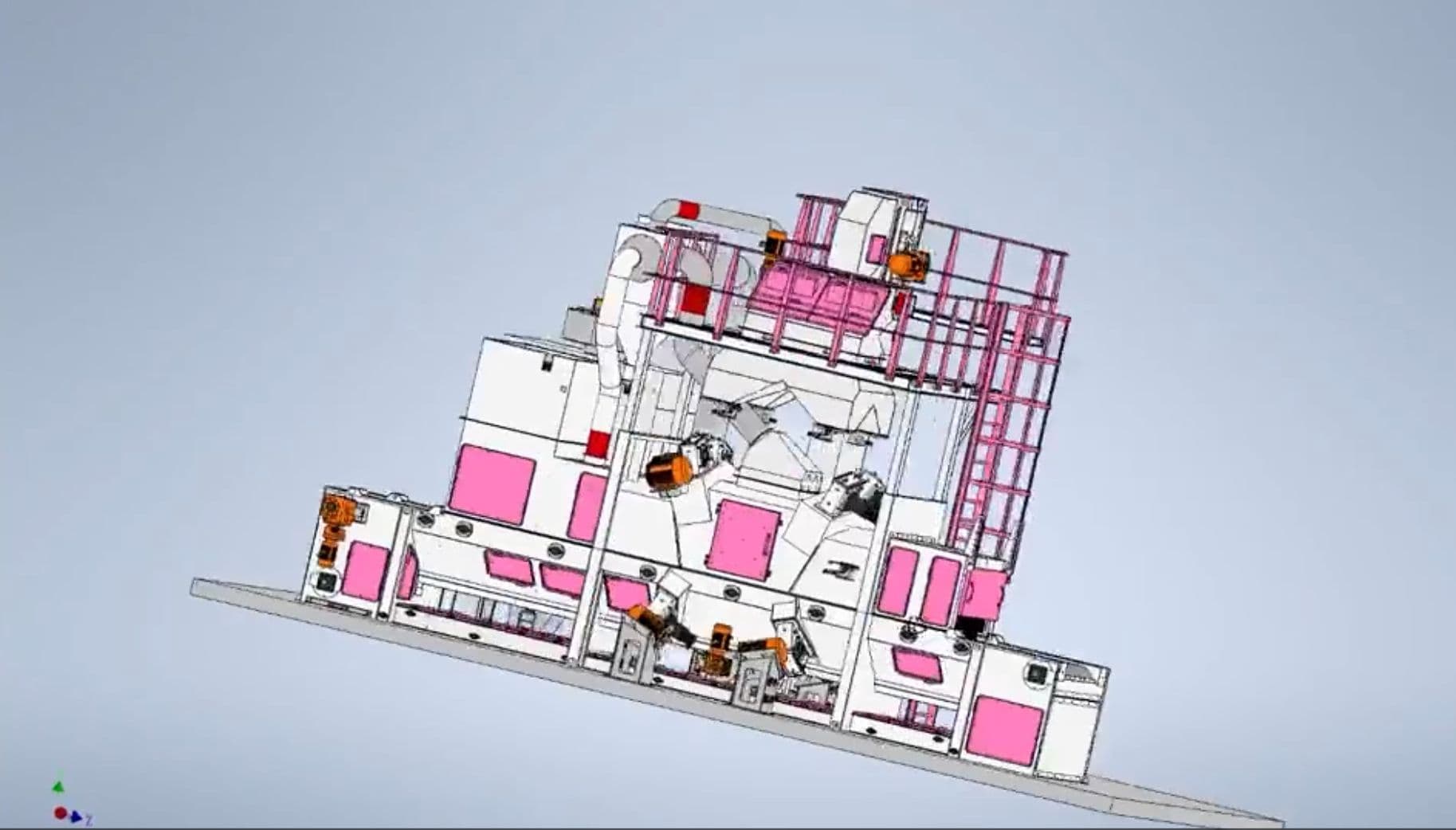
Continuous flow
Automatic mesh belt shot blasting machine for high-volume small steel parts such as cuplock scaffolding couplers and paver components. The continuous in/out flow removes the per-batch load/unload dwell that caps batch machines, so throughput tracks belt speed instead of batch count.
Explore machine
Continuous flow
A continuous through-type shot blasting line cleans structural sections, tubes and plates while they keep moving. This page explains how blast wheel placement, media recycling and dust routing are configured around the workpiece cross-section.
Explore machine