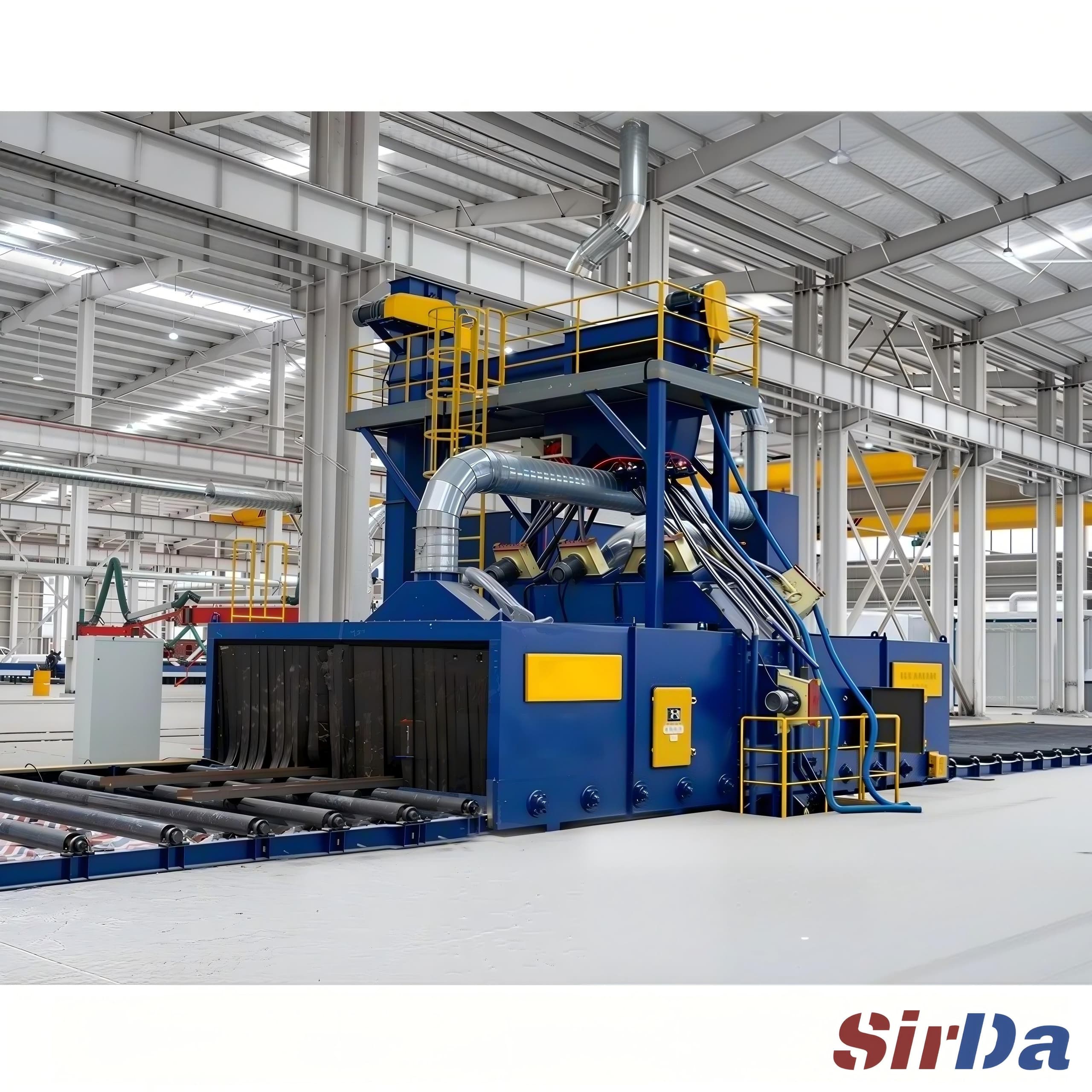
Q69
Roller Conveyor
Steel plates, profiles and fabricated structures
Explore machine
Home / Machines / Wire Mesh Belt Shot Blasting Machine for Heat-Treated Steel Parts
A continuous wire mesh belt shot blasting machine that removes oxide, mill scale and heat-treatment residue from steel parts while the wire mesh geometry lets abrasive reach three sides and lets debris fall clear of the workpiece, for foundries, forging shops and heat-treatment lines.
Read product details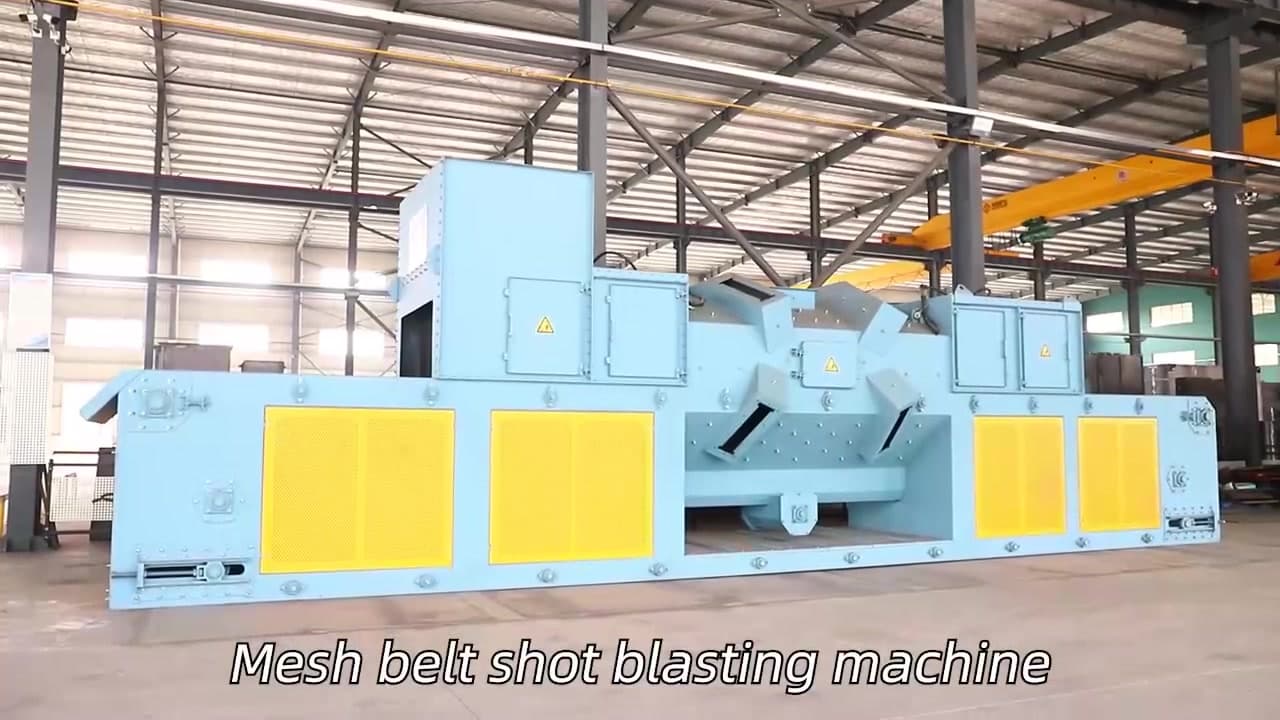
A part that has just come out of a heat treatment line carries two layers that look similar and behave completely differently. There is the oxide — mill scale from rolling or forging, heat-treat scale, sometimes a coloured temper film — and there is the base metal underneath, which on many heat-treated components has been deliberately hardened to a specification. The oxide is friable and wants to come off. The base is not oxide at all; it is the deliverable.
This is where blast intensity stops being a single number. A treatment that is aggressive enough to remove stubborn double-scale in one pass can, on the same part, drive abrasive into the surface and carry that damage forward into subsequent coating, plating or welding steps. The objective is never maximum removal. It is the lowest intensity that removes the layer you specified, with enough margin that the result is repeatable from the first part to the thousandth.
Two workpiece properties drive almost every configuration decision, and both need to be established before equipment is specified rather than after:
A wire mesh belt is not a solid belt with holes punched in it, and the difference matters more than it sounds. The belt is itself the conveyor and the workpiece carrier, and the open mesh is a working surface rather than a structural one.
Abrasive reaches three sides instead of one. On a covered belt, contact is essentially two-sided at best, because the belt physically separates the underside of the workpiece from the blast stream. An open mesh allows the projectile stream to pass through and reach the bottom face while the part sits on the belt. For a heat-treated part with scale on both faces — which is common when only one side is masked or fixtured during treatment — that is the difference between one pass and two.
Debris falls clear of the part. As scale breaks away, an open mesh lets it drop back into the blast chamber instead of staying trapped between the workpiece and the belt surface. Retained scale is abrasive: it keeps moving across the part while the belt runs, and it works at exactly the point where the operator is trying to avoid unintended contact. Clearing debris away from the workpiece removes that uncontrolled second process.
Small parts stay in place without being clamped. The mesh supports the part across its whole footprint while giving it no closed surface to slide on. That suits the light, small, high-count components that arrive from heat-treatment lines, and it removes the fixturing that would otherwise shadow the very surfaces you are trying to clean.
The part can be turned, and it can roll. Nothing about the mesh prevents a workpiece from rotating slightly as the belt advances. That degree of freedom is useful for elongated or asymmetric parts, which can be oriented so that the blast stream meets the surface at a useful angle rather than grazing it.
A wire mesh belt is built around parts that are stable enough to be carried by a mesh and light enough not to load it heavily. It is the wrong starting point when parts are heavy enough that belt loading has to be engineered in detail, when the geometry is deeply recessed and shadowing dominates, or when the production volume is too low to justify a continuous cell and batch handling would serve better.
Because those limits move the design rather than the price, we confirm the following before anything is specified. None of the figures we work from are invented — they are read from your parts and your process:
Send us a drawing or a photograph of a finished part together with the acceptance standard it has to meet, and we will tell you plainly whether this configuration is right for it, or whether a different one is.
Share a photo or drawing, material, maximum dimensions and expected output. These details help us review a suitable configuration.
Send project requirementsQ69
Steel plates, profiles and fabricated structures
Explore machine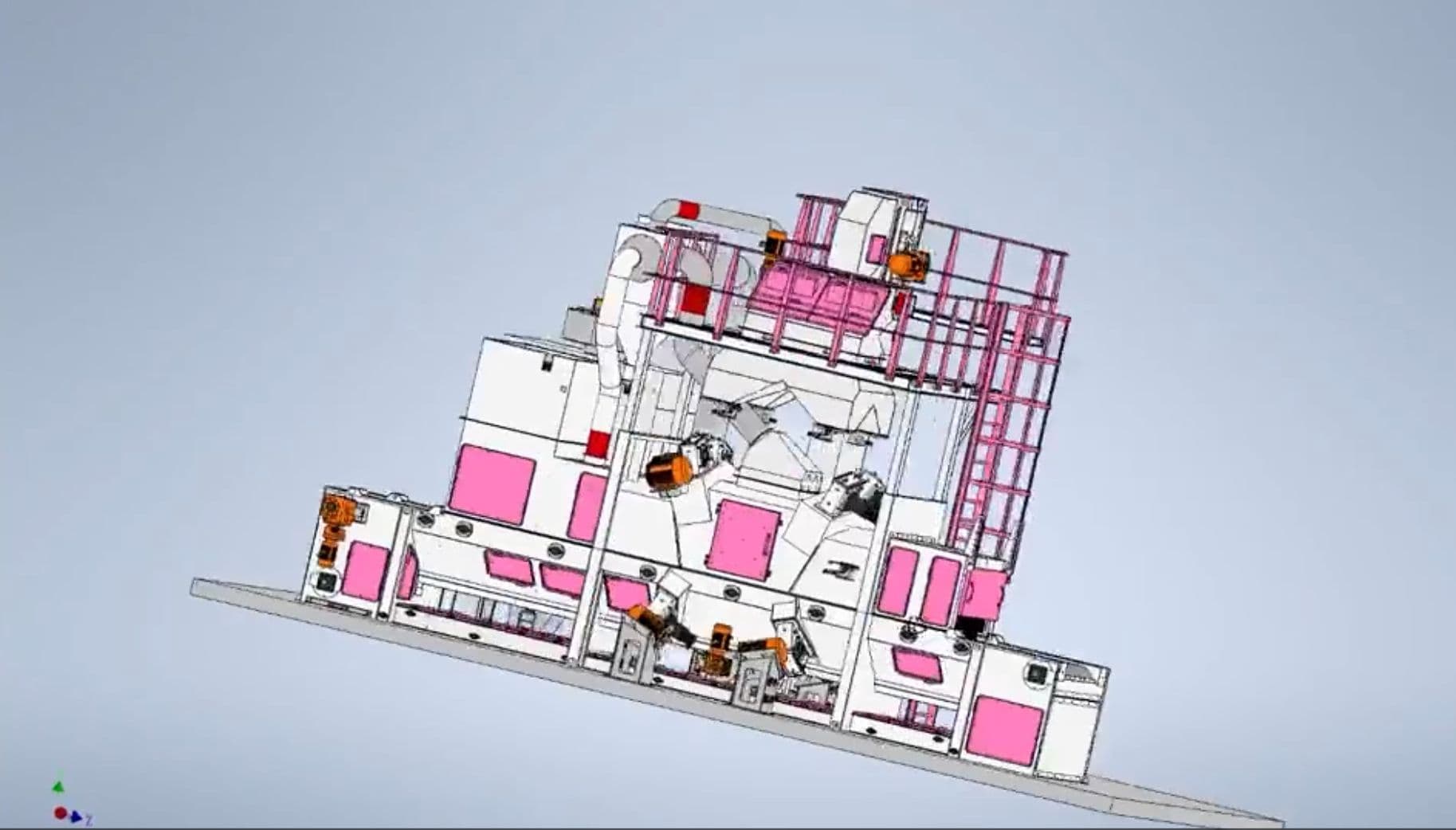
Continuous flow
Automatic mesh belt shot blasting machine for high-volume small steel parts such as cuplock scaffolding couplers and paver components. The continuous in/out flow removes the per-batch load/unload dwell that caps batch machines, so throughput tracks belt speed instead of batch count.
Explore machine
Continuous flow
A continuous through-type shot blasting line cleans structural sections, tubes and plates while they keep moving. This page explains how blast wheel placement, media recycling and dust routing are configured around the workpiece cross-section.
Explore machine