Blast Wheel Blades, Liners and Wear Part Maintenance
Which parts wear first, how to read wear as a process signal, and how maintenance intervals should be set from measurement rather than habit.
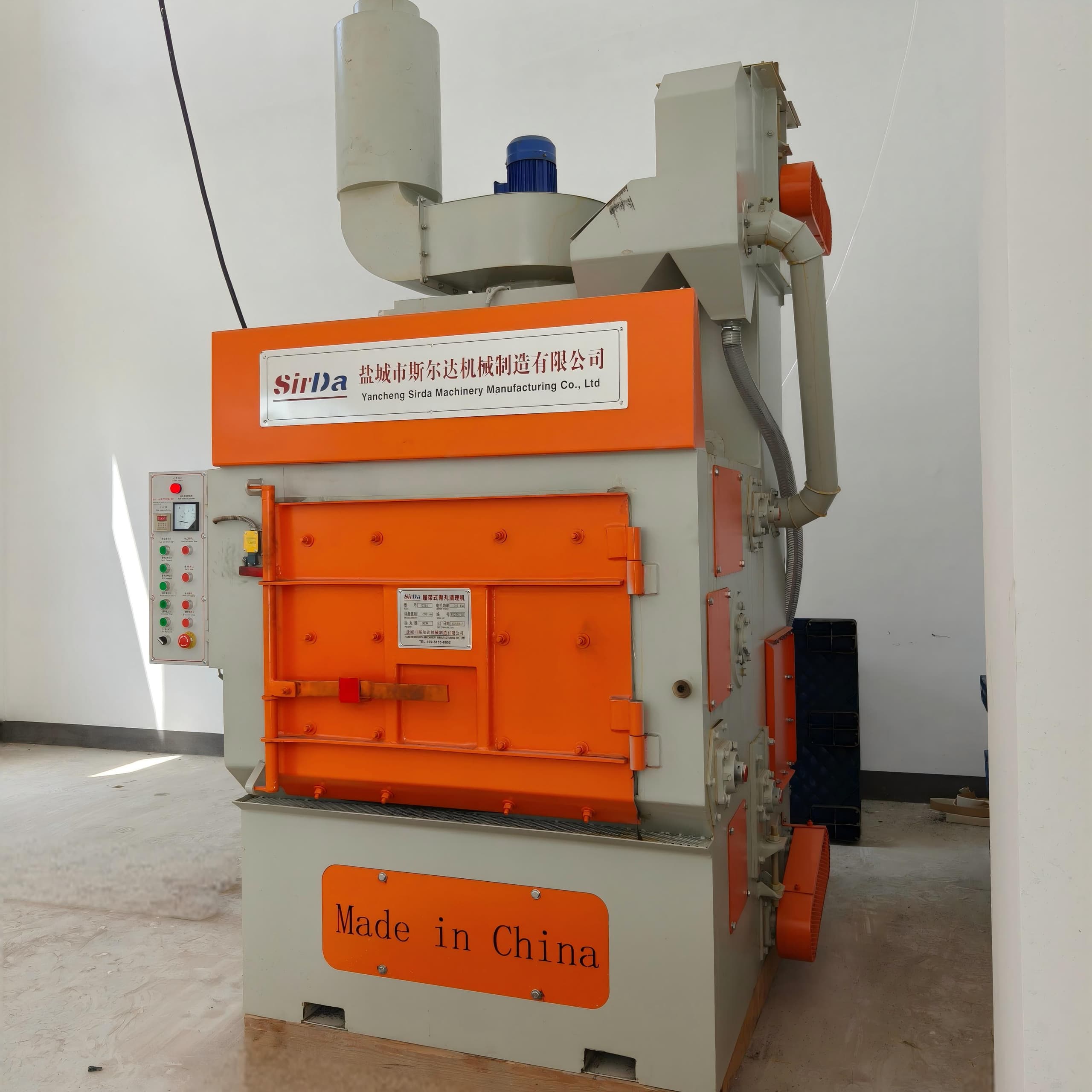
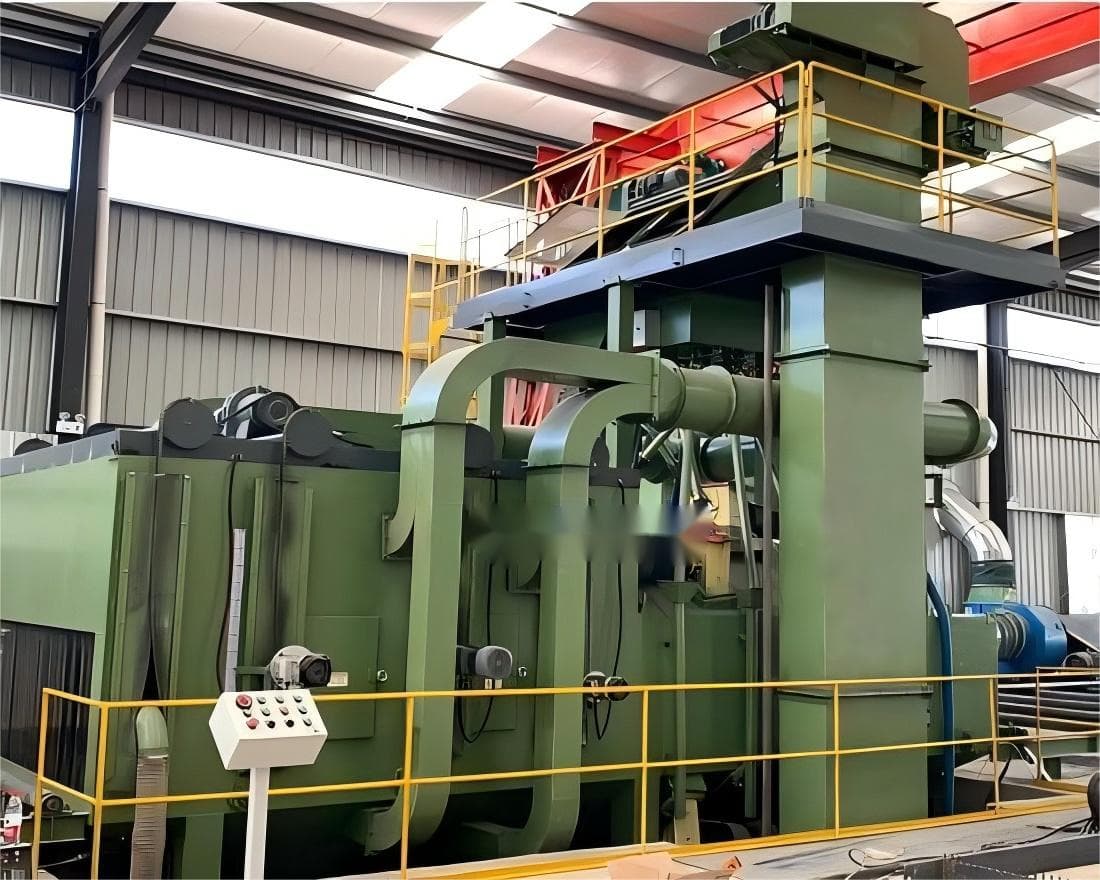
Wear parts are usually treated as a consumable line in the budget and a reactive task in the schedule. That is backwards. In a shot blasting machine the wear pattern is the most direct process feedback available: it tells you whether the abrasive is right, whether the separator is working, whether the wheel is balanced and whether the blast pattern is still where it should be.
What actually wears
The wear surfaces fall into four groups.
Wheel parts. Blades, the control cage, the distributor and the impeller wear from abrasive acceleration. Blade wear changes the exit velocity and the spread of the pattern.
Chamber liners. Top, side and bottom liners absorb the impact of abrasive that has already done its work. Liner wear is normal and predictable; uneven liner wear indicates a pattern problem.
Material handling parts. Tumble belts, mesh belts, rollers, hooks and hangers wear from a combination of abrasion and mechanical load. Their condition affects part movement and therefore exposure consistency.
Recovery and separation parts. Screw conveyors, bucket elevators, separators and ducting wear from continuous abrasive flow. Wear here is invisible until it changes the working mix.
Blades: the highest-leverage wear part
Blades are the part most worth measuring. As a blade wears, its profile changes, the abrasive leaves the wheel at a different angle and the blast pattern shifts and widens.
The visible symptom is usually described as "the machine got weaker". Profile drops, cleaning slows, and the operator compensates with conveyor speed or more abrasive flow. Both make the real problem worse.
The correct response is to inspect the blade set, not to adjust the process. Blades are replaced as a set, because mixing a new blade with worn ones unbalances the wheel and produces an uneven pattern.
Wheel balance and vibration
An unbalanced wheel produces vibration, accelerated bearing wear, and a pattern that moves. Media that has entered the wheel incorrectly, a damaged blade, or a blade set fitted without attention to mass matching will all show up as vibration.
Vibration monitoring on the wheel bearing is one of the cheapest predictive tools available. A baseline reading taken when the wheel is in good condition turns an abstract concern into a trend line, and a rising trend gives warning before a failure that damages the wheel housing.
Control cage and distributor
The control cage meters abrasive into the wheel and sets the point at which it is released. Wear at the cage opening changes the feed rate and the release point, which moves the hot spot of the blast pattern.
A pattern that has drifted along the work surface, or a hot spot that is now eroding one liner faster than the others, often traces back to the cage. Inspection should include the cage opening dimensions, not just a visual check for cracks.
Liners: reading the pattern
Liners are designed to be replaced. The information they carry is in the distribution of wear.
Even wear across a liner set means the pattern is centred and the machine is working as designed. Heavy wear in one area means the pattern has moved, and the cause is upstream: cage, blades, wheel position or abrasive flow. Replacing liners without correcting the cause simply repeats the wear.
Liner thickness measurement at fixed points, recorded on a schedule, gives a replacement forecast and a pattern trend at the same time.
Belts, rollers and hangers
A tumble belt machine depends on the belt turning the load over. A worn or torn belt, or a belt with material caught under it, stops the tumbling action and the parts at the bottom of the batch are under-blasted. Belt condition is therefore a quality variable, not just a maintenance item.
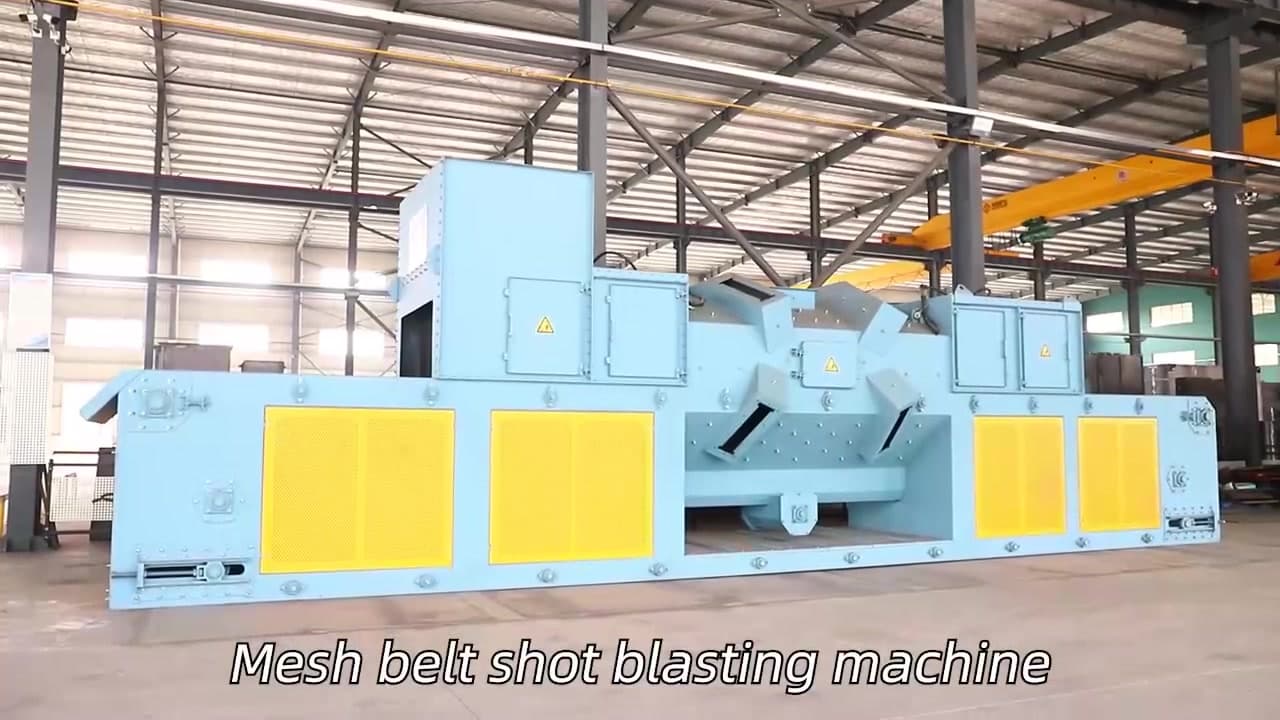
On a mesh belt machine, the belt carries parts through the blast zone. Stretched or damaged mesh changes part position and can allow small parts to fall through. Tracking and tension checks belong in the routine.
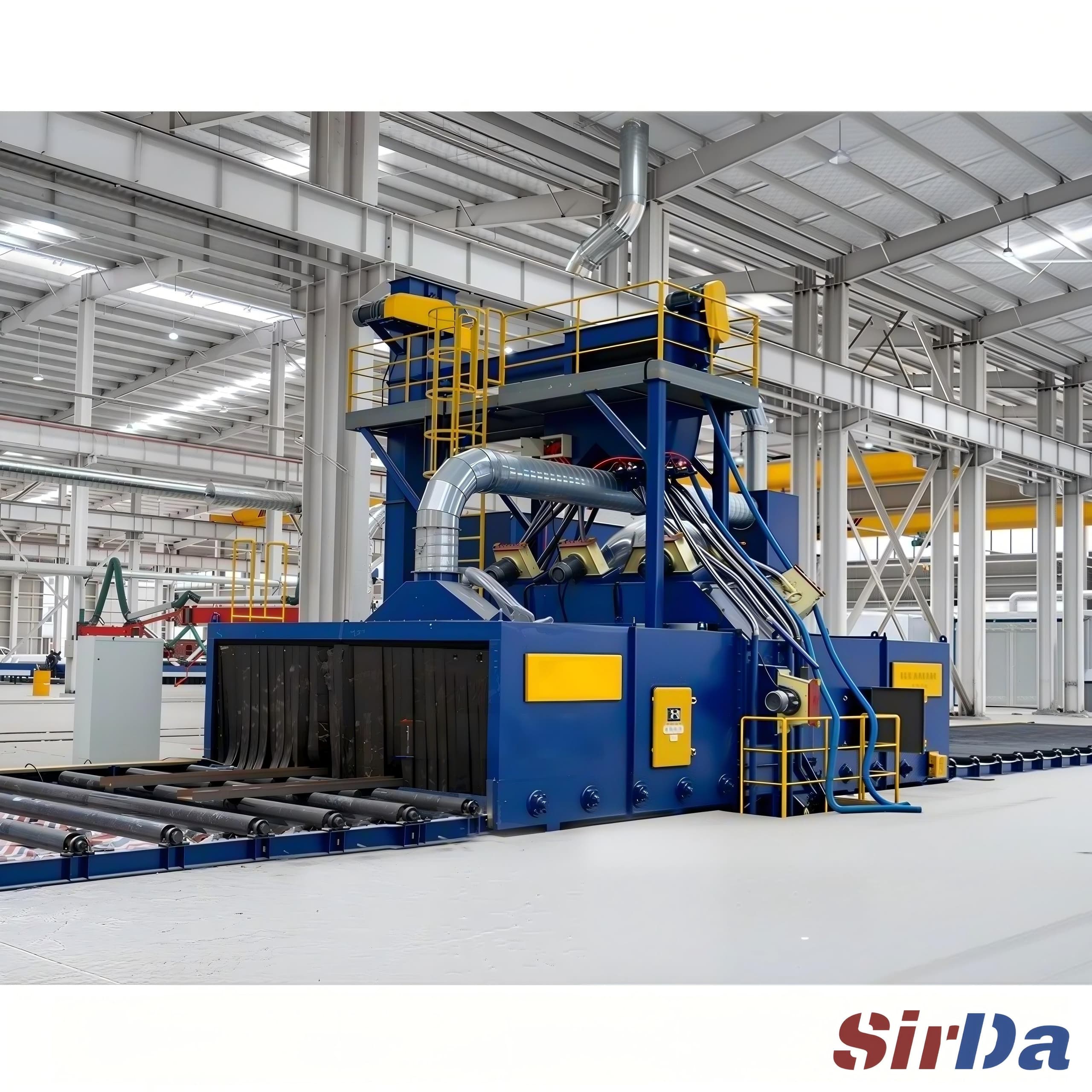
Rollers on a roller conveyor machine wear unevenly if parts are consistently loaded in the same position. Uneven roller diameter changes part height relative to the wheels, which changes the effective blast distance across the width of the line.
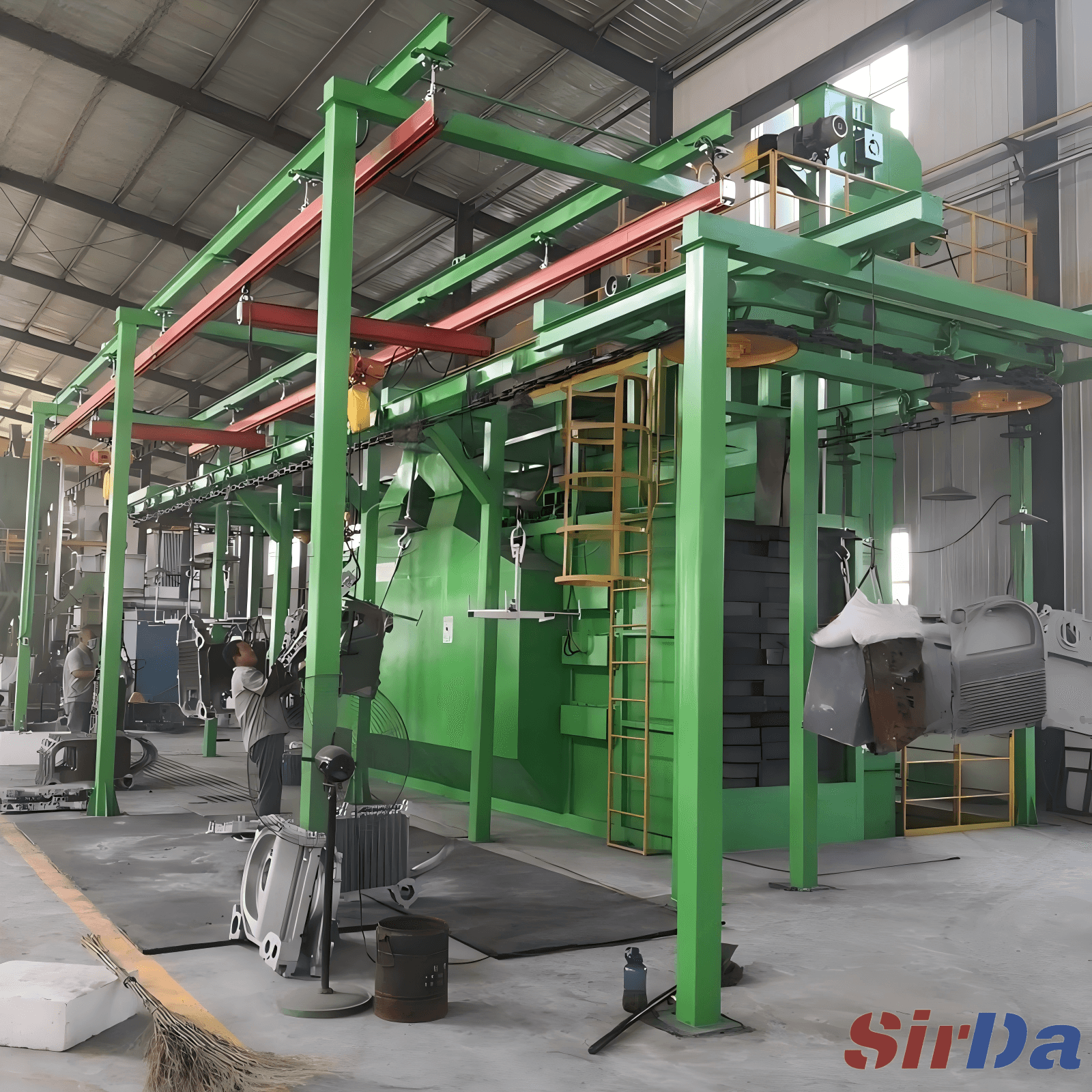
Hooks and hangers wear at the contact points and can bend under load. A bent hook changes part position in the chamber, and the effect on coverage is easy to miss because the part still looks blasted.
Recovery system wear
Screw conveyors and bucket elevators handle the full abrasive flow and wear continuously. Holes in a screw trough or worn elevator buckets reduce the return rate, and the machine slowly starves at the wheels.
The symptom is confusing because it looks like a supply problem: wheels run short of abrasive at peak demand, the pattern becomes intermittent and profile varies. Checking the recovery system is part of diagnosing a profile complaint, not a separate maintenance task.
Setting intervals from measurement
Two approaches are common and only one works.
The calendar approach replaces parts at fixed intervals regardless of condition. It either replaces serviceable parts or, more often, runs worn parts past their useful life because production pressure overrides the schedule.
The measurement approach records wear at fixed points on a fixed schedule, plots the trend, and replaces at a defined threshold. It requires a small amount of discipline and gives a forecast, which is what maintenance planning actually needs.
The measurement points worth recording: blade thickness at a reference position, liner thickness at three or four marked points, belt thickness and condition, roller diameter at the drive and at mid-span, hook straightness, and vibration on the wheel bearing.
Measuring wear without stopping production
Most wear measurements can be taken during normal stops rather than requiring a dedicated shutdown. Blade thickness at a reference point takes minutes with the access door open. Liner thickness at marked points takes longer, but only at the points that matter, not across the whole surface.
The trick is to mark the measurement points permanently when the parts are new. A painted mark or a stamped reference point removes the ambiguity that makes wear records incomparable between fitters.
For parts that cannot be reached easily, use an indirect indicator. Wheel current at a fixed feed, or the position of the blast pattern on a test plate, both change as the wheel wears and can be checked without opening the cabinet. They do not replace direct measurement, but they tell you when direct measurement is due.
Spares strategy
Wear parts fail on their own schedule, not the production schedule. Holding a spare blade set, a spare cage and a set of liners removes the most common cause of extended downtime, which is waiting for a part.
The second tier is belt or mesh, hanger assemblies and recovery components. These are slower to fail and more expensive to hold, so the decision depends on lead time and on the cost of the line being down.
What maintenance protects
Maintenance is not housekeeping. Blade condition controls profile. Separator condition controls the working mix. Liner condition tells you whether the pattern is still correct. Belt and roller condition control exposure consistency. Every one of those is a quality parameter that appears on a coating inspection report.
If you are planning a maintenance regime or trying to diagnose a profile drift that adjustments have not fixed, our engineers can review your wear records and setup — send them through the contact form.