Intelligent Automation in Shot Blasting Cells
What automation actually buys in a blasting cell: consistent coverage, recipe-driven changeover and fewer manual handling injuries.
Automation in shot blasting pays back in three places: coverage consistency, changeover time, and the elimination of manual handling of heavy parts. It rarely pays back on labour alone, and it never pays back if the cell is bought as a machine rather than as a process.
Start with the part family, not the robot
The first question is not which robot to buy but how many part families the cell must handle and how often they change. A cell that runs one family for weeks can be set up mechanically and run without recipes. A cell that changes every shift needs part tracking, stored recipes and a changeover procedure that does not depend on the operator's memory.
Write down the families, their weight range, their fixture requirements and the required cleaning grade. If more than a third of the families need a new fixture, the fixture cost will dominate the project, and a simpler machine with quick manual load may be the better investment.
Coverage is the hard problem
A robot arm moving a part through a fixed abrasive curtain is not automatically better than a person doing the same thing. Coverage depends on the angle between the surface and the abrasive stream, on the distance from the wheel, and on whether the part is rotated so that shadows are exposed.
Three approaches work in practice:
- Programmed poses: the robot presents each face at a known angle and distance, with overlapping passes. Simple, repeatable, and slow if the part is complex.
- Continuous rotation on a spindle: the part turns under a fixed curtain. Fast and cheap, but only works for rotationally symmetric or simple shapes.
- Scanner-driven correction: a sensor locates the part, and the program offsets the path. Useful for castings with variable dimensions, but it adds calibration and maintenance.
Most cells use the first two. The third is justified when part-to-part dimensional variation is large enough that a fixed program leaves uncleaned patches.
Recipes and part tracking
A recipe should hold everything that changes with the part: conveyor speed or robot program, wheel power, abrasive flow, number of passes, and the acceptance criteria. Part tracking then selects the recipe automatically — by RFID tag, by a barcode read at the load station, or by a signal from the upstream press or cutting line.
Without tracking, the operator selects recipes by hand, and the first part of every batch is either over-blasted or rejected. That single failure mode is responsible for most of the quality complaints in automated cells.
The interfaces decide the real throughput
Published machine throughput is measured on a continuous feed of representative parts. A cell reaches that number only if the upstream and downstream handoffs keep up. The details matter:
- The conveyor speed range must bracket the takt time with margin, not sit at its limit.
- Accumulation must exist before and after the blast cabinet, so a short upstream stop does not starve the wheels and a downstream stop does not leave parts sitting under the curtain.
- The load and unload stations must be reachable without entering the blast zone, or the safety system will stop the cell for every adjustment.
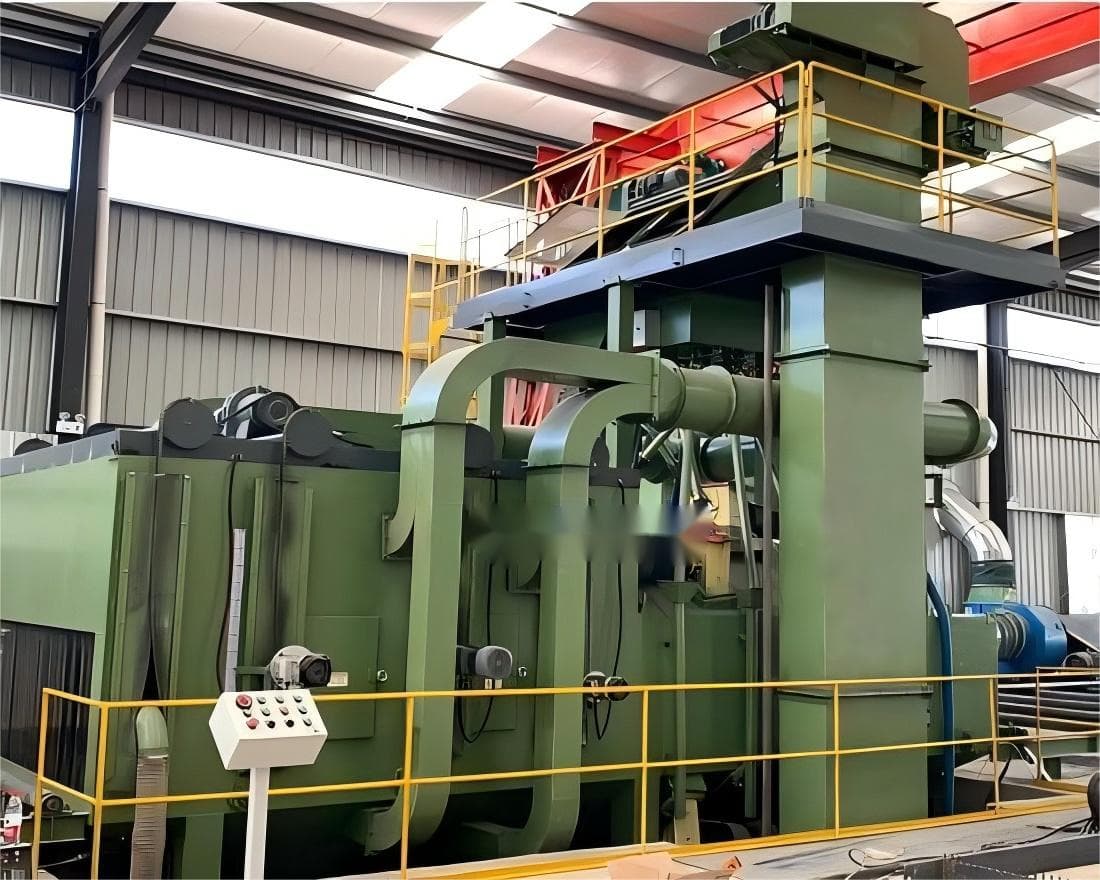
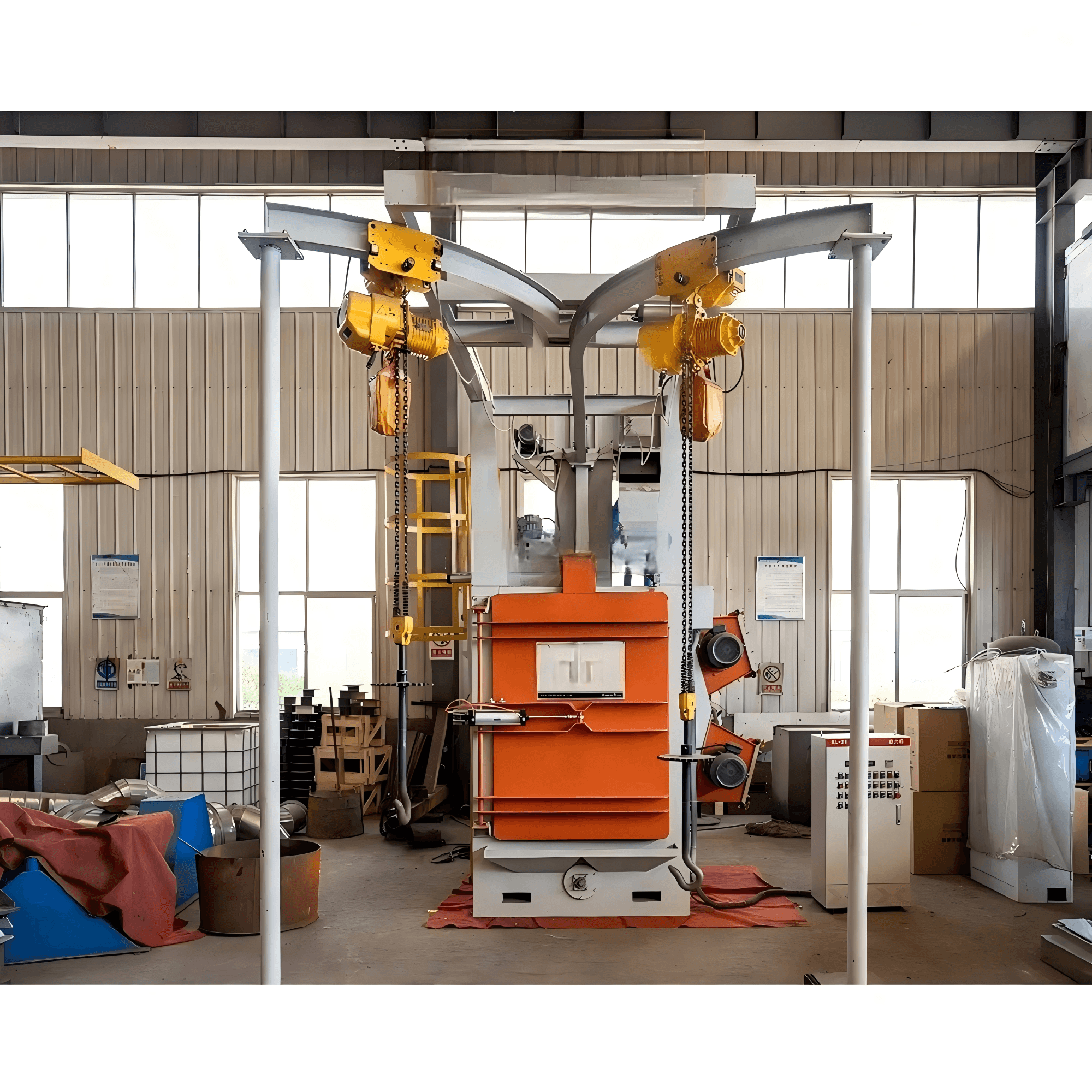
Our roller conveyor machine publishes a throughput of 2.0–5.0 t/h and handles workpieces of 5–30 t; the wide spread is a reminder that the number depends on the part mix. A cell designed around the top of that range will underperform on a mixed order book.
Safety and dust are part of the automation scope
Automating the handling does not remove the need for interlocked doors, zero-energy access for maintenance, and dust control. It increases the number of people who interact with the cell without knowing its history, so the safety documentation has to be better, not simpler.
Dust accumulation inside the cell is also a maintenance issue: automated cells run longer between stops, so fines build up faster. Differential-pressure monitoring and a scheduled internal inspection belong in the design, not in the operating manual's small print.
Fixtures are the hidden project
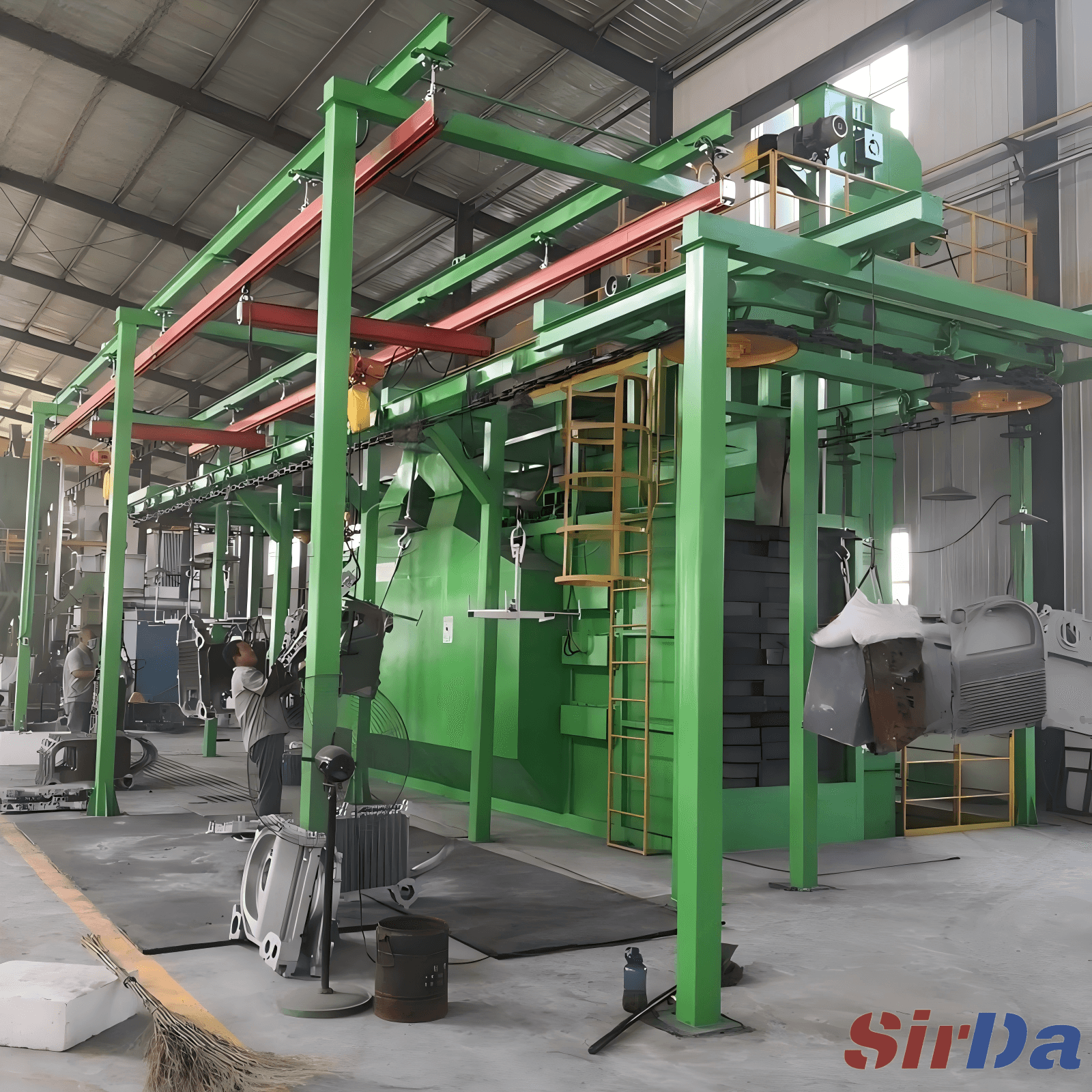
The robot is the visible cost; the fixtures decide whether the cell works. Every part family needs a location that repeats within a tolerance the blast pattern can tolerate, and it needs to be loaded and unloaded by the handling device without operator intervention.
Fixtures for blasting have a harder life than fixtures for machining. They are exposed to abrasive, they accumulate media in every recess, and they wear at the surfaces that locate the part. A fixture designed like a welding jig will lose its location within months.
Design rules that hold up in practice: locate on machined surfaces that are not being blasted, protect locating pins from the abrasive stream, provide drainage so media cannot pack into pockets, and keep the fixture light enough that robot payload is not consumed by tooling. Where a fixture must be blasted, treat it as a wear part and schedule its replacement.
Count the fixtures before approving the project. A cell with twelve families and no common locating feature needs twelve fixtures, and that number, not the robot specification, usually determines whether the payback closes.
Commissioning is where cells fail
An automated cell is commissioned against a specification, and the specification is usually written around a sample part. Production then arrives with parts at the edges of the tolerance band, and the fixed program leaves uncleaned patches or over-blasts thin sections.
The remedy is to commission against the difficult end of each family rather than the nominal part. Run the heaviest, the thinnest and the most geometrically awkward variant, and confirm coverage on each before sign-off. If the cell cannot handle the difficult variants, that is a design issue to resolve before acceptance, not an operating problem to solve later.
Acceptance should also include a changeover trial. Time a real changeover with the production team, including fixture exchange and recipe selection, and compare it with the number used in the business case.
When automation does not pay
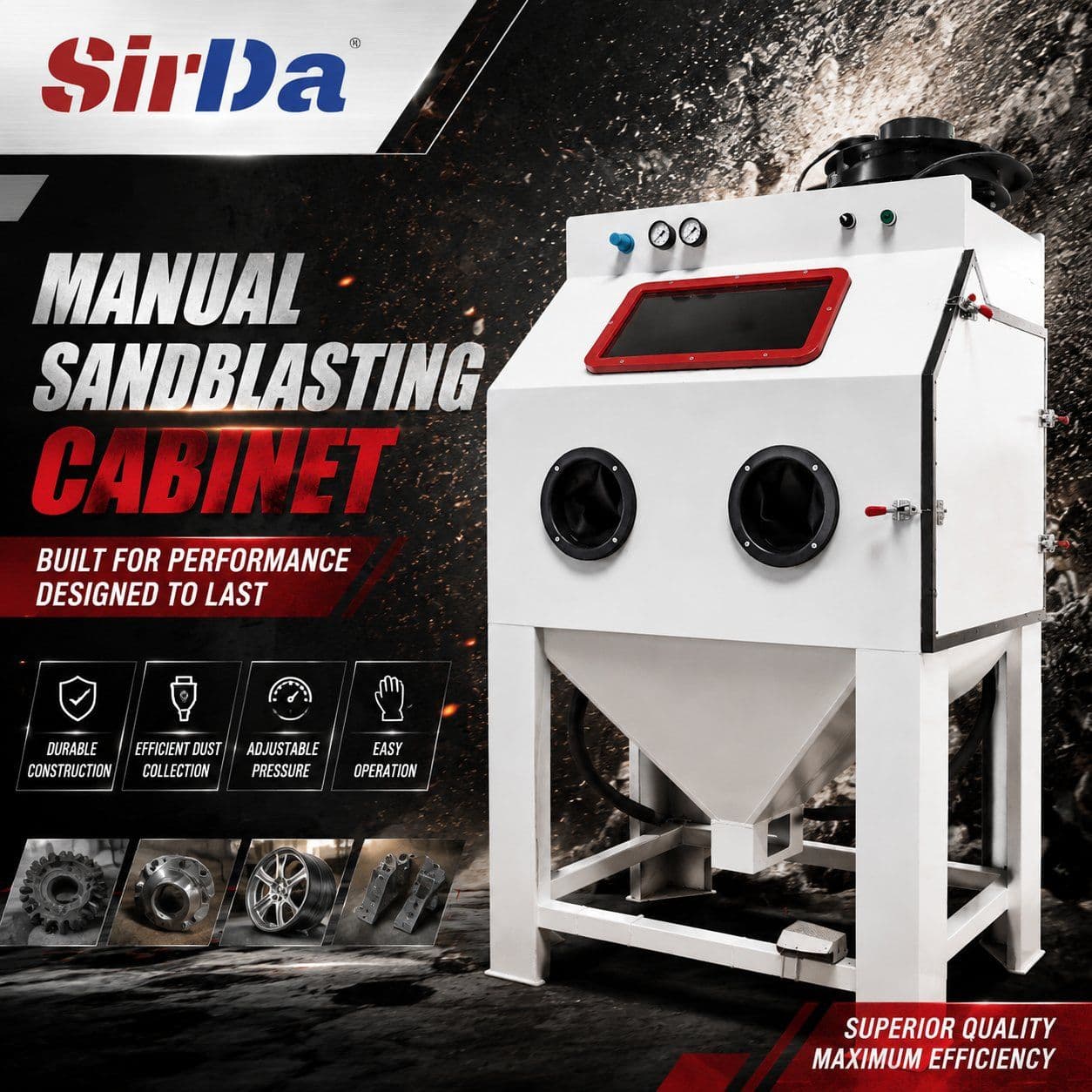
Automation stops paying when handling is already simple, the part family is stable and the labour saved is a fraction of one operator. In those cases a guarded manual machine with good extraction and quick-change fixtures delivers comparable consistency without the programming, calibration and maintenance burden of a cell.
Training belongs in the same calculation. An automated cell concentrates process knowledge in a smaller number of people, and when one of them leaves, the recipes and the calibration history leave with them unless the documentation is maintained as part of the asset.
A realistic payback calculation
Build the case on four lines: labour hours removed, scrap and rework avoided, throughput gained, and fixture and programming cost. Be conservative on throughput — a new cell rarely runs at its design rate in the first months. If the case only closes at the optimistic throughput, it does not close.
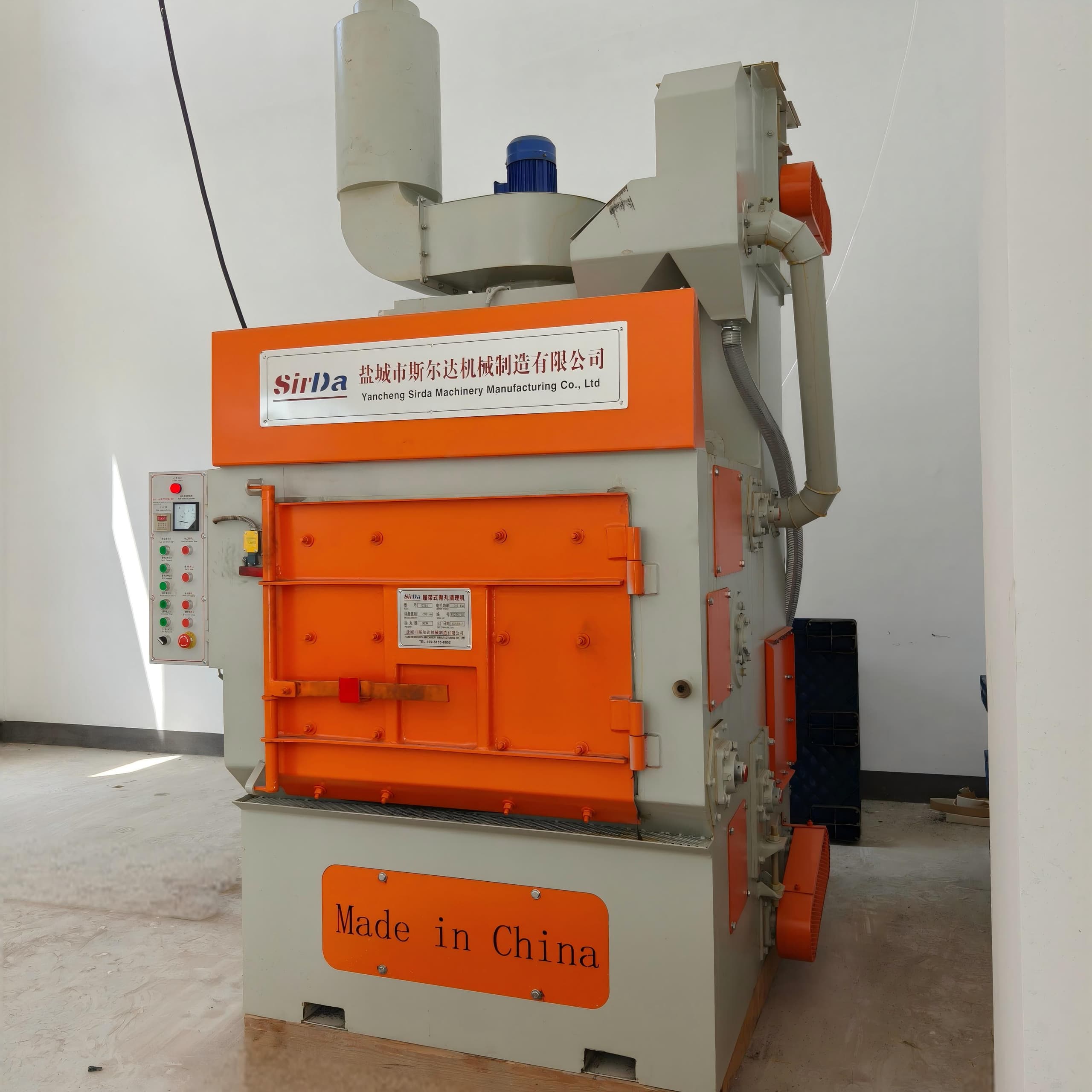
For small parts, a simpler route is often better value: a tumble belt machine with a 120 kg batch capacity and 0.6–1.2 t/h throughput automates the cleaning step without a robot, and the batch cycle is self-limiting. For medium plate and profiles, a mesh belt machine with an 800 × 500 mm pass-through opening integrates into a line with much less engineering than a robot cell.
If you want a second opinion on whether a cell needs automation at all, send the part drawings and the annual volume through our contact form. We will tell you where the automation stops paying.