Condition Monitoring for Shot Blasting Machines
Which signals on a blast machine actually predict failure, how to trend them, and where monitoring stops being worth the cost.
A shot blasting machine fails in a small number of predictable ways: a wheel bearing seizes, a blade breaks, an impeller wears through, a feed pipe blocks, a separator blinds, or a liner wears to the point of perforation. Condition monitoring is worth paying for when it catches those events early, and worth nothing when it produces a dashboard nobody acts on.
Start with the failure modes, then choose the sensors
Monitoring should be designed backwards from the failure list. For each mode, ask three questions: what signal changes before failure, how much warning does that give, and what action does the warning trigger?
- Wheel bearing failure shows up as rising vibration and temperature, usually with a change in noise. Warning time is typically days to weeks if the trend is watched.
- Blade breakage shows as an abrupt change in wheel current and vibration, and often as a drop in cleaning rate. Warning time is essentially zero — this is a detection function, not a prediction function.
- Impeller or control cage wear shows as a slowly falling cleaning rate at constant power, and as a change in the blast pattern on a test plate.
- Blocked abrasive feed shows as a falling wheel current and a starved pattern. Detection is immediate.
- Blinded filter shows as rising differential pressure and falling airflow.
- Separator overload shows as rising fines in the mix, which is measured by sieving, not by a sensor.
If a sensor does not map to one of those rows, it is probably decoration.
Wheel current is the most useful single signal
Wheel motor current combines several things: abrasive flow, media mass, blade condition and mechanical drag. That makes it a good general health indicator and a poor diagnostic one.
The useful practice is to record the current at a known steady state — same media, same feed, same part — and watch the deviation. A rise of a few percent at constant conditions usually means the curtain is worn or the media has coarsened. A fall usually means abrasive starvation: a blocked feed, an empty hopper, or a worn feed pipe.
Set alarms on deviation from a rolling baseline, not on absolute values. Absolute values differ between machines and change with media.
Vibration and temperature on the wheel bearings
Bearing monitoring is the clearest case for condition-based maintenance. A bearing that is beginning to fail gives weeks of warning if vibration is trended, and gives minutes if it is only inspected by ear.
Practical minimum: a vibration reading at each bearing housing on a fixed interval, trended against its own history. Temperature is a useful secondary signal, but it lags vibration and is affected by ambient conditions.
Do not over-instrument. One good reading per bearing per week, taken at the same point and the same load, beats continuous data that nobody reviews.
Differential pressure and airflow
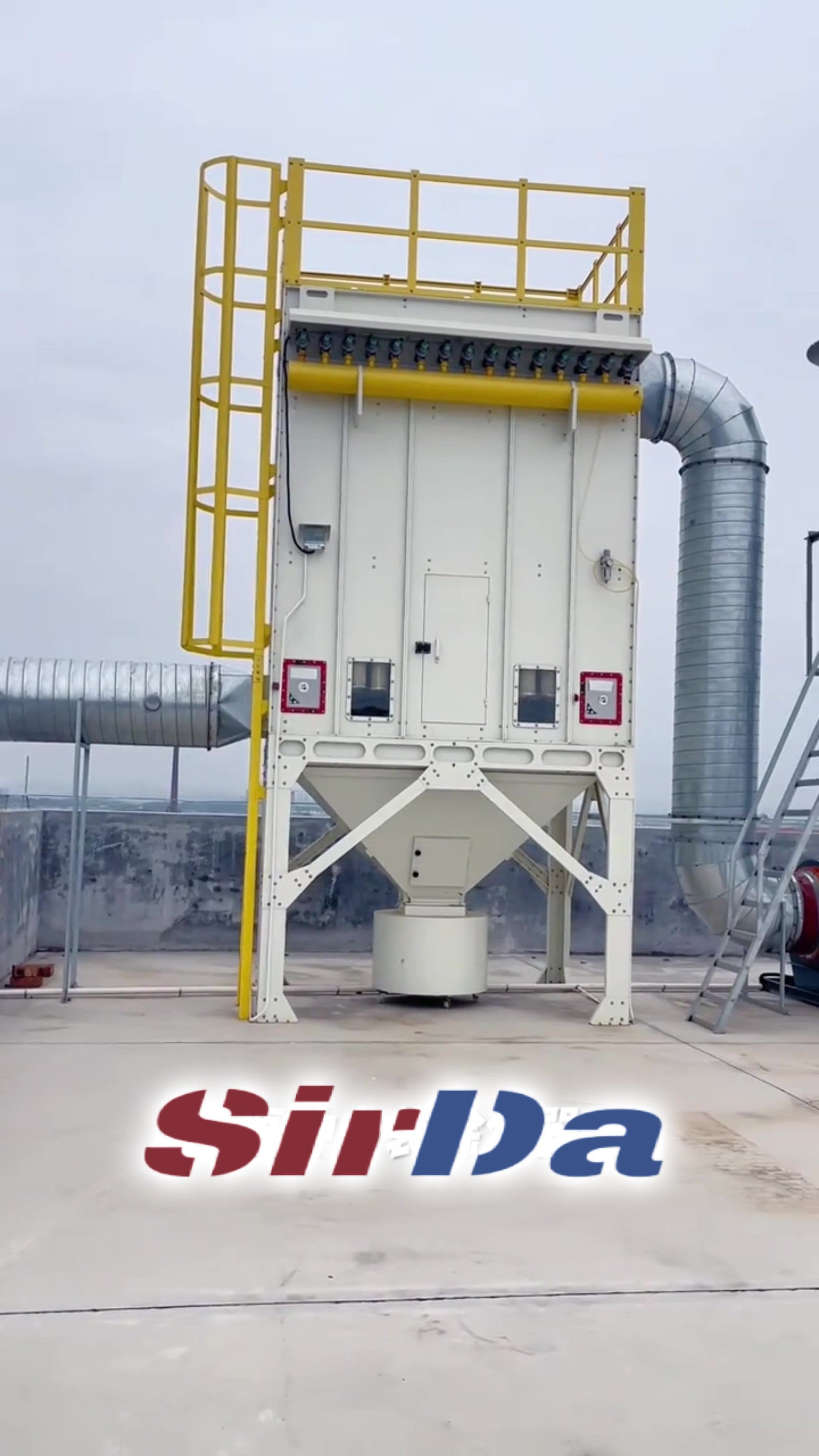
The dust collector is the part of the machine most often neglected and most directly linked to cleaning performance. Differential pressure tells you the filter condition; airflow tells you whether the system is actually extracting.
A rising differential pressure means the filters are loading. A falling differential pressure with unchanged settings can mean a filter has failed or a duct has disconnected — both are dust-release events, not improvements.
Record both at the same time each shift. The trend matters more than the absolute number, because the acceptable band depends on the filter type and the dust load.
Abrasive flow and mix
Abrasive flow can be monitored with a flow sensor or inferred from wheel current. Neither replaces sieving the mix. The mix is the process variable that most directly controls surface quality, and it is cheap to check.
Put the sieve check on the maintenance schedule with a defined frequency and a recorded result. If the fines fraction is rising, the separator or the collector needs attention, not more abrasive.
What monitoring cannot tell you
No sensor tells you the surface is correct. Cleanliness and profile are measured on a test piece with a comparator and a gauge. Monitoring tells you the machine is healthy; it does not tell you the process output is in specification.
It also cannot compensate for a machine that is hard to inspect. A design with good access to blades, liners and the separator will be maintained better than a better-instrumented machine that requires a partial disassembly for every check.
There is also a data-quality problem that no sensor specification addresses. A reading taken at a different load, a different media level or a different part mix is not comparable with the previous one. The value of a trend depends on the conditions being repeatable, which is why the reading procedure matters as much as the instrument.
Alarm strategy: warn, then act
An alarm that nobody can act on trains people to ignore alarms. Before setting a threshold, decide what the response will be. If the answer is "look at it later", the threshold is wrong or the channel is not worth monitoring.
Two alarm types are useful. A trend alarm fires when a signal moves beyond a band around its own rolling baseline over several readings, which catches wear. A limit alarm fires on an absolute value that indicates imminent damage, such as bearing temperature or a sudden current spike.
The first type needs a baseline and will be noisy for the first weeks. The second type can be set immediately from the manufacturer's data. Mixing them in one dashboard is the most common reason monitoring projects are abandoned.
Whatever the type, the alarm has to reach the person who can act on it. A message stored inside the machine's own control panel is not an alarm, it is a log entry.
Making the data useful
Monitoring produces value only when it changes a decision. Three practices make that happen.
First, put the readings where maintenance planning already looks — a weekly sheet, a shift handover, a planning meeting — rather than in a separate system that requires a login.
Second, connect each channel to a named action. Rising bearing vibration means schedule a bearing inspection within a defined window. Rising differential pressure means check the pulse valves and the filter condition. Falling wheel current means check the feed and the hopper level.
Third, review the alarms themselves. If a channel alarms repeatedly without a real fault, adjust the threshold or remove the channel. A monitoring system that cries wolf is worse than no system, because it consumes the credibility that the real alarm will need.
A realistic implementation
Start with three channels: wheel current, wheel bearing vibration, and collector differential pressure. Trend them for a quarter before setting alarms, so the baseline reflects your actual operation. Add abrasive flow only if starvation is a recurring problem.
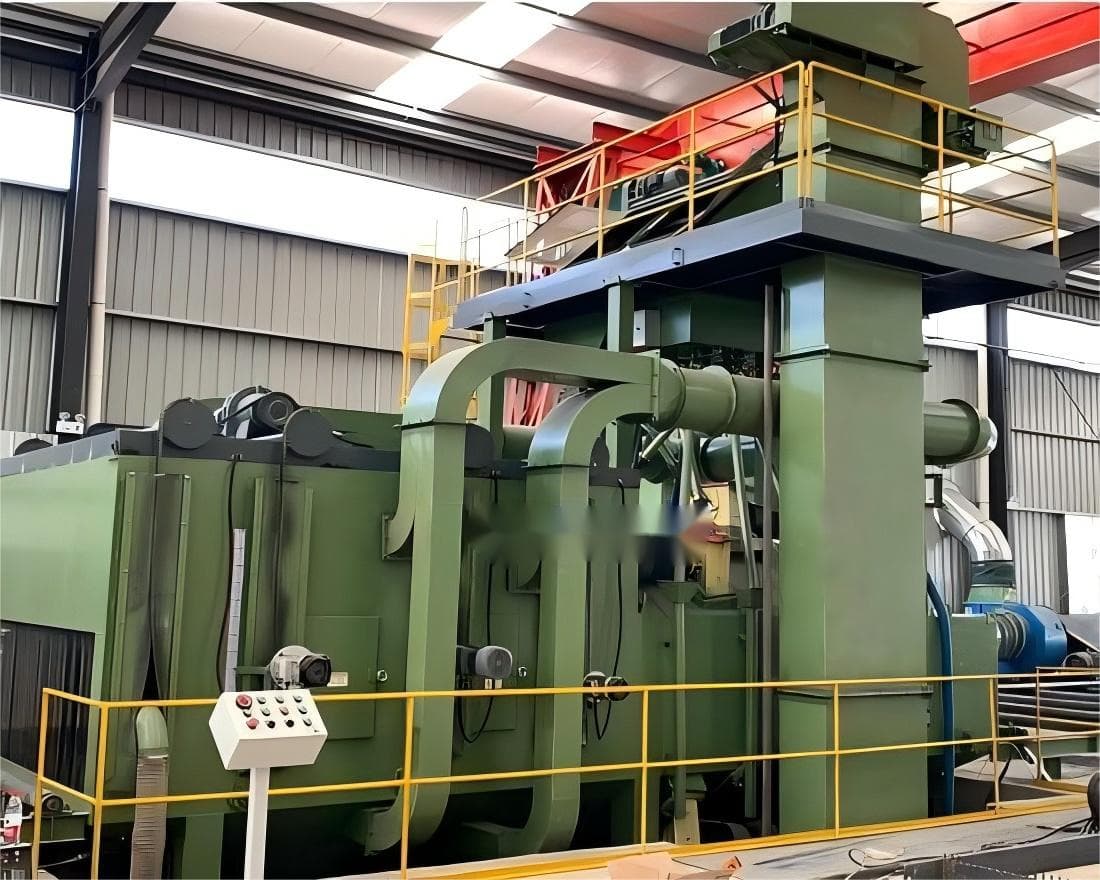
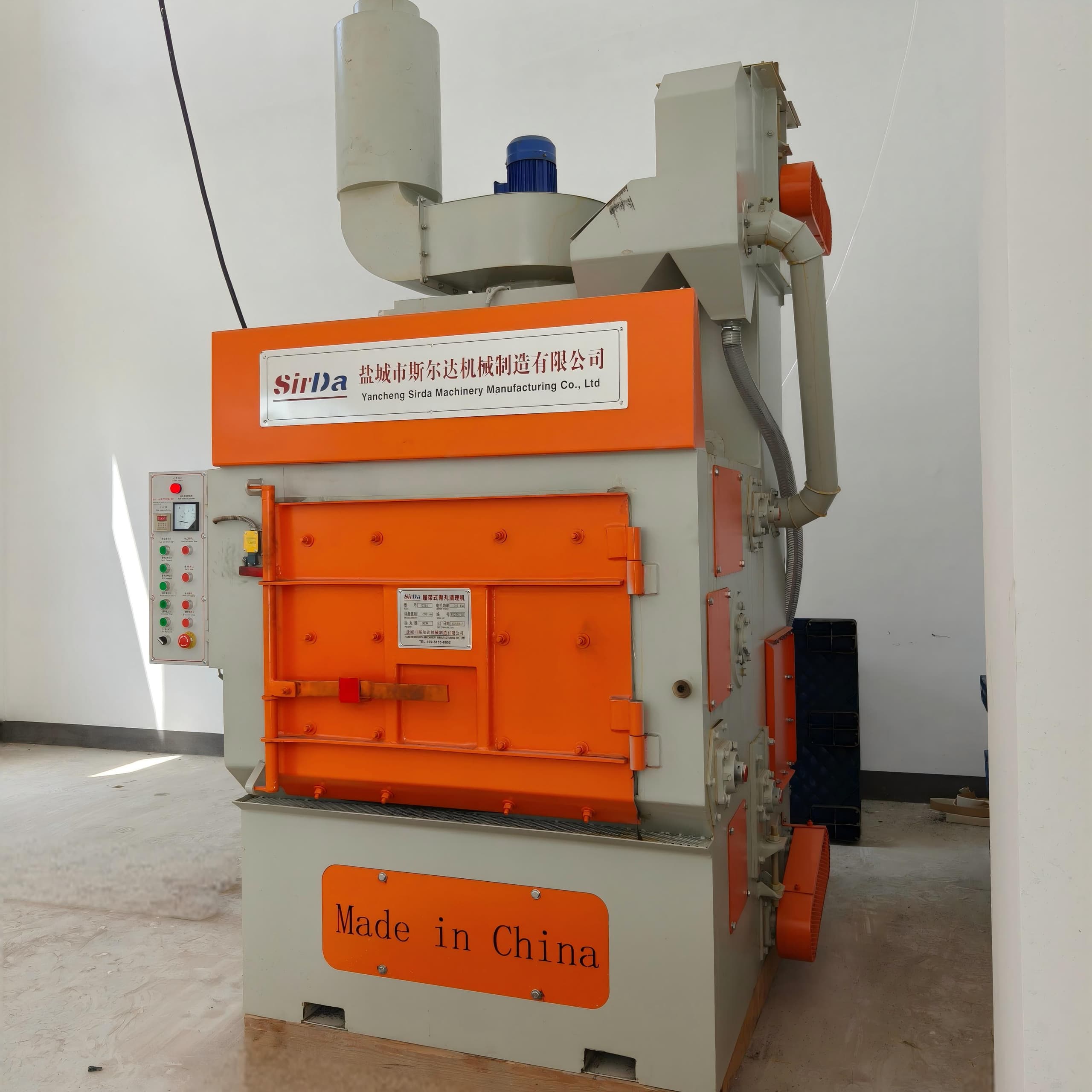
For a roller conveyor machine running long campaigns, this is usually enough. For a tumble belt machine with short batch cycles, wheel current alone catches most issues, because the cycle gives a repeated, comparable signature.
If you are specifying a new machine and want monitoring included, tell us which failure modes matter in your plant through the contact form and we will map the sensor list against them rather than against a catalogue.