The collector decides whether the cell can run at all
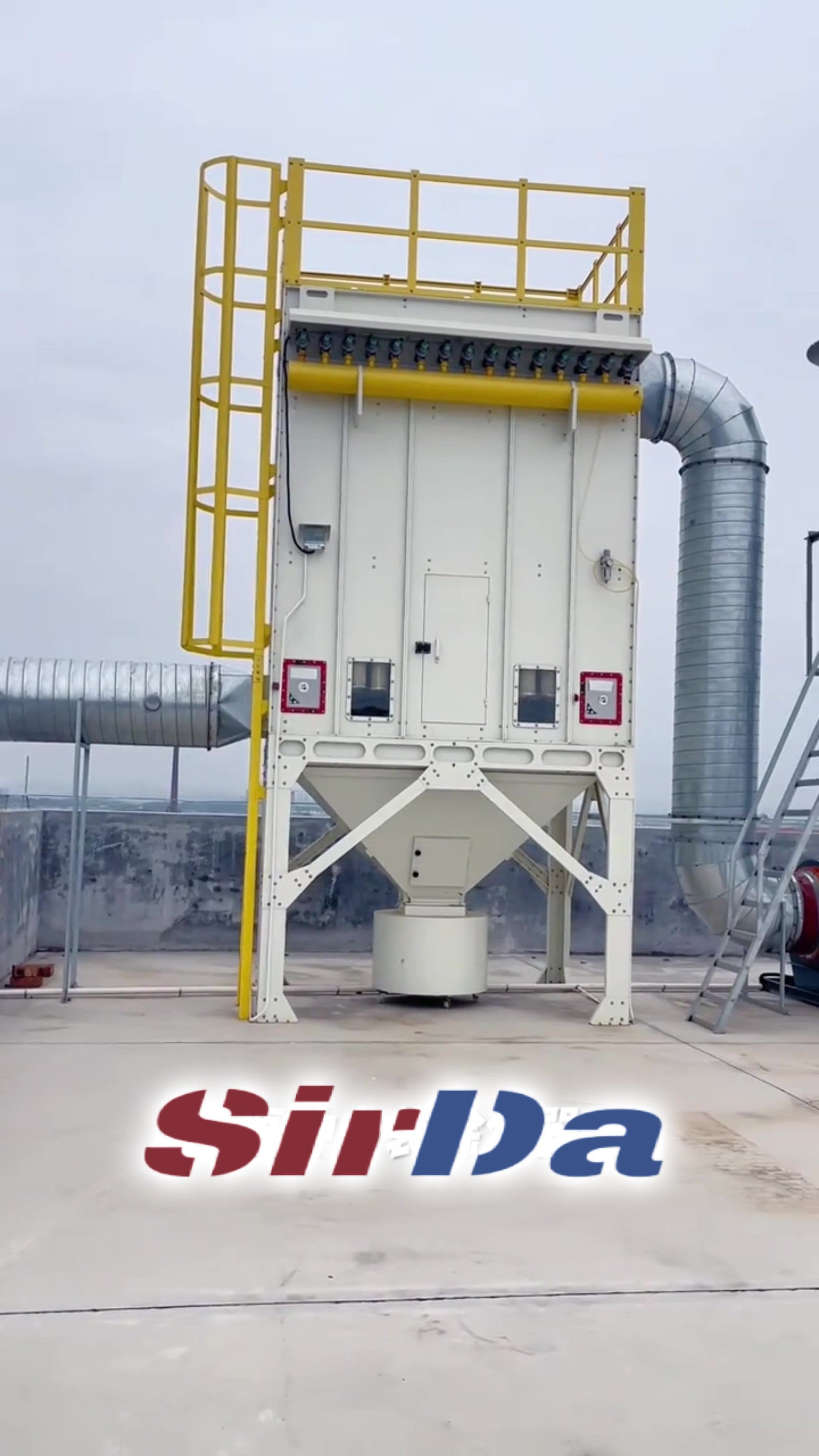
A blasting machine and its dust collector are usually quoted as two separate items, and that split is where most installations go wrong. The machine decides how clean the surface ends up. The collector decides something else, and it decides it first: whether the cell can legally and economically run every day.
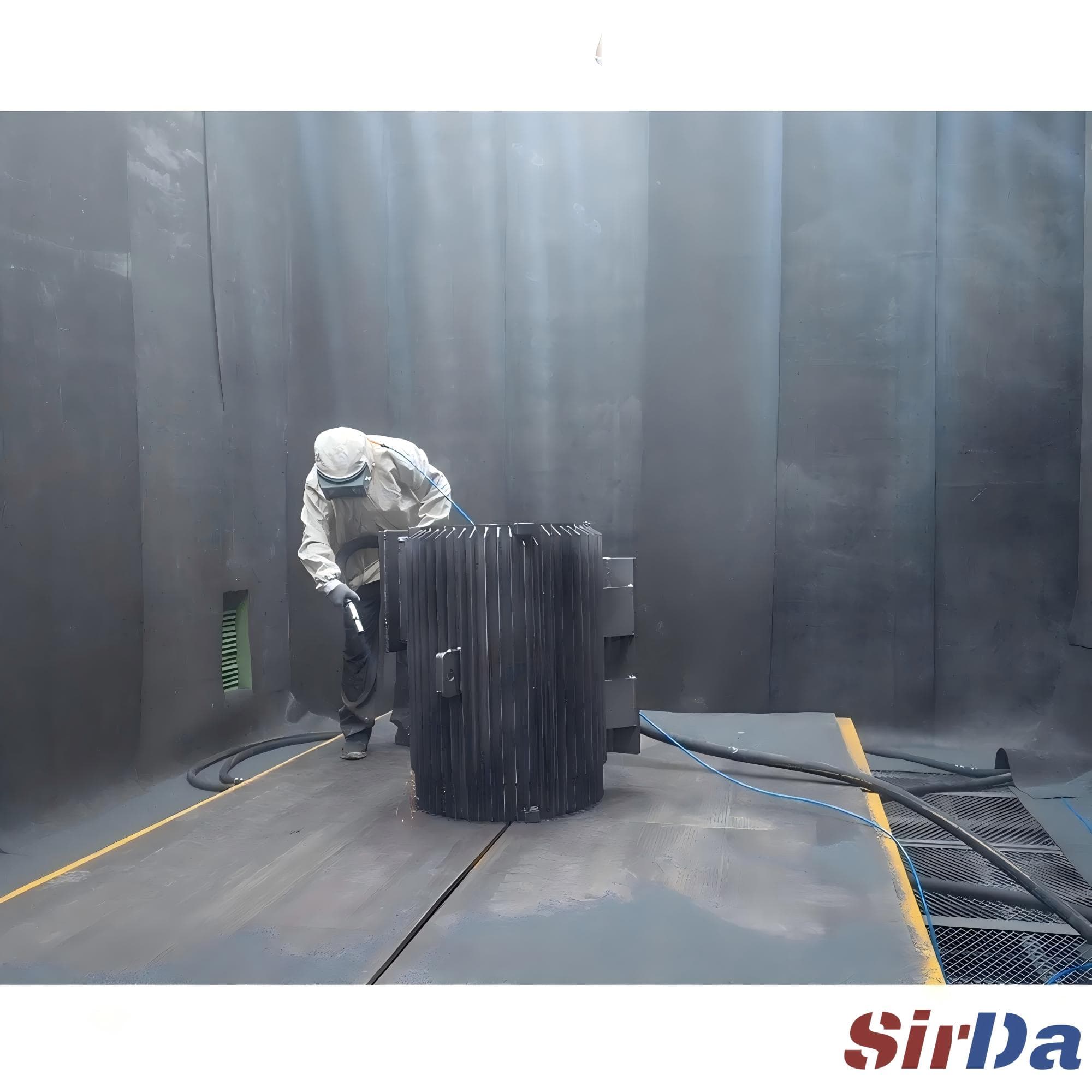
The dust from a blasting cell is not workshop dust. It is a mixture of spent abrasive, the scale just knocked off the workpiece, whatever coating was stripped, and fine metal particles generated by the impact itself. That last component is the one that changes the specification. A cloud of fine metal dust inside a duct is a combustible dust hazard, and the duct, the collector and the fan all become part of that hazard rather than just the blast room.
So the collector has to be chosen for what will pass through it, not for what it is bolted to.
How a pulse jet baghouse actually filters
Inside a baghouse, the filter fabric is not the filter. The dust cake that builds up on the bag is. Air carrying dust enters the housing, the dust is caught on the media, and a cake starts to grow. That cake is what performs the actual separation, and its thickness decides both the filtration quality and the pressure the fan has to push against.
This is why cleaning is a balance rather than a setting. Clean too often and the cake never gets thick enough to filter well, and dust breaks through into the discharge air. Clean too rarely and the cake compacts, the pressure drop climbs, and the fan works harder for the same airflow. A pulse jet system cleans with a short burst of compressed air delivered into the bag from the inside, which knocks the cake off in a fraction of a second and puts that bag back into service while the others keep filtering. The controller's job is to hold every bag in the same band of cake thickness, and to stagger the pulses so the housing never loses its filtration.
Filter media is chosen against the dust, not against price:
- Chemical bonded polyester — the common default, handles most blasting dust well.
- Polypropylene — lower cost, and a lower temperature limit.
- PTFE — the highest temperature and chemical resistance, at a higher cost.
- Coated and antistatic surfaces — where metal dust is present, surface treatment can matter as much as the base fabric.
Keeping the media out of the dust stream
The most expensive mistake in this arrangement is letting the shot reach the collector.
Media recovery and dust collection are two different jobs. The shot is worth recovering because it is reusable, and because it is the most visible daily cost on the floor. The dust is waste. A separator upstream of the collector takes the impact-broken media out of the airstream and returns the round shot to the machine, while the fraction too small to be useful travels on to the collector. If that separation is missing or badly balanced, media is destroyed in the duct, the collector fills with heavy material that does not belong on the fabric, and the pressure drop climbs for a reason nobody will find on the filter.
Airflow has to be decided before the collector is. The room itself must sit under negative pressure, otherwise dust settles where it is generated instead of travelling to the hood. The transport air needed to carry dust from the blast position to the hood belongs to the same calculation, and the collector's own pressure drop sits on top of it when the fan is selected. A collector chosen first and a fan fitted afterwards is the classic way to end up with a cell that cannot hold its pressure.
What we confirm before specifying
Dust composition, temperature and chemistry decide the media. The volume of the room and the negative pressure it has to hold decide the airflow. The media circuit decides where the separator sits. The metal dust assessment decides the venting and the isolation arrangements.
Send us the process, the room and the collection layout, and we will size it against those instead of guessing from a catalogue. Final configuration is confirmed after reviewing your dust source and operating conditions.