When to replace blast wheel blades before they fail
Blast wheel blades don't snap — they lose their shape and drift the blast pattern weeks before they look worn. Learn the on-condition replacement rule, why you must change blades as a matched set, and how abrasive quality and dust collection decide blade life.
Why blades never snap — they quietly lose their shape
The blade is the only part of the blast wheel that touches the abrasive at full velocity. The wheel spins, the shot drops into the centre, the control cage releases it through one window, and then the blades carry it outward, accelerating it along their length until it leaves the rim at up to 80 m/s. Everything the machine does is decided in that short stretch of blade face.
What surprises most operators is that blades do not fail the way you expect. They do not snap. They slowly wear away at the working face. Abrasive slides along the face thousands of times a minute, and that sliding cuts the shape away. The blade still looks like a blade. It is no longer the blade it was designed to be.
That is the expensive part. Once the face changes shape, the shot leaves at a slightly different angle, the clean spot on the part drifts, and some areas get hit twice while others get missed. Quality starts to drift weeks before the blade looks "finished." Most plants only change blades when they look worn out — by then the pattern has been sliding for a long time, and operators quietly compensate by running parts longer, paying in cycle time and abrasive before they ever pay for a blade.
What the wear pattern is trying to tell you
Uneven blade wear is almost always a symptom, not the root cause. Before you order blades, read the pattern — it names the actual culprit:
- One blade worn far ahead of the rest — the feed spout is delivering abrasive off-centre. The fix is feed distribution, not blade quality.
- Alternating wear across opposite blades — the control cage window has shifted or worn unevenly. A few degrees of cage timing is the difference between a part cleaned edge to edge and a part polished in one strip.
- Uniform but fast wear on every blade — this is the honest case where the abrasive or the blade material itself is the answer: too-hard or angular grit, or a wheel running faster than the process needs.
If the separator is not keeping the media clean, sand and fines act like lapping paste and cut blades far faster than clean shot does. Blade life is often really a separator problem wearing a blade costume. Wheel speed matters too: pushing speed past what the process requires raises impact energy exponentially and burns blades for no cleaning gain.
Replace on condition, and always as a matched set
There is no honest hour figure for blade life. It depends on your abrasive, your wheel speed, how clean the separator keeps the media, and how many hours you run. So change on condition, not on a calendar. Pull the wheel and change the set when any of these is true:
- blade thickness is down 4–5 mm (or roughly half its original thickness);
- blade length is down 4–5 mm;
- any blade is cracked, chipped, or loose in its seat;
- one blade is clearly ahead of the others in wear;
- the wheel vibrates violently under load.
One rule overrides all the others: never change a single blade on its own. The wheel spins fast, and every blade must weigh close to the same. Fit one new blade next to seven worn ones and that side is suddenly heavier — the wheel is out of balance the moment you switch it on. Vibration is the machine telling you something is wrong, and a mismatched set points that vibration straight at the bearings, the most expensive part of the assembly. Standard practice is a matched set with the weight difference between any two symmetric blades kept under 5 g.
Two habits make the change itself reliable. Clean the blade seats before fitting — grit packed into a seat holds the blade proud, the most common reason a wheel vibrates straight after a blade change. And keep one new blade hanging by the machine as a reference: held next to a running blade, the difference in the working face is obvious in a second, no gauge required.
Why this is really an abrasive and dust-collection story
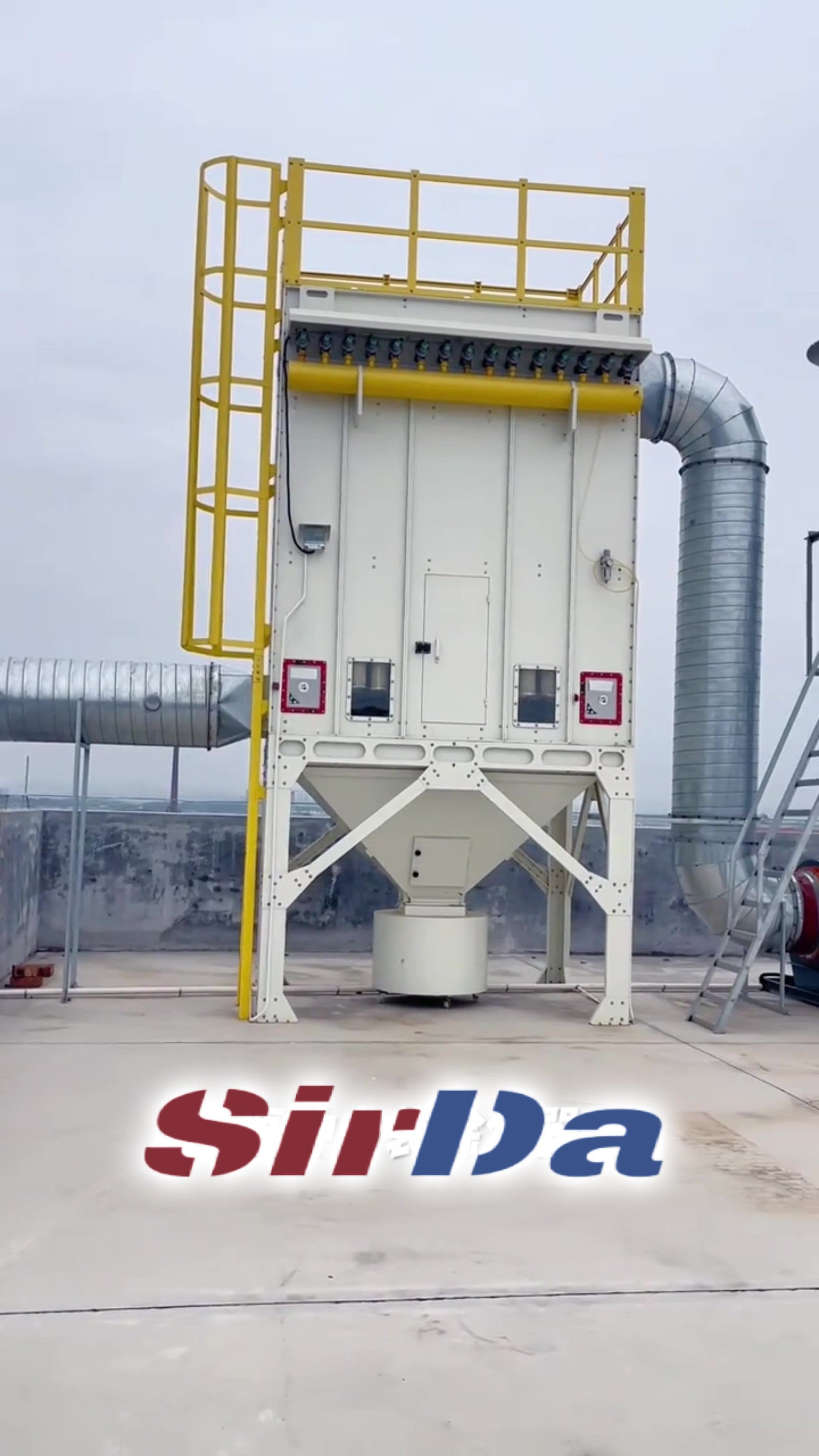
The blast wheel does not wear in isolation. Track abrasive consumption as kilograms per tonne of work processed, not per shift — a quietly climbing figure is usually a separator air-setting, shot-size-mix, or liner-condition problem long before it is a blade problem. Keep the dust collector doing its job: duct air velocity around 3–4 m/s, filters clean, no leaks. A clogged filter drops suction, the separator can no longer pull fines out of the media, and those fines recirculate straight back onto the blade faces.
Watch for shot-locking too: abrasive works into the blade mounting channel over time, seizing the blade to the wheel. High-chrome blades are hard but brittle, so hammering a locked blade out can chip or splinter it — a real safety hazard. Catch wear early and the blade comes out with a light tap, not a fight.
A routine that catches failure before it happens
You do not need an hour-figure; you need a habit. Look along the working face of each blade daily for the one that is clearly further gone than the rest. Check the control cage opening and the impeller weekly, because a worn cage moves the pattern on its own and new blades will not put it back. And at every change, confirm the separator is actually separating — sand and fines in the abrasive cut blades faster than anything else you can name.
Replace wear parts at the wear limit, not at failure. A blade changed on condition, as a balanced matched set, costs a fraction of the bearing, cage, and liner damage a single unexpected failure spreads across the wheel.