Reclaiming abrasive: screw conveyor versus bucket elevator
A blast machine's abrasive bill is decided underground, by the screw conveyor and bucket elevator that return spent media to the wheel. This guide compares the two movers, their failure modes, and how to balance them for your media and building.
The reclaim loop in one picture
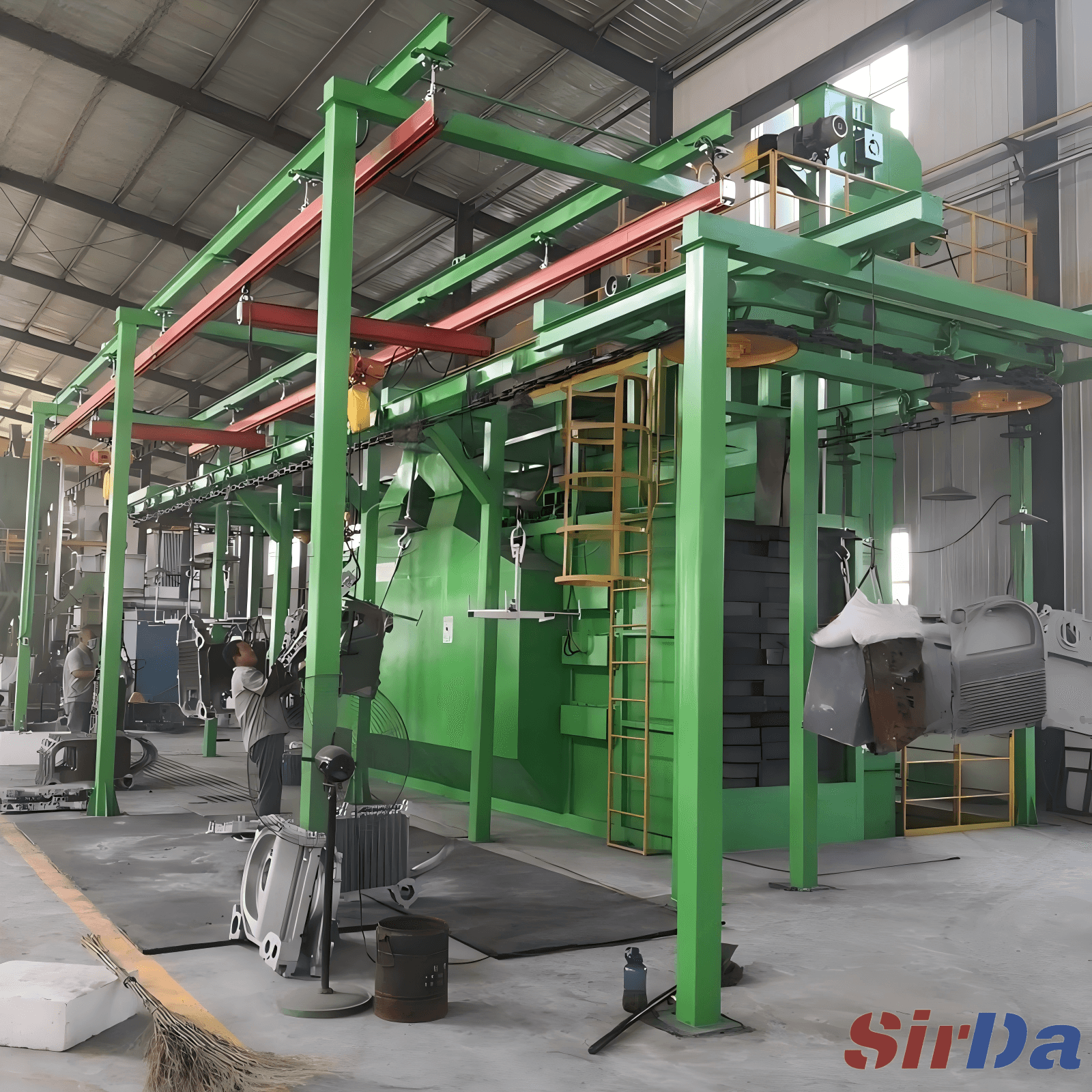
Every blast machine worth owning recycles its abrasive. Fresh media hits the part at full energy, then breaks down into smaller fractions that keep working the recesses and detail until the separator finally pushes them out as fines. The reclaim system exists to catch that still-useful media after every pass and return it to the wheel instead of letting it pile on the floor.
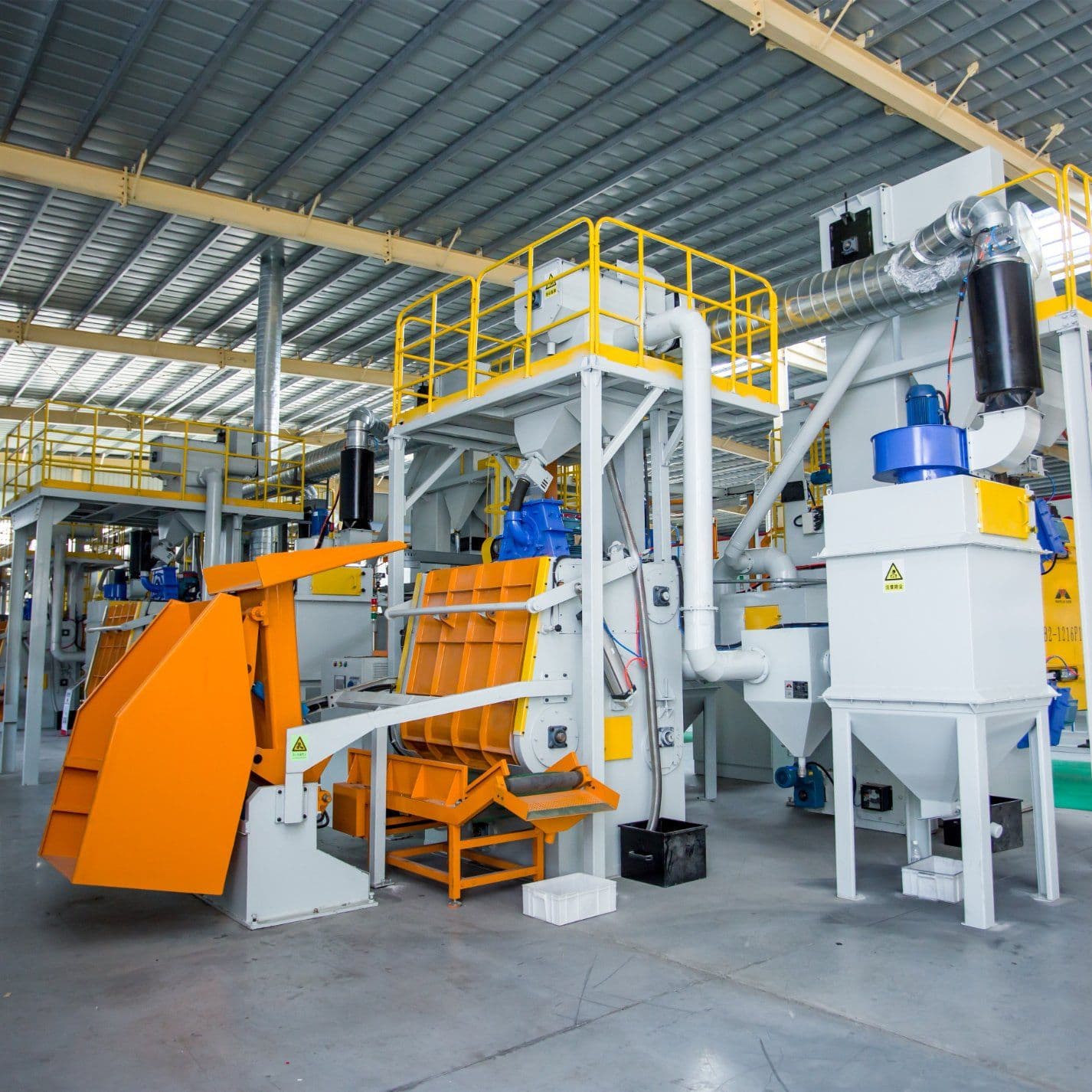
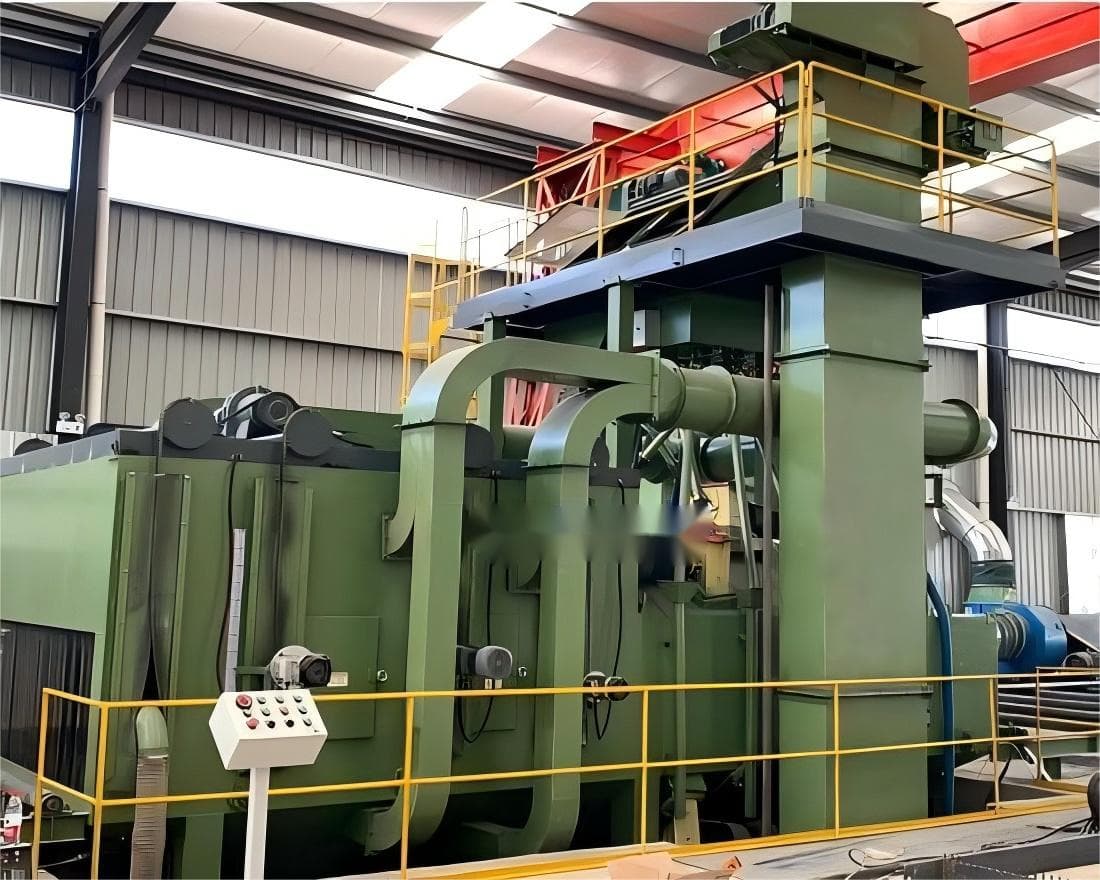
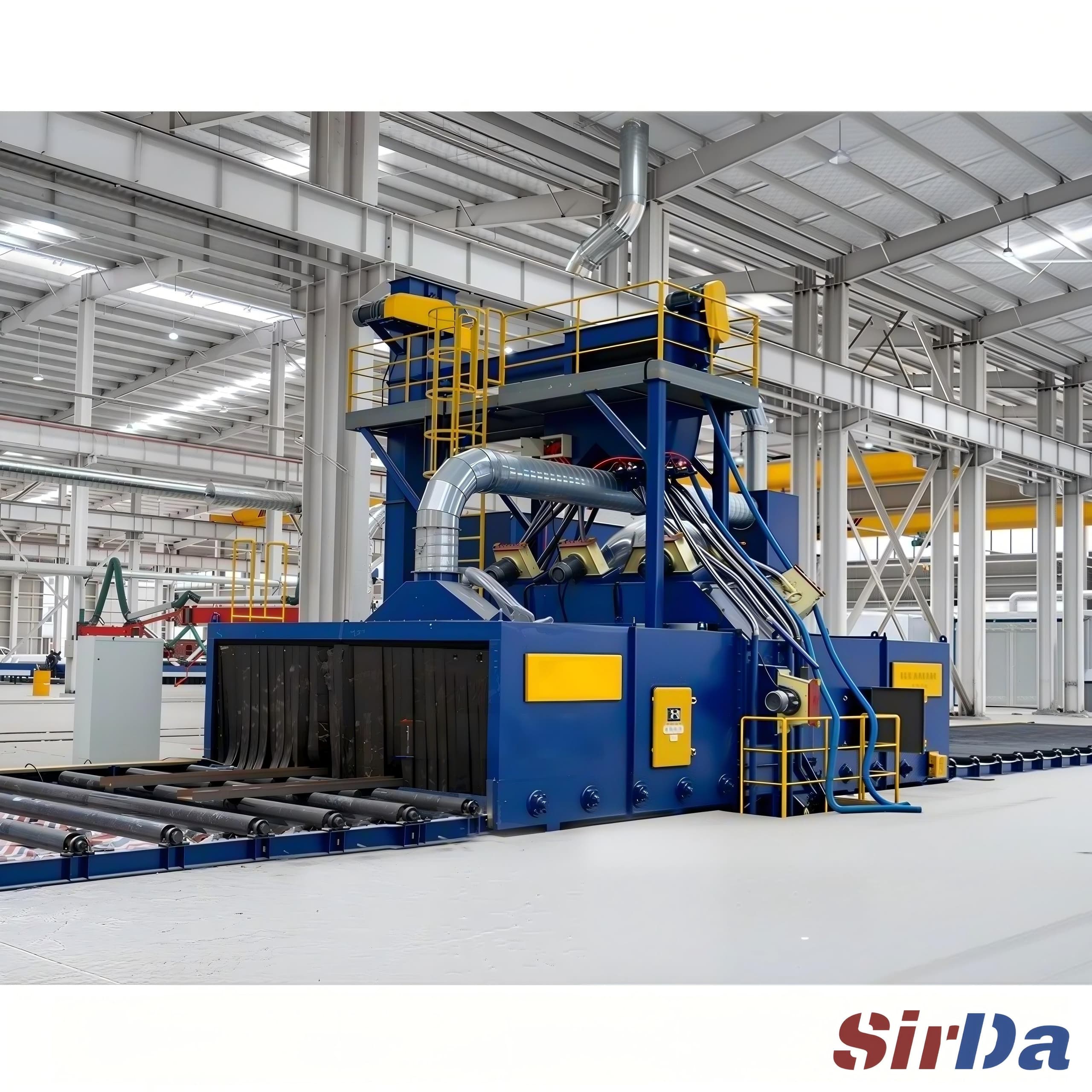
A typical reclaim loop has five stations. Spent media drops by gravity into floor hoppers or a collection trough. A screw conveyor carries it horizontally to a lift point. A bucket elevator raises it to the top of the machine. An air-wash or magnetic separator strips out dust, broken particles and tramp debris. Clean media falls into a storage hopper and gravity-feeds the wheels again. A connected dust collector pulls the fines the separator throws off, so the loop stays closed.
The screw and the elevator are not really rivals — they do two different jobs in the same circuit. The interesting design question is how much of the route you hand to each, and what fails when the balance is wrong.
Screw conveyor: cheap to run, costly to neglect
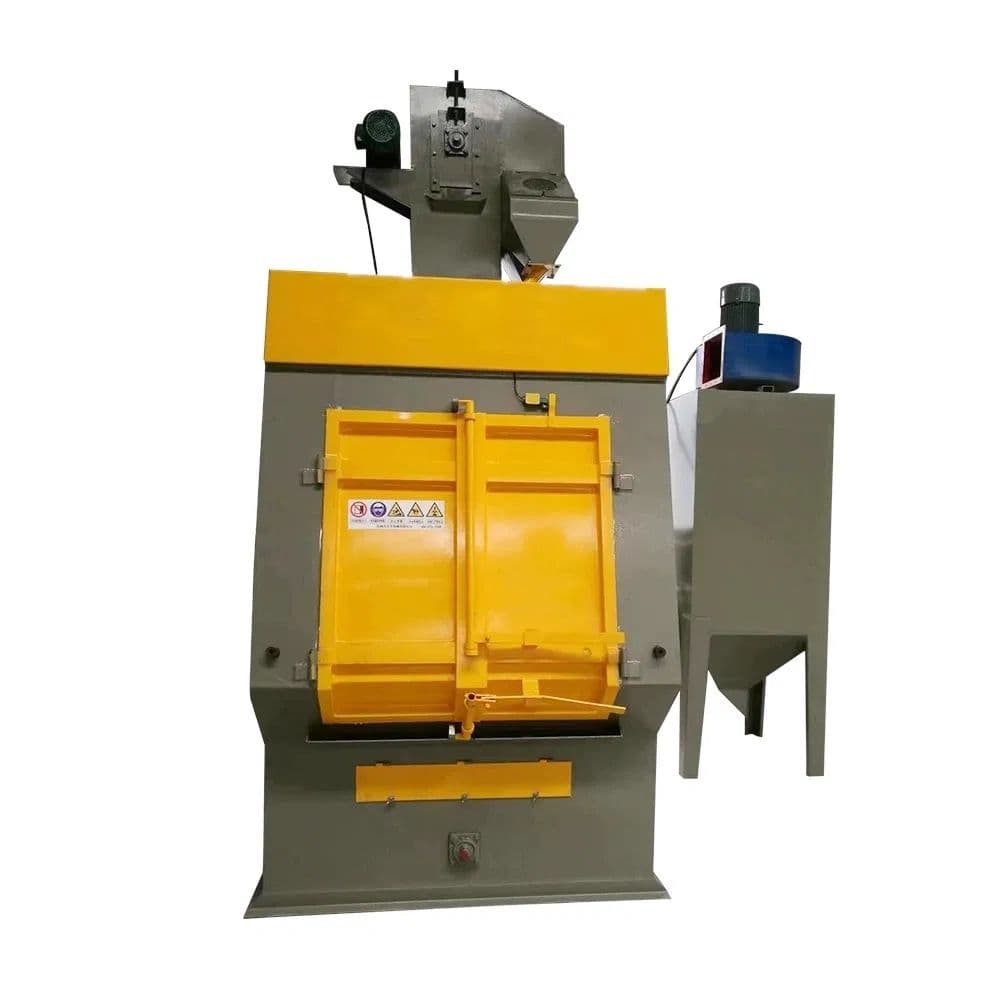
A screw conveyor, often called an auger, is the horizontal mover. In a blast room it usually lives under the floor grating, gathering media from longitudinal screws into a transverse screw that feeds the elevator. On a tumble or continuous machine it sits at the bottom of the cabinet, funnelling spent shot to the next stage.
Where it wins is simplicity and low headroom: a screw needs almost no vertical space, moves media steadily, and has no buckets to lose. Wear-resistant steel flights with rubber or manganese liners hold up well against steel shot and grit. For heavy, recyclable media — steel shot, steel grit, aluminium oxide — a mechanical screw-and-elevator floor is still the highest-recovery option available.
Where it bites is wear you cannot see. The shaft and bearings sit under the grating, so they are the parts most often skipped during maintenance. Tramp metal — bolts, slag, weld spatter, paint chips — collects in the debris basket of the rotary screen and, if that basket is not emptied, starts riding through the auger. On lines that throw a lot of tramp, some builders fit a shaker conveyor with perforations instead of a plain screw, sieving the junk out before it reaches the auger. Kinks wear through the flight from the inside, so a screw that looks sound from above can be paper-thin below.
Bucket elevator: the vertical bottleneck
The bucket elevator is the only part of the loop whose job is vertical lift. A belt carries buckets that scoop media from the boot at the bottom, carry it up the shaft, and dump it into the upper trough where a second screw moves it to the separator. A shed plate stops media falling back down the shaft.
Its advantage is exactly that vertical reach: it lifts media in a small footprint and keeps the whole loop compact, which is why machines with tight ceiling clearance lean on a taller elevator rather than a longer screw run. For high-volume rooms it is the standard.
Its weakness is that it is one belt, and a belt is a single point of failure. Buckets wear or go missing from the belt; a missing bucket silently drops media back into the boot instead of the trough, so flow through the machine falls with no alarm. Belt tracking drifts, and a mistracked belt scours the elevator housing wall. Belt tension is the one adjustment that matters most: it is set about a month after start-up and re-checked whenever throughput looks soft. Too loose and the belt slips; too tight and the bearings load up.
A practical balance: screw-heavy or elevator-heavy?
There is no universal winner, only the right balance for your part, your media and your building. Run this checklist before the layout is fixed:
- Headroom — If you cannot excavate the floor or the ceiling is low, a full screw-and-elevator pit will not fit. A raised floor or a pneumatic circuit may be the only realistic path.
- Media weight — Heavy, recyclable media such as steel shot and steel grit favour a mechanical screw-plus-elevator loop. Light or fragile media like glass bead or plastic is happier in a vacuum or pneumatic reclaim that handles it gently.
- Tramp load — Lots of bolts, slag or flash? Favour a shaker screen ahead of the auger, or you will be pulling jammed screws.
- Single point of failure — If one elevator belt stops the whole line, ask whether two shorter elevators or a longer screw run is safer for your uptime target.
- Service access — Screws hide under grating; elevators need a trap door and headroom to reach the belt. Pick the layout your crew will actually inspect.
Get the balance right and the separator keeps returning clean media at better than 95 percent recovery, steel shot cycles through dozens of passes, and abrasive spend stays a managed line item instead of a surprise. Get it wrong and you are either shovelling media by hand or watching throughput fade with no obvious cause. When you specify a machine, the reclaim circuit deserves the same attention as the blast wheel itself.