Factory acceptance testing: what to watch during the FAT
A factory acceptance test is your cheapest insurance when buying a shot blasting machine. Here is what to verify before shipment — from blast wheel alignment and the performance trial to the documents you must walk away with.
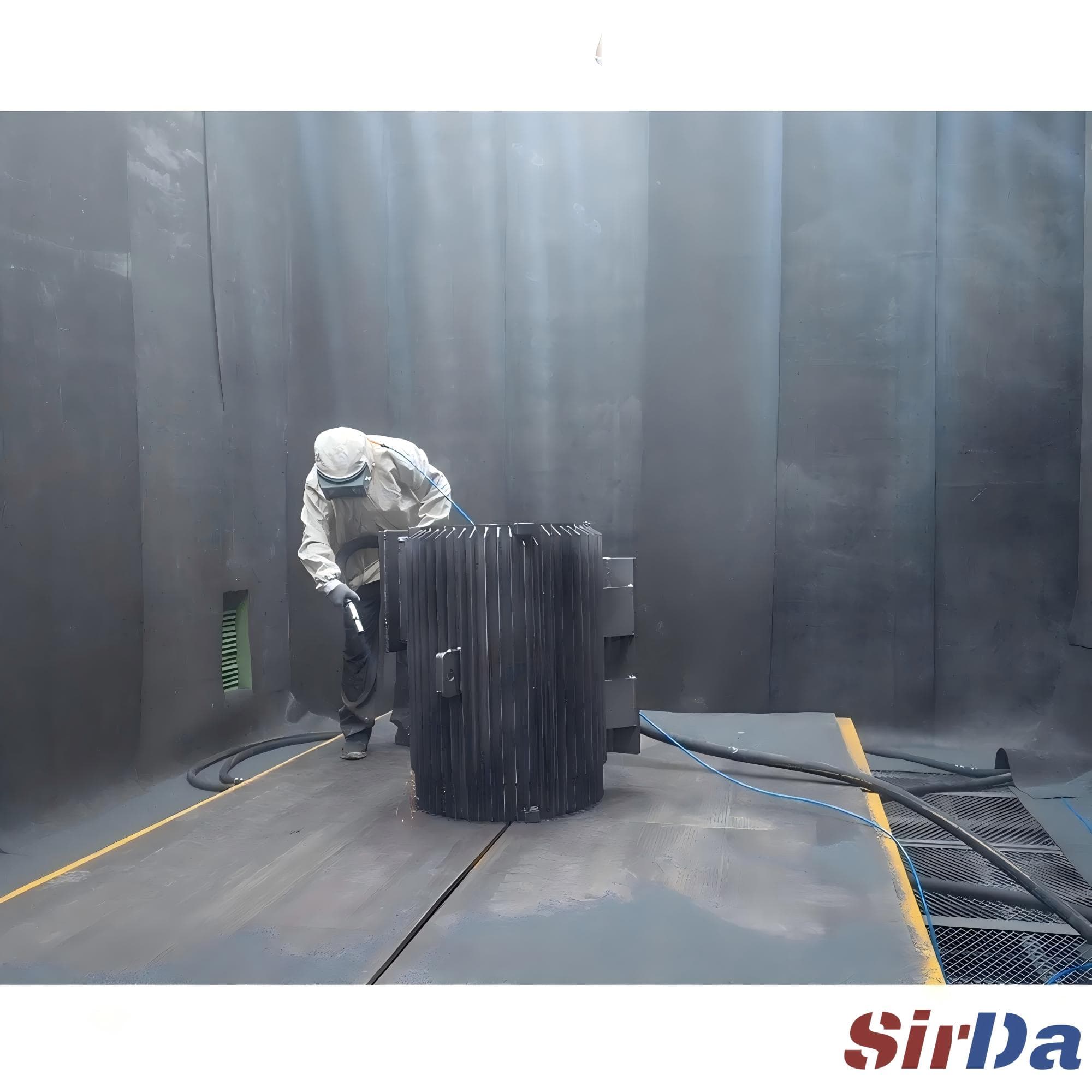
Why the factory acceptance test is where your money is actually protected
A shot blasting machine is one of the few pieces of shop equipment where the specification sheet and the delivered reality can quietly diverge. It throws abrasive at high velocity, runs heavy motors for hours, and moves tonnes of media through a sealed cabinet every shift. If a blast wheel is misaligned, a conveyor chain is over-tensioned, or a dust collector seal leaks, you will not see it on a photograph of the finished paint job. You will see it three months in, when a liner fails or the cleanliness grade drifts out of spec.
The factory acceptance test (FAT) is the single point in the project where you can witness the machine running, measure what it actually does, and refuse shipment before it leaves the builder's floor. Correcting a fault in the shop costs a fraction of correcting it on your site, where you have no spare blades, no lifting gear on standby, and a production line waiting. A structured FAT is not bureaucracy — it is the cheapest insurance in the whole purchase.
What to confirm before anyone switches the machine on
Most serious defects are mechanical or documentary, and they show up before the first abrasive is thrown. A pre-power inspection catches them while they are still cheap to fix.
- Blast wheel build — check wheel centreline alignment, blade seating, and control-cage positioning against the tolerance drawing. A wheel that is out by a millimetre throws media off-pattern and eats liners early.
- Liners and wear plates — confirm every internal liner, wear plate, and rubber seal is fitted and covered. Missing or reversed segments are the most common cause of early cabinet damage.
- Conveyor and elevator — verify chain tension, sprocket alignment, and bucket attachment across the full run. Misalignment that looks harmless static often only appears under load.
- Door interlocks and guards — confirm every access door interlock, guard switch, and E-stop is physically present and wired before electrical commissioning begins.
- Documentation pack — review the approved-for-construction drawings, bill of materials, material certificates, welding records, calibration certificates for test instruments, and a backup of the PLC program and HMI source. The paperwork is part of what you are buying; a machine that ships without it cannot be safely modified or certified later.
The performance trial: what a real run actually proves
A five-minute empty spin is a sales demonstration, not a test. A defensible performance trial loads the machine with the abrasive mix and sample workpieces that match your real part profile, then runs it long enough for the weak points to surface.
- Blast pattern coverage — place standardised witness plates or coupons at representative positions inside the cabinet and inspect them for uniform coverage across the blast zone. Coverage that looks acceptable on one plate and patchy on another points at a wheel or fixture problem.
- Surface cleanliness grade — assess the achieved grade against the agreed specification, typically Sa 2 or Sa 2½, using a comparator rather than a glance. This is the number your coating supplier will hold you to.
- Throughput and cycle time — measure conveyor speed and the time to process a representative load. The quoted capacity should be confirmed at rated abrasive flow, not at idle.
- Motor load — record amperage draw under full abrasive flow versus idle, and confirm it stays within a stable band. A draw that swings tells you the wheel balance or feed is wrong.
- Media recirculation — observe separator efficiency, media mix quality, and fines removal rate across multiple cycles. Poor separation puts dust back on the part and shortens media life.
- Dust collector outlet — check outlet air quality and watch the bag seals during the run. Visible leakage at the seals is an automatic reject; it means fines are escaping into the workspace.
- Sustained run — keep the machine running for a sustained period, not a few minutes. Thermal expansion, lubrication migration, vibration, and controller drift all tend to appear only after thirty minutes or more of continuous operation.
Safety verification should be treated as a pass/fail gate with no partial credit. Every interlock, guard switch, E-stop circuit, and overload protection must be tested by deliberate fault injection — physically triggering each safety input to confirm the machine actually stops as designed, not merely that the wiring exists on a drawing. A supplier-managed FAT that only shows the machine running is not a FAT.
The paperwork and packing you should walk away with
The FAT report is your release evidence, so it has to show what was tested, what was measured, and what remains open — not a one-line "passed". Insist on actual measured values with instrument details, photographs of nameplates and the test setup, and a categorised punch list where every deviation has an owner and a target date.
Make sure the package also includes the electrical schematics, a spare-parts list with original manufacturer part numbers, and the operation and maintenance manual. For export, confirm the chamber interior is preserved with volatile corrosion inhibitor, desiccant bags are fitted, the crate is rated for the gross weight and meets the wood-packaging requirement, and the main shaft is locked against rotation for transit.
A FAT that ends with a clean signature and a thin folder has not protected you. The one that ends with measured data, a real punch list, and a machine you have personally seen throw abrasive onto your parts is the one worth paying the milestone for.