SAE J444 Steel Shot and Grit: Hardness and Working Mix
How SAE J444 designations work, what hardness does to profile and wear, and how to manage a working mix instead of just topping up the hopper.
Abrasive is the largest consumable cost in most shot blasting operations and the variable most often left unmanaged. Machine settings get attention because they have dials; the working mix gets attention only when something goes wrong. In practice the mix determines profile, cleaning rate, dust load and wear rate simultaneously.
What SAE J444 defines
SAE J444 covers cast steel shot and grit for peening and blast cleaning. It specifies size designations, hardness ranges and the general requirements for shape and microstructure.
Shot designations begin with S, grit designations with G. The number indicates the nominal size: a higher number means a smaller particle. Shot is round; grit is angular, produced by crushing shot.
Two abrasives with the same size number can behave very differently because shape and hardness are separate variables. That is why the designation alone is not a purchasing specification, and why the lot certificate matters as much as the order description.
Hardness ranges and what they change
Steel abrasive is supplied in defined hardness ranges. Within the usual ranges, harder abrasive cleans faster and holds its size longer, but it also wears the machine faster and is more prone to breaking down under impact.
Softer abrasive produces a more rounded, peened surface, breaks down more quickly and generates more fines. It is gentler on the machine and on thin parts.
The practical trade is between cleaning rate, profile, machine wear and consumption. There is no universally correct hardness; there is a hardness that matches the part mix and the machine's wheel energy.
For peening, hardness control is tighter because the intensity and the residual stress field depend on it. For general blast cleaning the tolerance is wider, but the working mix still has to be kept within a defined band.
Size and the working mix
A new charge of abrasive is not what does the work. The working mix — the blend of sizes present in the machine at any moment — is what contacts the part.
The mix is dynamic. Every impact breaks some particles and wears others down. The separator removes fines, the make-up system adds new abrasive, and the equilibrium between those two determines the mix.
Three failure modes matter.
Mix too fine. Cleaning rate drops, dust load rises and profile falls. Operators compensate by slowing the conveyor, which increases cost per part.
Mix too coarse. Profile rises above the coating band, the surface becomes overly angular and the risk of embedded abrasive increases. Machine wear accelerates.
Mix unstable. The size distribution oscillates because make-up is irregular. Operators chase the symptom with machine settings rather than fixing the cause.
The fix in all three cases is the same: measure the mix on a schedule, compare it with the target band, and adjust make-up and separator settings.
Consumption is a rate, not a number
Abrasive consumption is normally expressed as abrasive used per tonne of steel blasted, or per square metre of surface treated. The figure depends on the abrasive, the machine, the cleanliness grade and the care taken with recovery.
High consumption almost always has an identifiable cause:
- separator settings allowing usable media into the waste stream
- leaking cabinet seals and worn door gaskets
- worn wheel parts throwing an abnormal pattern
- excessive dust extraction pulling fines and good media together
- media that is too brittle for the wheel energy applied
Managing consumption means tracking it. A plant that does not record make-up quantities cannot tell a normal rate from a leak, and leaks are common because abrasive escapes quietly.
Testing incoming abrasive
Three checks catch most incoming quality problems. Size distribution by sieve confirms the grade. Shape assessment confirms that shot is round and grit is angular, not a mixture. Hardness testing confirms the delivered range.
Record the results by lot. If a profile problem or a wear spike appears, the lot record is the first thing to check, and without it the investigation starts from nothing.
Matching abrasive to process
Shot and grit suit different intentions.
Shot produces a rounded, dense profile and is the default for general cleaning and for peening. It is kinder to the machine and to thin sections.
Grit produces an angular profile with better keying for thick coatings and is preferred where a sharp anchor pattern is specified. It wears machines faster and breaks down more quickly.
Mixed abrasives are sometimes used deliberately to balance profile and cleaning rate. They work, but they make the working mix harder to control because two size distributions are being maintained at once.
Abrasive and the machine types
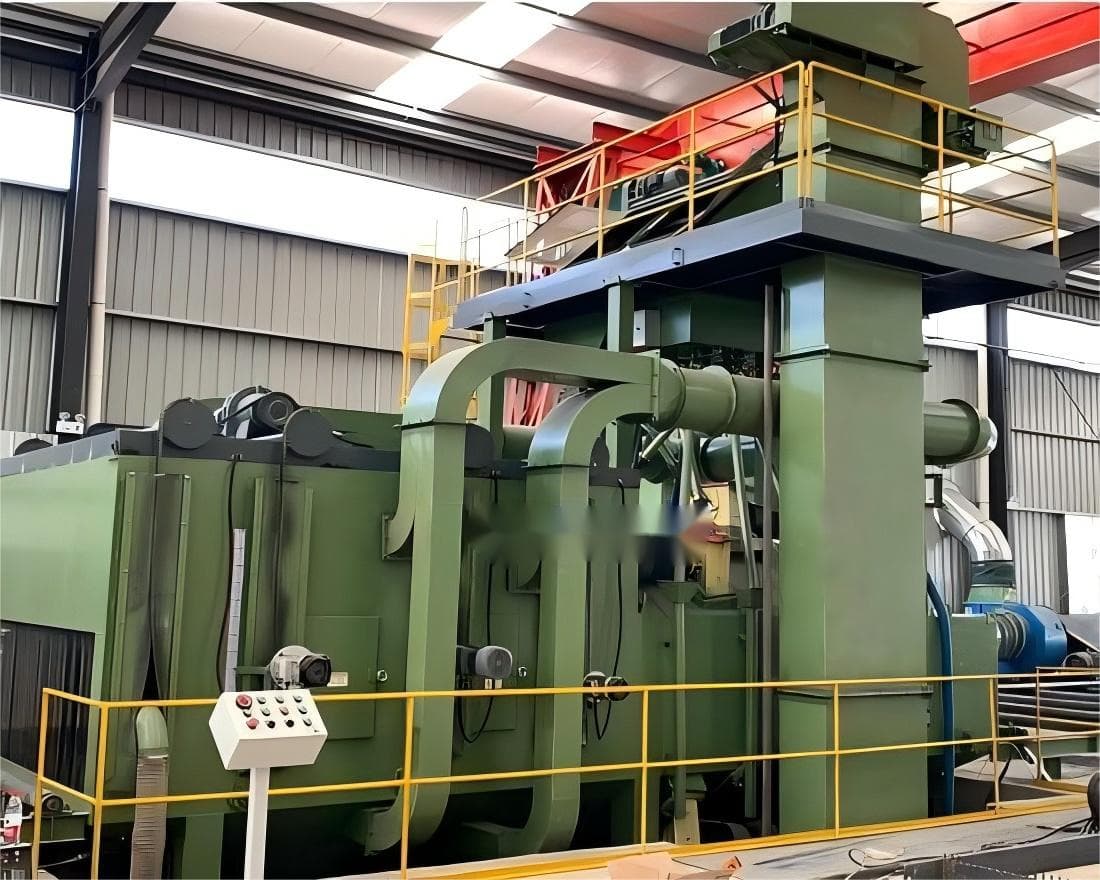
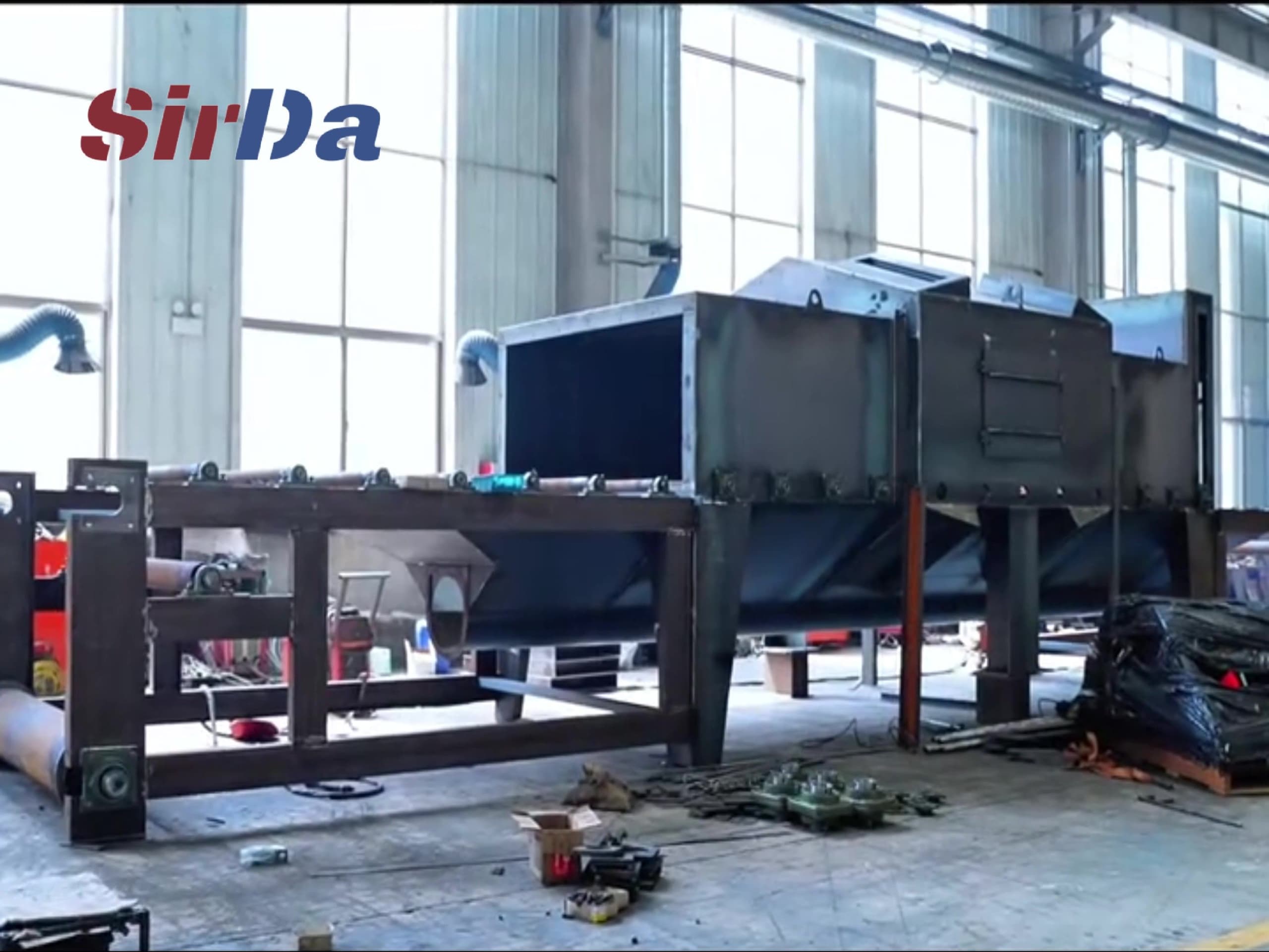
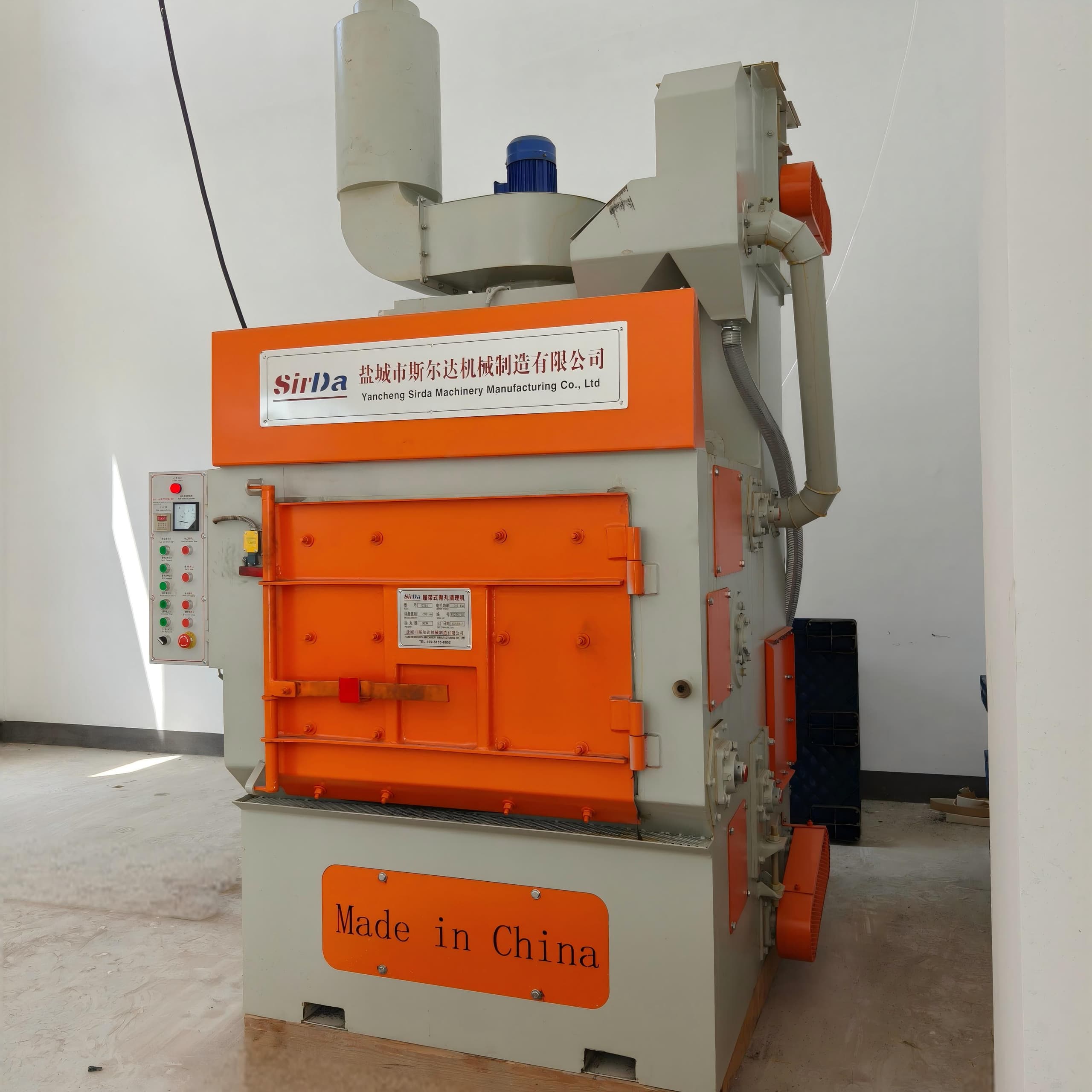
A tumble belt machine has a relatively small abrasive inventory and fast turnover, so the mix stabilises quickly but responds sharply to changes in make-up. A roller conveyor machine runs a larger inventory over a long line, so separator performance along the whole recovery path matters more than the make-up rate at any one point.
On mesh belt machines, the light parts and open belt mean that abrasive carry-out on parts is a real consumption path, and the recovery system has to be designed for it. Watching the floor under the discharge end tells you more about consumption than the hopper level does.
Delivery, storage and handling
Abrasive arrives in bags, drums or bulk tankers, and how it is stored decides whether the specification you paid for survives to the machine.
Moisture is the main enemy. Steel abrasive stored in a damp area rusts and cakes, and caked abrasive blocks feed systems and changes the flow rate. Bulk storage silos need to be kept dry and inspected for condensation, particularly where the silo is outdoors and subject to temperature cycling.
Contamination is the second issue. Storing abrasive in the same area as floor sweepings, sand or other media invites a mix-up that will not be visible until a profile problem appears weeks later. Keep grades separated, labelled and physically apart.
Handling also matters for the material itself. Dropping bags from height or pouring abrasive through a long unprotected chute generates fines before the abrasive ever reaches the wheel. Every unnecessary transfer adds broken media to the circuit.
Finally, record the lot on receipt and use stock in rotation. A lot record is the only way to trace a problem back to a delivery, and rotation prevents old stock from sitting in the back of the store until it is the only option left.
None of this is difficult, and all of it is routinely skipped. The cost appears later as an unexplained profile shift that no machine adjustment can correct.
A working mix control routine
Sample the mix at a defined interval and sieve it. Compare against the target band for that machine and job. Record the result with the make-up quantity for the same period.
Check the separator at the same time. A separator that is out of adjustment will produce a perfectly acceptable sieve result at the outlet while wasting good media to the dust collector.
Review the trend monthly. Consumption drifting upward over several months with stable production indicates wear or leakage, not a change in the steel being processed.
If you want help setting a target working mix for a specific cleanliness grade and coating system, our engineers can work from your current sieve data — send it through the contact form.
Frequently asked questions
What do the S and G prefixes in SAE J444 mean?
S designates cast steel shot, which is round. G designates cast steel grit, which is angular and produced by crushing shot. The following number indicates nominal size, with higher numbers meaning smaller particles.
Does harder abrasive always clean faster?
It cleans faster in the short term but breaks down differently, wears the machine faster and can push profile above the coating band. The right hardness depends on the part mix and the wheel energy applied.
What is a working mix?
The blend of abrasive sizes actually present in the machine at a given moment. It is not the same as the abrasive you purchased, because impact continuously breaks and wears particles while the separator removes fines.
Why is my abrasive consumption increasing?
Usually a separator passing good media to waste, leaking seals, worn wheel parts or excessive extraction. Track make-up quantities against production and inspect the recovery path before changing media grade.
Can I mix shot and grit?
You can, and it is sometimes done to balance profile against cleaning rate. It complicates working mix control because two size distributions must be maintained at once, so it needs a clearer sampling routine.
How often should the working mix be tested?
At a defined interval matched to turnover, and whenever profile, cleaning rate or consumption changes. Record sieve results alongside make-up quantities so trends can be reviewed monthly.