
Railway maintenance
Railway maintenance parts, North Africa
A railway maintenance base in North Africa overhauls freight wagon components. Brake blocks, coupler pins, axle box covers and other small steel parts arrive with rust, old paint and grease, and the depot used wire brushes and angle grinders to prepare them for inspection and recoating. The volume is high but the parts are small, and the manual method was creating a bottleneck before the reassembly benches. The parts must not be damaged by heavy impacts, and the depot needed a batch process that could be run by the existing team. The depot handles a steady flow of worn parts from the wagon overhaul line, and every part has to be ready for inspection on the same day it is stripped. Grease and old paint also hid cracks that the inspection team needed to see.
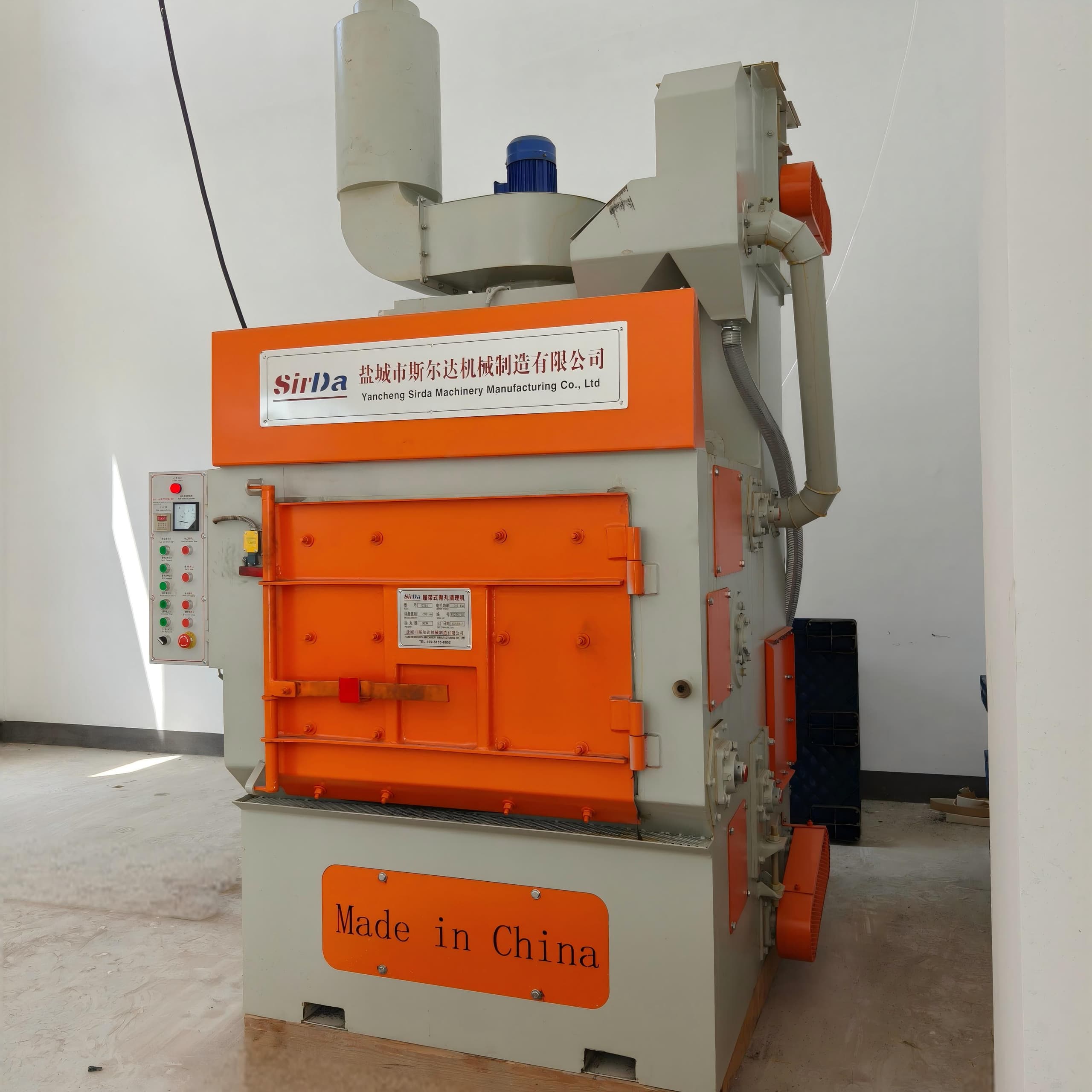
A Q32 tumble belt shot blasting machine was selected. The rubber belt accepts batches up to 120 kg and individual parts up to 2 kg, which covers the depot component range. The published throughput is 0.6–1.2 t/h, and the depot runs at 0.8 t/h. The machine is loaded by placing a batch in the belt, and the tumbling action exposes all sides of the small parts without manual handling. Threaded or precision parts are reviewed separately and are not mixed into the same batch. The batch size was matched to the stillage used at the benches so parts do not have to be re-counted after blasting, and the rubber belt and the low drop height reduce the risk of bent or chipped parts.
The Q32 uses a rubber belt that is gentler on painted or machined surfaces than a steel belt. The blast wheel, separator and dust filter are sized for the batch load, and the extraction is connected to the depot workshop ventilation. A pre-wash removes loose grease before blasting, because shot alone does not remove oil. The operator selects the batch recipe, monitors the ammeter and unloads into a container at the discharge end. The machine footprint fits the existing bay without blocking the inspection benches. The pre-wash tank was sized for one batch at a time so the blasting cycle is not waiting for parts to dry, and the dust filter is cleaned on a weekly schedule while the separator screen is checked for wear.
At 0.8 t/h a 90–110 kg batch takes roughly 8–10 minutes of blasting, plus loading and unloading. The depot runs several batches per shift and keeps a reference part for the surface check. Accessible surfaces reach SA 2.5, and the reassembly team receives parts without the patches left by hand tools. Delivery included the foundation, the pre-wash connection, commissioning with depot components and training. Spare belts and wear parts are kept at the base so the maintenance schedule does not depend on a long delivery. The depot logs the batch weight, blasting time and surface result so the overhaul file can be completed. The machine is stopped and locked for belt inspection, and the maintenance team follows a checklist that covers the drive, belt tracking and the dust filter.
Project facts
- Industry
- Railway maintenance
- Country / region
- North Africa
- Workpiece
- Brake blocks, coupler pins and axle box covers, ≤2 kg each
- Machine
- Q32 tumble belt shot blasting machine
- Result / takt time
- 0.8 t/h in 90–110 kg batches; SA 2.5 on accessible surfaces
Your next project
Let’s find your solution.
Send your workpiece and production requirements.
Let’s define the right blasting system.