
Steel fabrication
Structural steel cleaning, East China
A steel fabrication plant in East China builds welded beams, columns and plate assemblies for industrial buildings. The shop receives mill scale, rust and welding residue on parts that can be up to 12 m long and weigh between 8 and 22 t. Cleaning was done at the paint line with hand grinders and spot blasting, which left a patchy surface and slowed the coating crew. The plant wanted a through-feed solution that could sit before the painting booth and handle the same lifts already used in the bay. The shop works to a weekly painting programme, so parts often wait in the yard and pick up surface rust before they reach the booth. Some assemblies are too wide for a small cabinet and too heavy for a turntable, which is why the manual route kept coming back to grinders.
A Q69 roller conveyor machine was arranged as a pass-through unit ahead of the paint line. The published range covers workpieces from 5 to 30 t and 2.0–5.0 t/h, so the largest welded column fits within the roller loading. The line is set to 4.0 t/h for the current mix. Beams are loaded by the existing overhead crane, travel on powered rollers and leave the chamber ready for masking and painting. No extra transfer crane was needed. The line was laid out so the crane can load at the entry end and unload at the exit without crossing the blast zone, and the published roller width and weight range were checked against the widest base plate in the shop.
Four 11 kW blast wheels are positioned above and below the roller path, and the roller speed is set from the beam section and the required surface. The chamber has replaceable wear liners, and the abrasive recovery system separates scale and dust before returning shot to the wheels. Dust extraction is connected to the shop filter unit, and the outlet was coordinated with the paint booth extract so the two systems do not fight each other. The recipe list covers plates, H-beams and box sections, and the operator selects the section type before loading. The roller drives are inverter-controlled, so the line can be slowed for a heavy column without changing the blast settings. Abrasive consumption is checked weekly, and the separator is cleaned at the same interval.
At 4.0 t/h a 12 m beam section moves through in a few minutes, and the shop schedules blasting and painting in the same shift. The paint team checks the surface and the profile on a reference beam at the start of each batch. The plant notes fewer spot repairs before coating, although the acceptance decision remains with the coating inspector. Delivery included foundation work, roller alignment with the existing line, commissioning on production beams and operator training. Wear liners and blades are stocked according to the recommended list. The paint booth extract was balanced after commissioning so blast dust does not migrate into the coating area. Records of line speed and surface result are kept with the painting programme, and safety guards cover the entry and exit roller sections while the maintenance team inspects the line stopped.
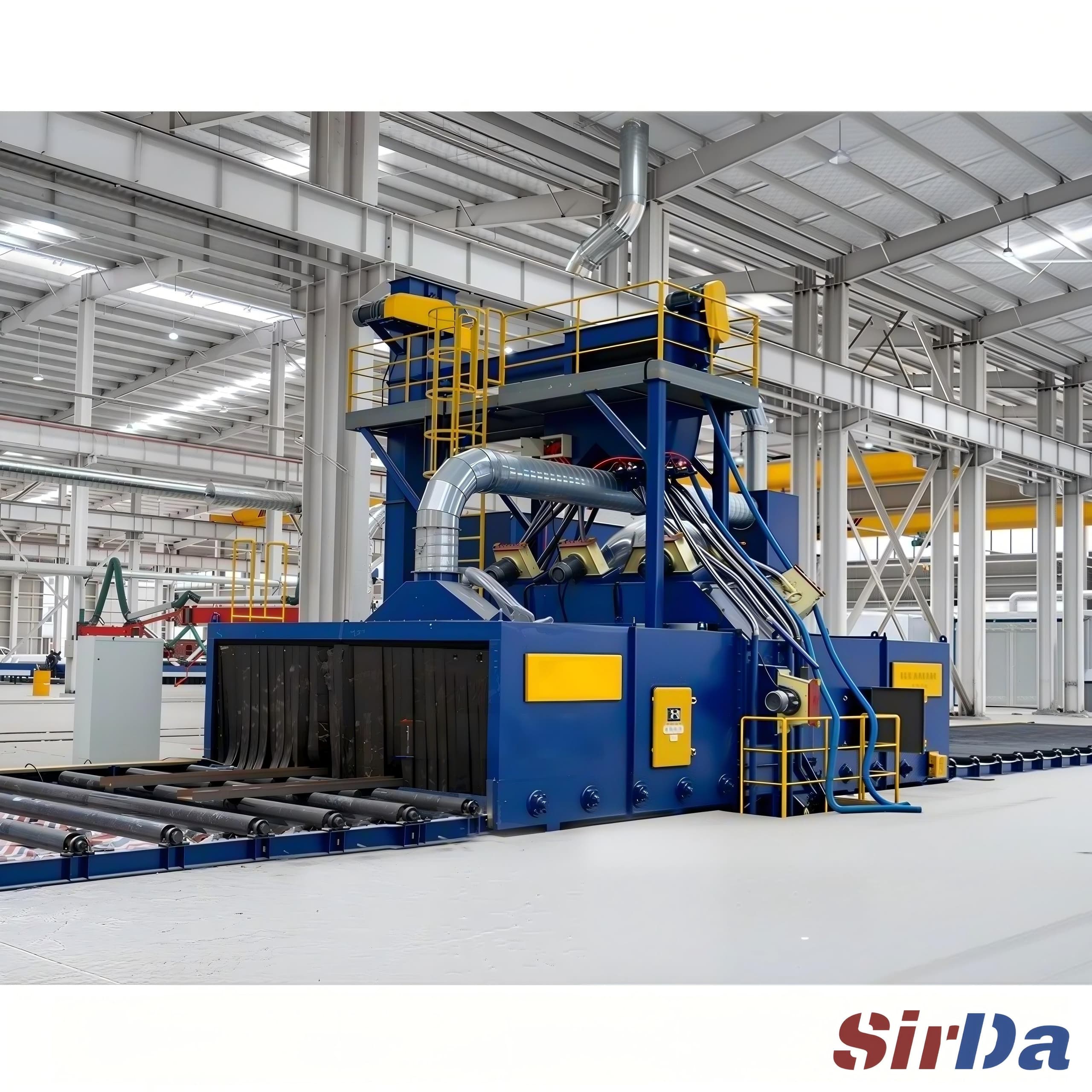
Project facts
- Industry
- Steel fabrication
- Country / region
- East China
- Workpiece
- Welded beams, columns and plate assemblies, 8–22 t
- Machine
- Q69 roller conveyor shot blasting machine
- Result / takt time
- 4.0 t/h continuous pass; SA 2.5 before painting
Your next project
Let’s find your solution.
Send your workpiece and production requirements.
Let’s define the right blasting system.