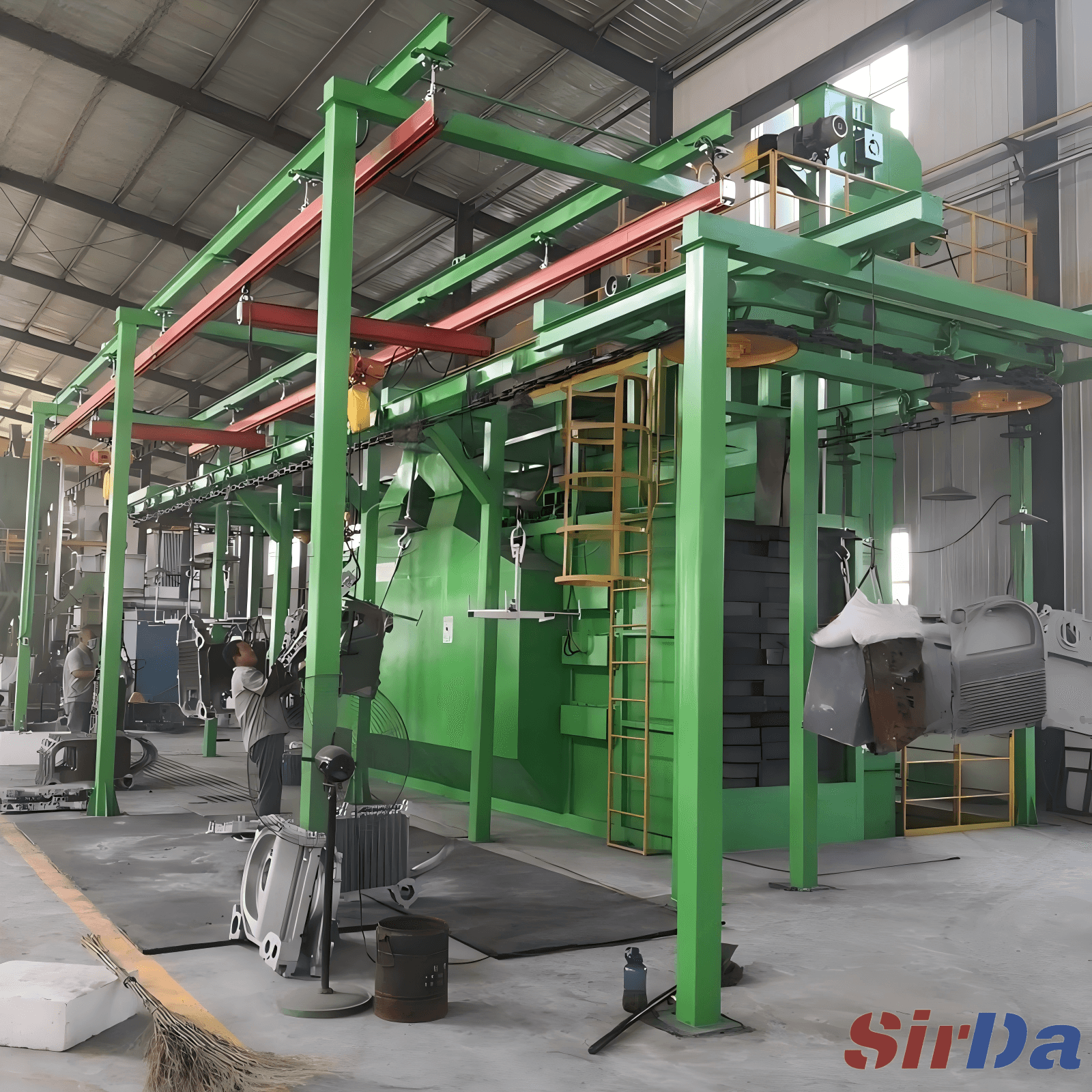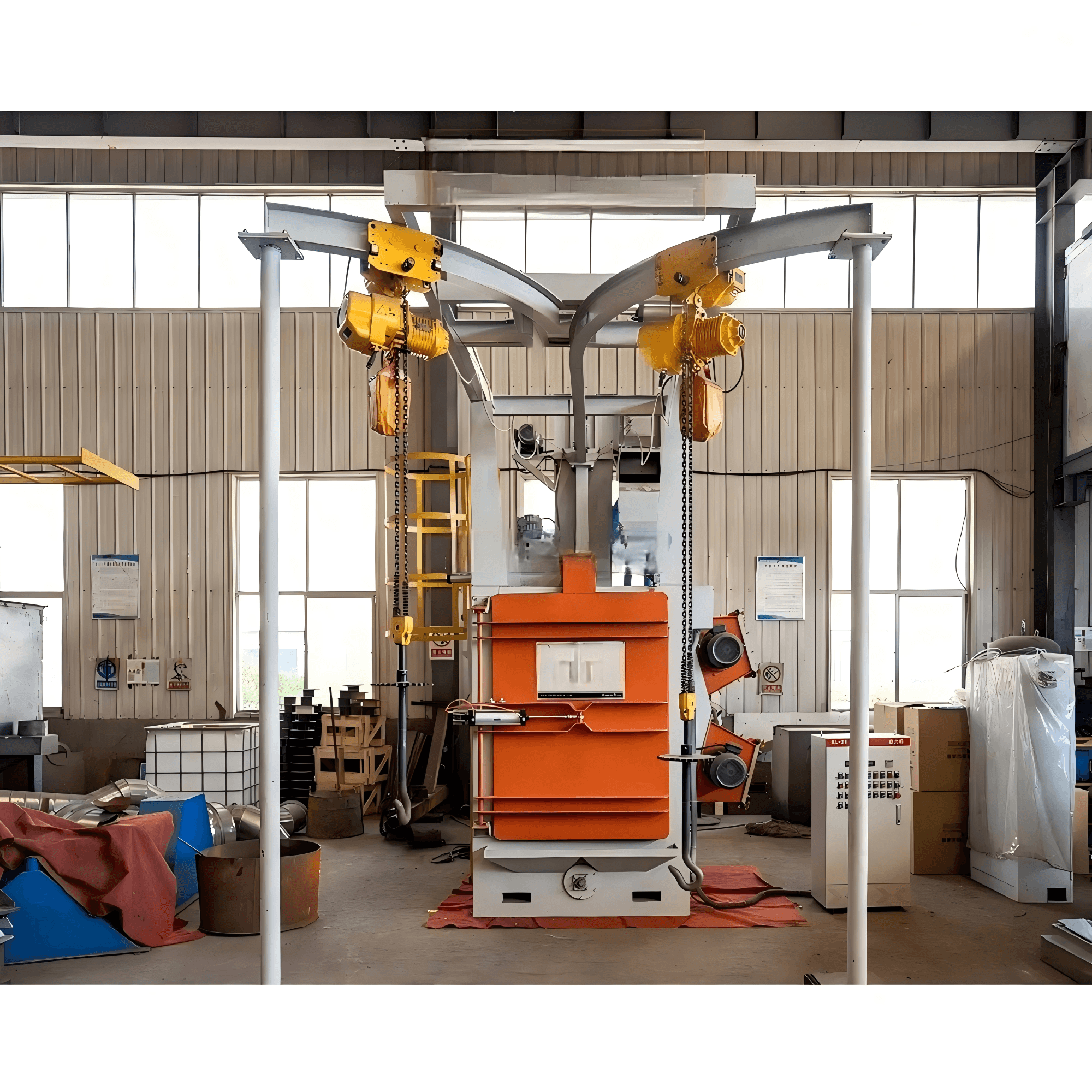
Q37
Hanger Type
Castings and complex suspended workpieces
Explore machine
Home / Machines / Tumble Belt Shot Peening Machine for Fatigue-Critical Parts
A rubber tumble belt shot peening machine that uses controlled blast intensity to induce compressive residual stress in springs, gears, forgings and other fatigue-critical parts, extending service life through uniform surface coverage.
Read product details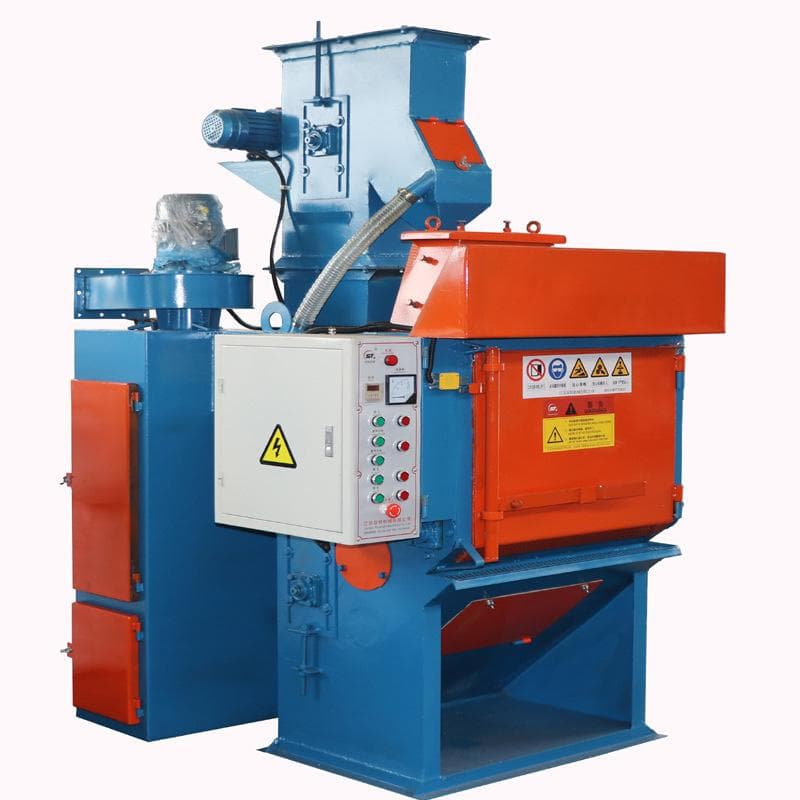
Cleaning removes rust and scale; peening changes the surface itself. A controlled stream of shot strikes the part again and again, plastically deforming the surface layer and locking compressive residual stress into the material beneath it. That stress field is what delays fatigue crack initiation and propagation in parts under cyclic loading. The goal here is a longer service life, not simply a brighter finish.
Typical workpieces are springs, gears, shafts, forgings and other fatigue-critical metal parts. The compressive layer improves resistance to fatigue, stress-corrosion cracking and surface-initiated failure. It is a finishing step for parts that already carry their final geometry; it does not correct dimensional errors and does not replace proper heat treatment.
Intensity, coverage, media type and cycle time all depend on workpiece geometry, material and the fatigue target. These are confirmed against samples and the customer's inspection method rather than quoted as fixed numbers. Specific capacity and machine settings are reviewed after the workpiece has been evaluated.
| Parameter | Value |
|---|---|
| Workpiece | To be confirmed: part type, geometry and material |
| Peening target | To be confirmed: target intensity and coverage |
| Media | To be confirmed: shot type and size |
| Cycle | To be confirmed: batch size, tumble time and unloading |
| Inspection | To be confirmed: intensity and coverage verification method |
| Configuration | To be confirmed: blast wheel count and dust extraction |
Share a photo or drawing, material, maximum dimensions and expected output. These details help us review a suitable configuration.
Send project requirementsQ37
Castings and complex suspended workpieces
Explore machine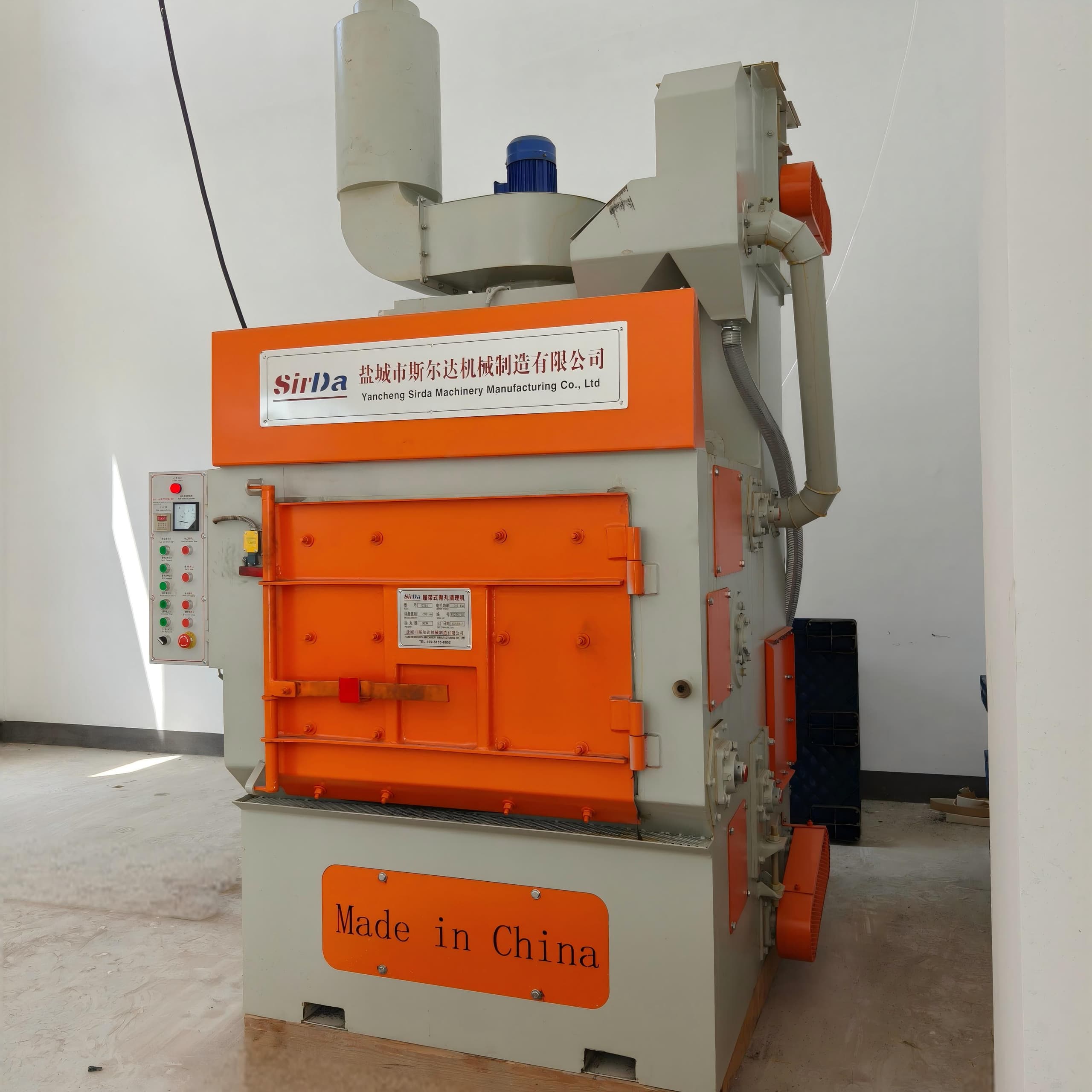
Q32
Batch preparation for smaller metal components
Explore machine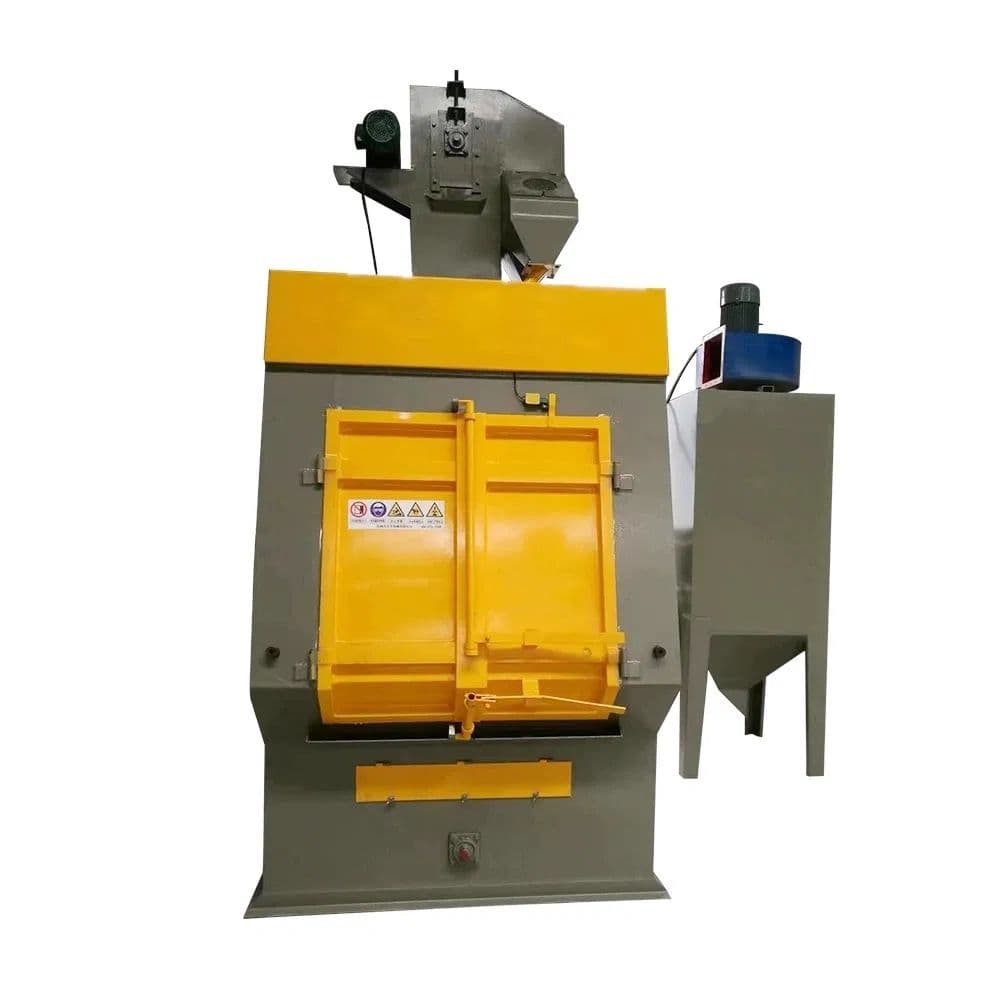
Batch cleaning
A batch shot blasting machine that mounts its blast heads above a horizontal chamber and discharges through a gated outlet, so small castings and stampings are cleaned from several directions in one cycle without being clamped or hung on hooks.
Explore machine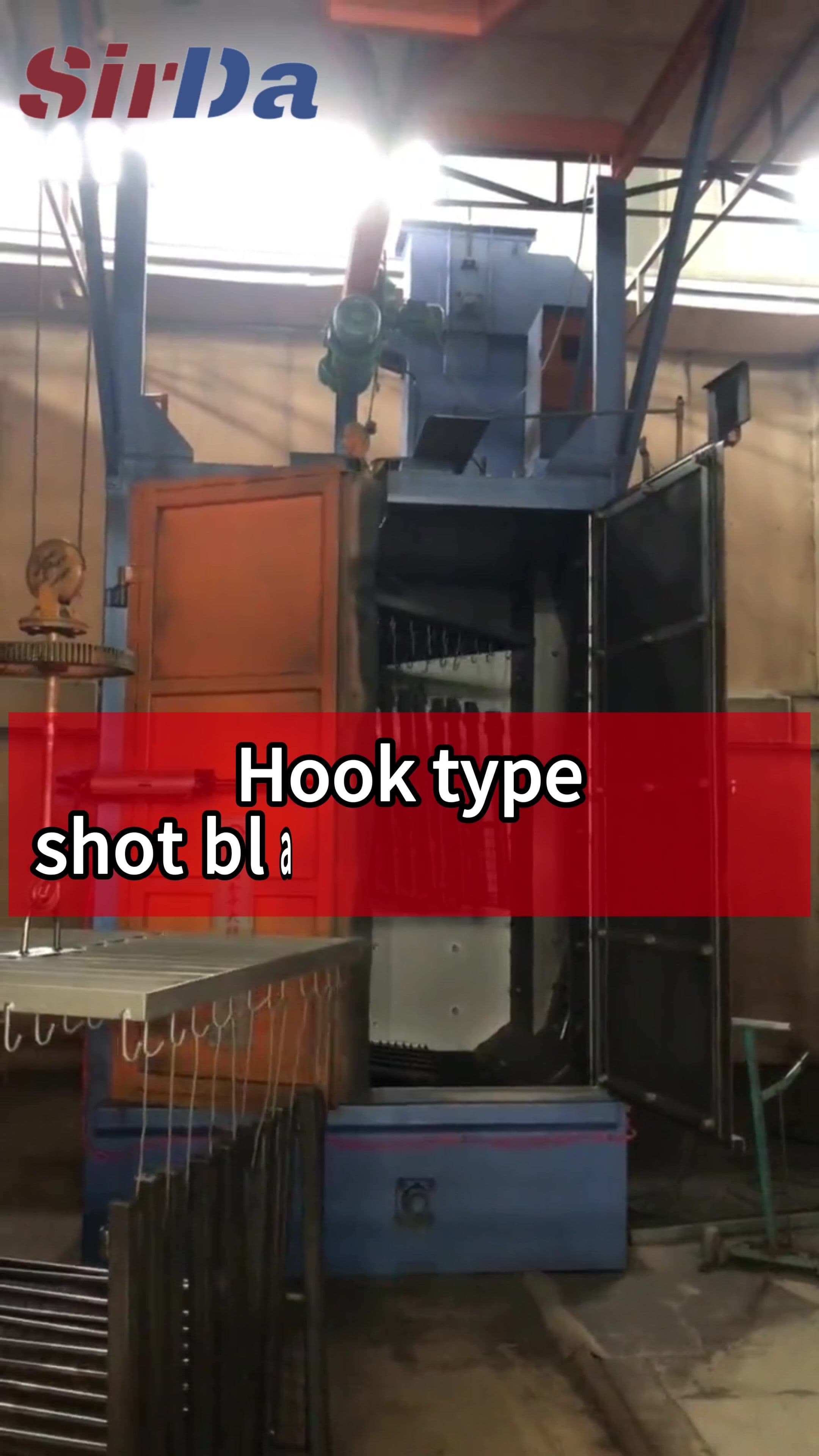
Batch cleaning
A batch shot blasting machine with rotating hanger hooks, built for workpieces that are too heavy to tumble and too awkward to lay on a conveyor. Removes rust, mill scale and old coating to prepare steel and fabricated parts for painting or powder coating.
Explore machineMatch workpiece handling, blasting configuration and production flow to your application.
Explore industry applications