Q37
Hanger Type
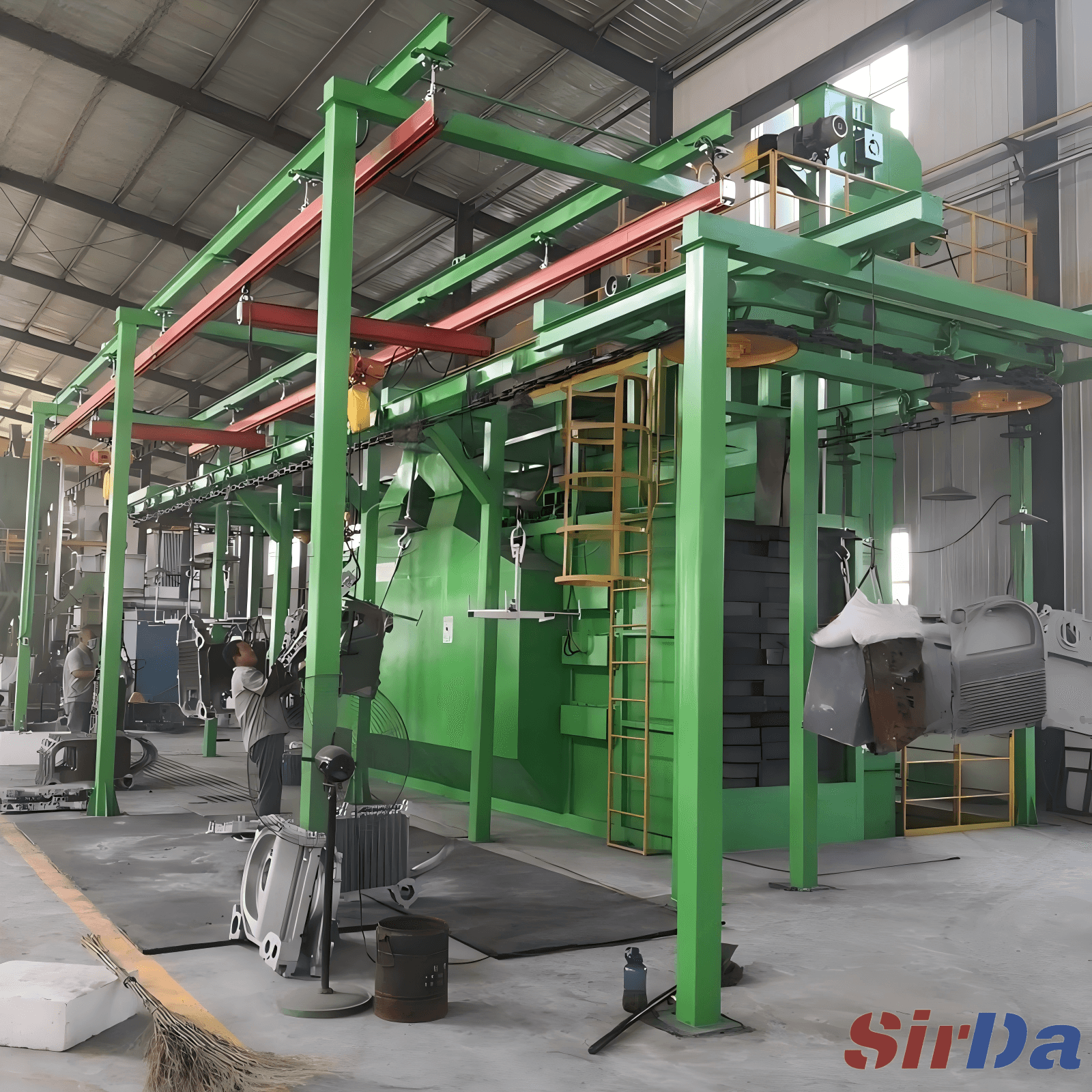
Castings and complex suspended workpieces
Explore machine
Home / Machines / Crawler Belt Shot Blasting Machine for Automotive Casting Sand Removal
A rubber-belt crawler shot blasting machine that removes casting sand, scale and adhered residue from small automotive castings in batch loads.
Read product details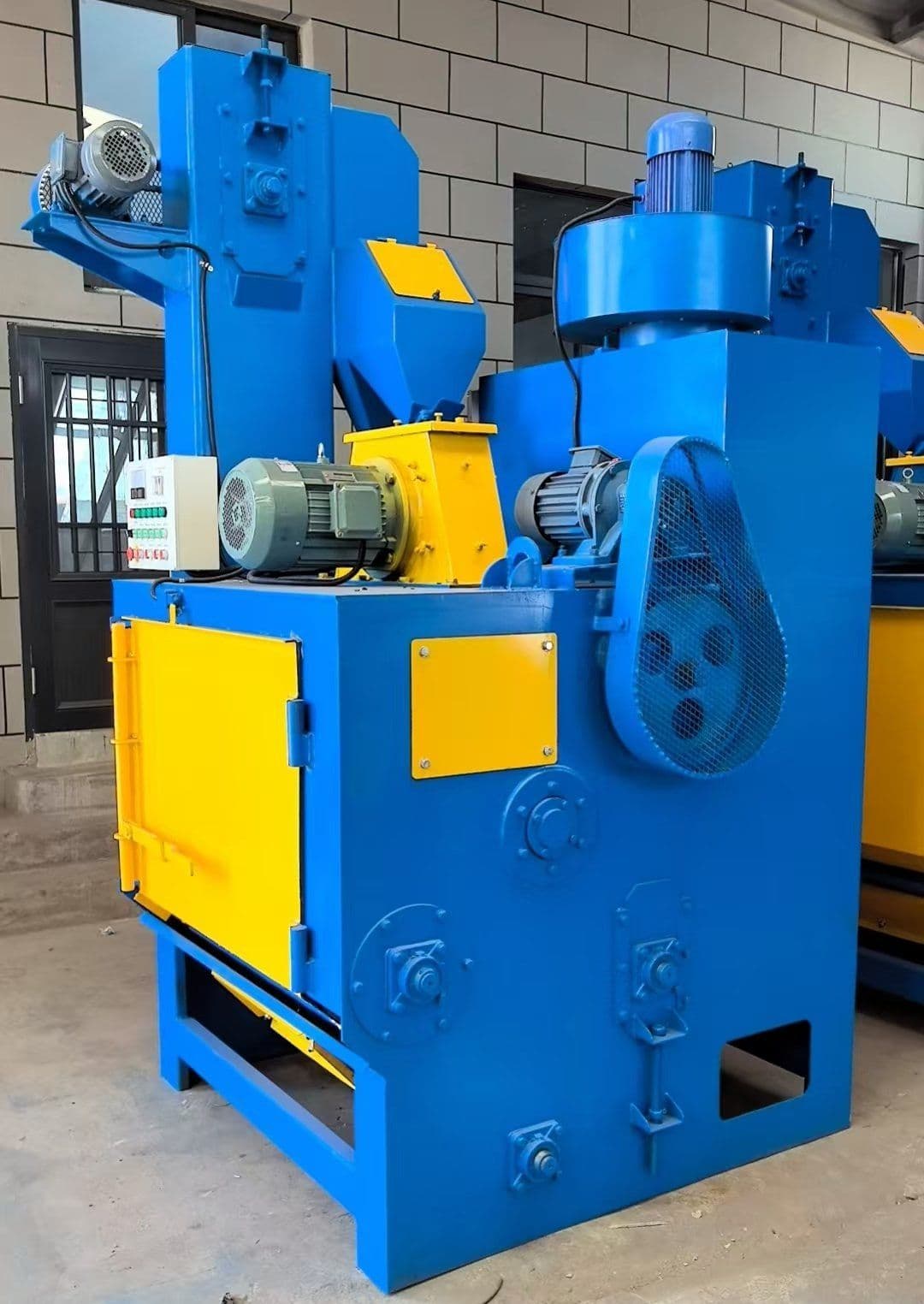
Small automotive castings — brackets, housings, caps and fittings — leave the mould with sand, scale and adhered residue in pockets and on machined faces. A crawler belt machine is built for this job: parts are tumbled in a rubber-lined chamber while several blast wheels throw abrasive at every surface. Unlike a hook or through-feed line, batch tumbling reaches internal passages and blind corners that a fixed workpiece position cannot expose.
The endless rubber belt carries the load, tumbles it, and discharges it at the end of the cycle. This does two things at once. It keeps fragile castings from colliding with steel fixtures, and it continuously reorients each part so no face stays hidden from the blast stream. Loading can be manual or automatic, and belt speed and cycle time are set to the part rather than to a fixed output figure. Mixed batches are practical as long as parts fall within the chamber's usable size and weight range.
There is no single output figure that fits every auto casting line. Before a configuration is fixed, confirm the alloy and part geometry, the largest and smallest pieces in the batch, the batch weight, the incoming sand condition, and the surface finish expected after cleaning. Voltage, collector type and automation level are then reviewed against those inputs. Every parameter is evaluated against the actual workpiece rather than assumed.
| Parameter | Value |
|---|---|
| Workpiece | Small automotive castings; confirm alloy, mass range and geometry |
| Handling | Batch crawler belt tumbling; confirm part size and batch weight |
| Surface target | Casting sand, scale and residue removal; confirm required finish |
| Abrasive | Confirm abrasive type and separation requirements |
| Dust collection | Confirm collector type and site extraction conditions |
| Configuration | Reviewed against the actual workpiece and finish requirements |
Share a photo or drawing, material, maximum dimensions and expected output. These details help us review a suitable configuration.
Send project requirementsQ37
Castings and complex suspended workpieces
Explore machine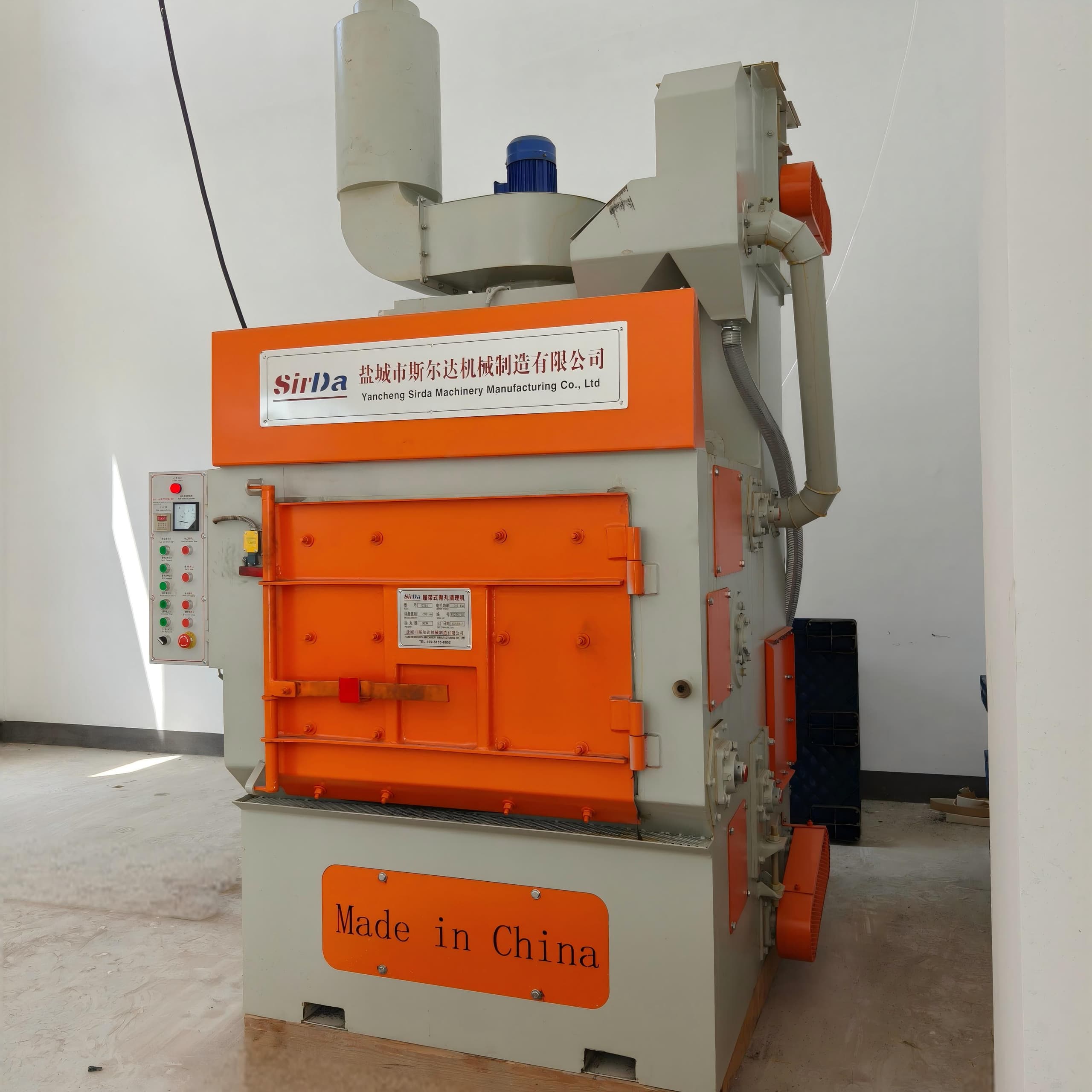
Q32
Batch preparation for smaller metal components
Explore machine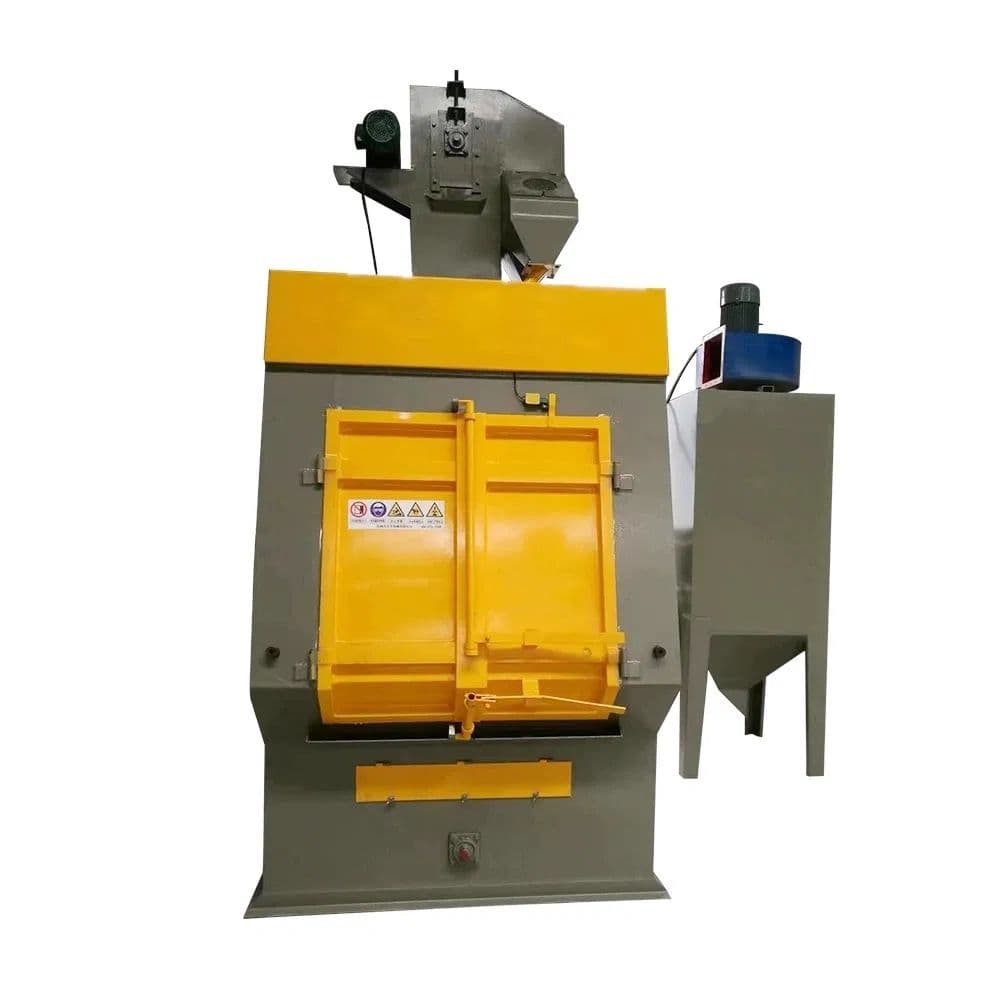
Batch cleaning
A batch shot blasting machine that mounts its blast heads above a horizontal chamber and discharges through a gated outlet, so small castings and stampings are cleaned from several directions in one cycle without being clamped or hung on hooks.
Explore machine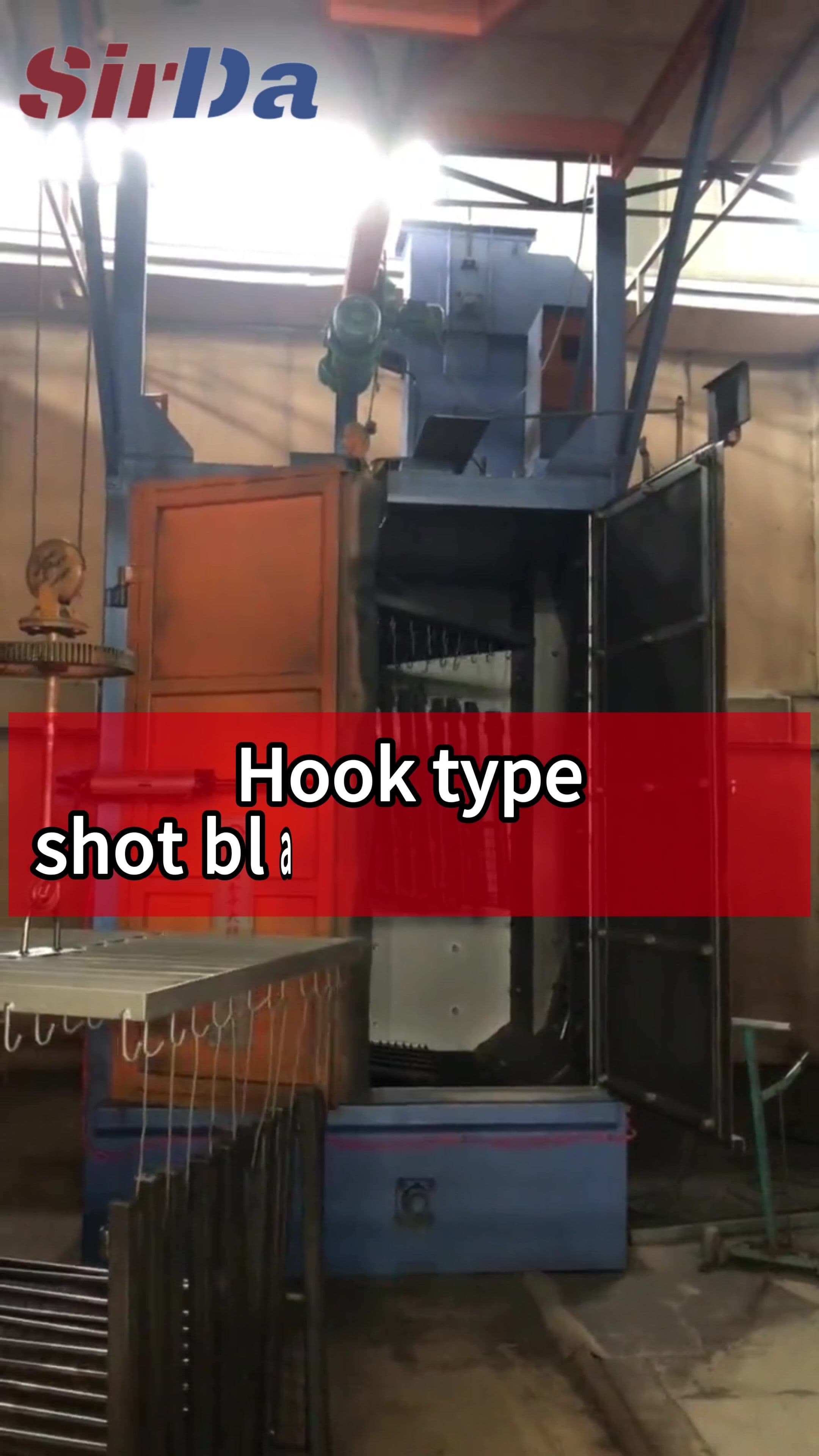
Batch cleaning
A batch shot blasting machine with rotating hanger hooks, built for workpieces that are too heavy to tumble and too awkward to lay on a conveyor. Removes rust, mill scale and old coating to prepare steel and fabricated parts for painting or powder coating.
Explore machineMatch workpiece handling, blasting configuration and production flow to your application.