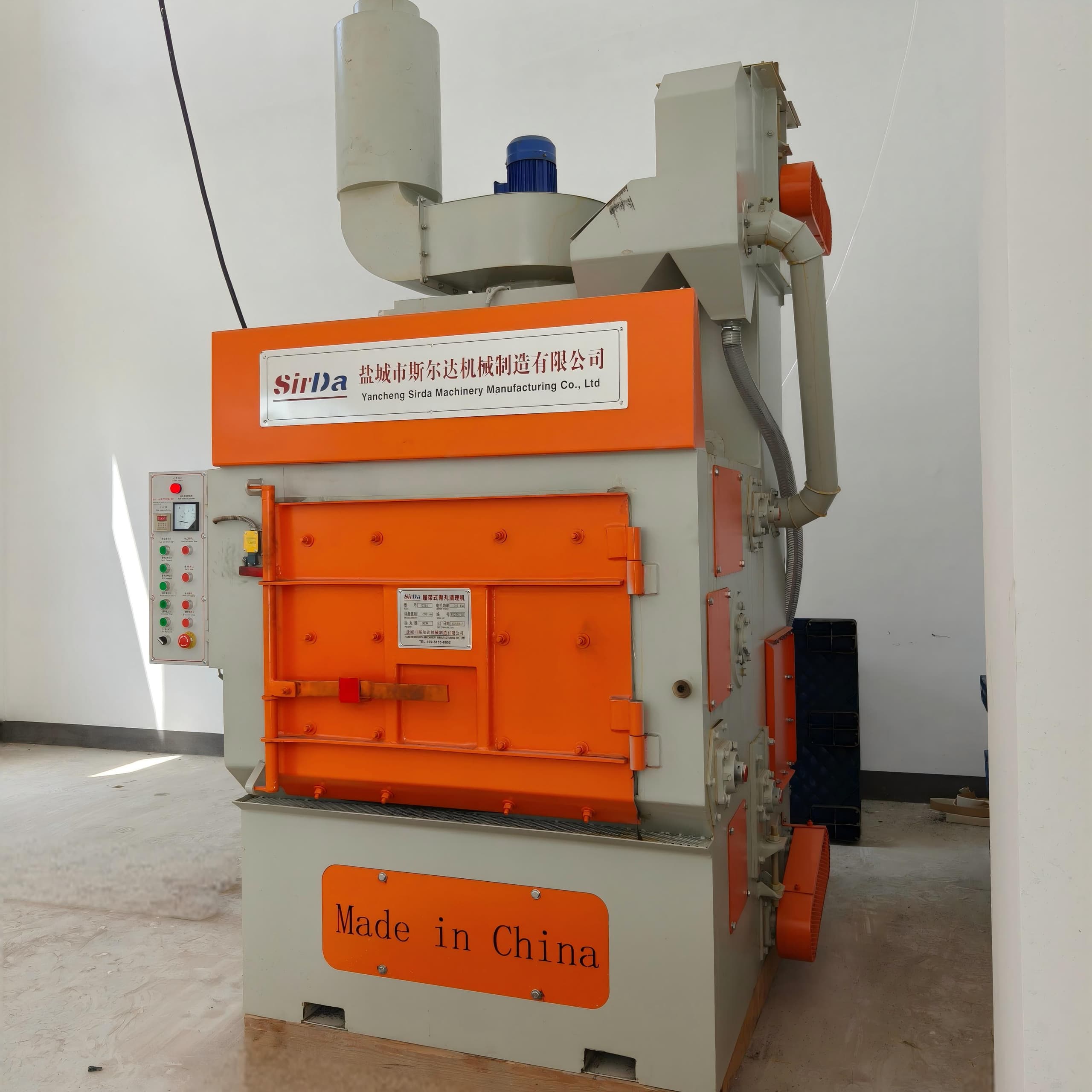
When your blast machine misses its cleaning rate: a systematic diagnosis
When a blast machine slows down, the cause is rarely age — it is a measurable break in the chain of flow, aim, abrasive quality and extraction. This guide gives you the four numbers to log first, how wheel wear and a shifted hot spot steal efficiency, how to calculate exposure from conveyor speed, and a fault tree that starts with the cheapest checks.
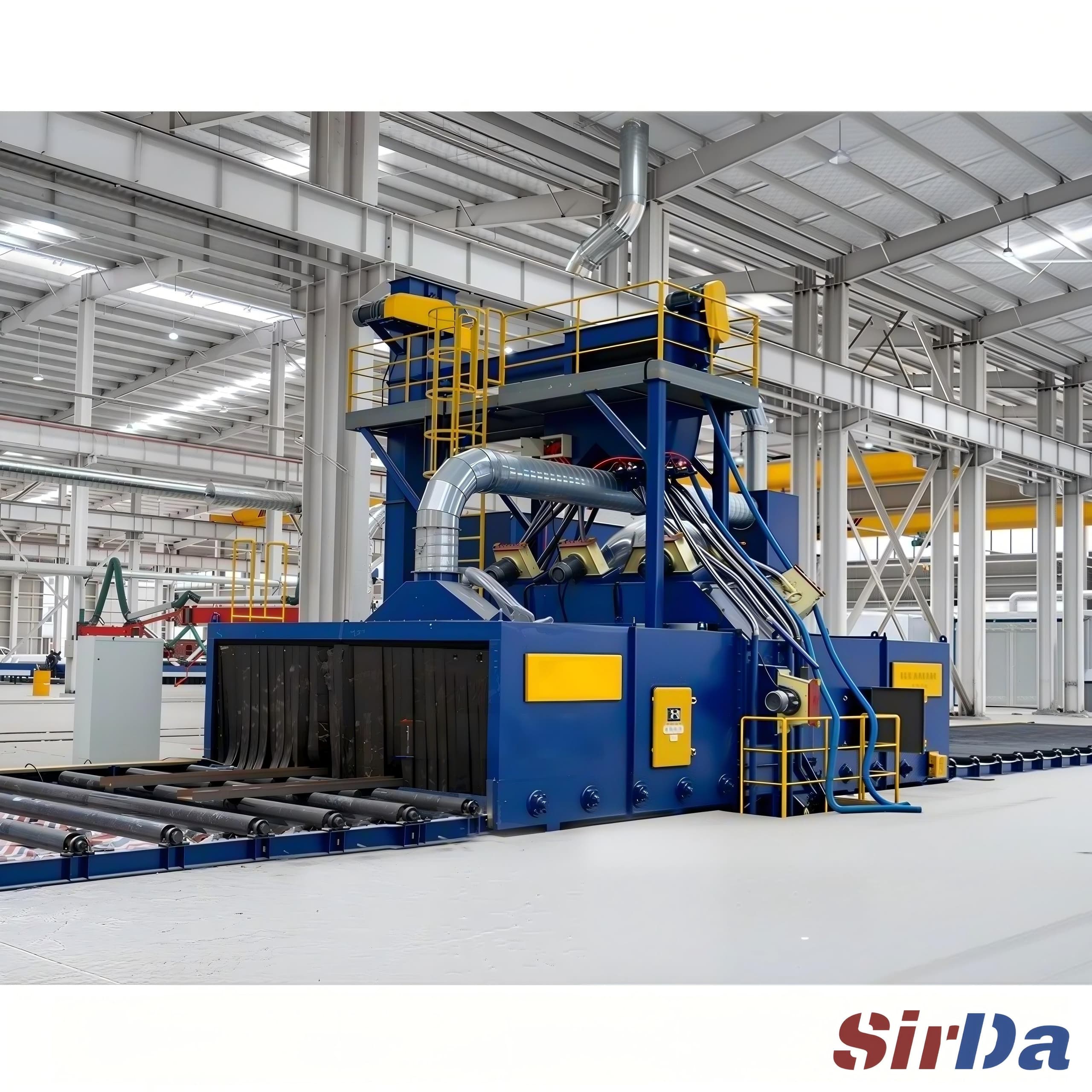
A blast machine rarely stops working all at once. It loses pace. A cycle that used to clear a batch in four minutes now takes six. Operators add a minute "just to be sure", abrasive orders creep up, and the finish starts varying from the first hook to the last. The machine still runs, so it stays in production — and that is exactly how a small drift turns into a missed delivery date.
The useful thing about this failure mode is that it is almost never mysterious. Cleaning rate is the product of a short chain: energy leaving the wheel, media arriving at the wheel, media hitting the part, and dust leaving the chamber. Break any link and the cycle stretches. The trick is to work through the chain in order rather than changing five settings at once and losing track of which one actually fixed it.
Measure before you touch anything
Write down four numbers before you adjust a single bolt: cycle time for a defined reference part, abrasive consumed per tonne of clean work, the blast motor's amperage while running, and the surface grade actually reached on the part. Grade matters here — a part that meets Sa 2.5 in one pass and a part that needs three produce the same appearance at the end, but very different cycle times.
Amperage is the fastest diagnostic in the whole machine. With the wheel at speed and the feed gate open, a healthy wheel draws close to its full-load current. A wheel drawing well below that is being starved — the flow is blocked somewhere upstream or the hopper is running low. A wheel pinned above full load is being overfed, which wastes media and heats the motor. Neither problem is cured by slowing the conveyor.
Keep short records. A cycle time that worsens steadily over weeks points to wear. A step change that appears the morning after a media delivery points to the abrasive, not the equipment.
The wheel, the hot spot and the abrasive
Three wear parts inside the wheel decide where the energy goes: the impeller, the control cage and the blades. The impeller meters media onto the blades. As its edges round off, flow becomes uneven and the blades wear faster. The control cage sets the discharge window — the "hot spot" where shot actually leaves the wheel. A cage opening that has grown with wear, or a cage sitting a few degrees out of position, moves that hot spot. Published guidance puts a 10% hot-spot shift at roughly a quarter of the blasting efficiency. That is why a machine can look and sound normal while cleaning far slower than it did when new.
Blades should be replaced as a full matched set, not one at a time. Mixed blade weights unbalance the wheel, and an unbalanced wheel shakes its bearings and throws an irregular pattern. When blades go, replace the impeller and inspect the control cage at the same time; a new blade set behind a worn cage will not recover the lost rate.
Abrasive quality is the other half of this link. Shot breaks down with every cycle. Broken particles and dust lower the working mix's average mass, so each impact carries less energy. Operators compensate by extending the cycle, which breaks more shot — a loop that ends in high media bills and a machine that still underperforms. Check the working mix with a sieve set rather than by eye. If a large share of the charge has fallen below the nominal size, the separator is not doing its job.
Conveyor speed and the cycle-time math
On a through-feed machine the relationship is simple enough to put on one line: media per square metre equals flow rate divided by conveyor speed times working width. Raise the speed and each square metre receives less shot; lower it and the part takes more impacts but output falls. That trade-off is the cycle time.
For a flat product the arithmetic is concrete. Take a 0.8 m working width, a total flow of 360 kg/min and a fill factor near 0.9. At 3.3 m/min the line delivers roughly 140 m²/h and lays down about 136 kg of shot per square metre. Drop to 1.5 m/min for a heavier texture and output falls to about 65 m²/h — the same machine, half the rate, purely because of exposure. If the surface specification needs the slower speed, no amount of extra blast time elsewhere recovers the missing hours. The answer is a wider machine, a second shift, or a different wheel configuration.
For batch machines the same idea wears a different coat: parts per hour equals pieces per cycle times cycles per hour. Loading pattern matters as much as wheel power. An overloaded hook or a tumble basket packed tight shields parts from the stream and stretches the cycle without raising output at all.
A fault tree worth keeping on the wall
When rate drops, work from the outside in — cheapest checks first:
- Low hopper level or a blocked return — elevator buckets, shot pipe or a stuck metering valve starves the wheel. Check the amperage before opening anything.
- Separator out of tune — good shot leaving with the fines, or fines staying in the working mix. Set the air wash so the curtain falls evenly across the full width; adjust in small steps and re-sieve the mix.
- Dust collector restricted — a loaded cartridge or a failed seal raises differential pressure, cuts airflow and lets dust back into the chamber. A dusty cabinet is a slow cabinet.
- Worn wheel parts — blades, impeller and control cage as a set, then re-check the hot spot against a test plate.
- Worn chamber liners and door seals — shot escapes, recovery falls, and the floor tells the story before the meter does.
- Changed workload — heavier sections, another steel grade or a new coating to remove all change the required exposure. The machine did not get slower; the job got harder.
That last item is the one most often missed. Before spending money on parts, confirm the reference part is still the reference part.
Restore the chain in order — flow, aim, mix, extraction — and measure after each step. A machine that held its rate when new can usually be brought back close to it; the exceptions are the ones that were undersized on day one. Our roller-conveyor and continuous-flow machines are specified against the actual part and finish grade, so the rate you are shown is the rate you should expect to hold.