Cleaning aluminum die castings without staining
Aluminum die castings need a different blast plan than steel: softer energy, a non-ferrous abrasive, and a dust system that respects combustible aluminum fines. This guide covers abrasive choice, NFPA 484, cycle time, and the failure modes that reach the customer.
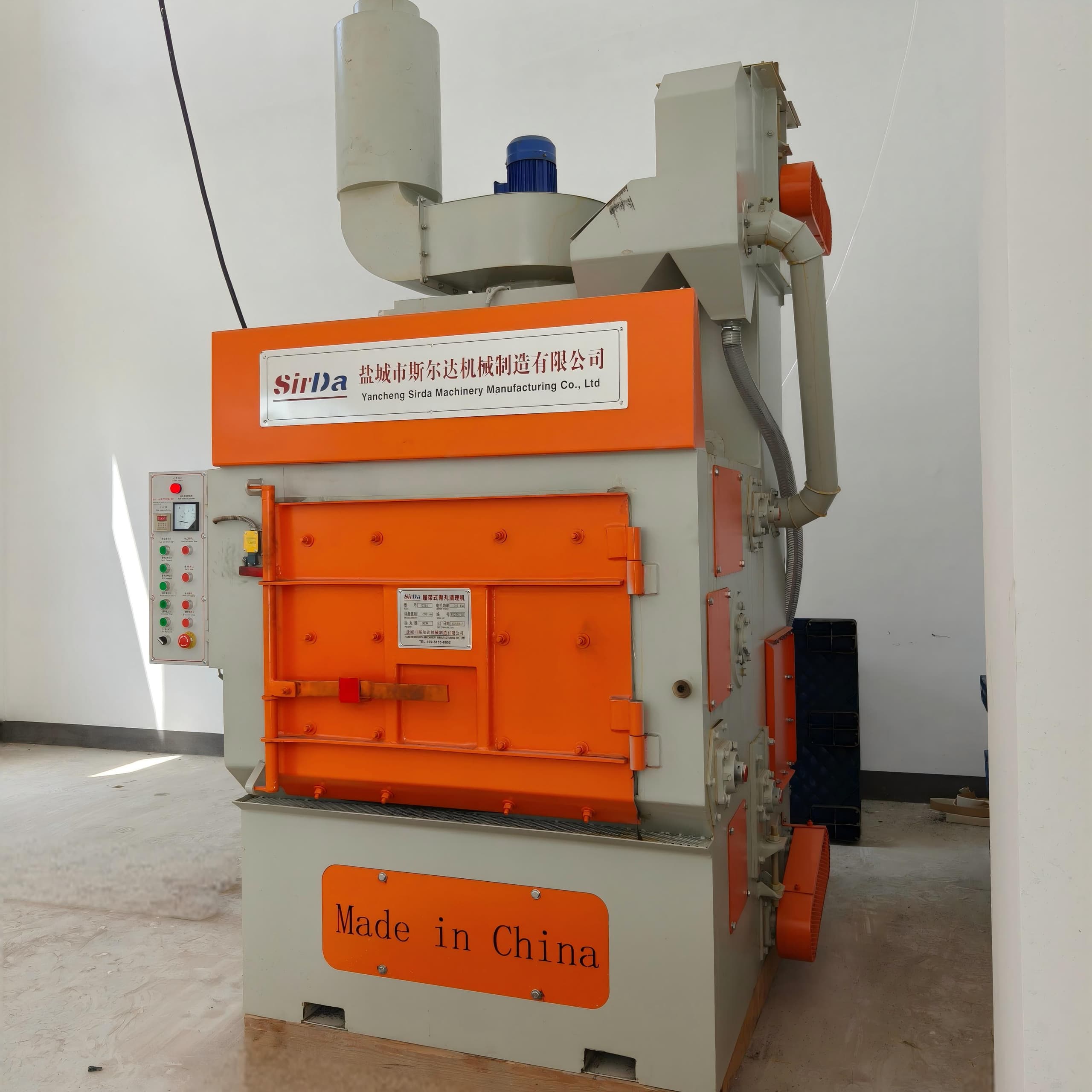
Aluminum die castings arrive from the die casting machine carrying fine flash along the parting lines, residual die-release lubricant, and an uneven skin. Shot blasting clears all three in one pass — but aluminum is not steel, and treating it like steel is the fastest way to turn a clean part into a stained, scrapped one.
Aluminum rewrites the rulebook
The first mistake plants itself before the machine is even switched on: assuming the blast program that cleans a grey-iron casting will clean an aluminum one. It will not, for two reasons that compound each other.
Aluminum is markedly softer than cast iron or steel. The same wheel speed, the same shot mass, and the same impeller setting that strips scale off iron simply beats aluminum into submission — leaving over-marked, peened faces, loss of dimension on thin-wall sections, and in the worst case visible deformation. Projection energy has to come down, and on a turbine machine that means a lower blast-wheel RPM, not just a shorter dwell time.
The second reason is invisible and far more expensive. When aluminum is blasted with carbon steel shot, the impact drives microscopic iron particles into the softer aluminum surface. The part comes out looking clean and uniform. The iron is still there, embedded, unseen. It only announces itself later — after anodizing, after painting, sometimes after the part has been in service for months.
Choosing the abrasive — the decision that decides everything
The downstream process dictates the media, and that single choice conditions the entire result.
- Carbon steel shot — never, for aluminum headed to anodizing. Embedded iron dissolves during the anodic bath and leaves dark run marks, stained areas, and patches where the oxide layer will not grow evenly. The defect is irreversible: the part is scrapped or fully reworked. Even for painted parts, where the coating hides the iron, the practice is a liability waiting to migrate.
- Glass beads — the safe default for appearance parts. Spherical, iron-free, gentle. They leave a bright satin finish, add no contamination, and introduce compressive stress that actually raises fatigue strength. The trade-off is slower deburring and higher media cost; throughput drops roughly 30% versus steel shot for the same machine time.
- Ceramic shot (e.g. B40–B60) — when you need cutting power. Harder than glass, longer-lived than brown corundum, it removes stubborn flash and weld spatter without iron. Cycle life is high, which brings the per-part cost down.
- Stainless steel shot — the unified criterion. Keep one non-ferrous abrasive in the circuit for every aluminum job. It suits anodizing, painting, and direct assembly alike, it does not stain in storage, and — critically — the recovery circuit needs no purge protocol when a batch's final destination changes at the customer's request.
- Aluminum shot — the softest option, preferred for even softer alloys such as zinc die castings, where it cleans without impregnating the surface.
There is a safety argument that reinforces the stainless-steel choice. Steel shot generates iron-oxide dust; aluminum processing generates aluminum fines. Mixed in a dust collector, that combination can initiate a thermite reaction — extremely exothermic, ignitable by very little energy. NFPA 484 expressly warns against combining aluminum fines with metal oxides and requires collectors to be dedicated to the metal they were designed to collect. Working with a stainless abrasive simply removes the iron-oxide contribution from the circuit.
The dust collector is part of the safety case
Aluminum dust is not nuisance dust. It is a combustible metal dust, and suspended in air at the right concentration it is explosive. NFPA 484 — the standard for combustible metals — has, since 2015, not permitted dry-type indoor dust collectors for aluminum. Wet dust collectors, which capture fines in a water bath with no dry filter media to act as fuel, are the compliant route.
A few points that get missed:
- Segregate the circuit, not just the media. The recovery system retains ferrous particles long after you swap the abrasive. A machine that has run steel shot will keep shedding iron onto aluminum parts until it is purged or dedicated. For shops running both ferrous and non-ferrous work, that means separate machines or a genuinely separated abrasive circuit — not a media change between jobs.
- Mind the hydrogen. Wet collectors trap aluminum fines in water, and aluminum reacts with water to release hydrogen gas. The basin needs ventilation, level monitoring, and sludge removal on a schedule, or you trade a dust explosion for a gas one.
- Add the standard protections. Spark detection at the duct entry, explosion isolation valves, vent panels, and a Class D extinguisher rated for combustible metals. Housekeeping matters too: the threshold for unsafe accumulation is about 1/32 inch (0.8 mm) on surfaces.
Cycle time and the failure modes that reach the customer
Capacity is not cabinet size. It is parts per hour, and that equals load per cycle multiplied by cycles per hour. On a batch tumble machine the wheels are idle while the operator loads and unloads — a short blast time buried in a long handling cycle is a slow machine no matter how much wheel power you buy. Specifying a cleaner finish than the downstream process needs quietly removes capacity you paid for.
Pick the machine family by the part, not the abrasive:
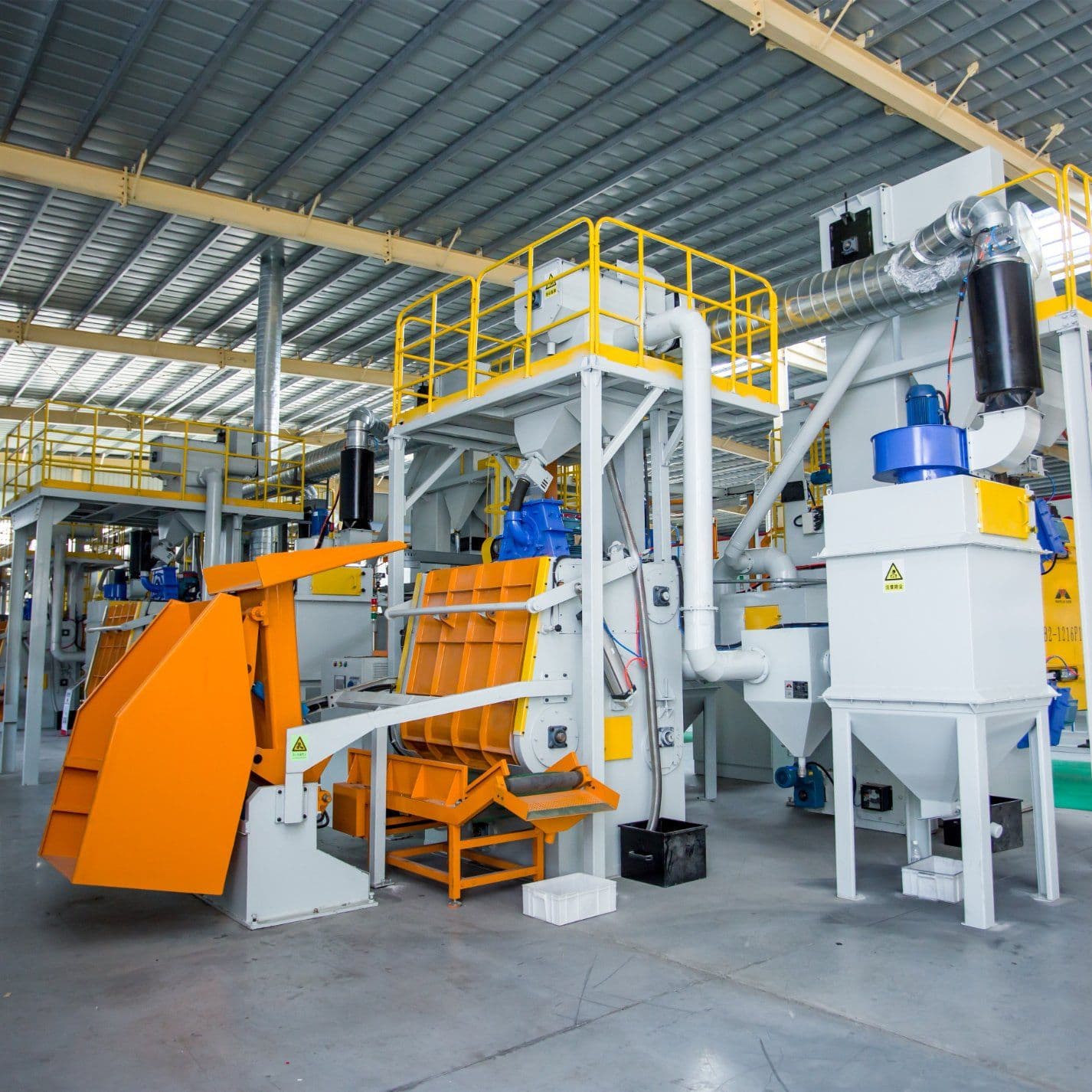
- Tumble belt for small, robust die castings that tolerate tumbling — bulk cleaning, every face exposed.
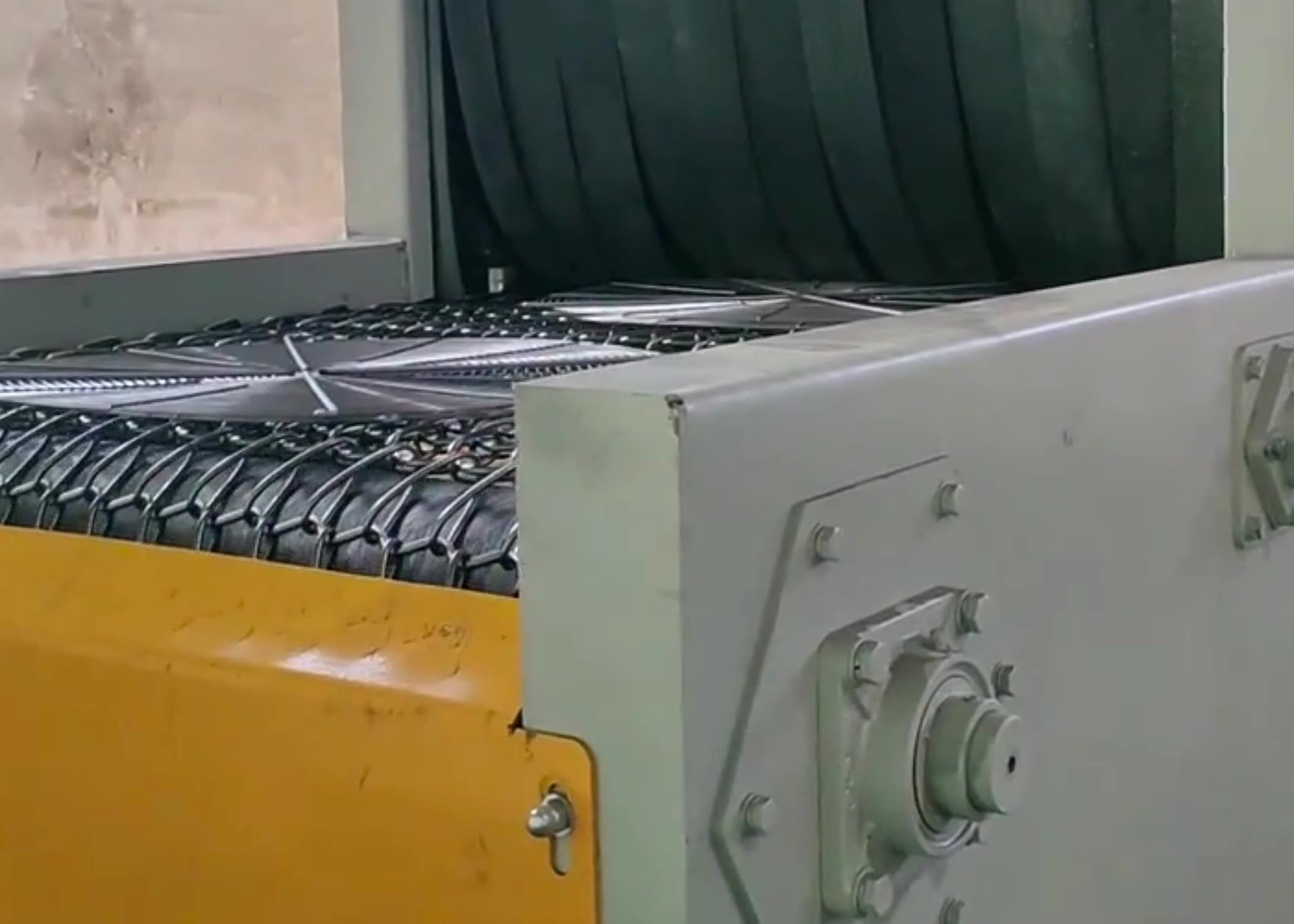
- Mesh belt for flat parts in series, wheels above and below, both faces in a single pass.
- Spinner hanger for large or delicate parts that must not contact each other.
- Rotary table with satellites for complex geometry that needs to rotate on its own axis.
Then watch for the failure modes that slip through to the customer: embedded-iron staining after anodizing; smearing and dimensional loss on thin walls from excess energy; thermite risk from a mixed ferrous-plus-aluminum circuit; cross-contamination from an un-purged recovery system; white (galvanic) rust from embedded iron meeting moisture; and residual flash left at the parting line because the part shadowed itself from the blast stream.
None of these are mysteries once the line is set up for aluminum from the start — softer energy, a non-ferrous circuit, and a dust system that respects what aluminum actually is.