Abrasive size distribution and the fines problem in reclaim loops
A closed blast loop slowly changes its own abrasive mix. This guide explains how to sample and sieve the working mix, why undersized fragments reduce coverage, how to quantify the resulting loss of throughput, and how to tune the scalper, air-wash curtain and extraction so that good shot is retained while fines leave the circuit.
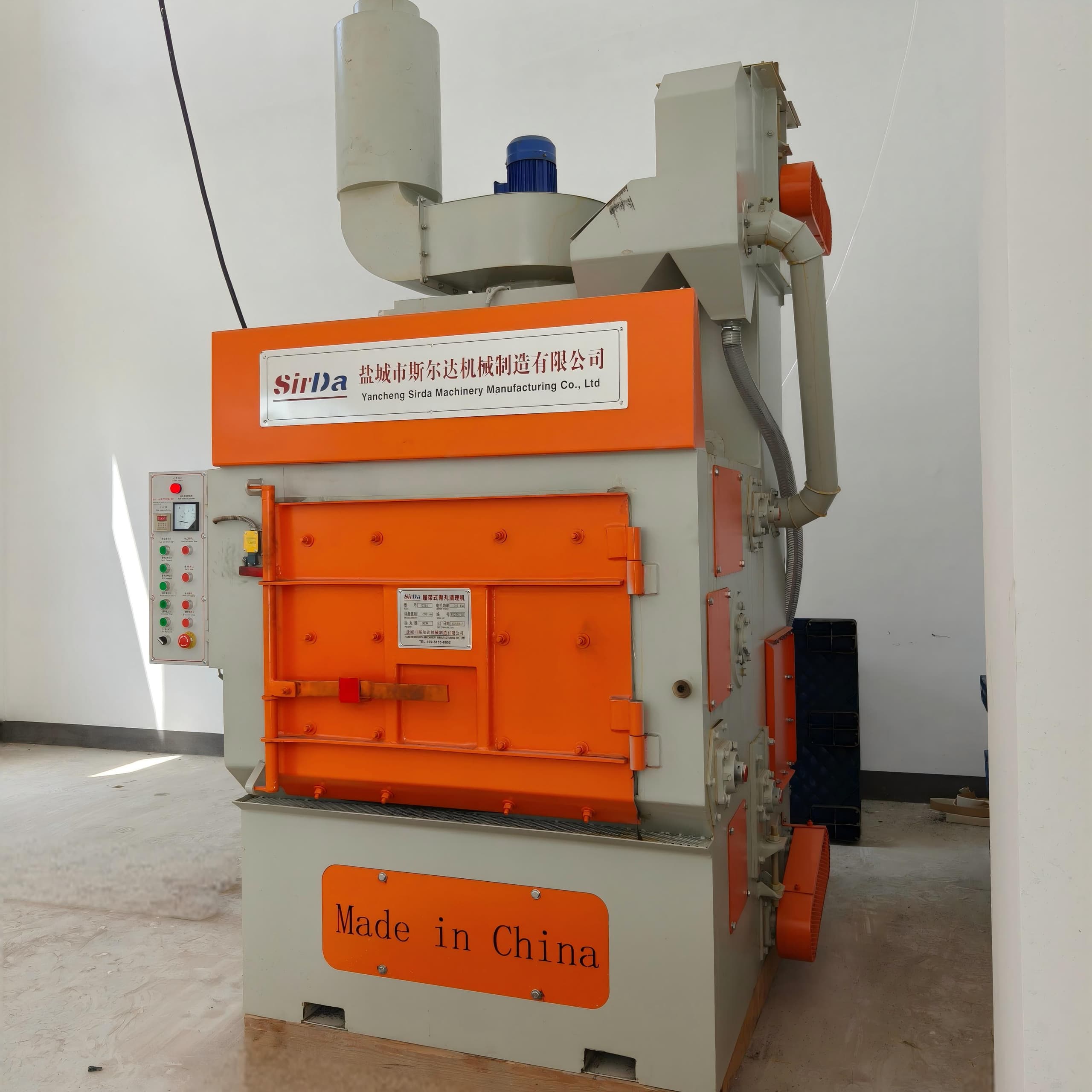
In a wheel-blast machine, abrasive is a circulating process medium rather than a consumable you simply pour in and forget. Every pass changes its size distribution: grains fracture, scale and sand are knocked off the work, and dust is generated. The reclaim loop is supposed to hold that distribution steady. When it drifts, cleaning time becomes unpredictable, consumption climbs, and the dust collector often gets blamed for a problem that actually began at the separator.
This article covers how to read a sieve sample of the working mix, what undersized particles do to the blast, how to quantify the capacity loss, and how to tune air-wash separation without discarding good shot.
What the working mix is telling you
The grade on a bag of new shot is not the condition of the abrasive inside your machine. In the SAE J444 system the S number roughly expresses nominal sieve opening in ten-thousandths of an inch, so S330 is about 0.84 mm; SAE J827 covers cast shot chemistry and hardness, and ISO 11124-3 dimensional grading. Those documents describe new media. A closed loop runs on a working mix containing several generations of particles, and that mix determines surface result and cycle time.
Sample from the storage hopper or separator discharge, never a fresh bag. A sieve analysis splits the charge into above-nominal, on-size and below-size fractions. Keep the same classes and sampling point weekly so results stay comparable. What matters is direction of travel: a mix slowly filling with undersized grains means breakdown is outrunning rejection.
Dust and fines are different. Dust is process residue light enough to be carried to the collector; fines are metallic particles merely below the useful range. If separation is weak, fines return to the wheel and compete with sound grains for energy. Dust costs filter life; fines cost cleaning rate.
Media choice sets the starting point. Angular grit cuts heavy scale but fractures faster than round shot. Higher hardness is not automatically cheaper: a harder grain may last longer yet wear blades, liners and the impeller faster. Judge a supplier by kilograms added per tonne processed, measured on one machine over a month, not by price per kilogram.
Putting a number on the fines penalty
Impact energy scales with particle mass. A fragment far below nominal delivers a small fraction of a full grain's energy, yet still consumes wheel power and a place in the stream. More particles sharing the same energy mean less useful work per impact: cleanliness depends on coverage at sufficient intensity, not on abrasive merely being present.
The size mix also moves the hot spot. A fine-drifted mix produces a softer stream that struggles to reach shadowed areas; an overly coarse mix reduces contacts in recesses. Both extend the cycle, and a longer cycle creates more breakdown and more fines. That loop is why a media problem is often mistaken for a drive or fan fault.
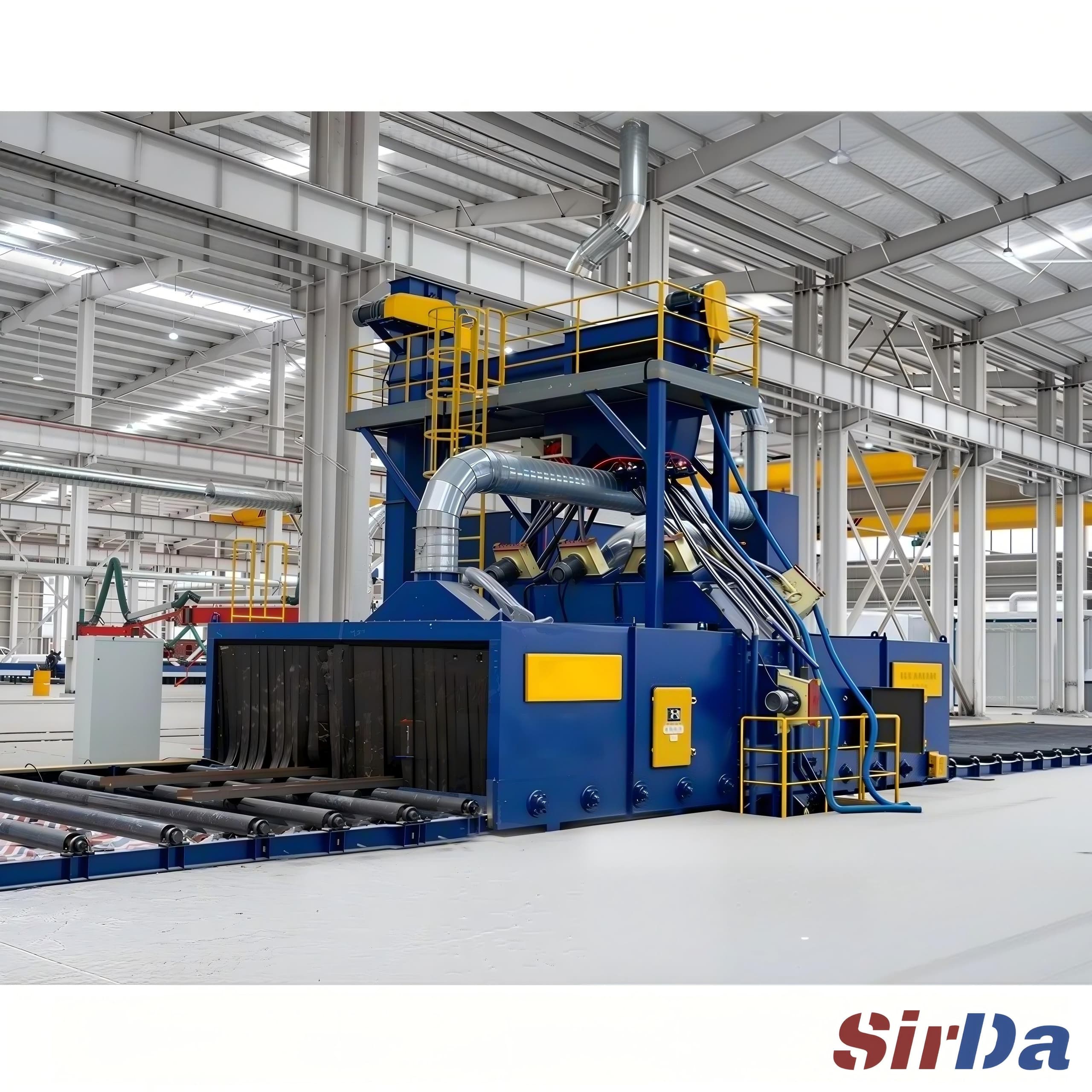
Illustrative arithmetic for a through-feed machine: a 1.2 m blast zone at 2.0 m/min gives 0.6 min, about 36 seconds, of exposure. If a sieve sample shows 20 percent of circulating mass below useful size, useful flux is roughly 0.8 of design. The same dose at unchanged wheel settings then needs 1 / 0.8 = 1.25 times the exposure — slow the belt to about 1.6 m/min, or accept poorer cleaning. These are examples, not machine ratings; measure your own line.
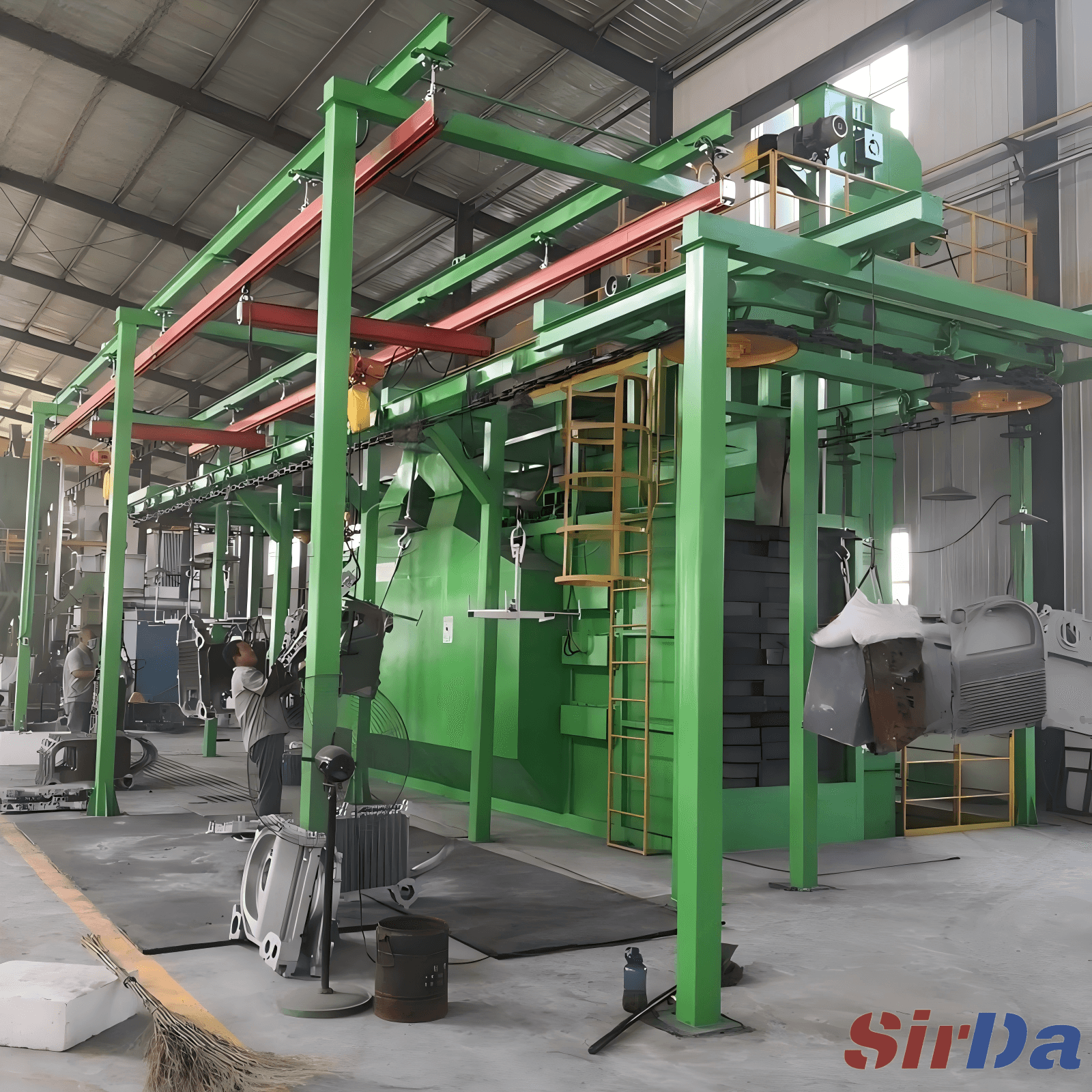
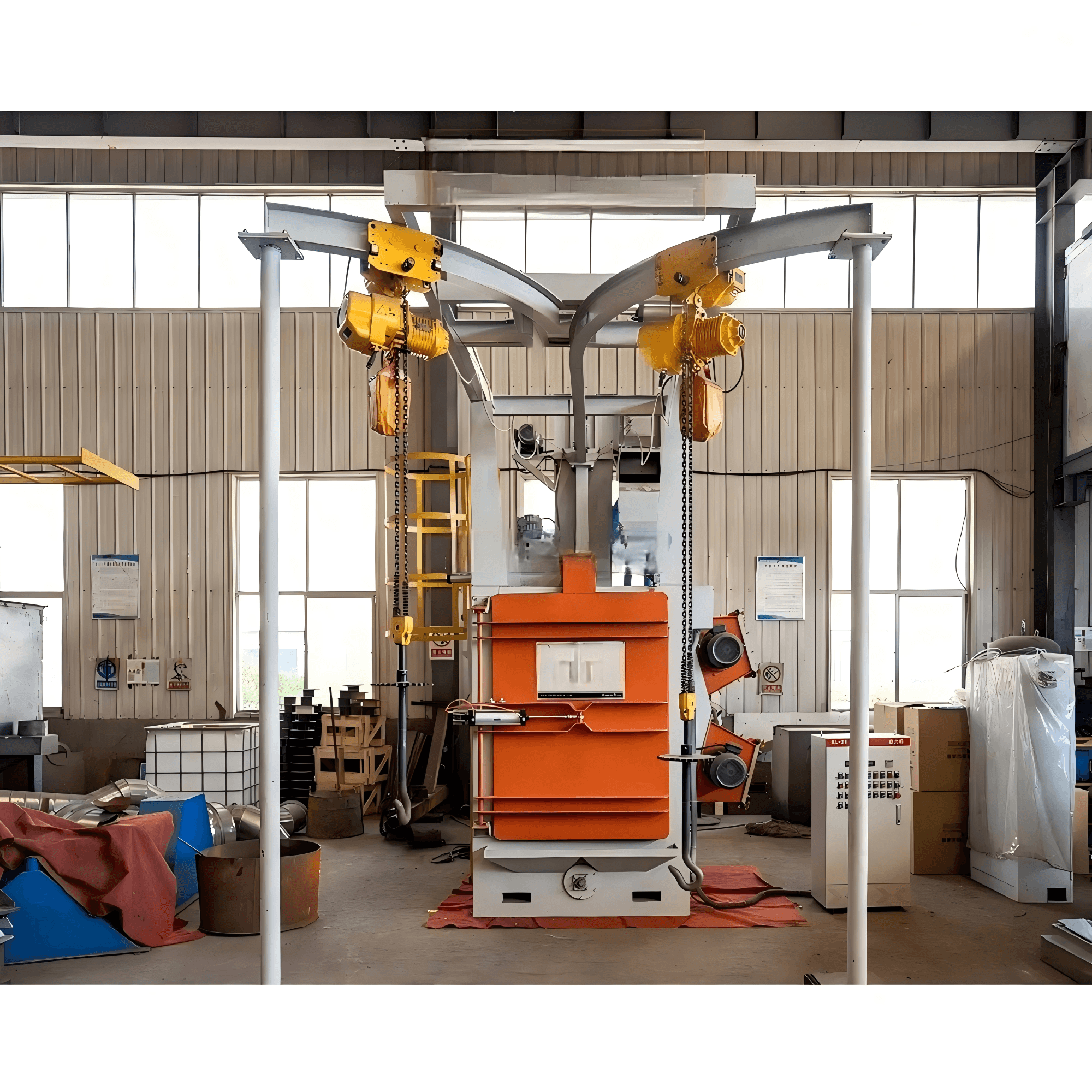
Batch work follows the same logic: six minutes of blasting plus one minute of handling gives about 8.5 cycles per hour; five minutes of blasting gives ten. Raising feed rate to compensate is a false fix — separator and collector are sized for a defined mass flow, and over-feeding sends good grains to waste while fines keep circulating.
Tuning the reclaim path
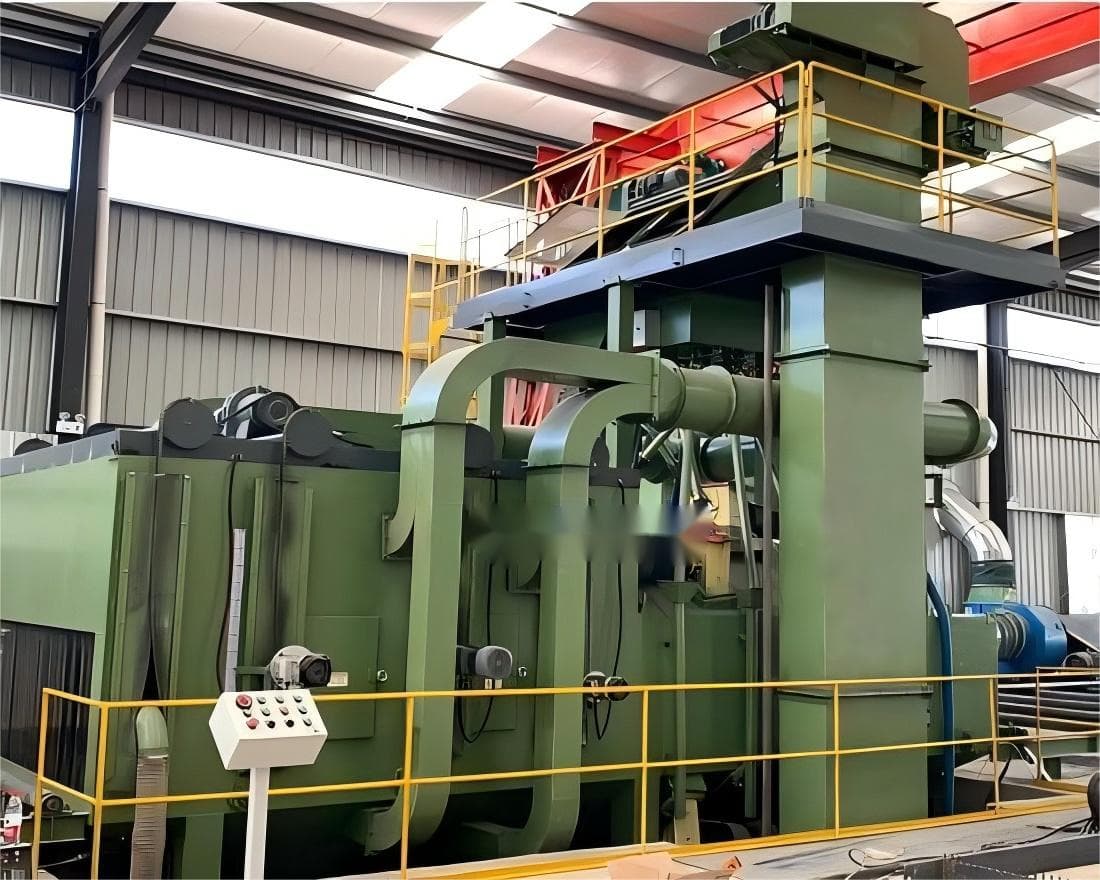
The circuit has three jobs in sequence. A scalping screen removes weld spatter, burrs, wire pieces and large paint flakes before they reach valves and wheels. A blast gate and spreader plate form the abrasive into a falling curtain. A controlled cross-flow of air then pulls light material out of that curtain, while sound grains fall into the storage hopper.
The curtain is the part most often misunderstood. Air takes the path of least resistance: where the curtain is thin, broken or short of the separator's full width, air rushes through the gaps and carries useful grains away while fines pass through thicker areas untouched — over- and under-separation at once. The spreader plate sets width, the gate thickness. Coarser mixes want a thinner curtain, finer mixes a slightly thicker one. Change one adjustment at a time.
The reject container is the fastest diagnostic. Sound grains in the reject mean too much draft or too thin a curtain; sand and fines returning to the hopper mean the opposite, or a blinded screen and starved airflow. Check the reject daily and the curtain each shift, and re-check settings whenever grade, contamination or throughput changes.
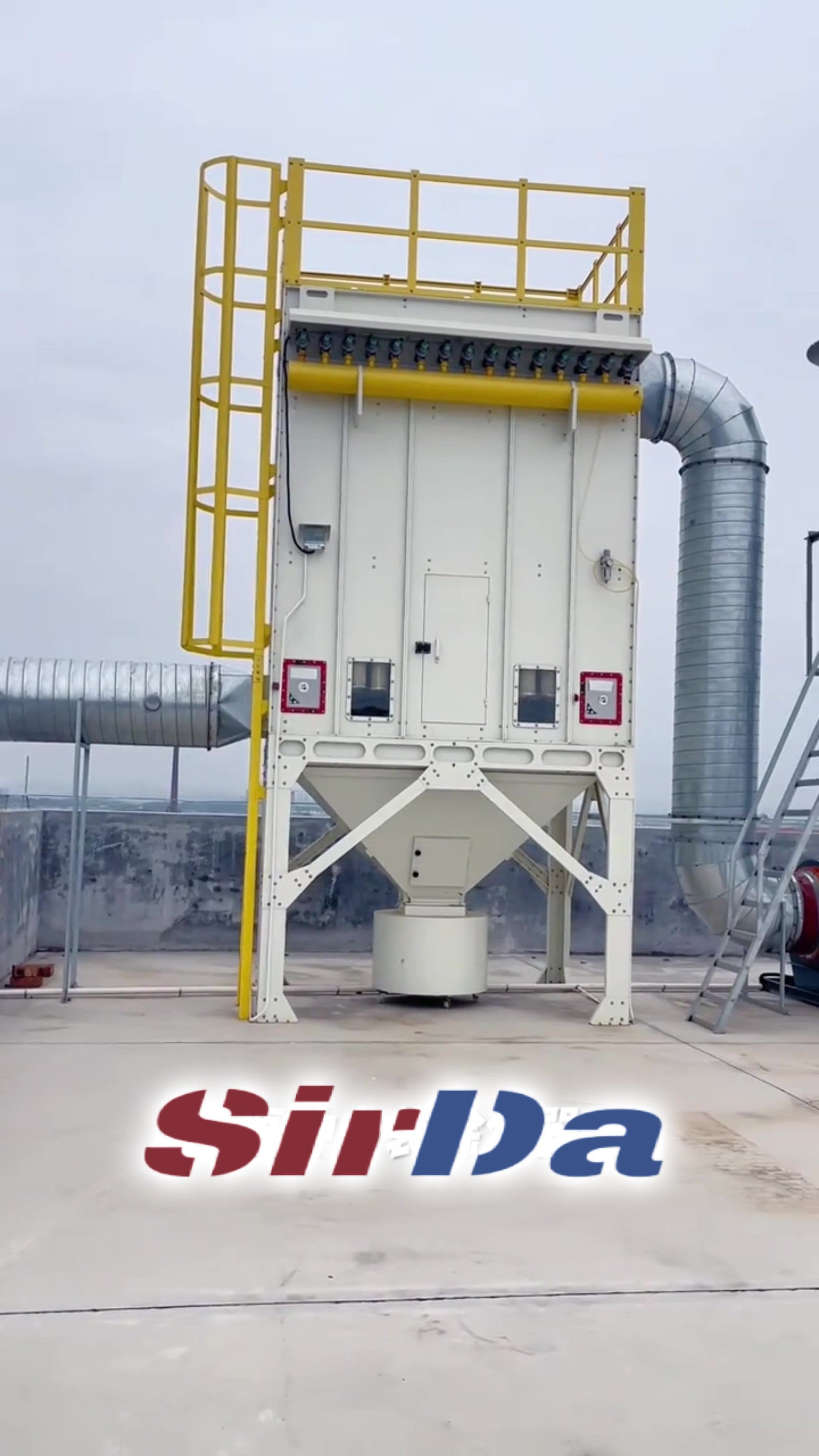
Extraction is part of the separator, not a separate system. Cartridge differential pressure, duct seals and fan setting decide whether air-wash gets the flow it needs: a loaded filter leaves fines in the loop, excessive draft steals good abrasive. Small, frequent top-up beats occasional full bags, replacing exactly the grains the separator rejects.
Failure modes and a diagnostic order
- Sieve profile drifts finer week after week — breakdown exceeds rejection; review hardness, curtain shape and draft before changing grade.
- The reject container holds sound shot — over-separation; thin curtain or excessive airflow. Recover the setting rather than buying more media.
- Parts leave the cabinet dusty and the hopper looks dirty — under-separation, a blinded scalping screen, or insufficient extraction.
- Cleaning time rises while wheel current stays normal — suspect the working mix before the drive; sample and sieve it.
- Corners and recesses stay dirty after a longer cycle — size mix no longer reaches the difficult geometry; check fine and coarse fractions together.
- Cartridge pressure drops climb rapidly with unchanged settings — process dust load or filter condition, not necessarily abrasive quality.
Work in that order: sample and sieve the working mix, inspect the screen and curtain, check the reject and the dust collector, and only then change grade or hardness. Record sieve fractions, kilograms added per tonne processed, cycle time and filter pressure weekly. Without that log, every adjustment is a guess and every supplier trial is inconclusive.
A stable working mix is what makes published throughput figures meaningful. Until the distribution is under control, a bigger wheel or a faster conveyor will only amplify the same problem. SIRDA roller-belt and tumble-belt machines are built with reclaim circuits sized for their blast wheels; a working-mix review against your actual parts is a more useful starting point than a specification sheet alone.