Media mix control: keeping your blast profile consistent
A steady blast profile is not luck — it is a controlled operating mix. This article explains how steel shot and grit ratios drift under repeated impact, how to verify the working mix by sieve analysis, how replica tape and comparators measure anchor depth, and how to calibrate the air-wash separator so coating adhesion stays predictable shift after shift.
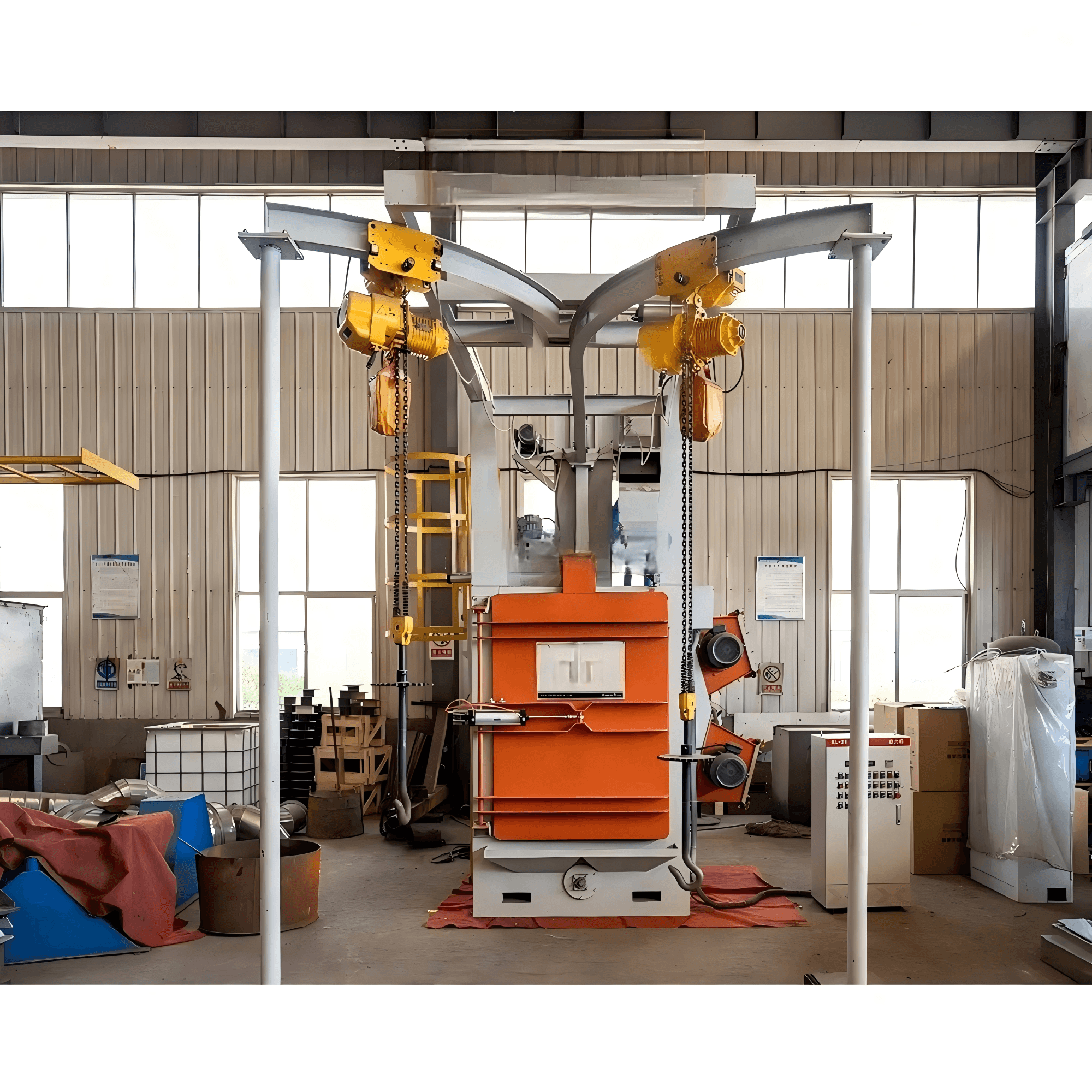
Why your operating mix never stays where you set it
A fresh charge of steel shot and grit is not the mix that reaches the workpiece an hour later. Every impact inside a centrifugal wheel changes something: shot rounds and shrinks, grit fractures into smaller angular pieces, and the dust they generate is removed by the collector. The blend actually circulating in the machine — the operating mix — is a moving target, and the profile it cuts moves with it.
Two particle shapes do two different jobs. Spherical cast steel shot peens: it fractures dense mill scale and leaves a rounded, dimpled texture with modest anchor depth. Angular cast steel grit scours: its cutting edges open the sharper, deeper profile that high-build epoxies and immersion linings need for mechanical keying. Run shot alone and cleaning looks fast, but the surface can be too smooth to hold a coating. Run grit alone and you get the anchor you want, while the wheel blades, liners and dust filters pay for it. Most production shops blend the two. Published practice puts the shot-to-grit ratio anywhere from about 2:1 to 5:1, with 50/50 used when maximum profile is required and 70/30 when cleaning speed and media life matter more. There is no universal number — the coating data sheet and the profile range on the drawing decide it.
A productive mix also needs three size bands working together. Coarse fractions carry the kinetic energy to break heavy scale. Medium fractions clean transition zones and knock the tallest peaks down. Fine fractions multiply the number of impacts per second across the surface, which is what lets you raise line speed without losing coverage. Strip the fines out too aggressively and coverage suffers; let them accumulate and the profile flattens while blade wear climbs.
Setting the mix and measuring what it produces
Start from a documented ratio, then treat top-up as a control loop rather than a bulk event. Dumping a full bag of one size when the hopper runs low is the most common way to destabilise an operating mix. Small, frequent additions — matched to what the separator is discarding — keep the distribution steady.
Verify with a sieve analysis, not by eye. A full screen stack, roughly 20 to 120 mesh, gives the distribution; for a quick shift check, one critical screen near the lower size limit tells you whether fines are building up. Cast steel media is graded under SAE J444, so put both the size designation (S330, G40 and so on) and the hardness grade (GP, GL or GH) on the purchase order. Hardness drifting between lots shows up as an inconsistent profile and faster blade wear.
Profile depth is measured, not assumed. Replica tape to ASTM D4417 Method C or ISO 8503-5 is the practical field method: coarse tape covers roughly 20–64 µm, X-coarse about 38–115 µm, and the carrier thickness is subtracted from the micrometer reading. ISO 8503-1 visual comparators are quicker but only return a category. For a general industrial epoxy, an Rz in the 40–75 µm band is a common target, though the only number that matters is the one on the coating manufacturer's data sheet. Measure at the start of a job and again whenever the abrasive lot, wheel current or line speed changes. Finding a shallow profile after the whole batch is blasted means rework.
Coverage and line speed are linked through impact frequency. Fine media raises the number of impacts per second per unit area, so a finer, well-controlled mix can run faster at the same coverage; a mix starved of fines must slow down or leave patches. That is why two machines with identical wheel power can quote very different throughputs.
The air-wash separator is the control point
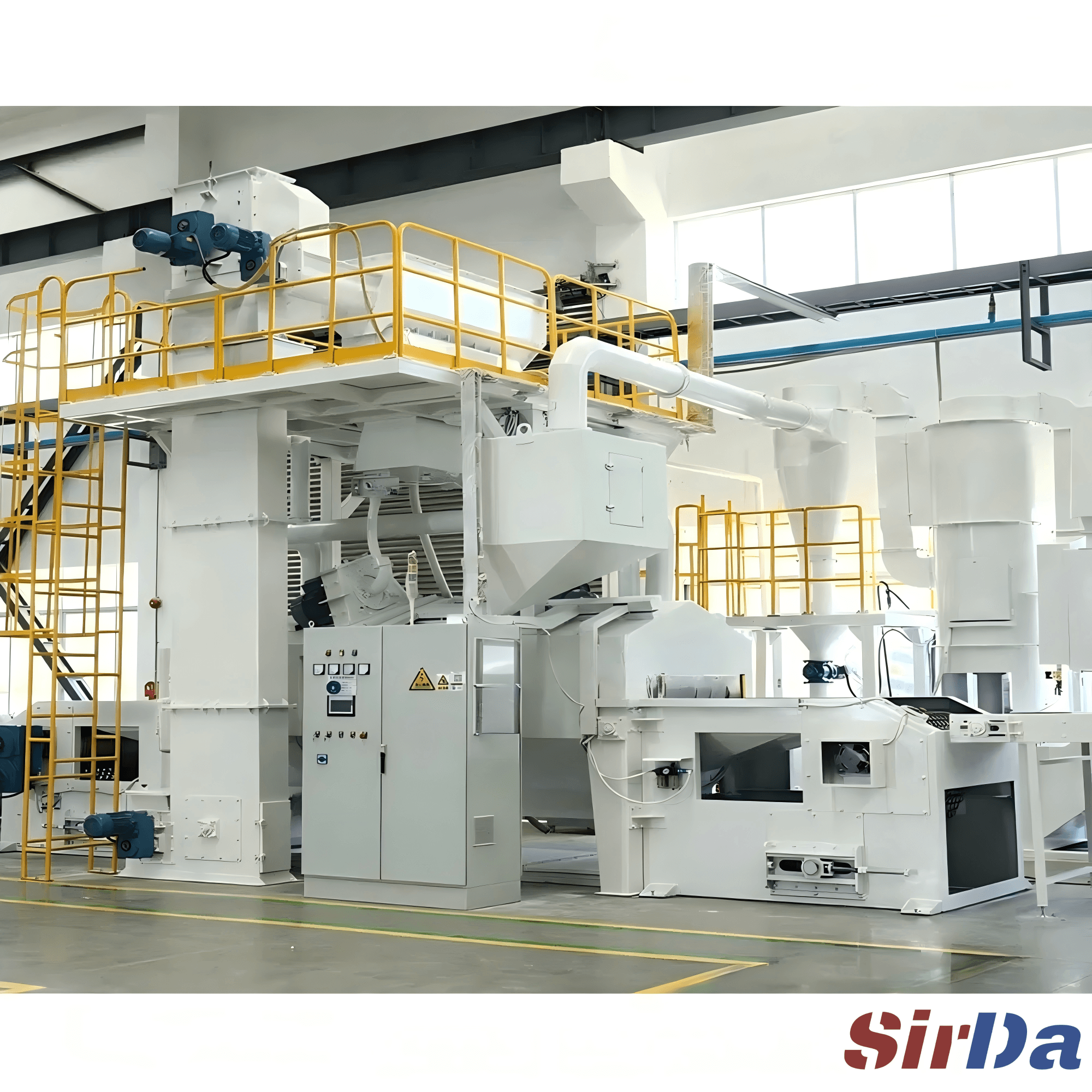
The separator decides which particles return to the wheel. It splits by mass and drag: gravity pulls heavy media into the recovery hopper while cross-flow air deflects dust and light fines into the collector. Stokes' law explains the sensitivity — drag force scales with particle radius and air velocity, so as particles wear smaller, or as filters load and airflow shifts, the cut point moves even when the damper has not been touched.
Calibrate it on the machine, not from a manual. Close the damper, run long enough for the curtain to stabilise, clear the waste pipe, then open the valve in small steps, waiting around 30 seconds between each. The moment the first usable grain appears in the waste stream is your limit; close back just enough to stop that loss and hold there. Recheck a waste sample a few days later — if the split is steady, the setting is locked. One practical rule of thumb: a quarter- to half-inch of gate movement counts as a major change.
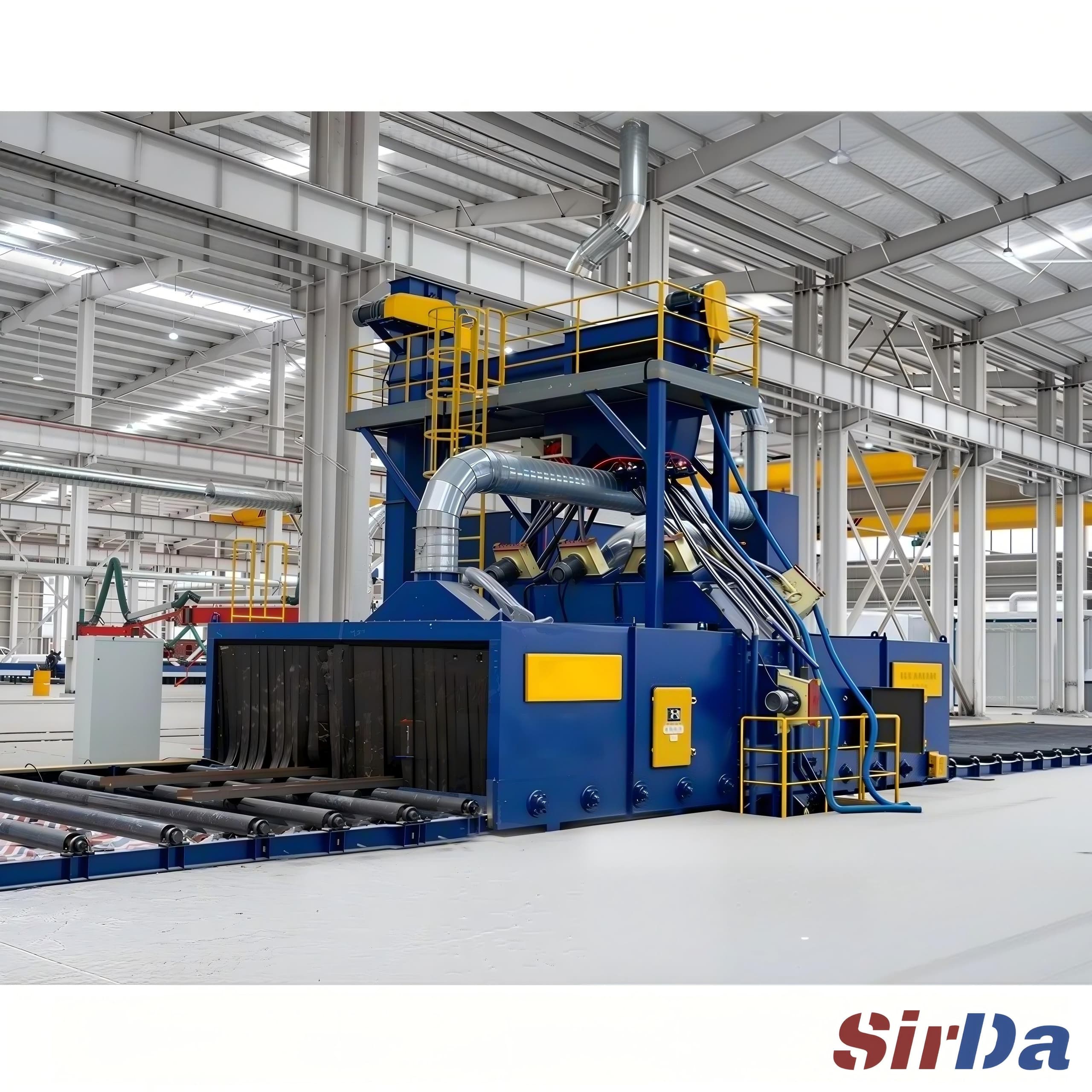
Air wash has a limit. It separates by mass and drag, so it handles fines well but cannot remove sand or contaminants of similar density, and it cannot hold one tight shot size for peening work. Where that applies, add mechanical separation — a vibratory screen, a rotary screen or a magnetic drum. Changing media type always means recalibrating the separator.
Failure modes and a shift-start checklist
Consistency problems rarely announce themselves. They surface as a lining that disbands a year early, or as a media bill that quietly doubles.
- Profile too shallow — too little grit in the mix, or excess fines retained; the lining mirrors a peened surface and loses adhesion. Verify the ratio, not just the depth reading.
- Profile too deep — coarse fractions dominating or the wheel over-energised; primer is consumed filling valleys and peaks may break through the dry film.
- Fine-media starvation — separator suction set too high; cleaning slows, consumption climbs and good shot ends up in the dust bin.
- Blade and liner wear — grit cuts harder than shot; if wear jumps after a mix change, correct the ratio before blaming the hardware.
- Free-iron contamination — carbon steel media must never touch stainless steel or aluminium; it breaks the passive film and starts pitting. Use stainless shot, cut wire or a non-metallic medium on those alloys.
Before the first part of each shift, pull a media sample, check the separator waste and measure one profile with replica tape. Three minutes of measurement is cheaper than a reblast. If a line cannot hold its profile from one shift to the next, our pages on media selection and continuous-flow equipment show where the mix, the separator and the dust collector must be matched.