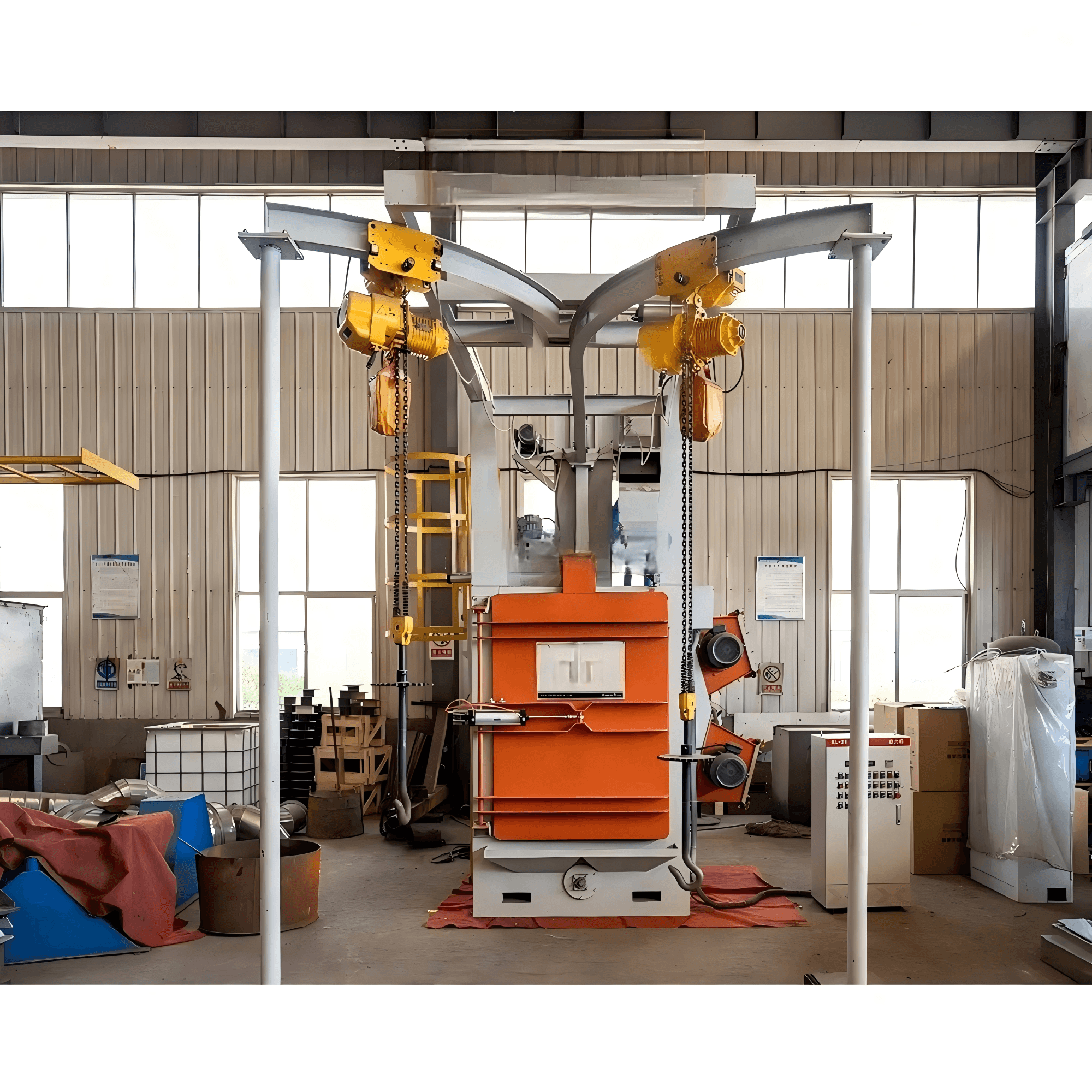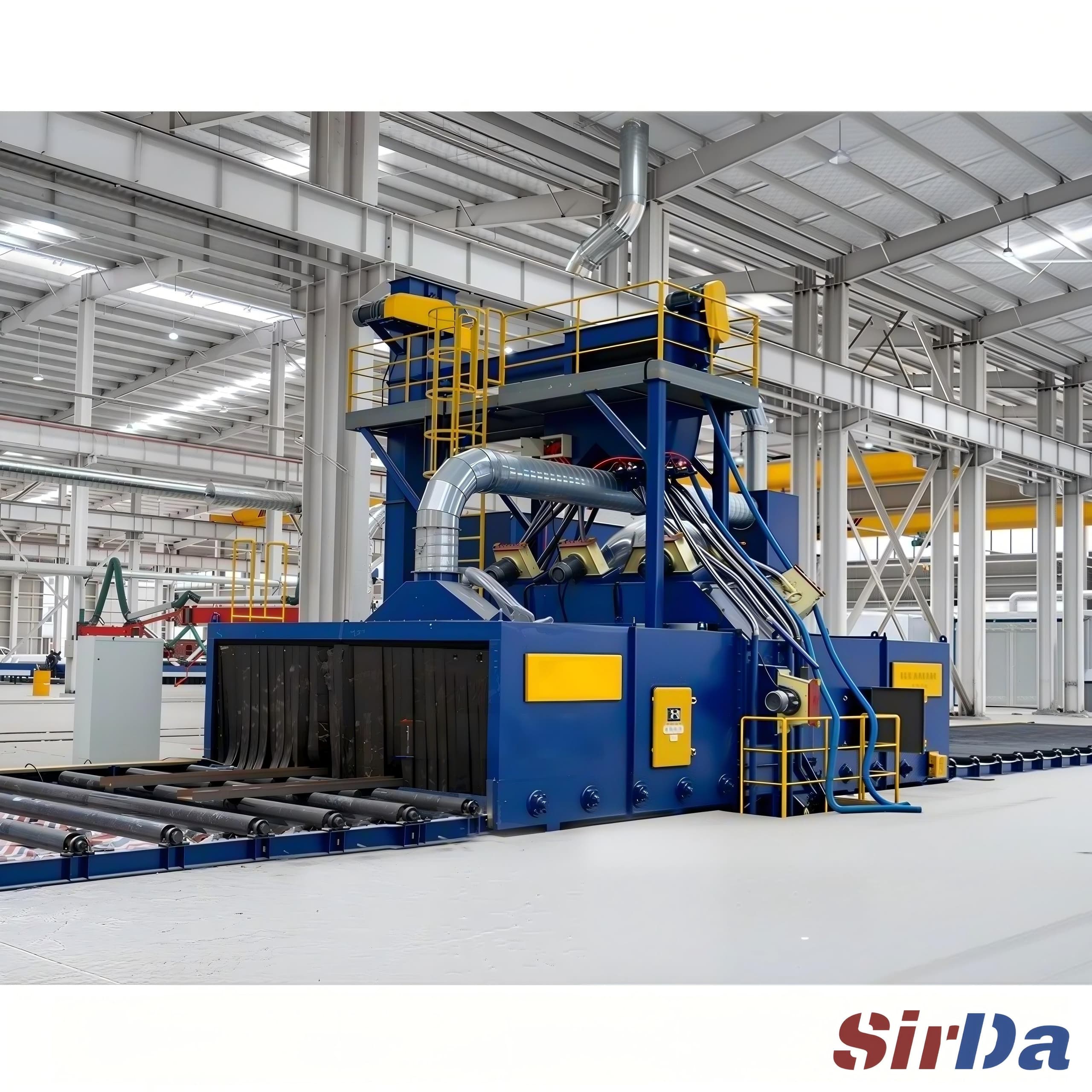
Q69
Roller Conveyor
Steel plates, profiles and fabricated structures
Explore machine
Home / Machines / Wire Mesh Belt Shot Blasting Machine for Stainless Steel Parts
A continuous wire mesh belt shot blasting machine configured for stainless steel fabrications, where the process is designed around one constraint: keeping free iron off the surface. Parts travel through the blast chamber on an open mesh belt while a dedicated non-ferrous abrasive circuit, separation stage and discharge cleaning remove oxide, weld tint and scale without embedding carbon steel. Used ahead of passivation, coating or welding preparation. Media type, belt speed and blast wheel layout are confirmed against the actual workpiece.
Read product details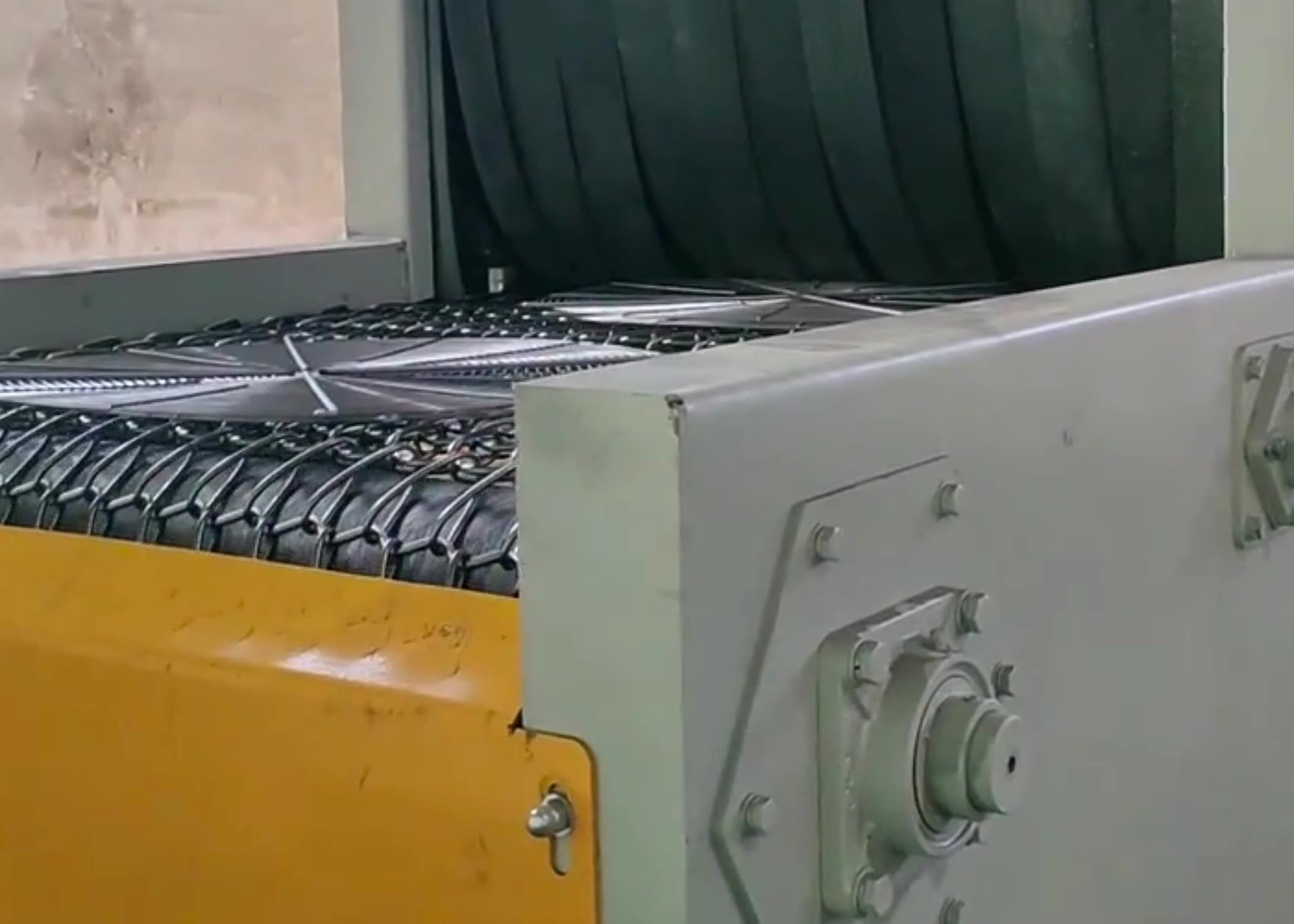
Blast cleaning on carbon steel is judged mostly by how quickly oxide and scale disappear. On stainless steel the deciding factor is what the process leaves behind. Carbon steel shot, or abrasive that has already run on mild steel, can press free iron particles into the stainless surface. In humid air those particles corrode first, producing rust spots and pitting that break down the passive layer the grade was specified for. A line for stainless parts is therefore designed as a controlled loop rather than a general-purpose cleaning station: the abrasive, its recovery path and the contact surfaces inside the chamber are treated as one system.
Parts are laid flat on a wire mesh belt and carried through the blast chamber in a single pass. The open belt lets the abrasive stream reach the underside as well as the top face, which matters for flat fabrications, pressed components and welded assemblies that cannot be tumbled or hung one by one. Blast wheels are arranged to cover the full working width, and belt speed is set against the actual surface condition rather than a nominal throughput figure. Because parts never collide with each other, thin sections and already machined faces keep a repeatable finish.
The intended result is a clean, uniform surface with an even anchor profile and no embedded free iron, ready for the specified downstream treatment. This configuration suits flat or moderately shaped stainless fabrications that lie stable on a belt. Very thin or distortion-prone parts, mirror-polished finishes, and components with precision mating faces that must be masked are reviewed separately, since an aggressive blast may alter appearance or fit. Media type, wheel layout, belt speed and the required finish are all confirmed after inspecting the real workpiece; no performance figures are assumed in advance.
| Parameter | Value |
|---|---|
| Workpiece | Stainless grade, geometry, wall thickness and batch mix to be confirmed |
| Surface condition | Oxide, weld heat tint, weld residue or existing coating to be reviewed |
| Abrasive media | Non-ferrous media type and whether a dedicated circuit is needed, to be agreed |
| Handling | Wire mesh belt continuous pass; belt width and speed to be confirmed |
| Downstream process | Passivation, coating, bonding or welding preparation to be specified |
| Configuration | Blast wheel layout and line integration reviewed against the workpiece |
Share a photo or drawing, material, maximum dimensions and expected output. These details help us review a suitable configuration.
Send project requirementsQ69
Steel plates, profiles and fabricated structures
Explore machine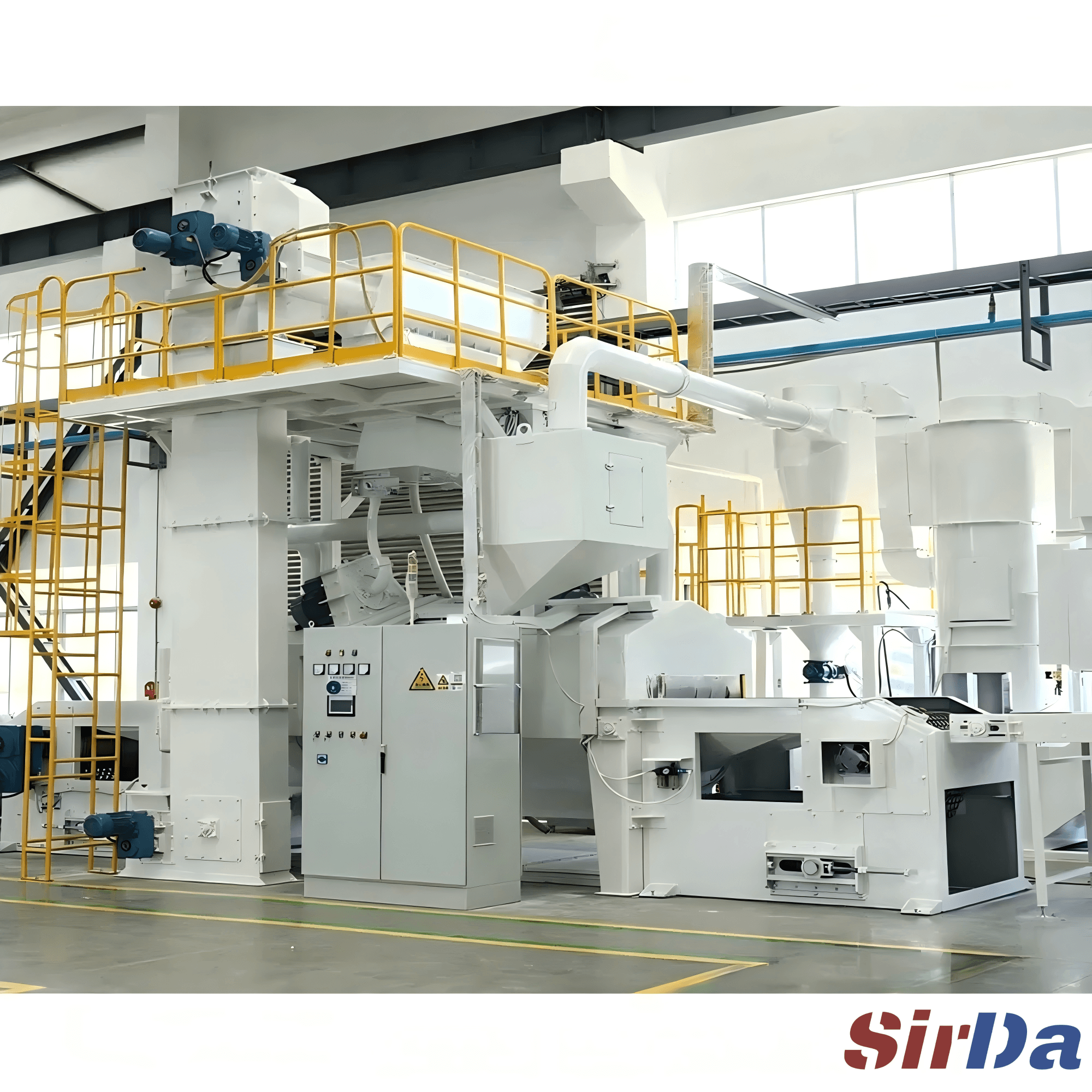
QWD800
Parts carried through a continuous blasting process
Explore machine
Continuous flow
A continuous through-type shot blasting line cleans structural sections, tubes and plates while they keep moving. This page explains how blast wheel placement, media recycling and dust routing are configured around the workpiece cross-section.
Explore machine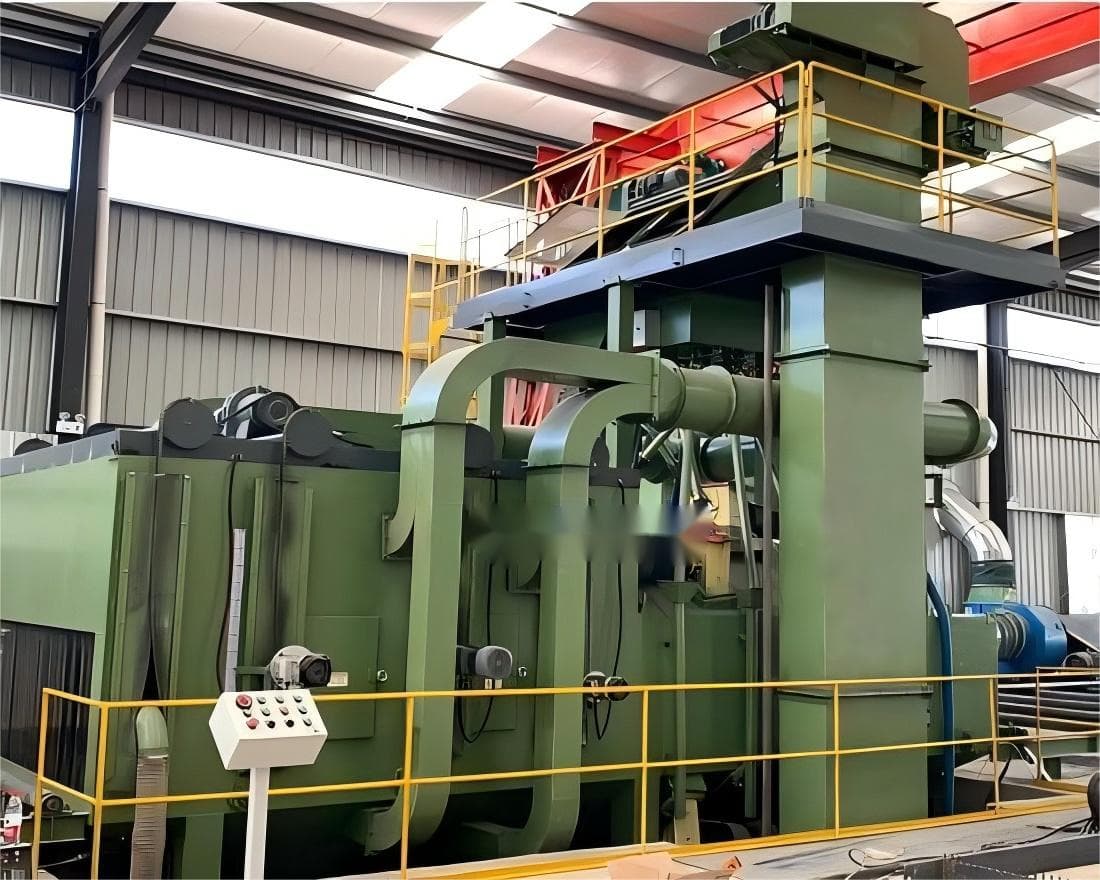
Continuous flow
An abrasive recovery system for continuous roller conveyor shot blasting lines closes the loop between the blast chamber and the media supply, so spent abrasive and workpiece debris are separated before the media returns to the wheels. Recovery quality determines consumable cost, wheel maintenance intervals and how consistently the line holds a given surface standard.
Explore machineMatch workpiece handling, blasting configuration and production flow to your application.