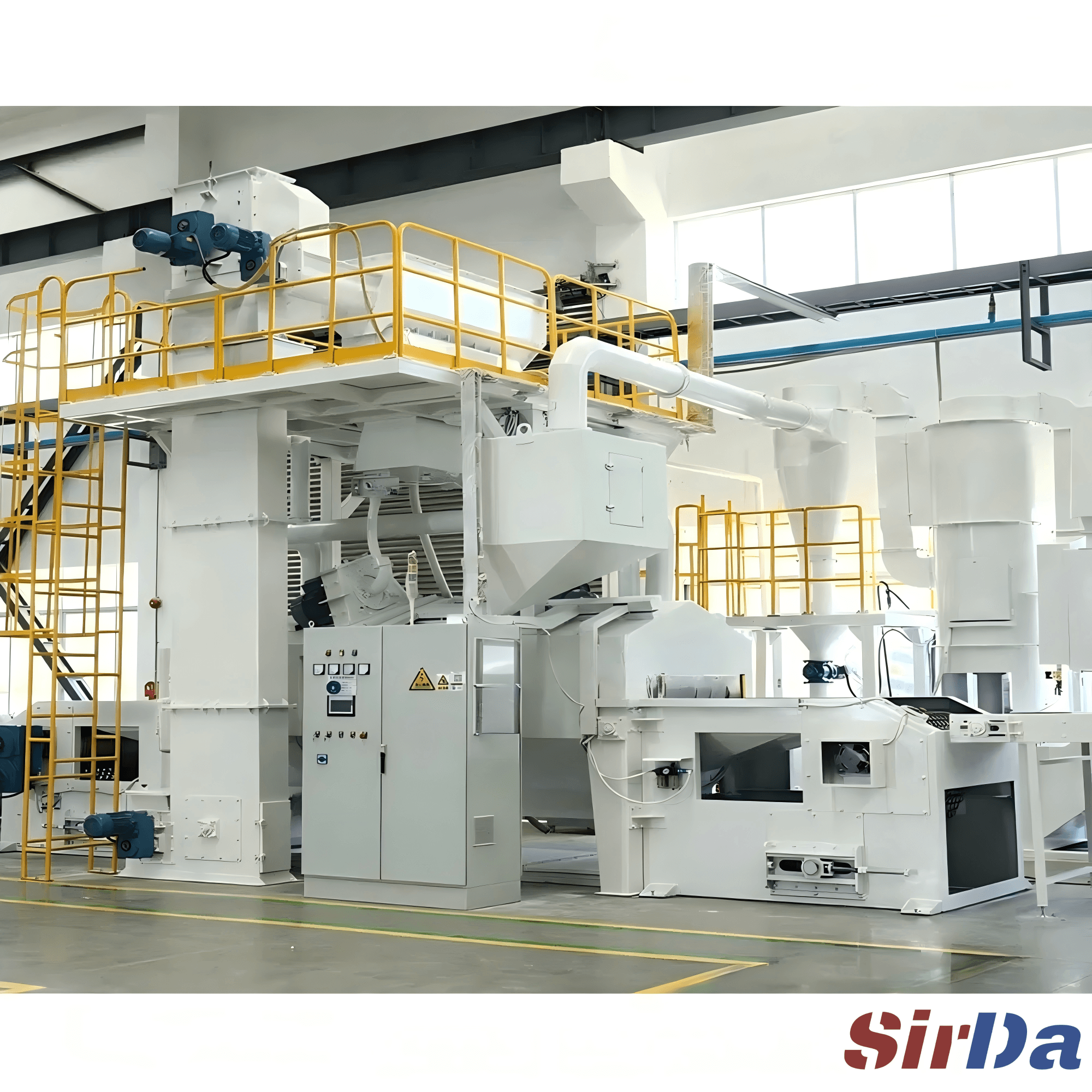
Rail and wagon maintenance blasting at line speed
Rail and wagon maintenance runs blasting as a production line. This guide covers abrasive selection for rail steel, line-speed timing, rail-head limits, and controlling lead-paint dust from legacy wagons.
Why depots run rail blasting as a line, not a job
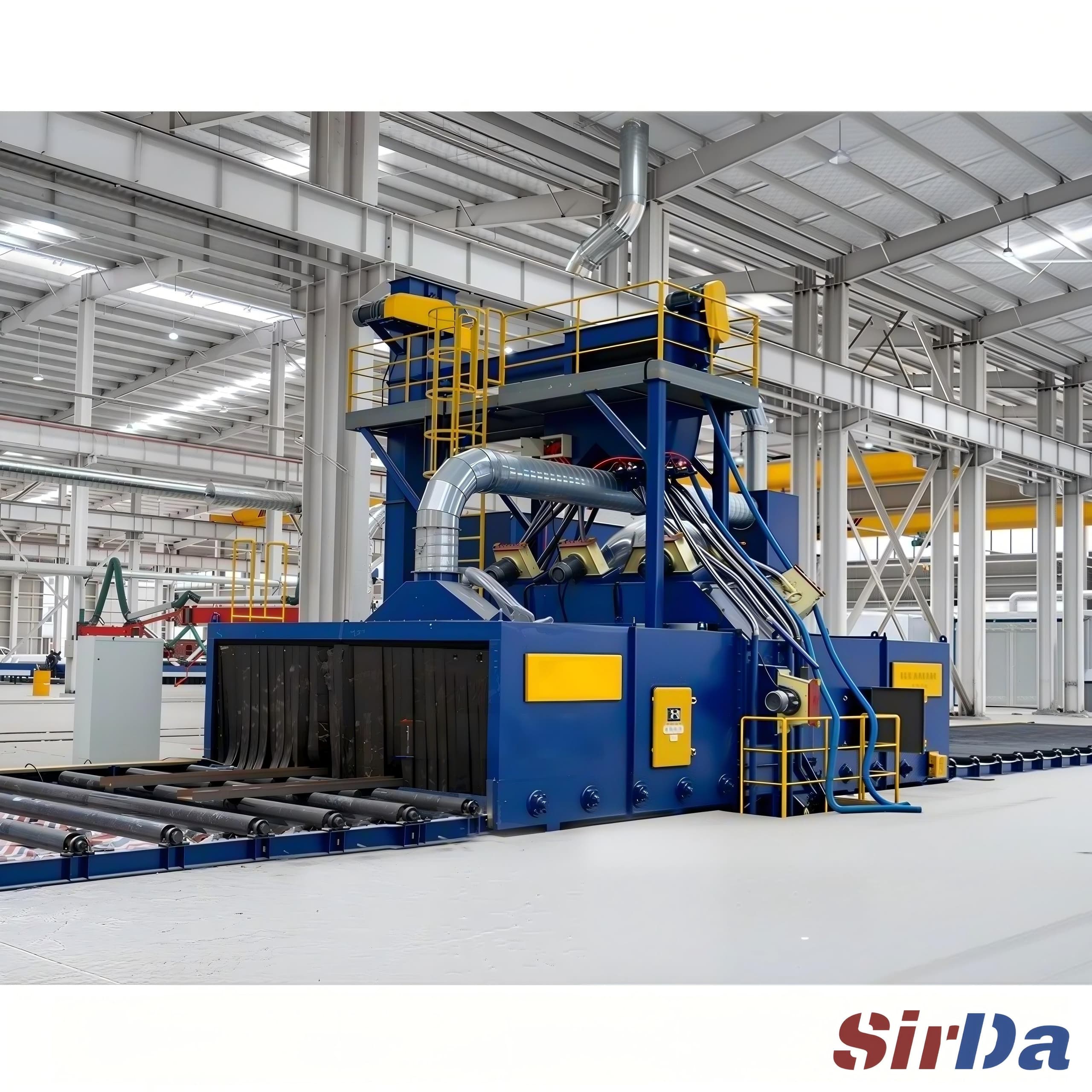
Rail and wagon maintenance is measured in throughput. A depot that pulls a wagon in for repainting, strips it, and pushes it back out on a schedule is running a production line, not a job shop. Abrasive blasting is the pinch point: it has to remove rust, old livery, grease and winter de-icing salt fast enough that the rest of the overhaul — welding, NDT, priming — never waits on it.
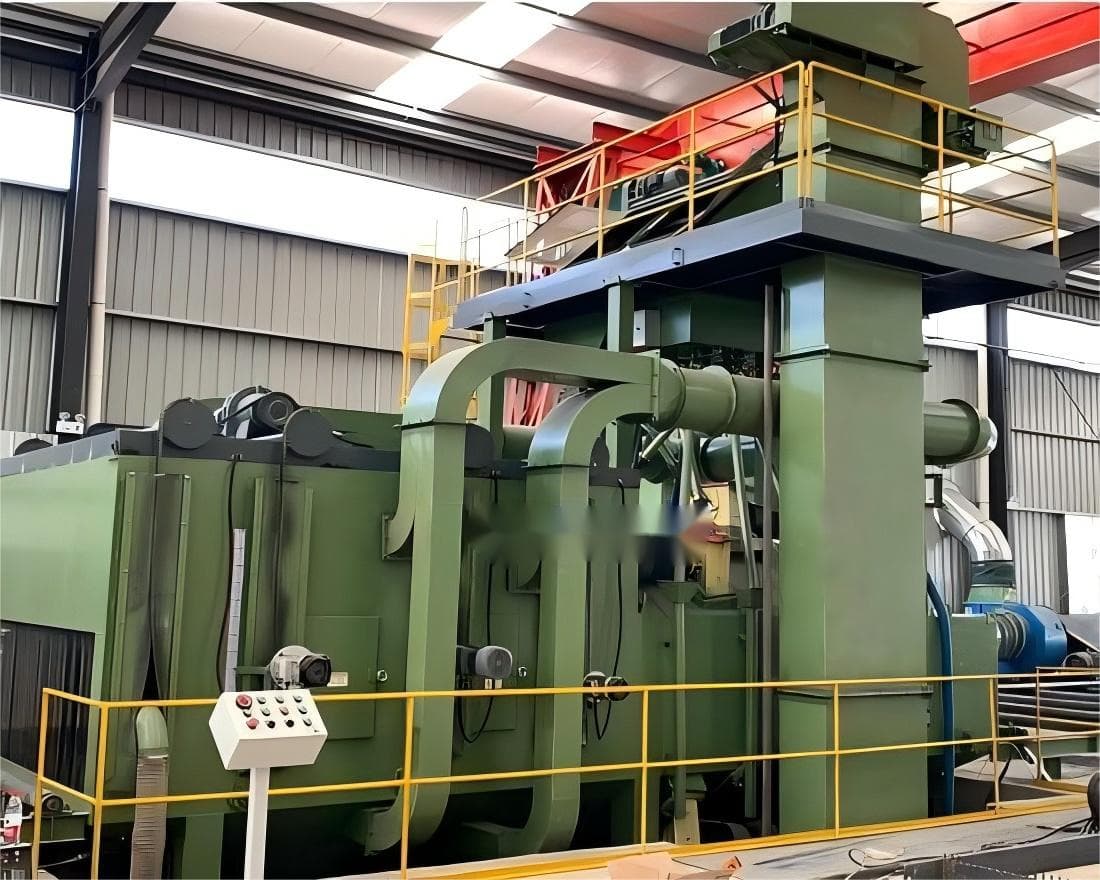
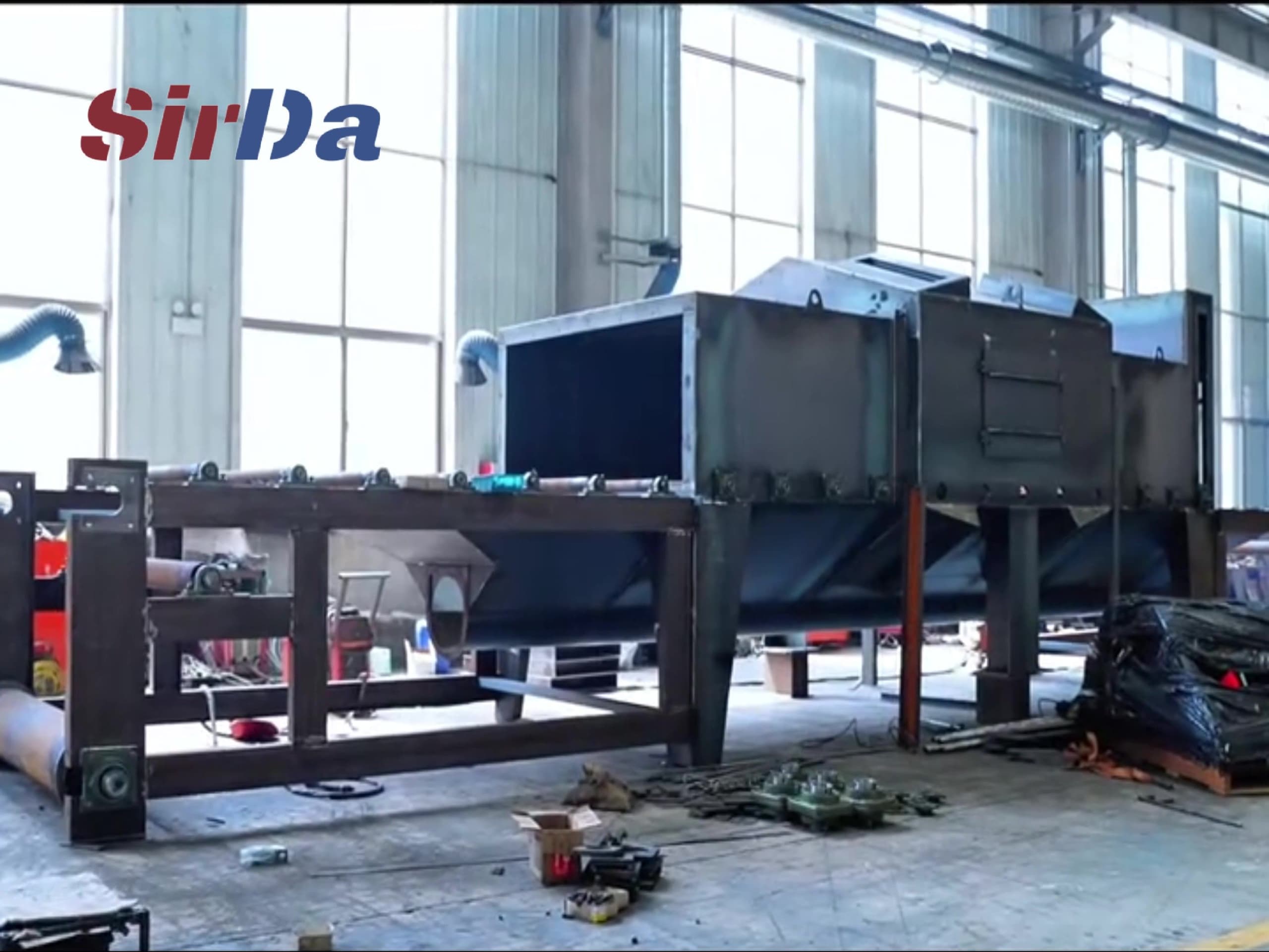
The answer most depots land on is a roller-conveyor wheel-blast line. Long parts such as rail sections, sleeper plates and bogie beams ride through on powered rollers at a controlled speed; the blast wheels are fixed and the part moves past them. That converts a batch process into a continuous one. The operating variable is dwell time, and dwell time is set by line speed. For heavy sections the practical band is roughly 0.5 to 2.5 metres per minute — slow enough that the wheels can do their work, fast enough that a 12-metre rail does not occupy the machine for half an hour.
Picking the abrasive: rail steel is not structural steel
Rail steel is high-carbon and already work-hardened on the head. That changes the media call in two ways.
- Cast steel shot in the S330–S460 range, at 40–52 HRC, is the default for cleaning rail and wagon bodies. It peens as it cleans, which is welcome on weld-affected zones and underframes.
- Steel grit earns its place only when you need an aggressive profile for a coating that demands high mechanical key — but grit cuts, it does not peen, so over-using it on a rail head thins the hardened layer you are supposed to be preserving.
- Keep a working mix, not a fresh charge. Screen out fines daily and top up with new shot; a mix that drifts too fine loses energy and loads the dust collector.
- Watch the rail head specifically. The running surface is the most valuable steel on the rail. If the line treats it like any other face, over-blasting rounds the profile and shortens the rail's service life. Mask it or drop wheel intensity on that face.
For line-speed ferrous work, cast steel shot S230–S390 is the industry baseline on cost per square metre; the rail application just biases you toward the coarser end because scale on a rail head is stubborn.
Timing the line: takt, dwell and the trap of "faster is cleaner"
Throughput is not "how fast the rollers turn". It is the slowest of three things: load or unload time, the blast dwell the contamination actually needs, and the downstream bottleneck. Speed the rollers up and you simply ship partly-clean steel.
A practical check: count the wheels, sum their practical throw rate, and compare that to the surface area passing per minute at your chosen line speed. If area per minute exceeds what the wheels can clean to the target grade — usually Sa 2½ (near-white metal) for a repaint, Sa 3 for a weld prep — slow down or add a wheel station. The failure mode is subtle: one side of a bogie beam cleans, the other does not, because the part was rotated past the wheels too quickly for the shadowed face to be hit.
The rail-head trap again: blasting is also a fatigue treatment. Light peening on the head can be beneficial, but the line must be tuned so the running surface gets coverage without being worked past its design stress state. This is a setting, not a happy accident.
Dust, hazard and the old-coating problem
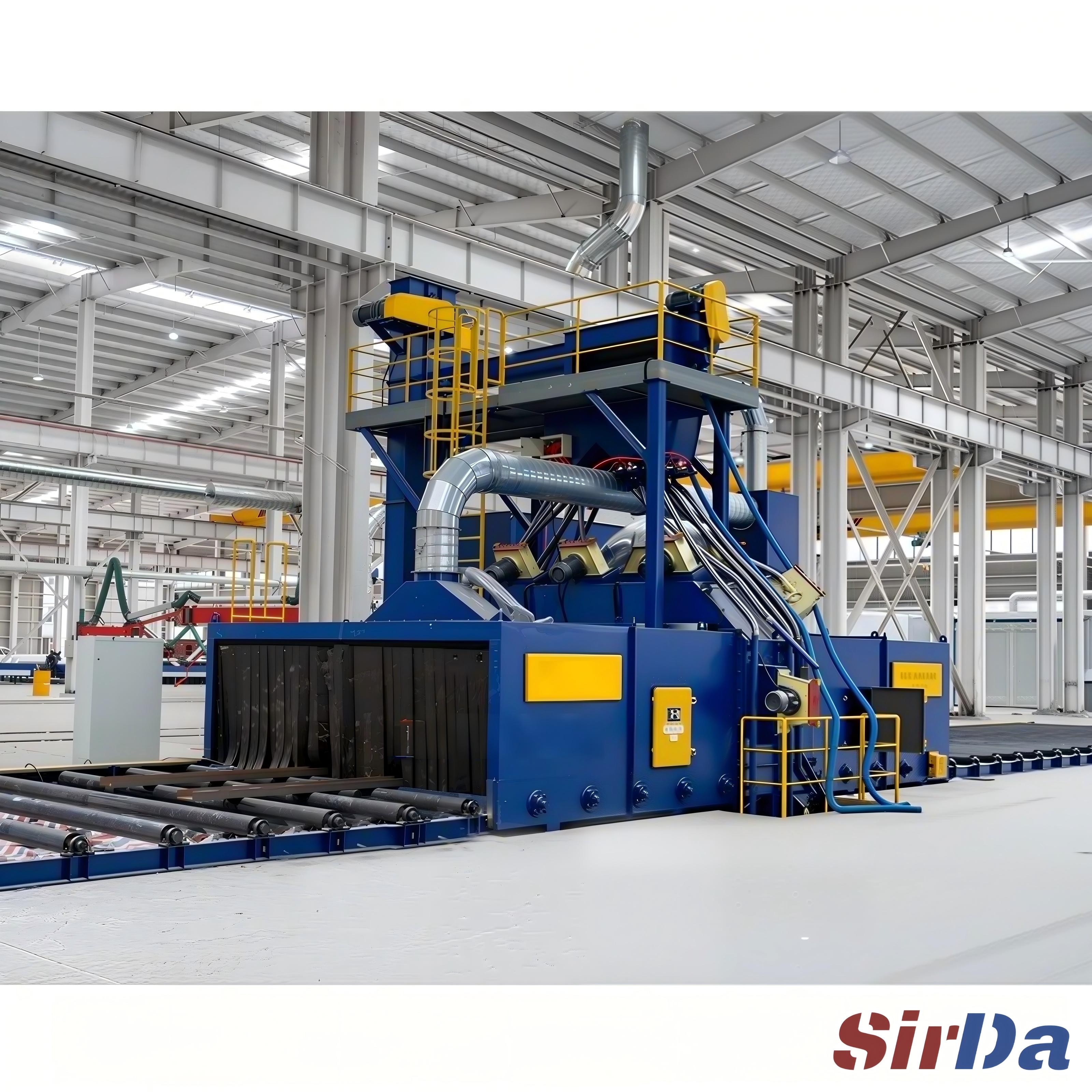
Here the depot diverges from a fabrication shop. Wagons built before the 1980s may still carry lead-chromate primers and lead-based topcoats. Blasting liberates that history as respirable dust. Before any legacy vehicle enters the line, screen the coating with an XRF analyzer; where lead is confirmed, the work falls under strict occupational-lead controls and the dust must be contained and characterized, not just filtered.
Containment means a sealed recovery floor, an air-wash separator, and pulse-jet cartridge filtration sized for the volume. A blast room should turn over its air roughly 60 times an hour; the same discipline applies to an enclosed line. Steel shot is recyclable for hundreds of cycles, so the separator does double duty — it strips dust and broken media while returning usable abrasive to the hopper.
Two checks depots skip at their peril:
- Soluble salts. Winter de-icing leaves chloride on wagon skins. Blast to Sa 3 and you can still get early coating failure if salts remain; measure with the Bresle method (ISO 8502-6/9) and wash if needed.
- Hidden defects. A clean, profiled surface is the best time to run magnetic-particle inspection — blasting exposes cracks that paint was hiding.
What good looks like. A rail and wagon blast line earns its place when the part leaves at the right cleanliness grade, the right profile, and with no hidden contamination — on a predictable cycle time. Get the abrasive, the line speed and the dust containment right together, and blasting stops being the bottleneck and becomes the pacemaker of the whole overhaul.