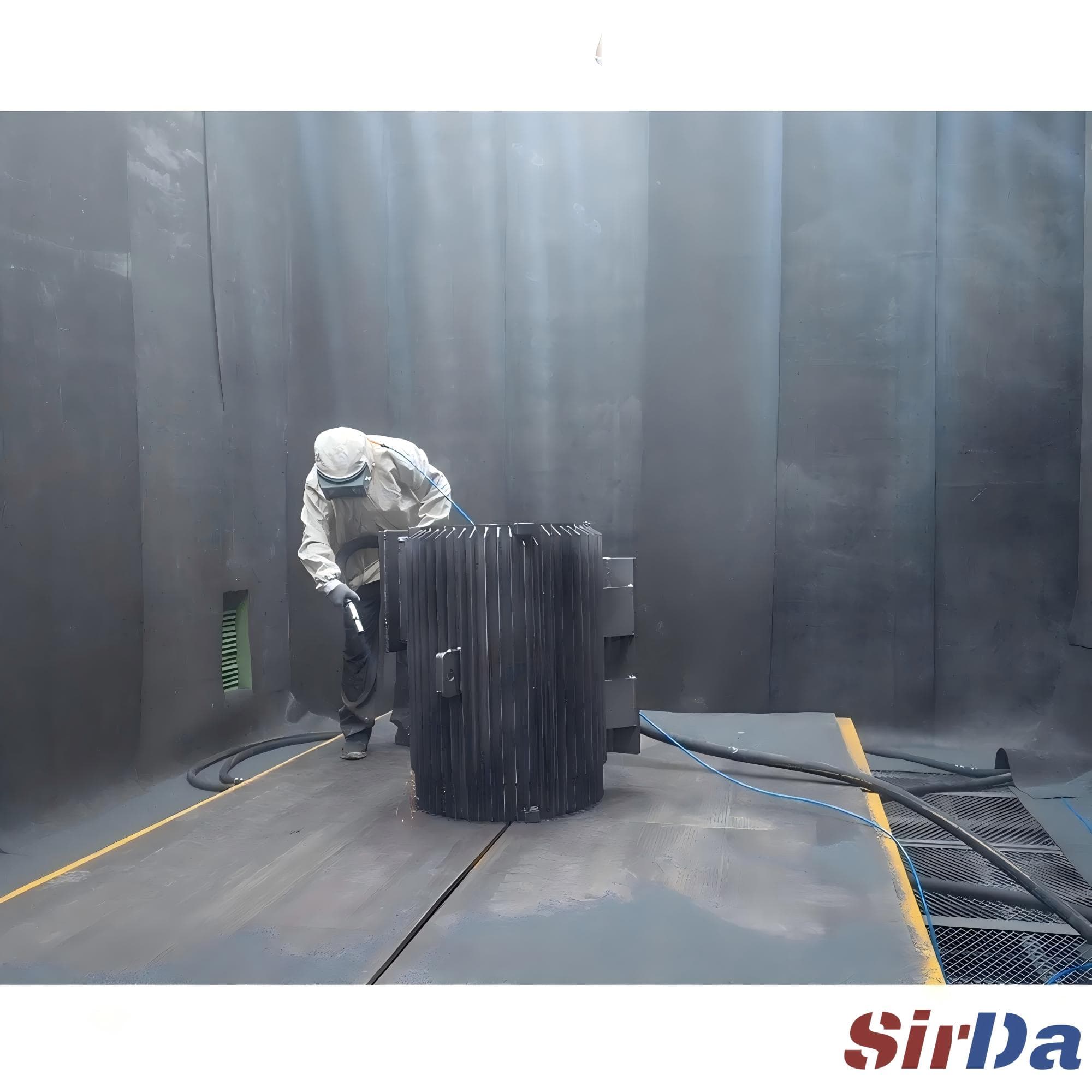
Shot Blasting Machine Specifications at a Glance: Real Figures and Selection Limits
Verified specifications for tumble belt, floor, roller conveyor, hanger and mesh belt machines, with the operating limits of each.
A buyer usually arrives with a part and a question: which machine will clean it without ruining it? The useful answer starts with numbers, not machine names. Shot blasting equipment is selected by how the part is carried and how much it weighs — the blast wheel comes later. Below are the recorded figures for five machine families, with the operating limit written next to each so a part can be ruled in or out before a quotation is discussed.
| Machine | Model | Verified figures | Hard limit | |---|---|---|---| | Tumble belt | Q3210 | 120 kg/batch · ≤2 kg/piece · Ø320 mm drum · 0.6–1.2 t/h · 7.5 kW wheel · ~12 kW total · 3,500 kg | parts that cannot tumble | | Hanger | Q37 | 600–10,000 kg/hook · 2×200–5×250 kg/min blast · 5,000–16,000 m³/h air · 2×11 kW · 1.0–2.0 t/h · 60–80 m/s shot · 8,000 kg | blind cavities | | Roller conveyor | Q69 | 4×11 kW · 2.0–5.0 t/h · 5–30 t workpiece · 15,000 kg | short parts, hollow sections | | Mesh belt | QWD800 | 800×500 mm opening · 0.5–4 m/min · 1.0–3.0 t/h · 12,000 m³/h collector · 12,000 kg | parts smaller than the mesh | | Floor unit | — | 380 mm head · 1×15 kW · 40–80 m²/h · 0.3–2 mm/pass · S280–S390 shot · CSP 2–6 · 2,500 m³/h filter · 380 V / 20 kW · 620 kg | 50 mm from walls |
These are recorded specification rows, not a quotation. The figure that decides the machine is usually the least glamorous one — a 2 kg piece limit, a 320 mm drum, an 800 × 500 mm opening — because those are the numbers a part either fits or does not.
Small fasteners and stamped parts — start with the 2 kg ceiling
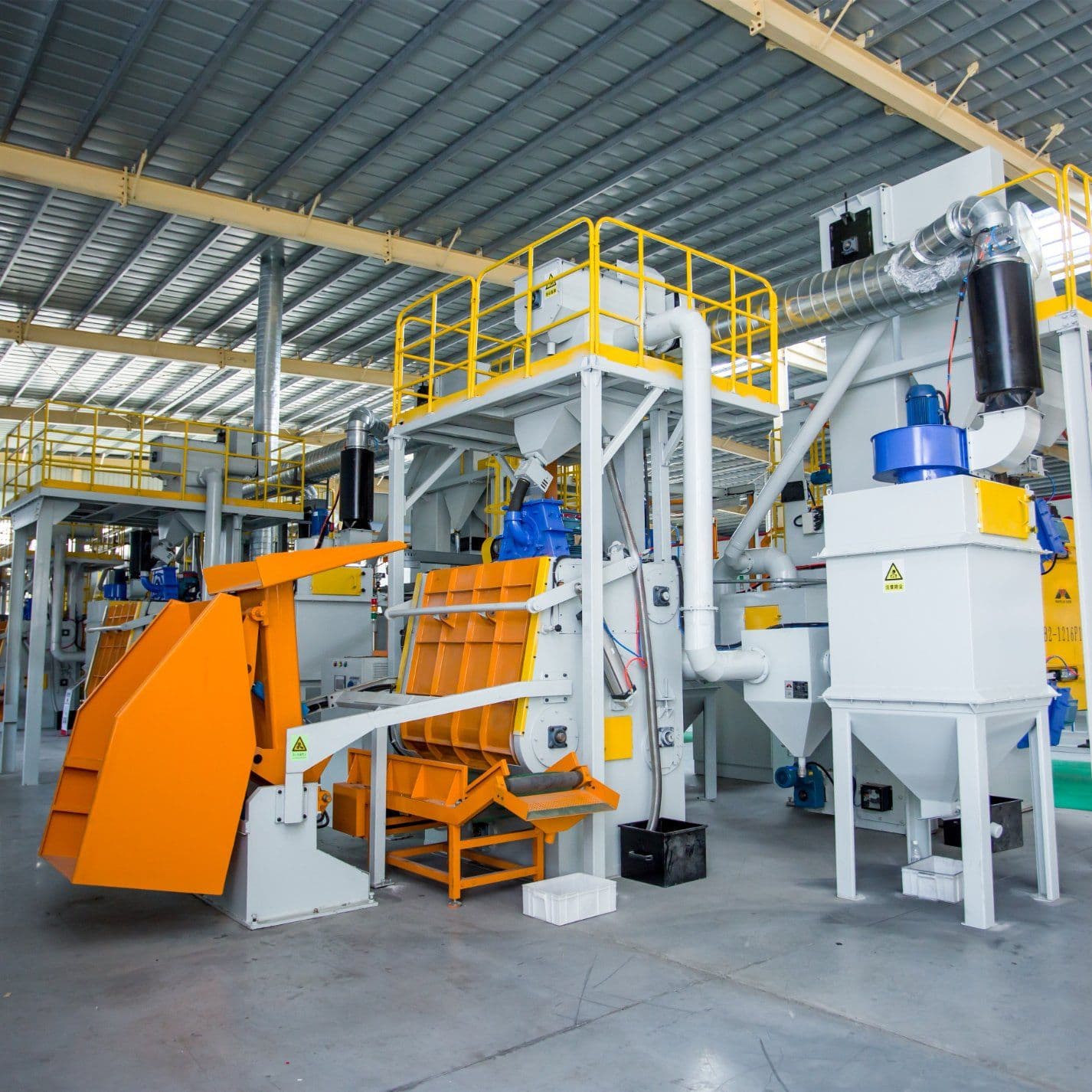
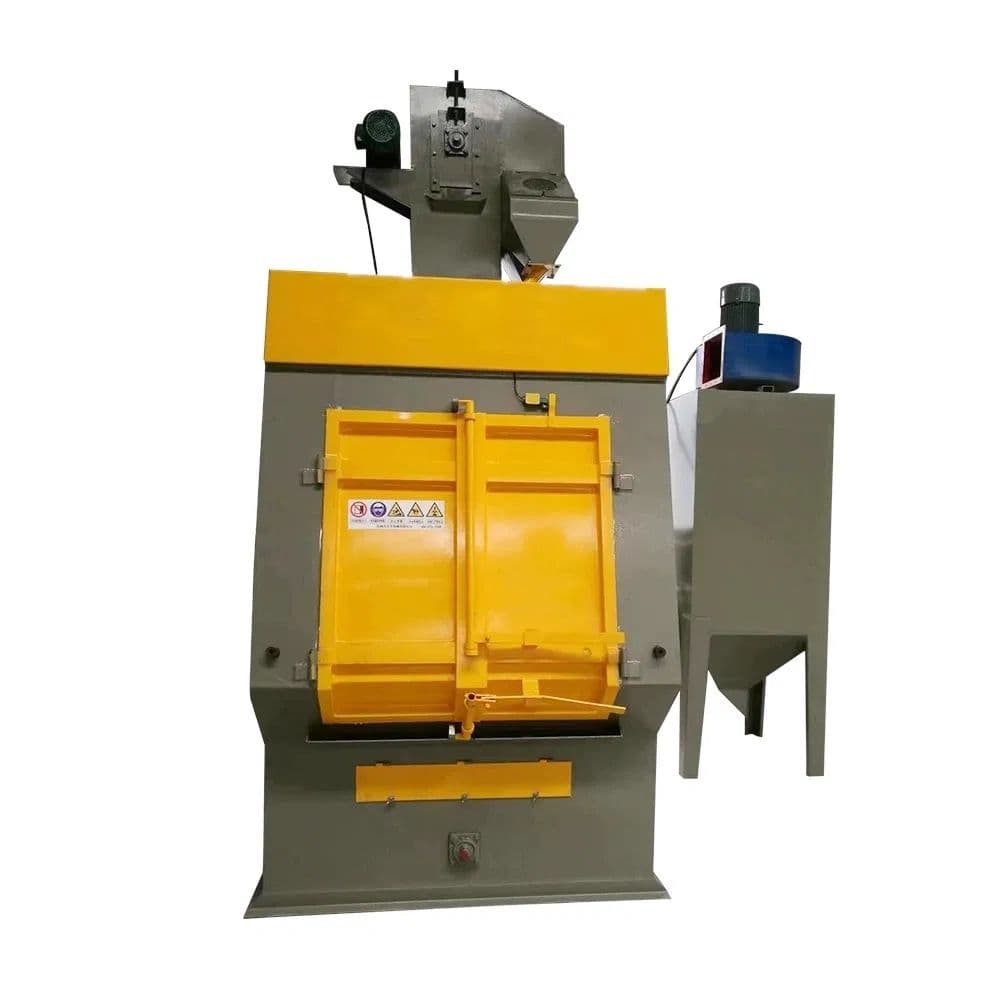
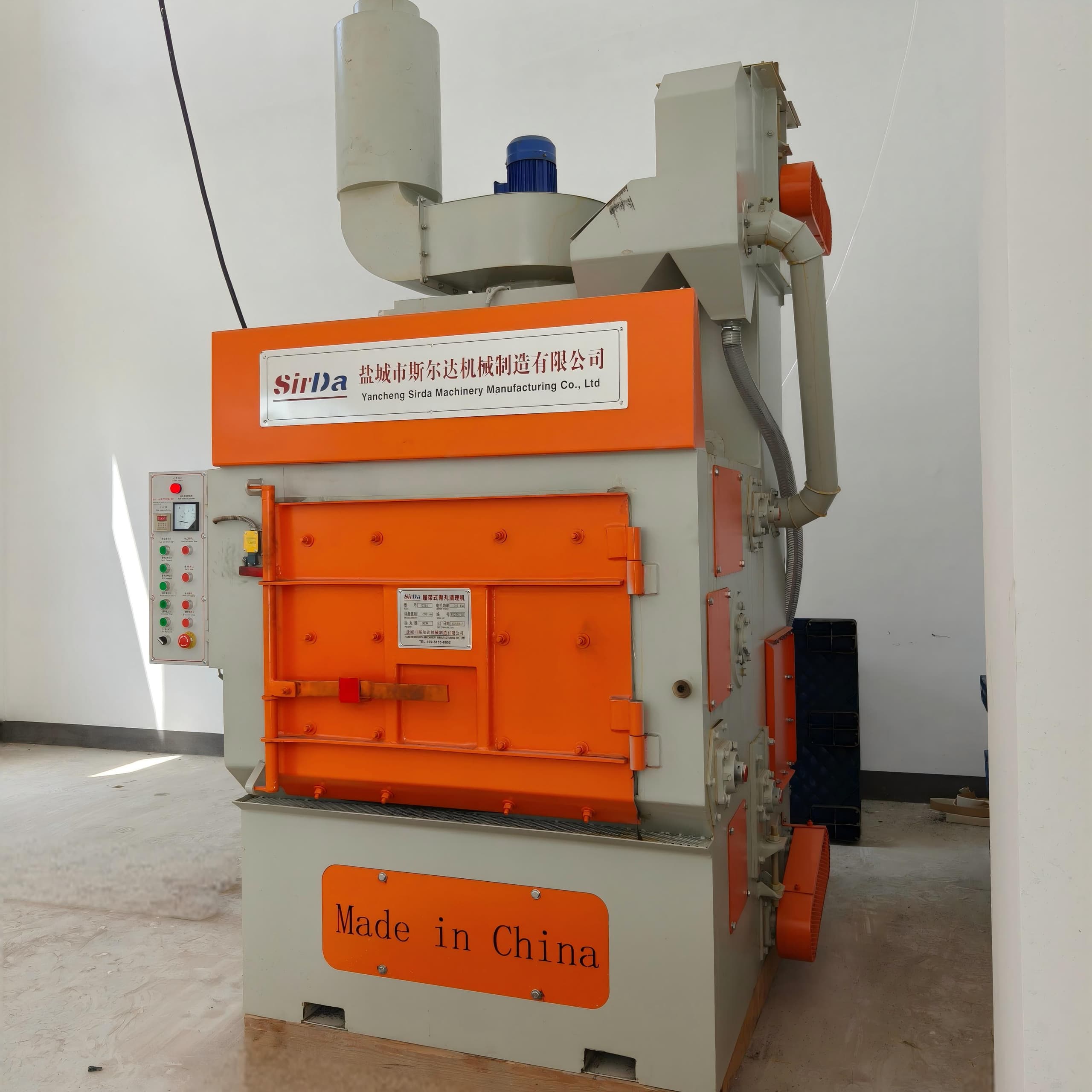
A rubber-belt tumble machine cleans by making the batch roll. Parts load into a perforated drum, the belt lifts and drops them, and blast wheels throw shot into the falling curtain; every face crosses the stream as the bed turns over. The Q3210 row is recorded at 120 kg per batch, 2 kg maximum per piece, a 320 mm drum, 0.6 to 1.2 t/h, a 7.5 kW wheel and roughly 12 kW installed. It weighs 3,500 kg. The single-piece limit is the one that decides most applications: above 2 kg a part stops tumbling and sits at the bottom of the bed, shielding what is around it. Long rods and nesting shapes behave the same way. Those parts do not belong in a drum no matter how much the batch weight allows.
Concrete floors — the coating fails at the interface, not in the coating
A walk-behind floor blaster is bought to prepare a slab, not to clean it. One 15 kW wheel in a sealed 380 mm head drives steel shot into the concrete, while a cyclone separator pulls out dust and returns clean media to the wheel — which is why the machine can work in an occupied building without a dust cloud. Practical output is 40 to 80 m² per hour per pass with turns and shot replenishment included; the head removes 0.3 to 2 mm per pass. Abrasive is S280 to S390 shot circulating at 5 to 8 kg/min, travel runs 0 to 10 m/min in both directions, and the profile reaches CSP 2 to 6 checked against ICRI 310.2. The cartridge filter moves 2,500 m³/h, the machine runs on 380 V three-phase at 20 kW installed and weighs about 620 kg. Within roughly 50 mm of a wall or column, the head cannot seal — that strip still needs a handheld tool.
H-beams and plate — four wheels and a 5-to-30 tonne workpiece
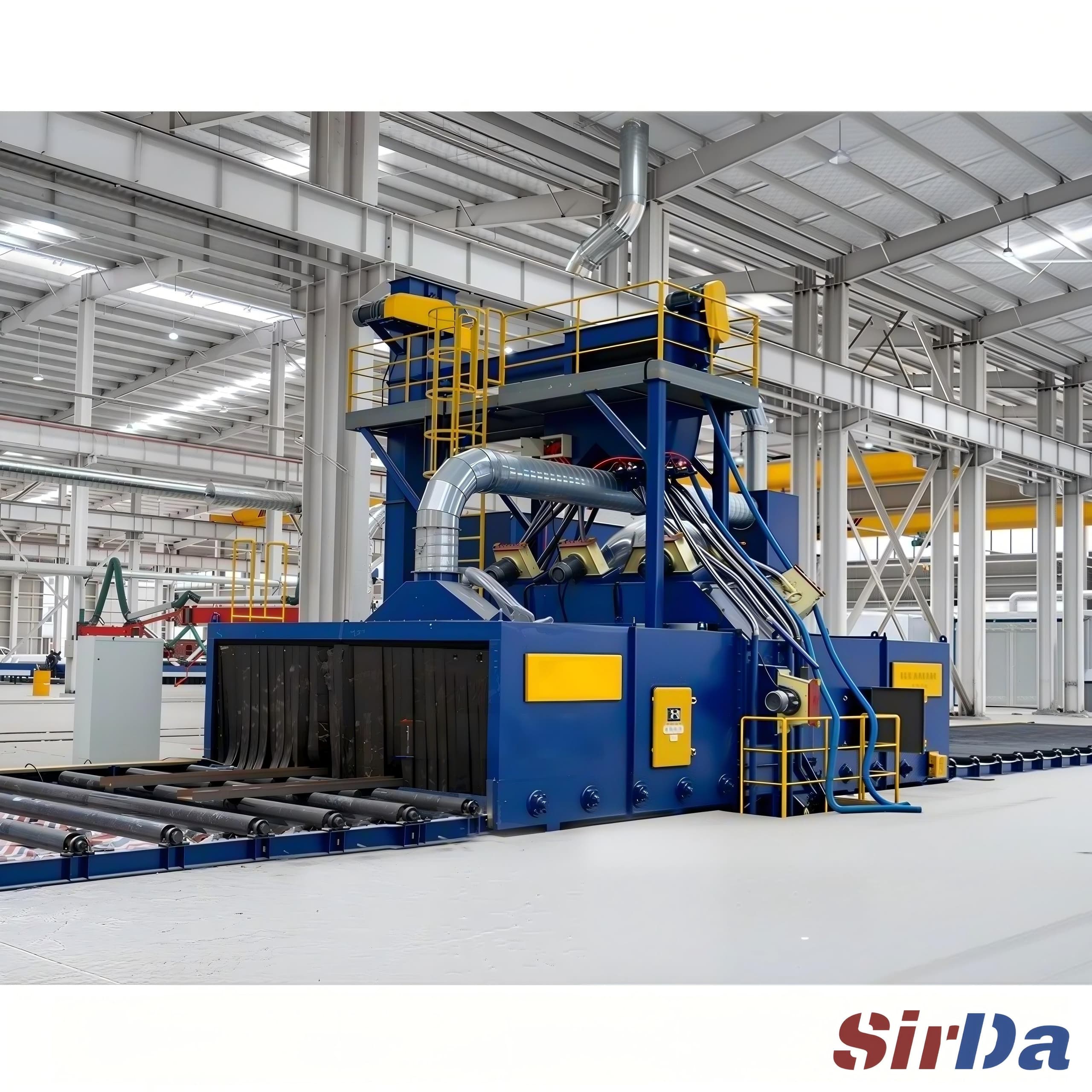
A roller conveyor is the through-feed answer for steel that must be cleaned along its full length. Powered rollers carry the section past fixed blast stations, so every metre sees the same pattern and no crane is needed each cycle. The recorded Q69 row runs four 11 kW wheels at 2.0 to 5.0 t/h for workpieces of roughly 5 to 30 t; the machine itself is 15,000 kg. Working width and station count follow the part mix, with Q6915 as the wider row. Two geometries defeat this carrier: a part too short to bridge the roller pitch, and a hollow section that traps shot with no discharge position. Both need a different machine, regardless of throughput figures.
Castings and engine blocks — line-of-sight decides what gets clean
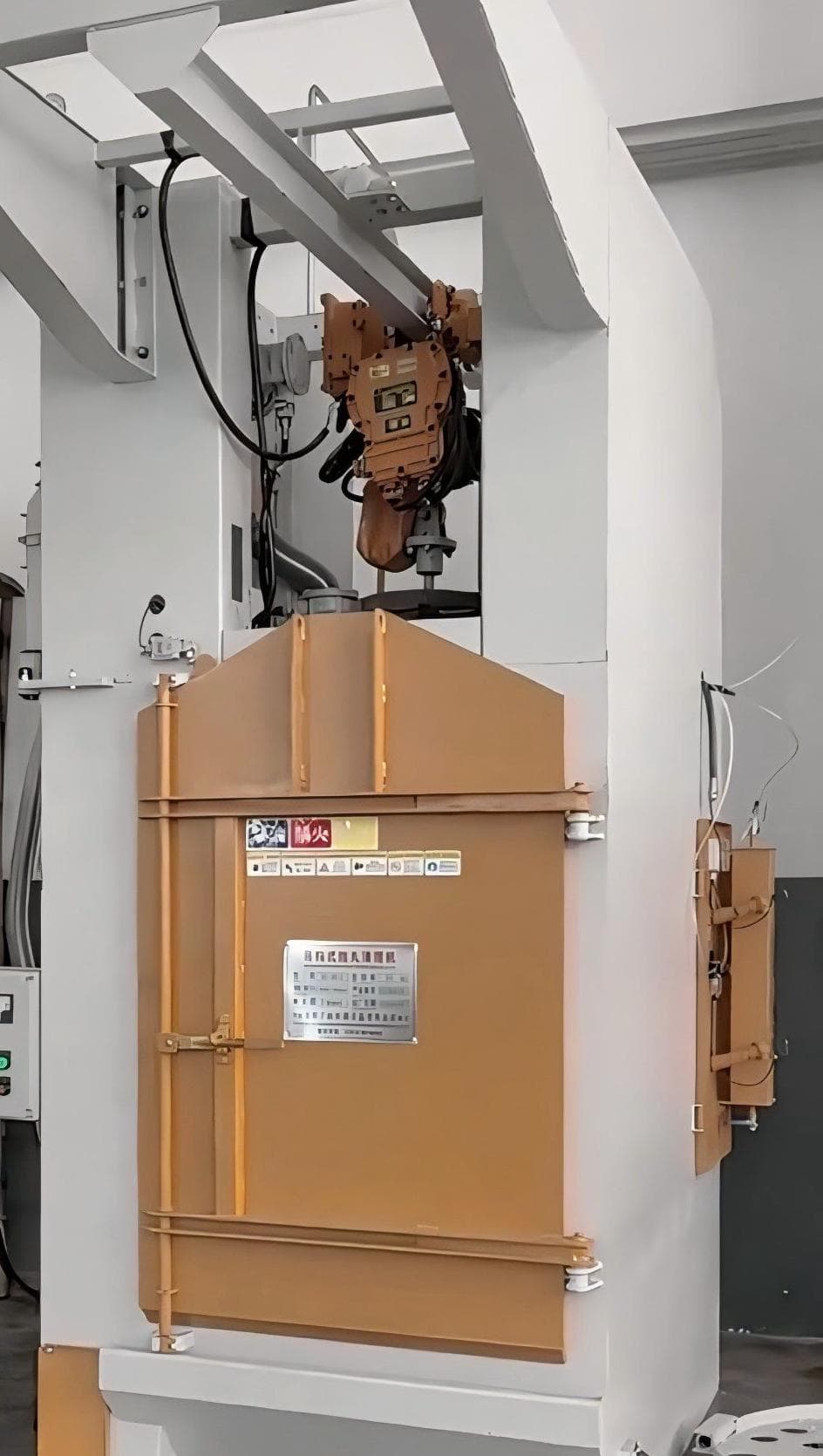
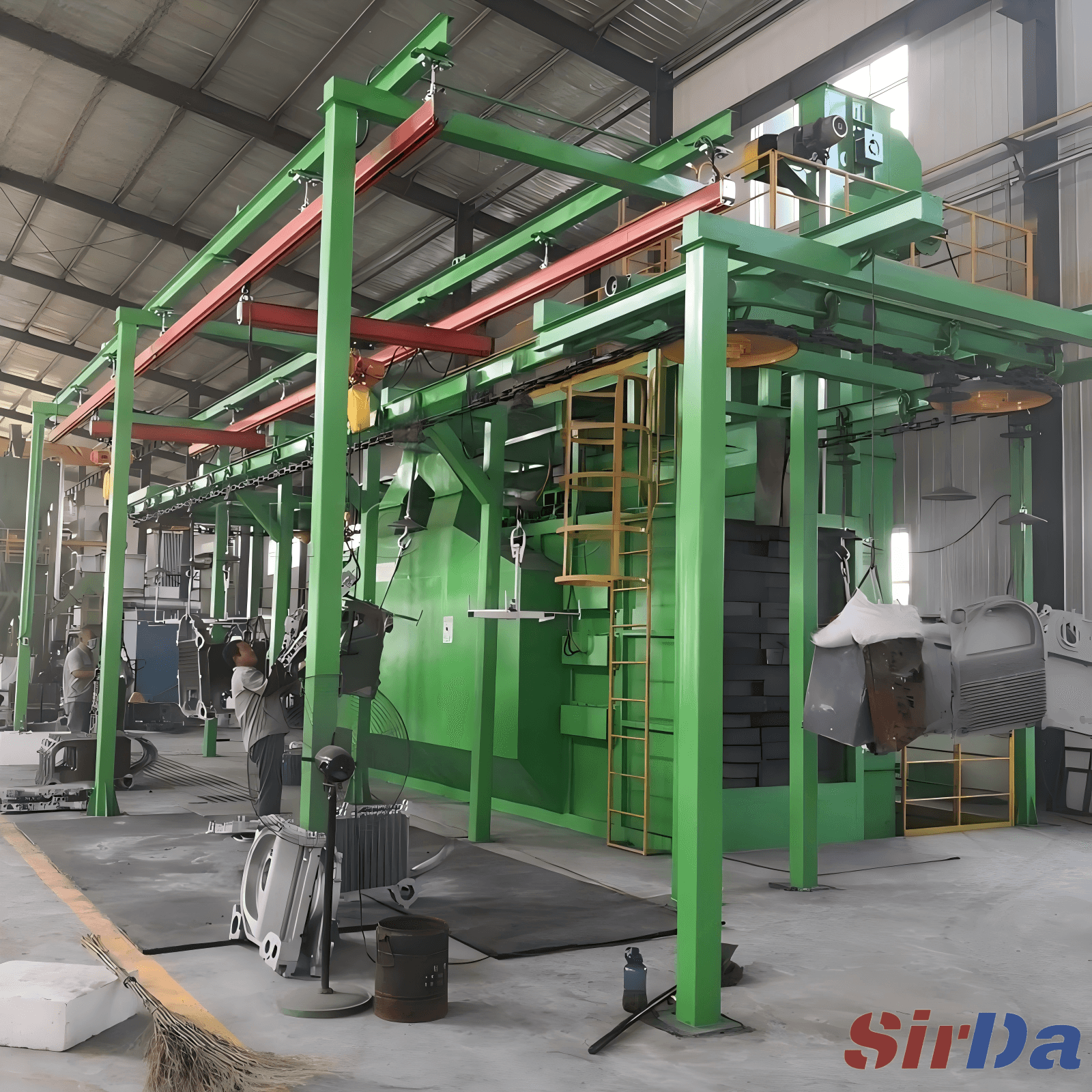
A hanger machine suspends each part from a hook and rotates it past fixed wheels, so corners and recesses are covered while parts never touch one another. That is why cylinder heads and machined castings go on a hook. Q37 rows cover 600 to 10,000 kg per hook, blast flow of 2×200 to 5×250 kg/min, air volume of 5,000 to 16,000 m³/h, two 11 kW wheels, output of 1.0 to 2.0 t/h and shot velocity of 60 to 80 m/s; the machine weighs 8,000 kg. The limit is physical: shot travels in a straight line, so a blind pocket stays blind however long the hook turns. Check the cavity openings on the drawing before the chamber size is discussed.
Choosing a carrier — and where the standards fit
Carrier choice follows the part, not the wheel. A tumble belt handles small parts that can roll (Q3210: 120 kg/batch, 2 kg/piece). A mesh belt carries small and medium parts in continuous flow — the QWD800 opens at 800 × 500 mm, runs at 0.5 to 4 m/min and clears 1.0 to 3.0 t/h, with a 12,000 m³/h collector on a 12,000 kg machine. A roller line takes long plate and welded beams; a hook keeps complex castings separated. Across all four steel machines, cleanliness is written as a Sa grade to ISO 8501-1 (Sa 2.5 is the near-white grade normally specified before coating), anchor profile as Rz to ISO 8503, metallic abrasive to ISO 11124, delivered abrasive tested to ISO 11125, and the blast process to ISO 8504-2. For concrete the equivalent is the ICRI CSP scale. One rule applies throughout: the achievable grade depends on the part, the blast time and the abrasive, and is agreed during the application review — never promised from a model name.
Send the part drawing, material, piece weight, output target and surface specification, plus a photograph of a typical load. A photo of a real batch tells more than one sample, because the mix decides whether parts tumble, nest or shield one another — and that decides the machine before any wheel power is discussed.