Dust explosion risks and how blast rooms stay safe
A blast room can supply all five conditions for a dust explosion in one shift. This article explains how media breakdown changes the dust hazard class, why duct velocity and capture airflow matter, how NFPA 68 venting, NFPA 69 isolation and grounding work together, and which housekeeping failures cause most incidents.
Why a blast room can explode
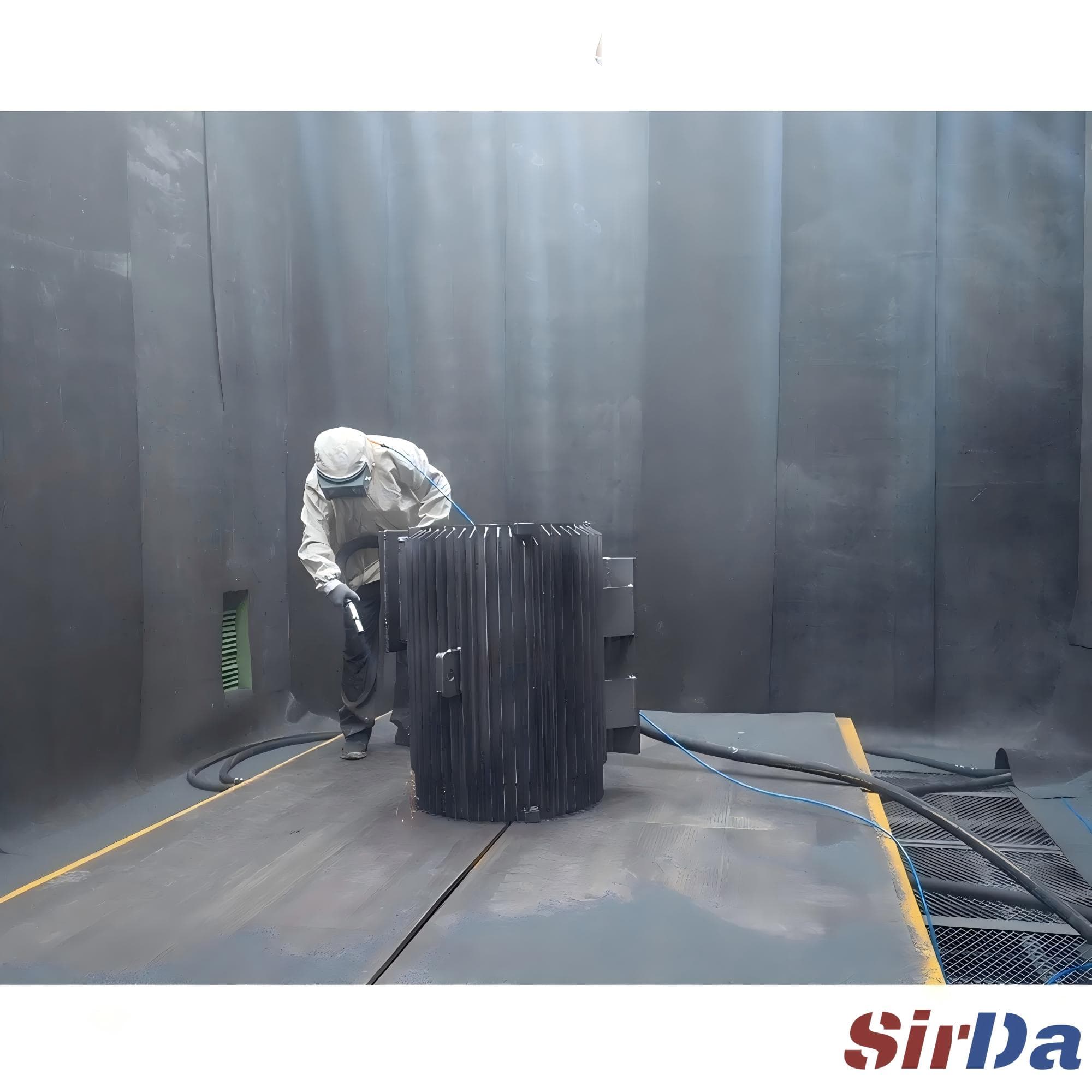
A dust explosion needs five things at once: combustible dust, oxygen, an ignition source, dispersion into a cloud, and confinement. A blasting enclosure supplies all five on an ordinary shift. The walls and ductwork provide confinement; the wheels and the collector's pulse-jet cleaning keep fine particles suspended; the dust is the fuel; the room air is the oxidiser. The only variable is whether an ignition source coincides with a combustible cloud.
The detail that surprises most operators is the media. Fresh steel shot is dense, rounded and comparatively inert. Every impact fractures a little of it, and over thousands of cycles the media sheds a fine metallic fraction along with coating residue and rust scale from the workpiece. Those fines are what the collector captures, and they behave very differently from the pellets entering the wheel. Blast a batch of aluminium castings and the collected dust changes class again. The machine has not changed, but the hazard has.
The measure that matters is the deflagration index, Kst, quoted in bar·m/s. It describes how fast pressure rises when a cloud ignites. St1 dusts sit below 200, St2 between 200 and 300, St3 above 300; the higher the class, the larger the vent area a collector needs. Mild steel and iron dusts generally fall in St1. Aluminium ranges from about 150 to 500 depending on particle size, magnesium can exceed 500, and titanium and zirconium are higher still. Minimum ignition energy for these reactive metals is only tens of millijoules — a spark a person never feels is enough. Dust explosions in polishing and blasting shops have caused catastrophic losses.
Make the media choice with the dust in mind
Media selection is usually framed as a surface-preparation decision — profile depth, cleaning speed, finish. It is equally a dust-hazard decision. Rounded cast steel shot peens and fractures slowly; angular grit cuts faster but breaks down into sharper, finer fragments that stay airborne longer. Switching to a less durable media can raise the fines load in the collector without anyone changing the extraction settings.
- Match media to the alloy. Carbon steel media on carbon steel work produces a comparatively predictable St1 dust. Introduce stainless, aluminium, magnesium or titanium workpieces and the dust may become a reactive metal mixture that behaves far more aggressively.
- Never blend reactive metals into a carbon-steel system. NFPA 484 calls for dedicated collection for aluminium, magnesium and related alloys. A single collector serving both steel shot and aluminium fines can turn a manageable event into a severe one.
- Treat water as a decision, not a reflex. Wet collection is the required choice for many reactive metal dusts because it captures the dust before a cloud can form. But aluminium, magnesium and titanium respond to water in a fire — some generate hydrogen — so extinguishing and cleanup procedures must be designed around the specific metal, using Class D agents rather than water.
- Test the dust, do not assume it. Ask the supplier or a lab for Kst and maximum explosion pressure (Pmax) of the actual collected mixture. Where composition is uncertain, sizing should be based on the highest Kst and Pmax of any component, not an average.
The practical question before buying media is simple: what alloys will this room ever see, and is the dust collector rated for the worst of them?
Design the extraction and protection around the dust
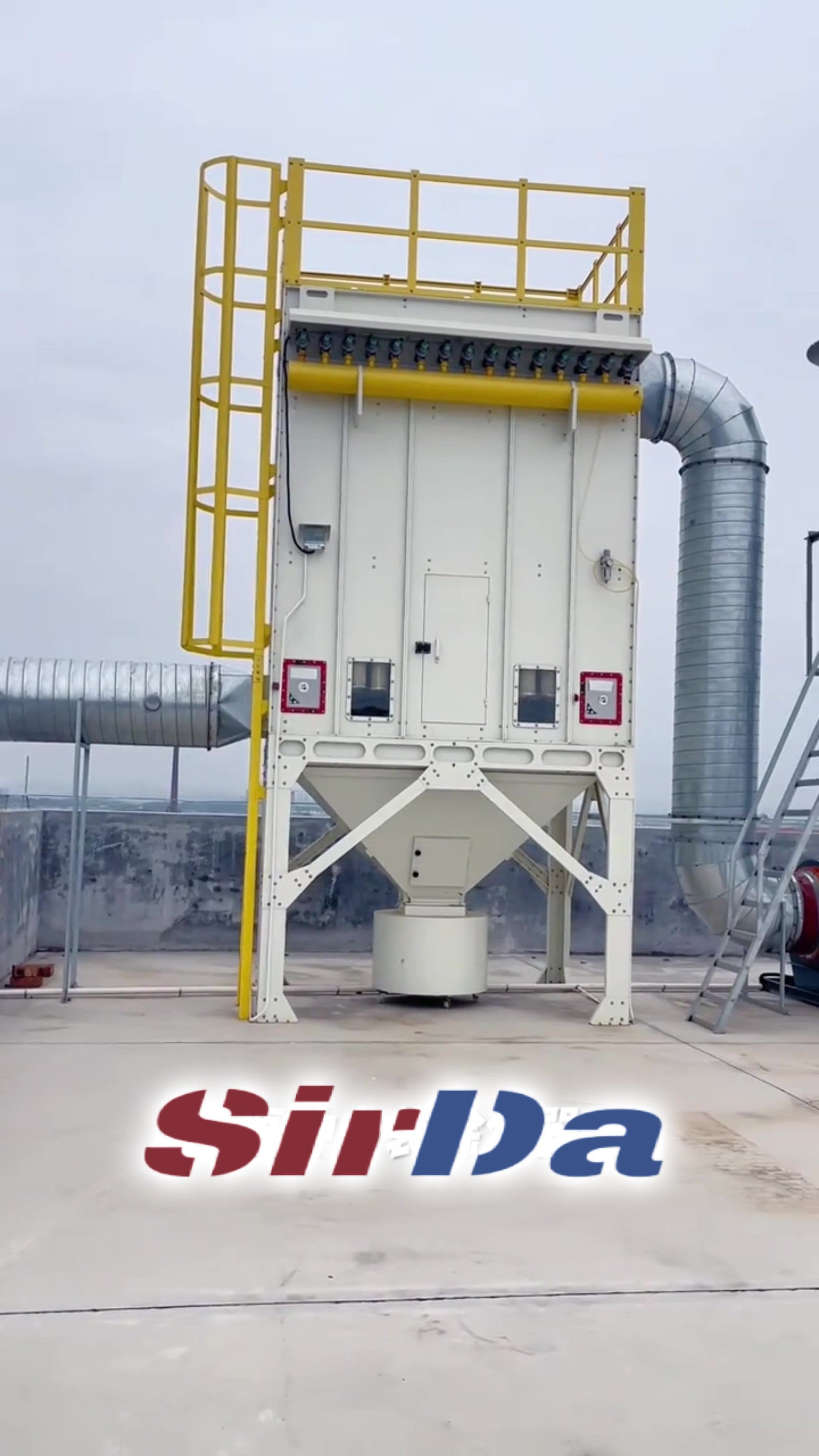
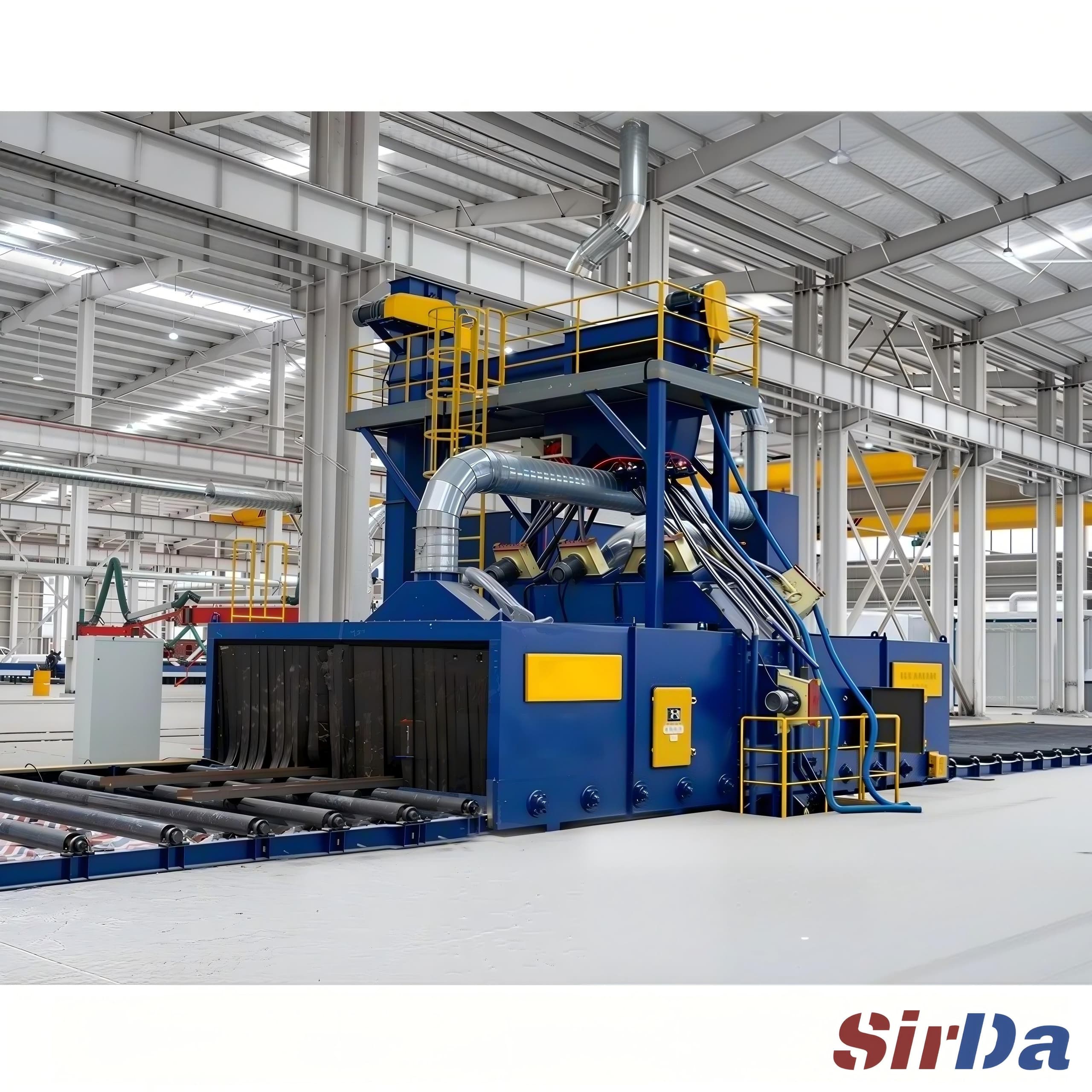
A collector is often the most dangerous equipment in the room. During pulse-jet cleaning, a dense dust cloud is deliberately released inside a sealed housing — exactly the fuel-and-confinement combination that turns a spark into a deflagration. Extraction has to remove that risk, not relocate it.
Start with transport velocity. Dust must move fast enough through the duct that it never settles: guidance commonly cites around 20 m/s (roughly 4,000 ft/min) as a floor, and 23 to 25 m/s for heavier or moist metal dust. Below that threshold dust salts out, forming a layer a later disturbance can loft into a secondary cloud — and secondary explosions are usually more destructive than the first. Keep ducts short and straight.
Then size the capture airflow to the process. A centrifugal wheel throws media continuously and the separator rejects a stream of fines; the fan must keep the room and separator under negative pressure without letting dust escape around the door. If dust is visibly settling on ledges near the machine, capture velocity is too low or the duct is moving too slowly, whatever the fan's nameplate says.
Protection then has three layers, and they work as a set:
- Deflagration venting per NFPA 68. Vent area follows the dust's Kst, Pmax and vessel volume — the starting relationship is Av proportional to V to the two-thirds power, with a coefficient rising with explosibility. Vents must discharge to a restricted outdoor area, never back into the room, and the cover must open at the design pressure (NFPA 68 caps cover mass near 12.2 kg per square metre of free vent area).
- Explosion isolation per NFPA 69. A vent protects the collector but not the duct or the room. Passive flap valves, active fast-closing dampers or chemical isolation stop a deflagration from travelling back through the inlet duct toward the work area, and stop pressure piling between connected vessels.
- Bonding and grounding. The room structure, ductwork, collector and media handling equipment must be electrically bonded and grounded, with resistance kept below about 1×10⁶ Ω. Anti-static filter media and spark-resistant fan construction remove the remaining ignition paths. Without bonding, a single static discharge defeats the vent and the isolation valve.
Where a collector must sit indoors, a flameless vent can be used, but it carries a lower maximum Kst and needs a clear perimeter around the discharge; confirm those distances with the supplier.
Failure modes to audit before the next shift
Most serious incidents trace back to housekeeping and small changes that nobody re-assessed. Walk the room and the collector with this list:
- Dust layers on beams, ledges and the floor. A layer thicker than about 0.8 mm (1/32 in) over a significant area is fuel waiting to be lofted. Clean on a documented schedule with conductive, non-sparking scoops and soft brushes; avoid compressed-air blowdown, which creates the very cloud you are trying to prevent.
- A vent that discharges indoors or has been painted shut. Check that every vent points to a restricted area and that its panel is free to move.
- Isolation valves stuck open or missing. Confirm flap valves and dampers are present, rated for the dust and in working order.
- A broken ground strap or a plastic duct section. Any break in the bonding path reintroduces static ignition.
- A new alloy, a different media or a faster cycle. Each changes the dust's Kst or the fines load. Re-check the hazard assessment and the collector rating before the change becomes routine.
- Cleaned air returned to the building. For combustible metal dust, exhaust should be discharged outside, not recirculated.
None of this needs exotic equipment: specify the collector for the real dust, keep the duct at velocity, and inspect the protective devices as deliberately as the wheels. Before changing what this room blasts, review our notes on dust collection sizing and media selection, and confirm the collector's rating against the new alloy.