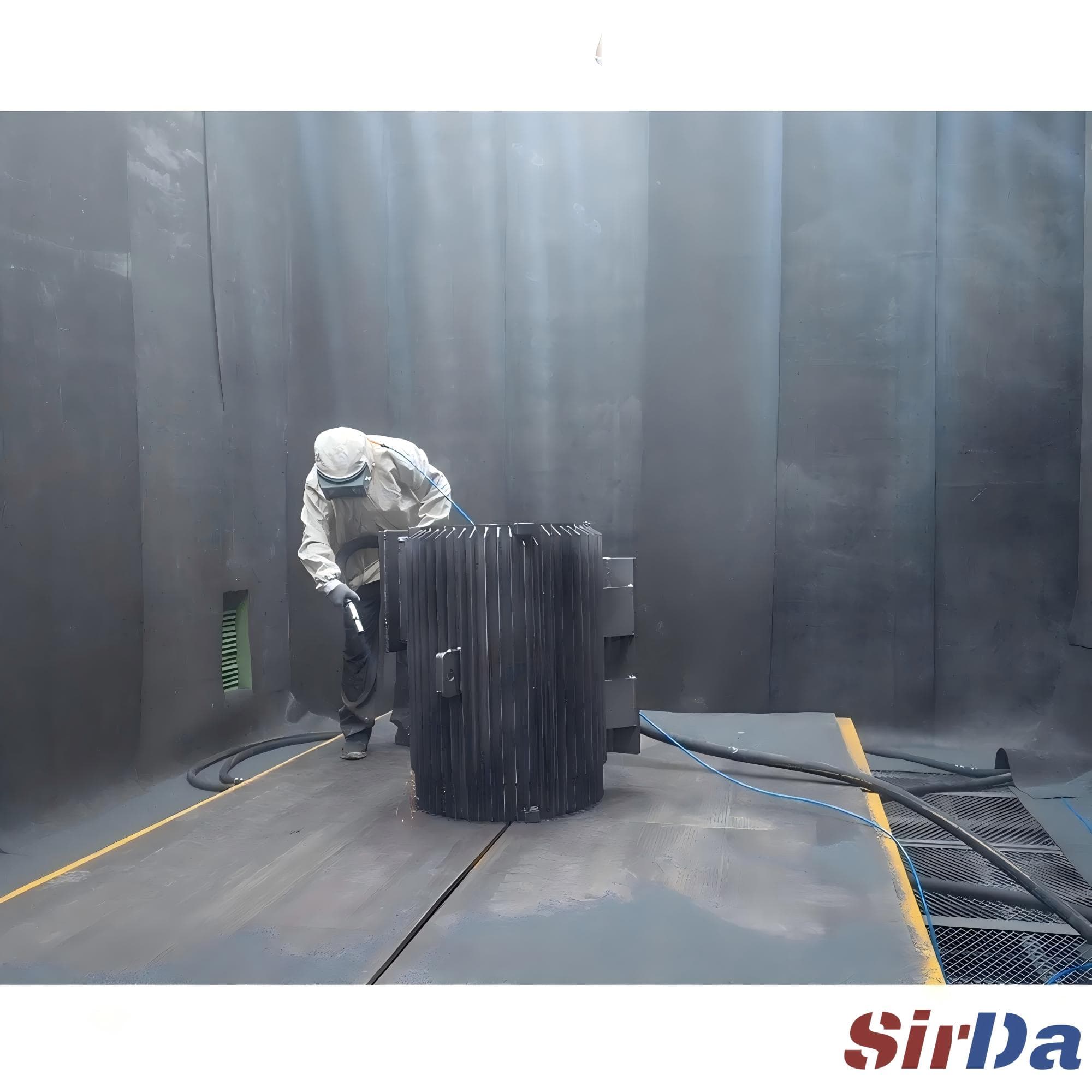
Q69
Roller Conveyor
Steel plates, profiles and fabricated structures
Explore machine
Home / Machines / Roller Conveyor Shot Blasting Machine for Ship Plates and Marine Steel
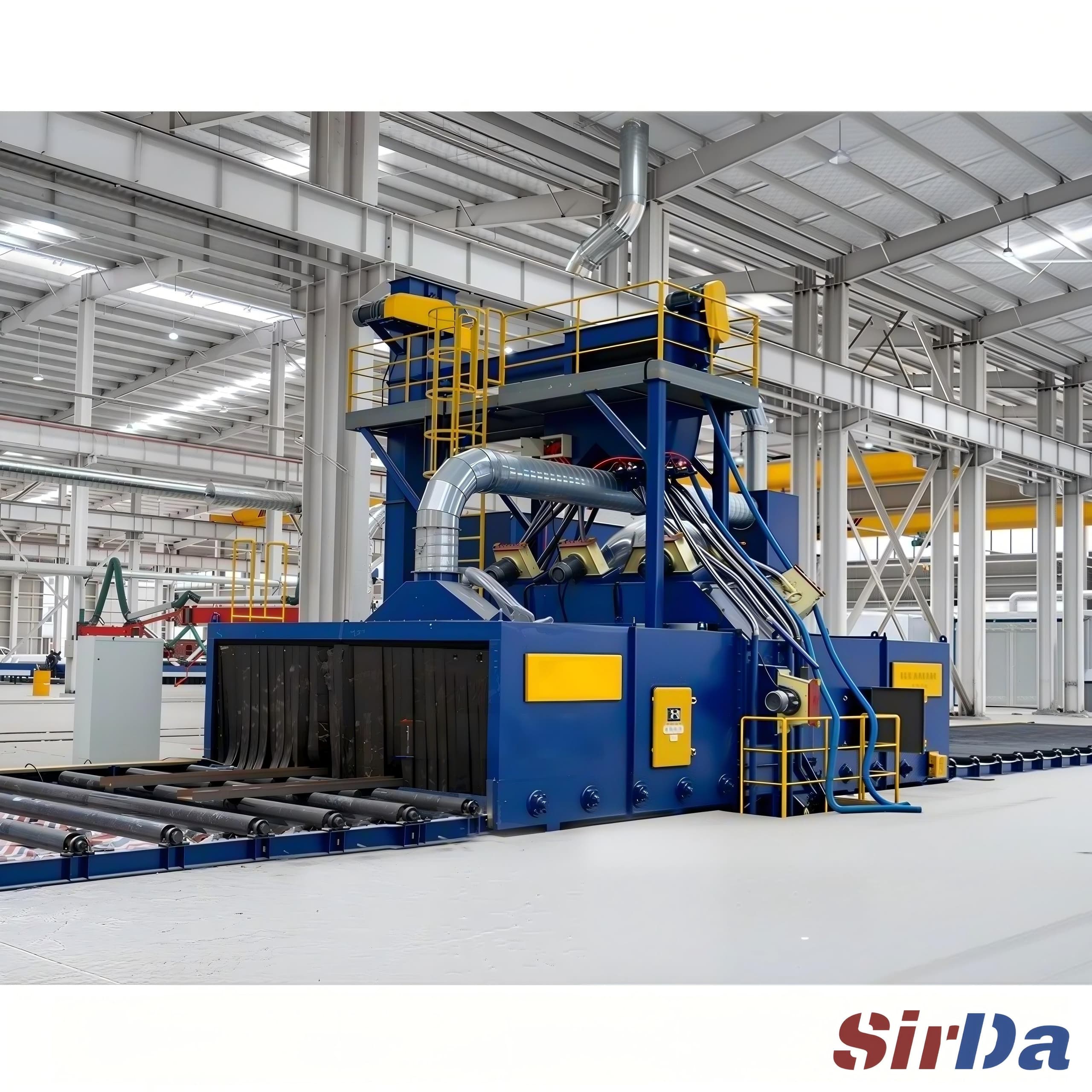
A pass-through roller conveyor shot blasting system built for ship plates and marine steel. It removes mill scale, rust and surface salt in one pass, preparing large flat panels for shop primer and marine coatings. Configuration follows plate width, thickness and the required cleanliness grade.
Read product details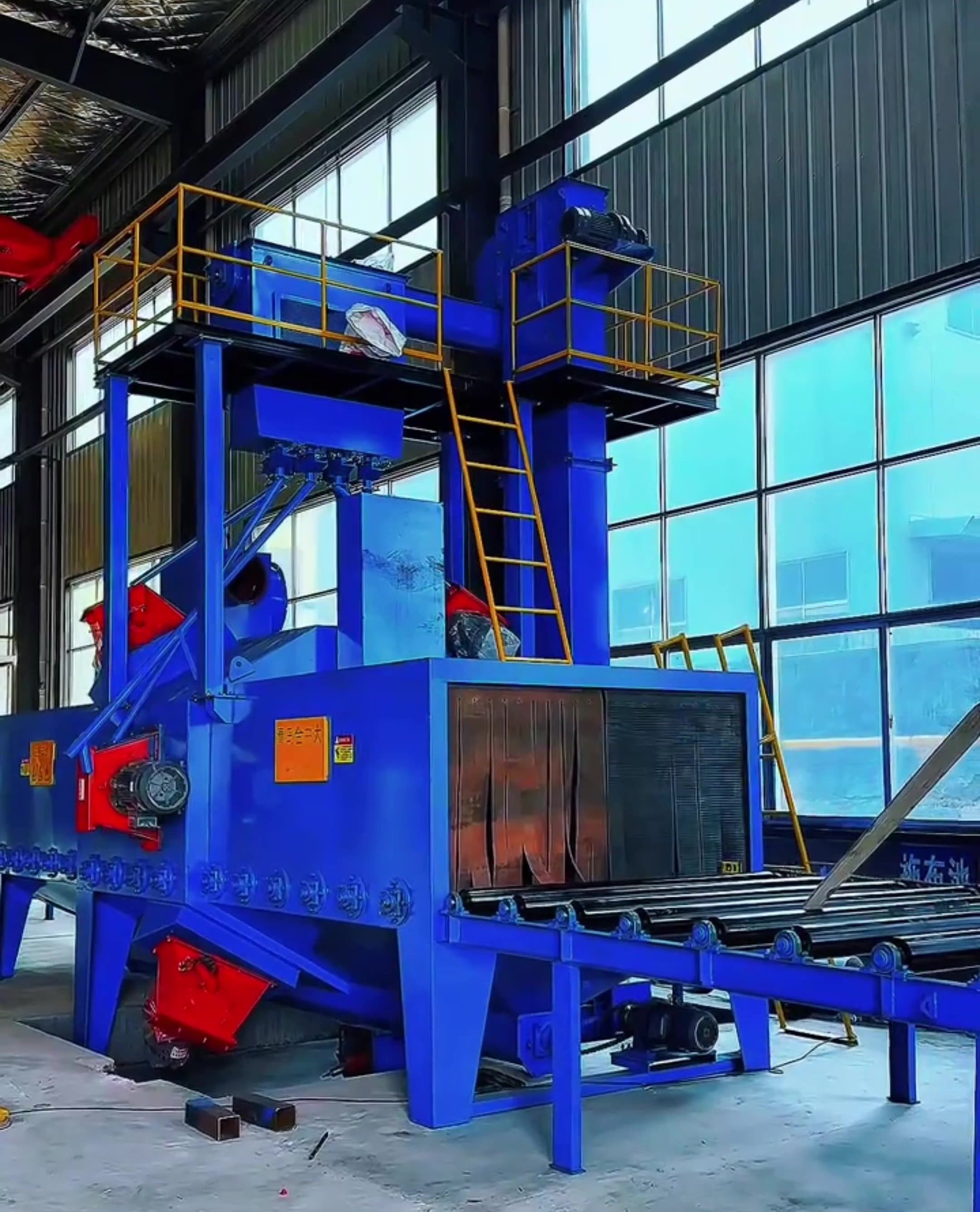
Ship plates leave the mill with tight, baked-on scale, and after months in a yard stack they pick up salt, oxidation and uneven rust. A cleaning line for marine steel has to do more than remove rust. It must leave a uniform anchor profile that a shop primer can grip, and it must not drive salt or dust back into the surface. Large flat panels also demand consistent treatment across the full width, edge to edge, pass after pass.
Plates ride on powered rollers through a sealed blasting chamber. The abrasive circuit is arranged for continuous duty:
The result is a uniformly cleaned and profiled surface: mill scale and loose rust are gone, and soluble salt is controlled rather than driven back into the steel. That gives the shop primer a consistent key to bond to and lowers the risk of premature coating failure along welds and edges, the places where marine structures tend to fail first. Plates simply travel straight through, with no turning or re-fixturing between blasting and priming.
This layout suits flat plate, stiffened panels and regular profiles that can travel on rollers. Very thick sections, tall fabricated assemblies, curved hull blocks and small loose parts are better handled by hook-type or table machines. Roller pitch, conveyor speed, wheel layout and dust-collection capacity are fixed only after plate dimensions, steel grade and target cleanliness are reviewed. No two yards need the same configuration.
| Parameter | Value |
|---|---|
| Workpiece | Ship plates, stiffened panels and marine steel |
| Plate dimensions | To be confirmed against drawings |
| Surface condition | Mill scale, rust and marine salt to be confirmed |
| Cleaning target | Cleanliness grade and anchor profile to be confirmed |
| Handling | Roller pitch and line speed to be confirmed |
| Configuration | Wheel layout and dust collection to be confirmed |
Share a photo or drawing, material, maximum dimensions and expected output. These details help us review a suitable configuration.
Send project requirementsQ69
Steel plates, profiles and fabricated structures
Explore machine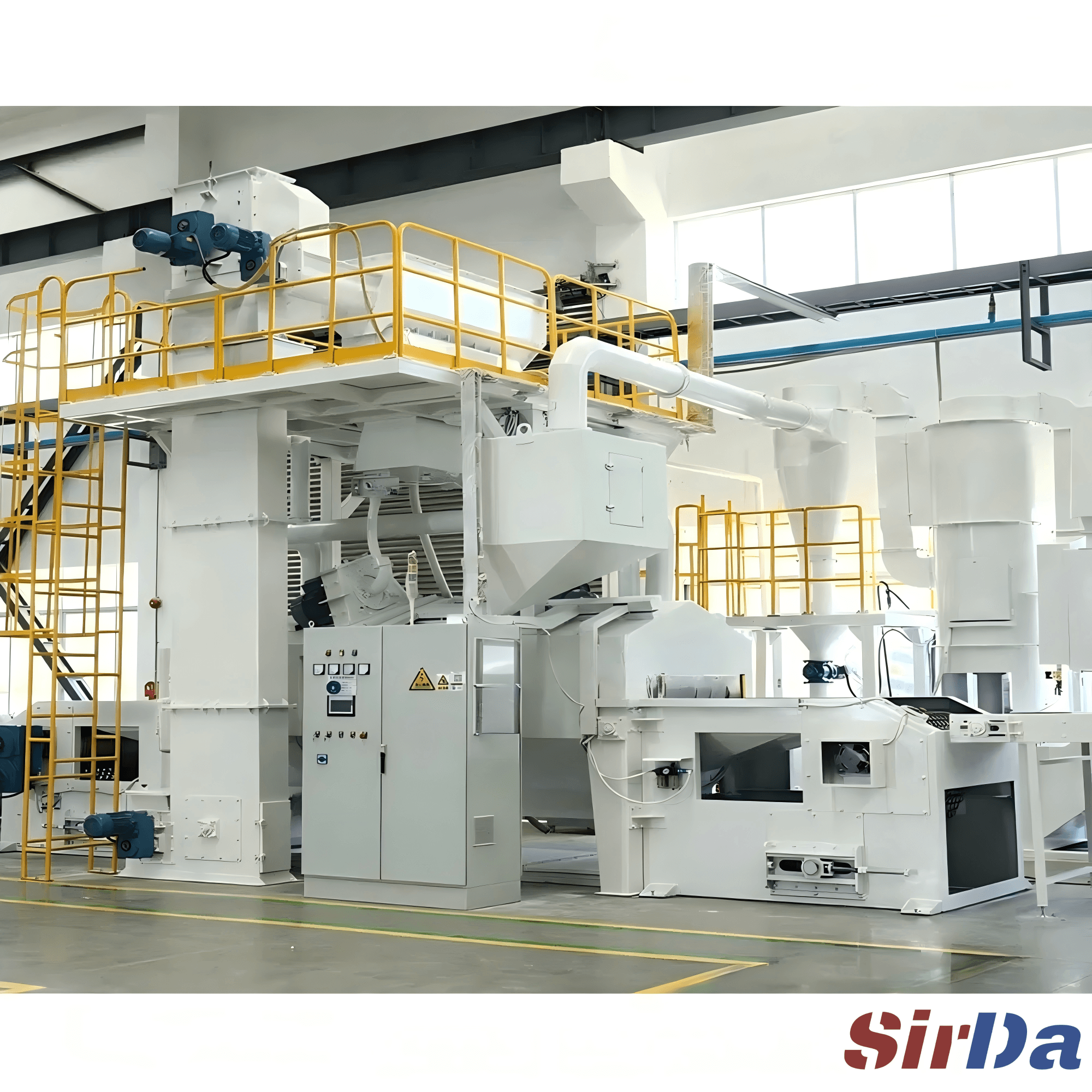
QWD800
Parts carried through a continuous blasting process
Explore machine
Continuous flow
A continuous through-type shot blasting line cleans structural sections, tubes and plates while they keep moving. This page explains how blast wheel placement, media recycling and dust routing are configured around the workpiece cross-section.
Explore machine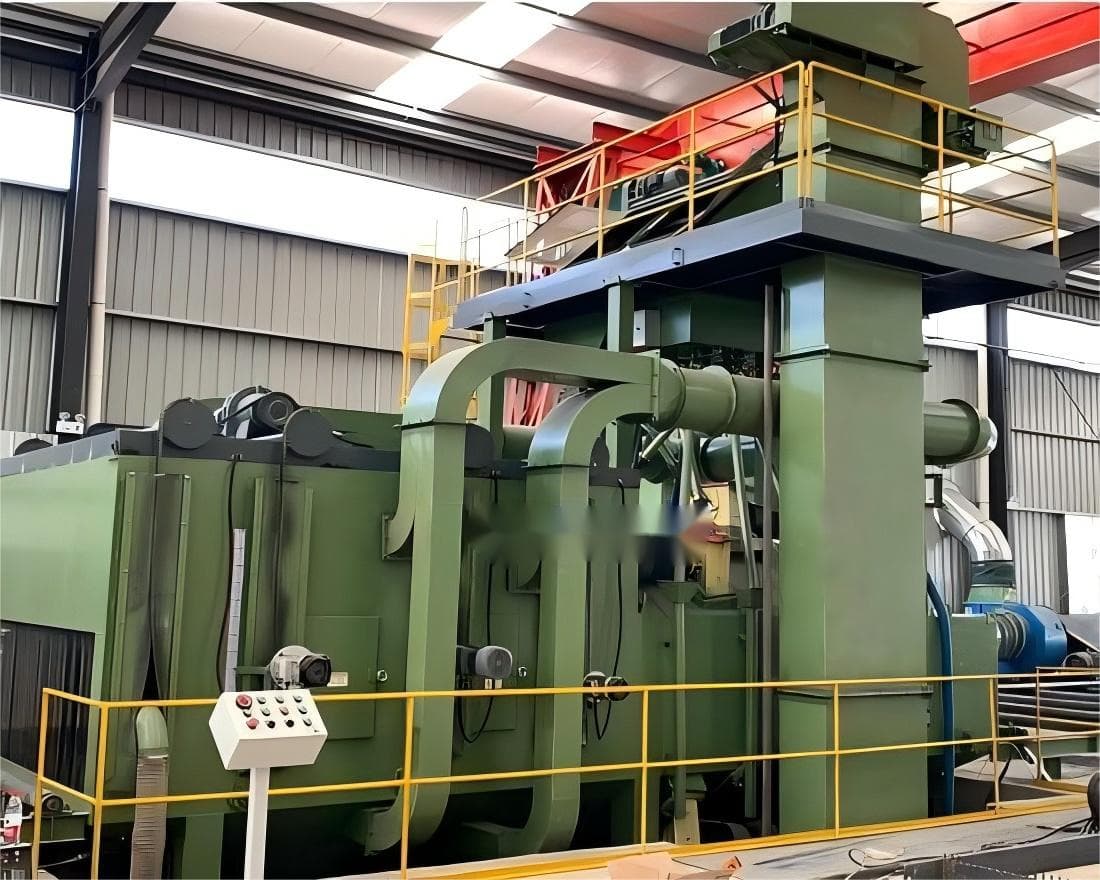
Continuous flow
An abrasive recovery system for continuous roller conveyor shot blasting lines closes the loop between the blast chamber and the media supply, so spent abrasive and workpiece debris are separated before the media returns to the wheels. Recovery quality determines consumable cost, wheel maintenance intervals and how consistently the line holds a given surface standard.
Explore machineMatch workpiece handling, blasting configuration and production flow to your application.