Airless versus air-powered blast: which reclaim fits your shop
Airless wheel blasting and compressed-air blasting are not just two ways to throw media: they imply two different reclaim loops. We compare media throughput, separator tuning, recovery floor options, dust collection and the quiet failure modes that erode finish and output, so you can match the system to your parts and duty cycle.
Buyers often frame this as "wheel blast versus air blast." That is the wrong starting point. The propulsion method is only the first link in a chain, and the chain that decides your operating cost is the reclaim loop: how spent abrasive is gathered, cleaned of rust and fines, and fed back to the nozzle or wheel. Change the propulsion method and you change the entire loop downstream of it.
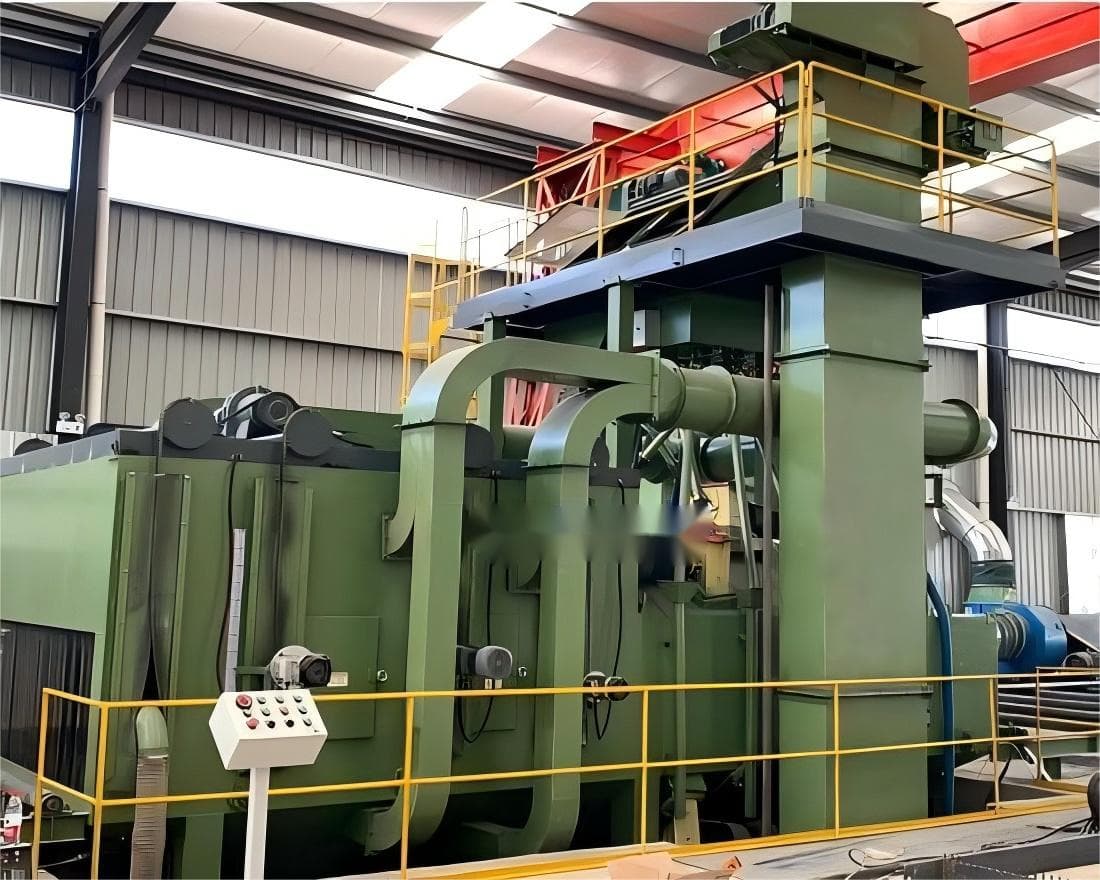
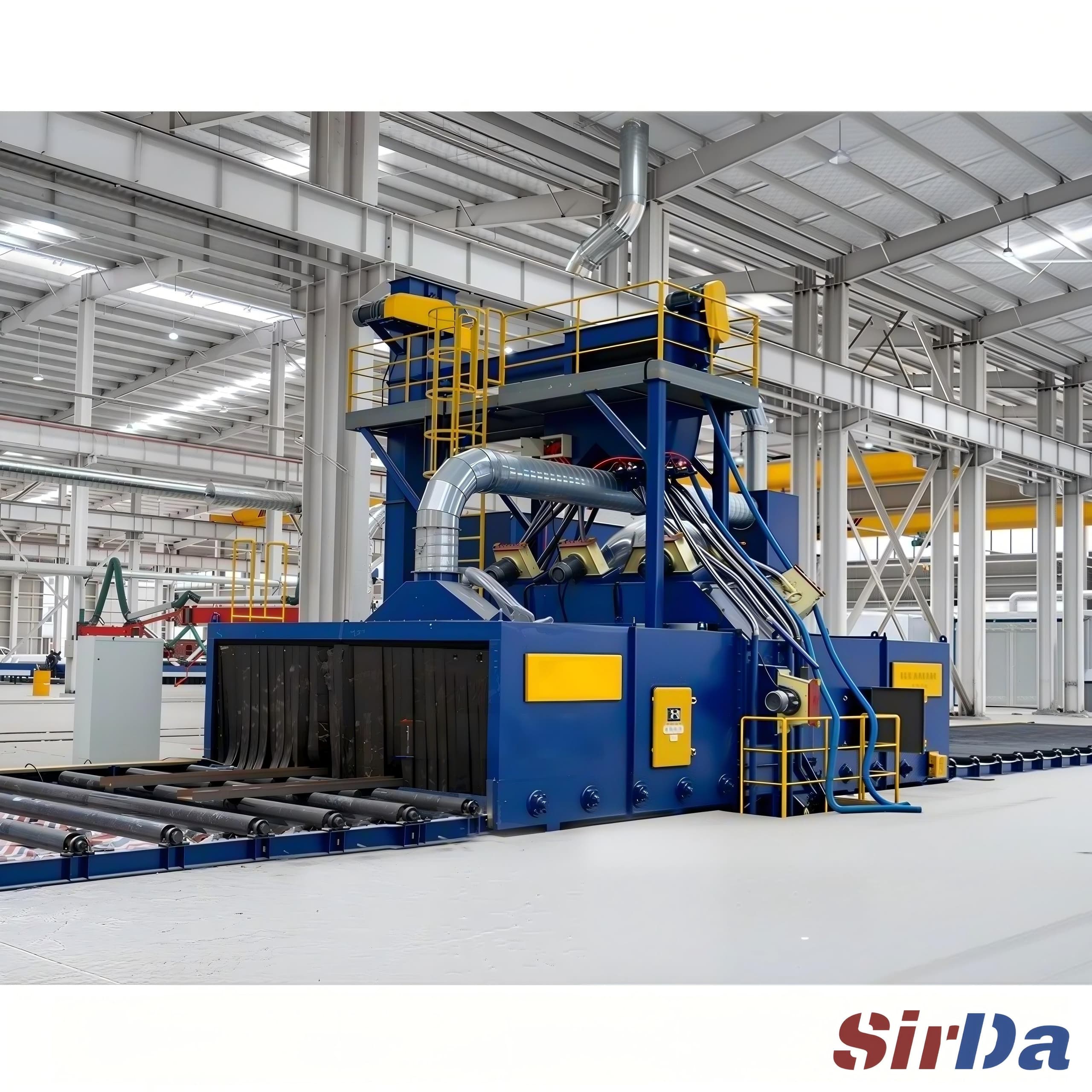
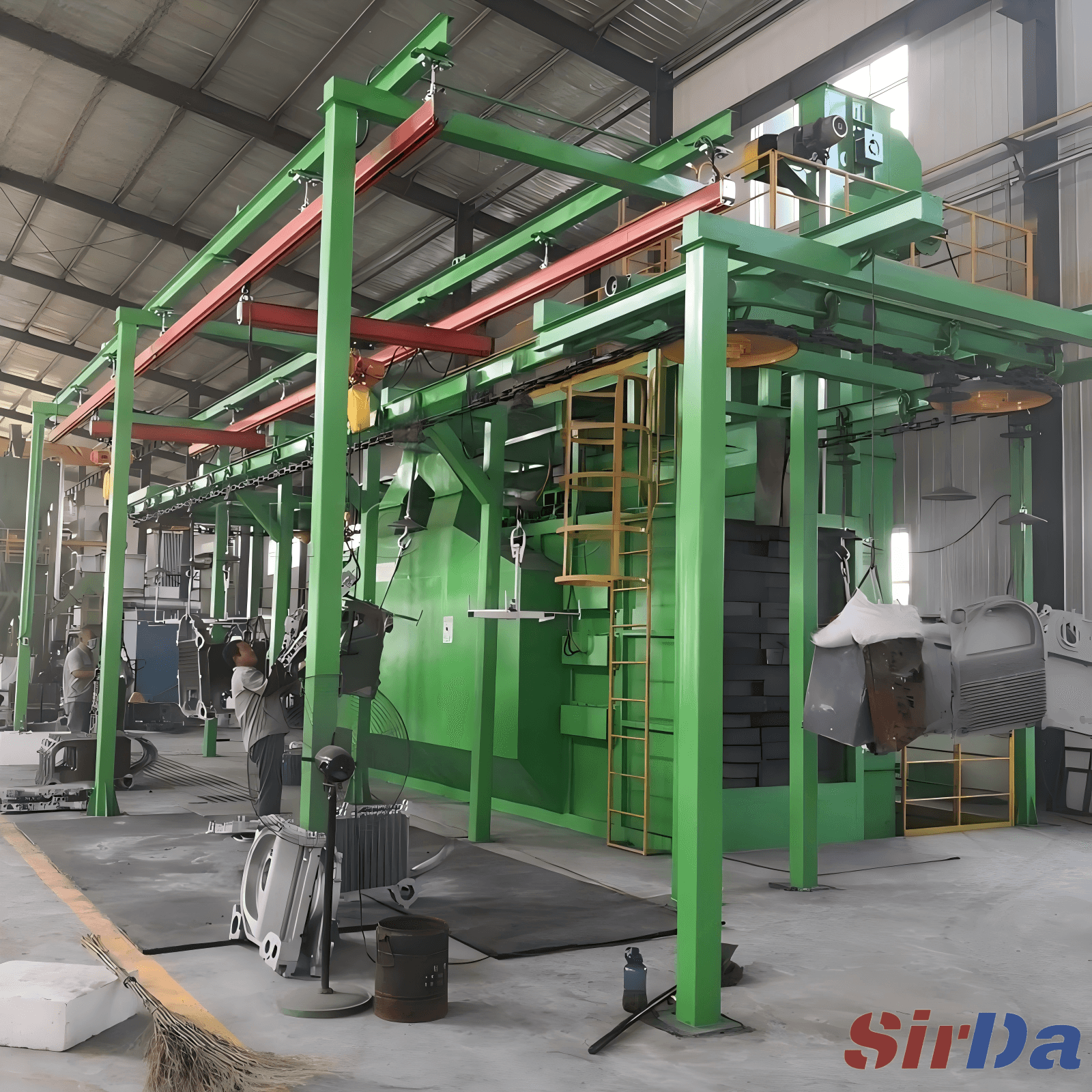
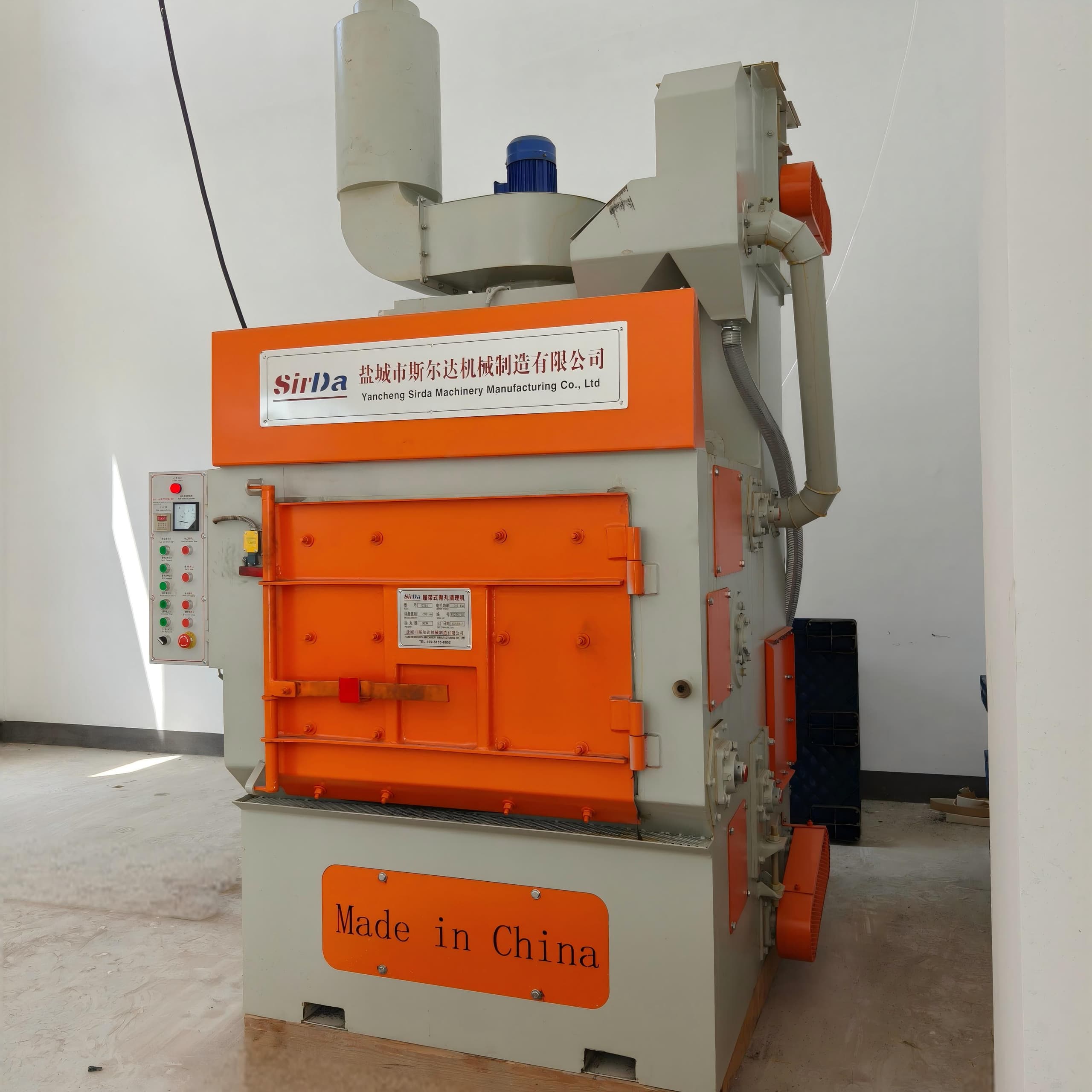
In an airless (centrifugal wheel) machine, a motor-driven wheel throws steel shot or grit at the work with no compressed air involved. Vendor figures commonly quote wheel speeds around 2,000–3,600 rpm and media leaving the wheel at roughly 60–90 m/s. A single wheel can move on the order of 360 kg of media per minute — a typical 9.5 mm air nozzle moves closer to 32 kg/min. That order-of-magnitude gap in media throughput is why wheel machines dominate repetitive, high-volume batches.
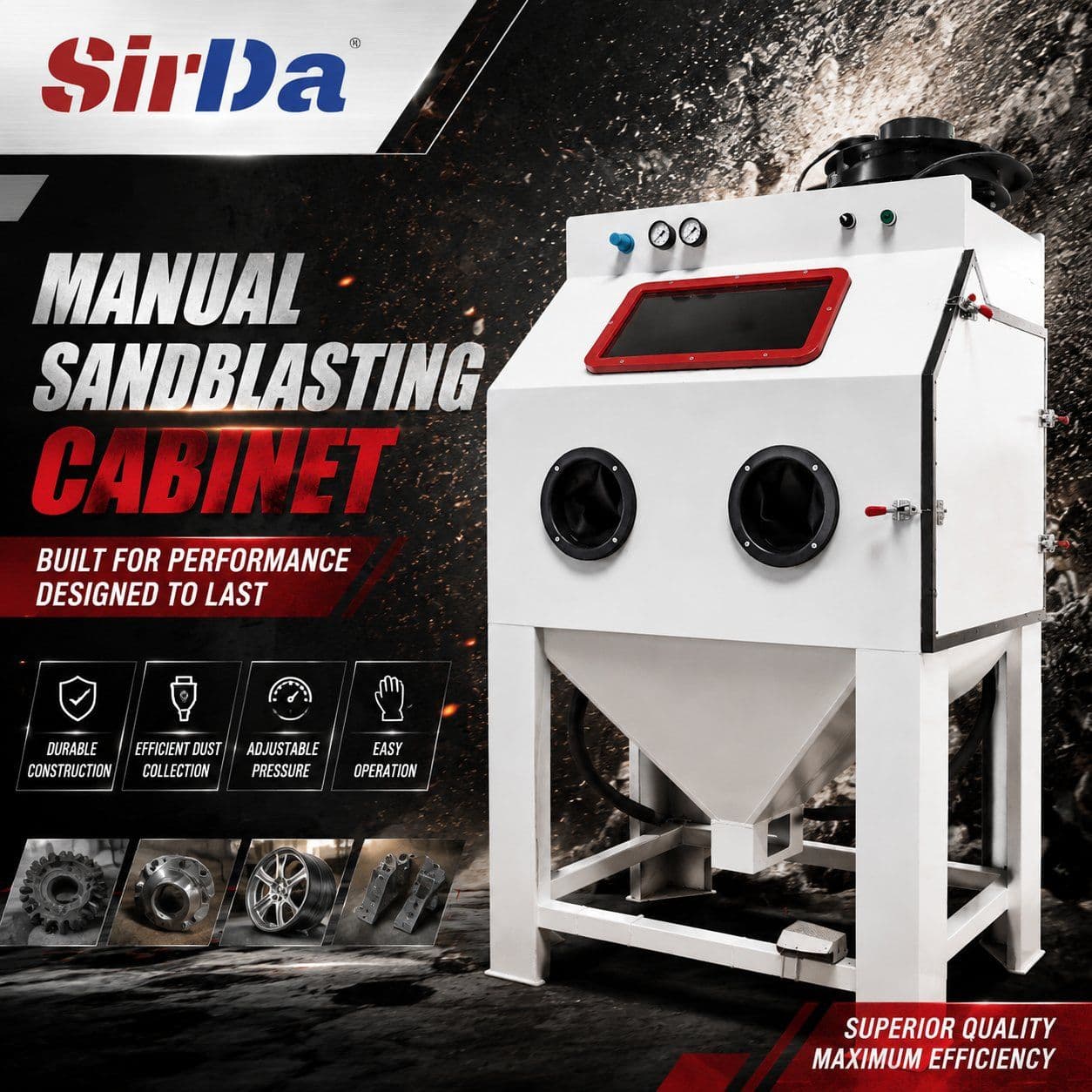
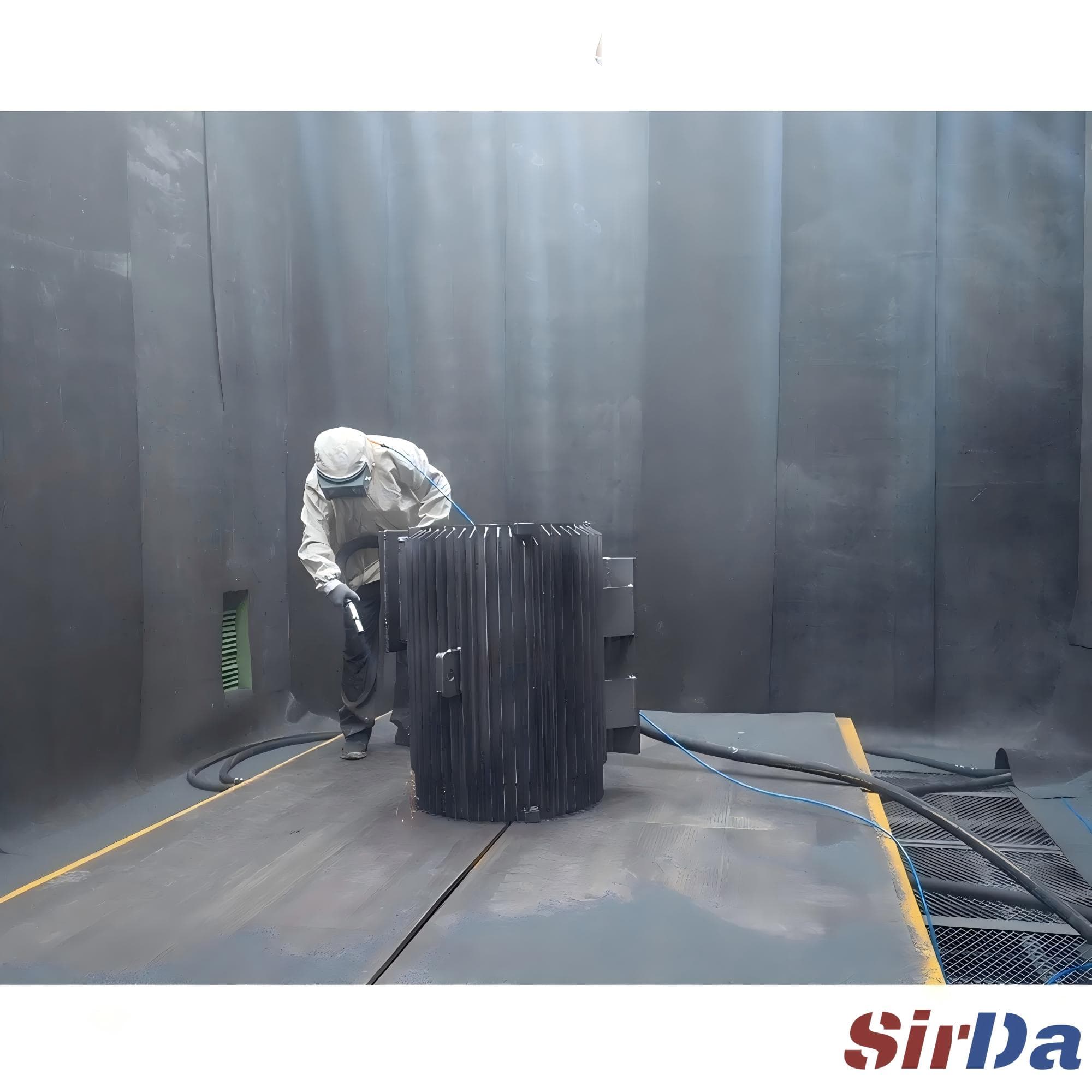
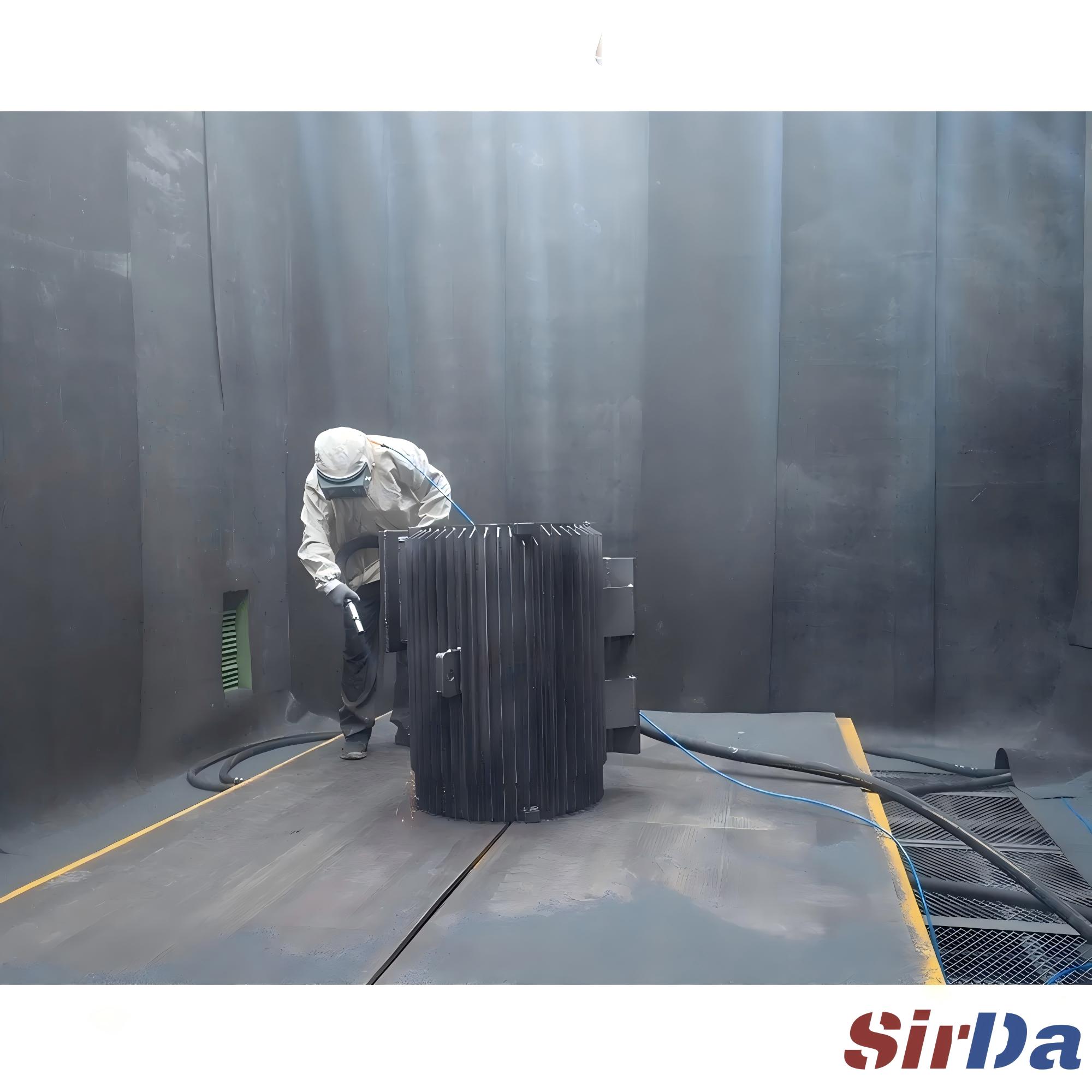
Compressed-air (air-powered, or "sandblasting" in loose usage) systems push media through a hose and nozzle. A nozzle is far more agile: it reaches recesses, tank interiors and structures that cannot be moved into a cabinet. But that flexibility is bought with compressed air, which is an expensive utility, and with media that is frequently used once and discarded unless a recovery floor is installed.
The decision, then, is less about which method cleans better and more about which reclaim loop can serve your parts, your media and your duty cycle economically.
What the reclaim loop has to accomplish
A closed loop does four jobs in sequence. Miss any one and the whole circuit degrades quietly.
- Collection — spent media and debris must leave the work zone. In a wheel cabinet, perforated grating drops media into a hopper below. In a blast room, recovery ranges from a simple sweep-in pit to a full grated floor over screws or an oscillating conveyor.
- Elevation — a bucket elevator lifts media from floor level to a separator mounted above the machine. Its capacity (tonnes/hour) must match the blast output or it becomes a bottleneck that caps production no matter how powerful the wheel or compressor.
- Cleaning and classification — an air-wash separator cascades media through a controlled cross-draft. Dust, undersized broken grains and mill scale are light enough to be drawn off to the dust collector; dense, in-spec grains fall through to the storage hopper. For steel media, a magnetic stage removes non-magnetic debris and tramp metal.
- Storage and re-feed — a hopper above the pot or wheel holds enough clean media for a continuous run, gravity-feeding on demand.
The separator is the quality gate. Set the air velocity too high and it carries away usable media; too low and degraded fines return to the circuit, widening the particle-size spread and spoiling the anchor profile. Recalibrate whenever the media type or grit size changes, because terminal velocity depends on both density and particle size. Suppliers of wheel systems often quote reclamation rates around 90–95% per cycle, but that figure is only meaningful with the separator correctly tuned.
Matching media and floor to the method
Media choice and recovery hardware are inseparable.
Airless machines want dense, durable metallic media — steel shot for peening and general cleaning, angular steel grit for cutting scale and producing an anchor profile. Mixed shot-and-grit blends balance cutting and coverage. These media survive hundreds of reuse cycles, but only if the loop protects them; a wheel machine fed garnet or glass bead without explicit manufacturer approval risks rapid media breakdown and equipment wear.
Air-powered systems accept a much wider range — garnet, aluminium oxide, glass bead, plastic media, steel grit — and can switch between them in minutes. That flexibility matters in a job shop. For light or friable media such as fine glass bead or 120-mesh alumina, a vacuum floor with a cyclone separator is usually gentler than a mechanical screw and elevator. For dense steel grit under heavy contaminant load, a mechanical screw floor with a bucket elevator and air-wash separator is the robust, cost-effective choice.
Recovery floor selection for a blast room is driven by duty cycle:
- Under roughly 10 hours per week — a sweep-in or shovel-in hopper keeps capital cost low and accepts the labour.
- Around 20 hours or less — a partial floor with a single trench and cross-conveyor cuts sweeping to a few paces.
- Medium to high production — U- or H-shaped screw floors along the walls reclaim on the order of 60–90% automatically, with the remainder swept in at shift end.
- Continuous operation — a full grated floor returns essentially all media and removes manual cleanup, but demands careful material-handling design and, often, a shallow pit.
Duty cycle, dust and the failures that sneak up
Throughput math starts with media flow, not motor horsepower. A conveyor line hitting SSPC-SP 10 cleanliness typically runs at 1.2–1.8 m/min; cleaner or multiple passes mean slower line speed or repeat trips. For a blast room, multiply the number of nozzles by per-nozzle media flow and cleaning rate, then subtract loading, staging and cleanup time. Compressor capacity is a hard ceiling for air systems — add a nozzle and the whole room can go starved.
Dust collection is part of the reclaim circuit, not an afterthought. A blast-specific cartridge collector with reverse-pulse cleaning should be sized to the room volume and the media being used; dusty air from the separator and the chamber exhaust both feed it. For silica-bearing or heavy-metal coatings, filtration requirements tighten considerably. Keep the work surface at least 3 °C above the dew point before a final clean, or flash rust appears within hours and undoes the finish you paid for.
Watch for these failure patterns:
- Separator drift — air velocity out of calibration sends good media to waste or returns fines that ruin the profile.
- Elevator and screw wear — buckets, liners and bearings on a continuous loop are the quiet consumables; a worn elevator silently caps throughput.
- Blind filters and duct plugging — poor visibility is often blamed on filters alone, but restricted intakes, plugged ducting and over-generation of fines all play a part.
- Contamination carry-over — paint flakes, tramp metal or a previous media charge returning to the nozzle produces inconsistent coverage and embedded ferrous particles on sensitive substrates.
Choosing without guesswork
Start with the part and the finish, then work backwards. Repetitive batches of sturdy parts that fit a cabinet, with heavy scale to remove and high daily volume, point to an airless wheel machine with a closed steel-media loop. Large fixed structures, deep recesses, delicate surfaces, soft or mixed media, and low or variable volume point to an air-powered setup — invest in a recovery floor only once the duty cycle justifies it.
Ask a supplier to run your actual parts with your target profile and media, and to show the separator settings and reclamation rate they achieve. The propulsion method is a specification; the reclaim loop is the system. Judge the system.