Steel shot versus steel grit: when to switch abrasives
Steel shot and steel grit come from the same carbon steel but behave nothing alike. This guide compares their shape, hardness grades and the surface profile each one produces, then gives a practical rule for when to switch — and how to keep recycled media working.
What shot and grit are made of
Steel shot and steel grit start from the same raw material — carbon steel — but leave the production line as two physically different media. Shot is made by atomising molten steel and letting surface tension pull each droplet into a sphere during quenching and tempering. Grit is that same shot crushed and screened into angular fragments with sharp edges. The difference you feel on the part surface is the whole point: a sphere rolls and hammers, an edge cuts and scrapes.
Both are graded by hardness on the Rockwell C scale and sized under SAE J444 and ISO 11124. Standard shot runs 40–51 HRC, with conditioned or high-hardness grades reaching 54–62 HRC for peening work. Grit spans three grades — GP 40–51, GL 47–56, GH 55–66 HRC — where higher numbers mean more bite but more breakage. Size codes trip people up: for shot, S70 is the smallest and S780 the largest; for grit the G-series runs the opposite way, G10 coarse down to G120 fine.
How shape rewrites the surface
The single most important consequence of shape is what happens to the substrate. Shot strikes and rebounds, peening the surface and leaving a dimpled, orange-peel texture. That peening compresses a thin layer of metal, which is exactly why shot is the media for fatigue-life extension. Typical anchor profile from shot lands around 0.5–1.5 mil, roughly 12–38 µm, Ra 3–15 µm — smooth enough for primers and powder coat.
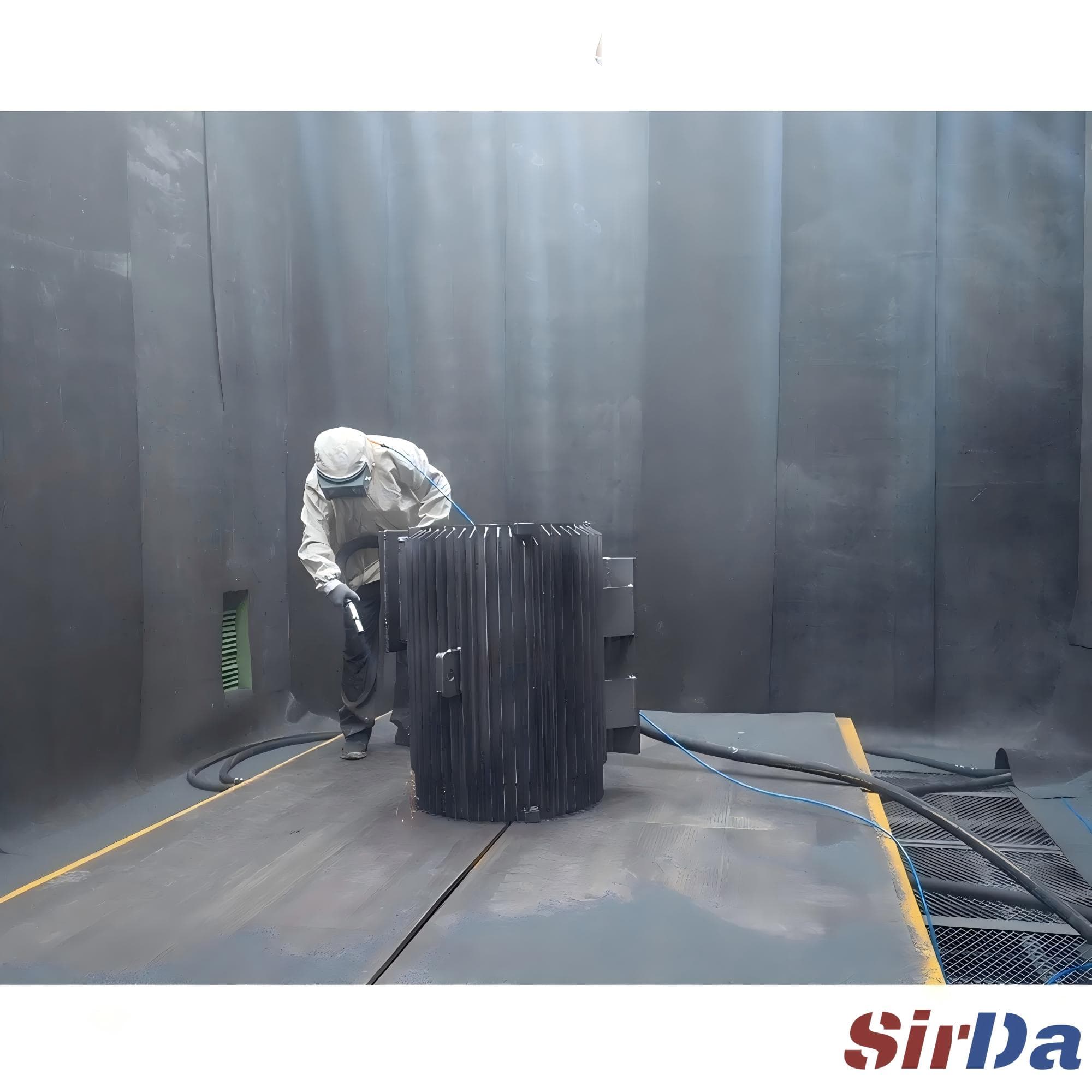
Grit does the opposite. Its edges shear into the substrate and cut away mill scale, rust and old coating, leaving a sharp, jagged anchor pattern. Profile depth runs 2.5–5.0 mil, 62–125 µm, Ra 10–50 µm. That deeper, more aggressive profile is what heavy epoxy, fusion-bonded epoxy (FBE) and zinc-rich systems grip onto. The trade-off is residual stress: grit's cutting action can leave a tensile layer, while shot leaves a beneficial compressive one.
This is also why the two are not interchangeable on stainless. Both are carbon steel, so either one will embed iron into stainless and void a ferroxyl or copper-sulfate test. Dedicated machines or a full teardown are the only safe path there — the abrasive choice is secondary to the contamination risk.
When to switch abrasives
A clean way to decide is to start from the coating specification and the contamination in front of you:
- Heavy mill scale, thick rust, or multiple old paint layers → steel grit. You need cutting action and a deep anchor profile; shot alone will polish the top without breaking through.
- Shot peening, fatigue parts, or a smooth matte finish → steel shot. The peening benefit and low profile are the whole reason to use it.
- Structural steel to Sa 2.5 with a standard primer → either works, and many shops run a 70:30 to 50:50 shot-to-grit blend so grit opens the profile while shot cleans and evens it.
- Thin plate or delicate castings → favour the softest grade that still meets spec. GP or GL grit, or low-hardness shot at a smaller size, to avoid warping and dimensional loss.
- Pipeline or offshore coating prep demanding SP5 white metal → high-hardness grit (GH) with aggressive sizing to hit the deepest profile.
The hardest habit to break is "harder is better." In steel abrasives, raising hardness buys cutting aggression and profile depth but sacrifices toughness — harder particles shatter faster under repeated wheel impact, generating fines and lifting your per-cycle consumption. Choose the softest grade that reaches the required profile.
Keeping the media alive
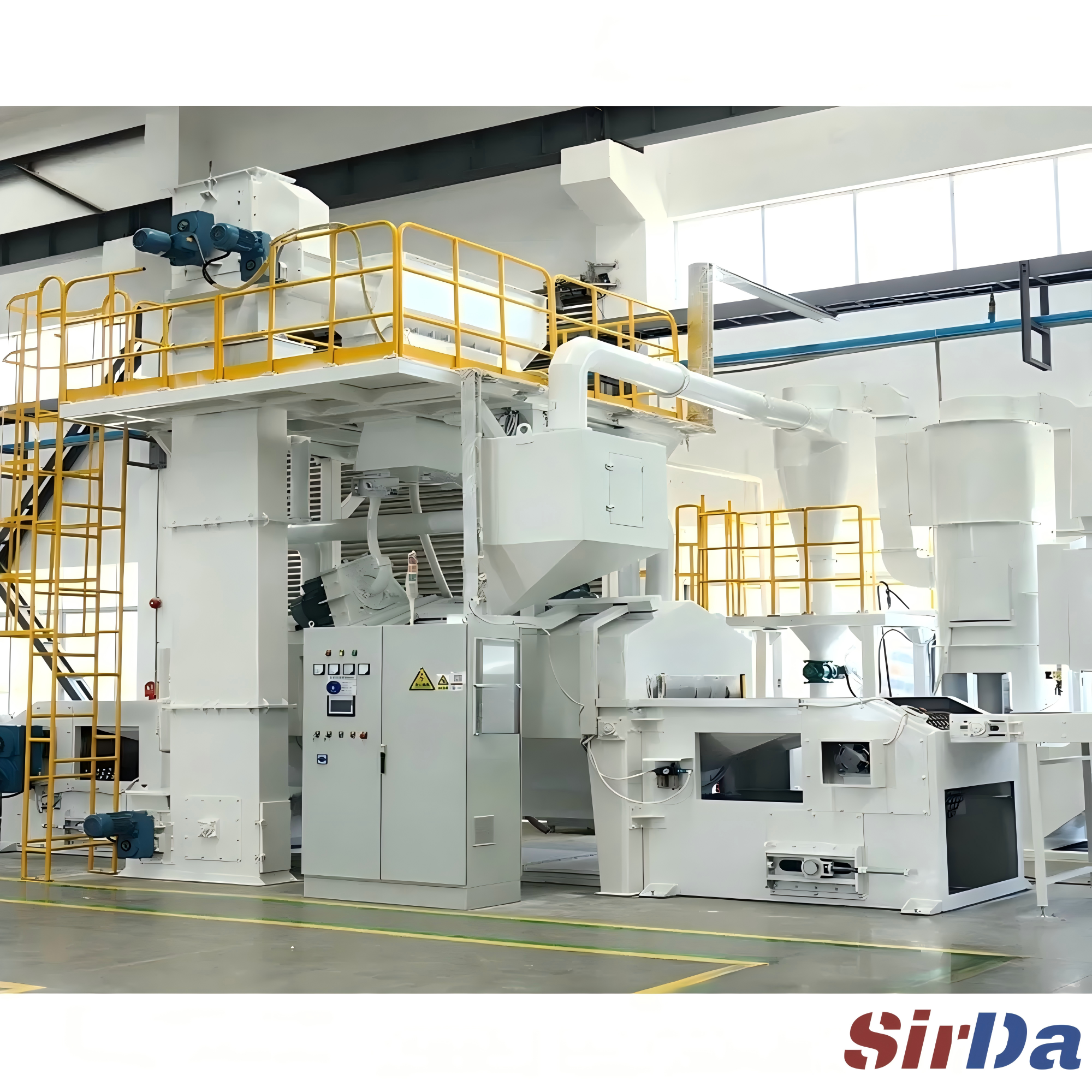
Steel media is only cheap because it recirculates. A well-tuned room or cabinet with magnetic separation, a bucket elevator and an air-wash classifier can sustain 200–300 effective cycles before the accumulated fines force a full change. The air wash must pull out broken particles below the minimum effective size while returning intact, on-size media to the wheel; the magnet pulls out non-magnetic contamination. Skip that maintenance and you pay in three ways:
- Breakdown fines coat the part and reduce cleaning energy, so operators slow the line or open the wheels — both raise cost.
- Over-hard grit on a soft substrate causes excessive removal, dimensional change and distortion you cannot blast back out.
- Wrong size either leaves scale (too fine) or scars the substrate (too coarse) and fails the profile gauge.
Regular sieve analysis of the circulating charge is the standard control. Sample, screen, and confirm the on-size fraction stays in range; when fines climb, tune the air wash rather than buying more media. The substrate and the coating spec decide shot versus grit — the separator decides how long either one keeps working.